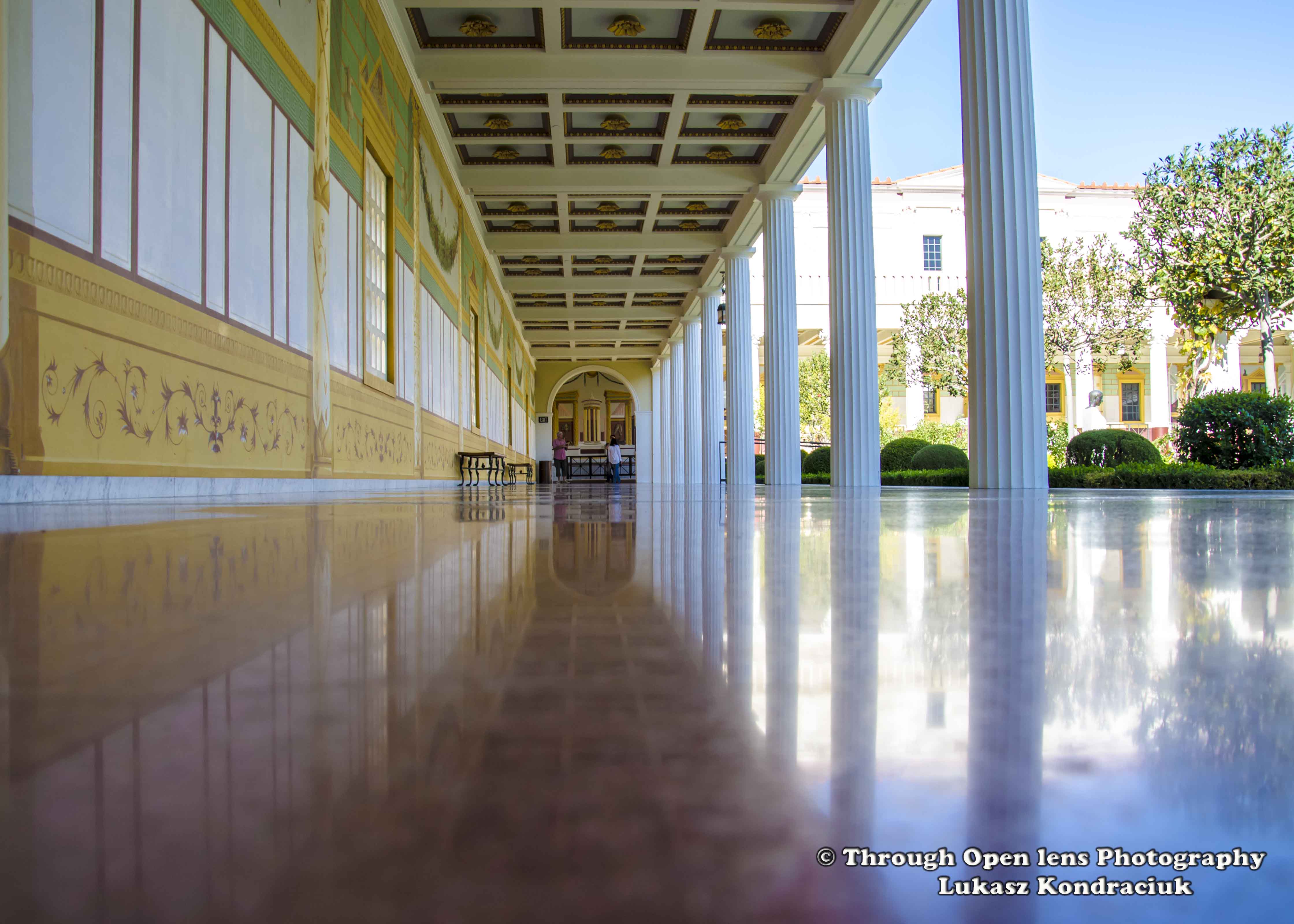
Show Me, Wax The Floor

Getty Villa

F/8.0, 1/250, ISO 200.

Getty Villa

California Week

Visiting the modern art museum, a lady turned to an attendant standing nearby.” This,” she said, “I suppose, is one of those hideous representations you call modern art? ” “No, madam,” replied the attendant. “That one’s called a mirror.”

Interesting Fact: In 1954, oil tycoon J. Paul Getty opened a gallery adjacent to his home in Pacific Palisades.[3][4][5] Quickly running out of room, he built a second museum, the Getty Villa, on the property down the hill from the original gallery.[4][6] The villa design was inspired by the Villa of the Papyri at Herculaneum[6] and incorporated additional details from several other ancient sites. It was designed by architects Robert E. Langdon, Jr. and Ernest C. Wilson, Jr..[7][8] It opened in 1974,[9] but was never visited by Getty, who died in 1976.[5] Following his death, the museum inherited $661 million[10] and began planning a much larger campus, the Getty Center, in nearby Brentwood. The museum overcame neighborhood opposition to its new campus plan by agreeing to limit the total size of the development on the Getty Center site.[11] To meet the museum’s total space needs, the museum decided to split between the two locations with the Getty Villa housing the Greek, Roman, and Etruscan antiquities.[11] In 1993, the Getty Trust selected Rodolpho Machado and Jorge Silvetti to design the renovation of the Getty Villa and its campus.[11] In 1997, portions of the museum’s collection of Greek, Roman and Etruscan antiquities were moved to the Getty Center for display, and the Getty Villa was closed for renovation.[12] The collection was restored during the renovation. ( https://en.wikipedia.org/wiki/Getty_Villa#History )

Hum With Me

Rufous Hummingbird

F/ 5.6, 1/125, ISO 100.

Rufous Hummingbird

California Week

Why do hummingbirds hum?

Because they forgot the words!

Interesting Fact: The Rufous Hummingbird makes one of the longest migratory journeys of any bird in the world, as measured by body size. At just over 3 inches long, its roughly 3,900-mile movement (one-way) from Alaska to Mexico is equivalent to 78,470,000 body lengths. In comparison, the 13-inch-long Arctic Tern’s one-way flight of about 11,185 mi is only 51,430,000 body lengths. (AAB) ( https://www.allaboutbirds.org/guide/Rufous_Hummingbird/lifehistory )


Day Is Behind Us, Watch Out Night, Here We Go!

cali sunset

F/ 10.0, 1/500, ISO 100.

California Week

Three men were in a NASA conference room to decide how to spend $10 billion.
“I think we should put our men on Mars!” said the first man.
“Ooh, good idea,” said the other two.
“I think we should put our men on Venus!” said the second man.
“Ooh, good idea,” said the other two.
“I think we should put our men on the Sun!”
“How are you going to do that?”
“Easy. We go at night.”

Interesting Fact: The 16th-century astronomer Nicolaus Copernicus was the first to present to the world a detailed and eventually widely accepted mathematical model supporting the premise that the Earth is moving and the Sun actually stays still, despite the impression from our point of view of a moving Sun. ( https://en.wikipedia.org/wiki/Sunset#Historically )

My Pillow Just Slapped Me Upside The Head And Said What Are You Still Doing Up!

Griffith Observatory

F/10.0, 30.0, ISO 100.

Griffith Observatory

California Week

How can you go without sleep for seven days and not be tired?

Sleep at night.

Interesting Fact: 3,015 acres (12.20 km2) of land surrounding the observatory was donated to the City of Los Angeles by Colonel Griffith J. Griffith on December 16, 1896.[1] In his will Griffith donated funds to build an observatory, exhibit hall, and planetarium on the donated land. Griffith’s objective was to make astronomy accessible by the public, as opposed to the prevailing idea that observatories should be located on remote mountaintops and restricted to scientists. ( https://en.wikipedia.org/wiki/Griffith_Observatory#History )

Fly Free!!

Black Skimmer

F/5.6, 1/250, ISO 400.

Black Skimmer

California Week

How long do chickens work?

Around the cluck!

Interesting Fact: Although the Black Skimmer is active throughout the day, it is largely crepuscular (active in the dawn and dusk) and even nocturnal. Its use of touch to catch fish lets it be successful in low light or darkness.  ( https://www.allaboutbirds.org/guide/Black_Skimmer/lifehistory )

California Dreaming

Santa Monica Pier

F/ 16.0, 10.0, ISO 100.

Santa Monica Pier  

California Week

What did the boat say to the pier?

What’s up, dock?

Interesting Fact: Santa Monica has had several piers over the years; however, the current Santa Monica Pier is actually two adjoining piers that long had separate owners. The long, narrow Municipal Pier opened September 9, 1909,[4] primarily to carry sewer pipes beyond the breakers,[5] and had no amenities. The short, wide adjoining Pleasure Pier to the south, a.k.a. Newcomb Pier, was built in 1916 by Charles I. D. Looff and his son Arthur, amusement park pioneers.[6] Attractions on the Pleasure Pier eventually included the Santa Monica Looff Hippodrome building (which now houses the current carousel and is listed on the National Register of Historic Places), the Blue Streak Racer wooden roller coaster (which was purchased from the defunct Wonderland amusement park in San Diego), the Whip, merry-go-rounds, Wurlitzer organs, and a funhouse. ( https://en.wikipedia.org/wiki/Santa_Monica_Pier#History )

That Water Is Freezing I Am Not Going In!

Black-Crowned Night-Heron

F/9.0, 1/1250, ISO 800.

Black-Crowned Night-Heron

What do you get if you cross a parrot with a shark?

A bird that will talk you ear off!

Interesting Fact: A breeding Black-crowned Night-Heron will brood any chick that is placed in its nest. The herons apparently don’t distinguish between their own offspring and nestlings from other parents. ( https://www.allaboutbirds.org/guide/Black-crowned_Night-Heron/lifehistory )

The Mighty Duck!

Hooded Merganser

F/6.3, 1/200, ISO 1600.

Hooded Merganser

What did the duck carry his schoolbooks in?

His Quackpack!

Interesting Fact: Hooded Merganser ducklings leave their nest cavity within 24 hours of hatching. First, their mother checks the area around the nest and calls to the nestlings from ground level. From inside the nest, the little fluffballs scramble up to the entrance hole and then flutter to the ground, which may be 50 feet or more below them. In some cases they have to walk half a mile or more with their mother to the nearest body of water. ( https://www.allaboutbirds.org/guide/Hooded_Merganser/lifehistory )


I Fly So High, I Can Reach The Sky!

Rough Legged Hawk

F/ 8.0, 1/320, ISO 100.

Rough Legged Hawk ( Dark  )

Is chicken soup good for your health?

Not if you’re the chicken!

Interesting Fact: Nonbreeding adults eat about a quarter-pound of food daily, or a tenth of their body mass—that’s about 5 small mammals. Nestlings start feeding themselves (swallowing lemmings whole) at about 16 days old. It’s estimated that a brood of 2 nestlings requires 26 pounds of food during the 40 days between hatching to fledging. ( https://www.allaboutbirds.org/guide/Rough-legged_Hawk/lifehistory )


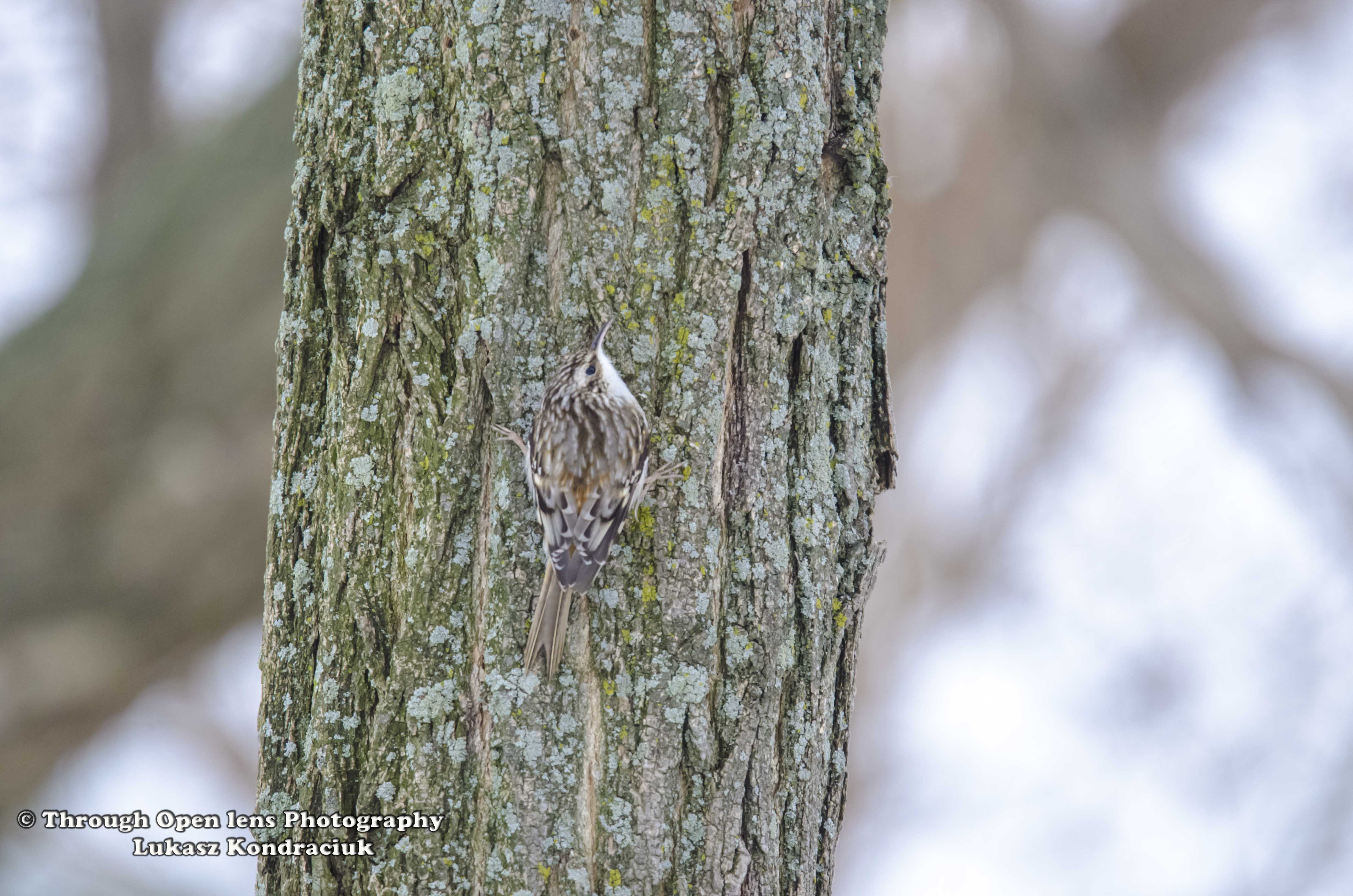
Spot Me If You Can!

Brown Creeper

F/6.3, 1/200, ISO 1600.

Brown Creeper

What do you call a bunch of chickens playing hide-and-seek?

Fowl play!

Interesting Fact: Brown Creepers burn an estimated 4–10 calories (technically, kilocalories) per day, a tiny fraction of a human’s daily intake of about 2,000 kilocalories. By eating a single spider, a creeper gains enough energy to climb nearly 200 feet vertically. ( https://www.allaboutbirds.org/guide/Brown_Creeper/lifehistory )