I Want To Fly Like An Eagle

American Kestrel 1

F/6.3, 1/800, ISO 800.

American Kestrel

Day 255 / 365

Why did the American Kestrel cross the road, roll in the mud, and cross back?

He was a dirty double-crosser!

Interesting Fact: When nature calls, nestling kestrels back up, raise their tails, and squirt feces onto the walls of the nest cavity. The feces dry on the cavity walls and stay off the nestlings. The nest gets to be a smelly place, with feces on the walls and uneaten parts of small animals on the floor. ( http://www.allaboutbirds.org/guide/American_Kestrel/lifehistory )


We Remember!

September 11

F/14.0, 30.0, ISO 100.

Day 254 / 365

God Bless all who lost their Lives. We Will Never Forget 9/11.

Interesting Fact:  September 11 is now remembered as Patriot Day in the US in memory of those killed. ( http://www.express.co.uk/life-style/top10facts/509590/Top-10-facts-about-9-11 )

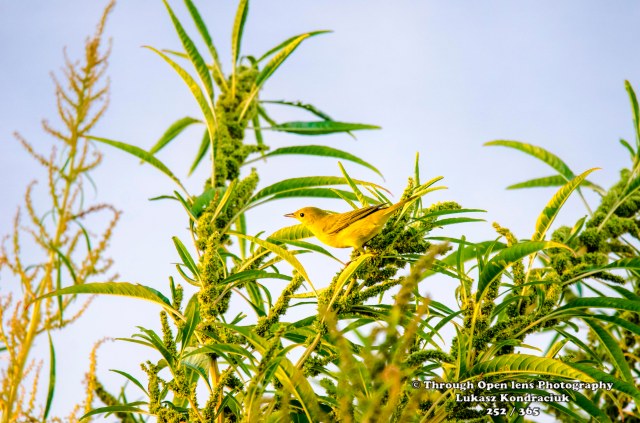
Yellow Is Back!

Yellow Warbler 2

F/6.3, 1/500, ISO 1600.

Yellow Warbler

Day 252 / 365

Daughter: Mom, can I have a yellow bird for Christmas?
Mom: NO! You’ll have turkey like everyone else.

Interesting Fact: Yellow Warblers forage along slender branches of shrubs and small trees, picking off insect prey as they go or briefly hovering to get at prey on leaves. Singing males perch near the tops of the bushes or trees in their territory. As male Yellow Warblers are setting up territories they may perform a “circle flight” in which they fly toward a neighboring male or female in a horizontal, semicircular path. A male may also fly slowly with fast, exaggerated wingbeats away from a female he is courting or a male he is competing with. As these territorial encounters proceed, males start by singing at each other; as the dispute goes on, the songs get quieter or switch to chip notes as the males begin to chase each other. Yellow Warblers typically form monogamous pairs that sometimes last more than one breeding season and reform the next. Yellow Warblers defend their nesting territories from many species, including other warbler species, chickadees, House Wrens, blackbirds, and Eastern Kingbirds. They may even chase off other warbler species while on their wintering grounds. Common predators of Yellow Warbler nests include garter snakes, red squirrels, jays, crows, raccoons, weasels, skunks, and domestic or feral cats. ( http://www.allaboutbirds.org/guide/Yellow_Warbler/lifehistory )

I Have To Stop Clowning Myself.

American Oystercatcher

F/6.3, 1/1600, ISO 400.

American Oystercatchers

Day 248 / 365

What did the egg say to the other egg?
You crack me up!

Interesting Fact: American Oystercatchers insert their long blade-like bills into mussels and other bivalves, severing the powerful adductor muscles before the shells can close. ( http://identify.whatbird.com/obj/1013/overview/American_Oystercatcher.aspx )

This Fence Can’t Hold Me! I’m Breaking Out!

Yellow-breasted Chat

F/6.3, 1/640, ISO 800.

Yellow-breasted Chat

Day 247 / 365

Why did the Yellow-breasted Chat scale the chain-link fence?

To see what was on the other side.

Interesting Fact: Unlike most warblers, this species has been known to mimic the calls of other birds, and it’s the largest North American warbler.  ( http://identify.whatbird.com/obj/342/overview/Yellow-breasted_Chat.aspx )

Park Closes At Dusk!

park bench

F/10.0, 30.0, ISO 100.

Day 245 / 365

I woke up on a park bench and had no idea where I had been

And then I remembered, I’d been to the park

Interesting Fact: The first parks were English deer parks,[citation needed] land set aside for hunting by royalty and the aristocracy in medieval times. They had walls or thick hedges around them to keep game animals (e.g., stags) in and people out. It was strictly forbidden for commoners to hunt animals in these deer parks. ( https://en.wikipedia.org/wiki/Park#History )


You Can’t See Me I’m A Flower!

The American Goldfinch

F/6.3, 1/800, ISO 800.

The American Goldfinch

Day 244 / 365

Why did the little bird get in trouble at school?

He got caught peeping on a test.

Interesting Fact: The American Goldfinch changes from winter plumage to breeding plumage by a complete molt of its body feathers. It is the only member of its family to have this second molt in the spring; all the other species have just one molt each year in the fall. ( http://identify.whatbird.com/obj/91/_/American_Goldfinch.aspx )

Bad Hair Day!

Red-tailed Hawks1

F/ 6.3, 1/1000, ISO 500.

Red-tailed Hawk

Day 243 / 365

How do witches keep their hair in place while flying?
With scare spray.

Interesting Fact: Red-tailed Hawks have a very keen eyesight that is 8 times as powerful as a human’s, allowing them to see prey as small as a mouse from 100 feet (~30 meters) away. ( http://beautyofbirds.com/redtailedhawks.html )

“Are You My Dinner? “

Red-tailed Hawks

F/6.3, 1/125, ISO 200.

Red-tailed Hawk

Day 242 / 365

Did you know my fiancé does a great bird impression.

She watches me like a hawk.

Interesting Fact: In flight, this hawk travels at speeds from 20 to 40 mph (64 km/h); however, when diving to catch prey, their speed may exceed 120 mph (190 km/h). ( http://beautyofbirds.com/redtailedhawks.html )

I’m Cute And Cuddly. But I Will Steal Your Stuff When You Are Not Looking!

Chinchilla

F/5.6, 1/60, ISO 800.

Chinchilla

Day 239 / 365

A man went to visit a friend and was amazed to find him playing chess with his Chinchilla. He watched the game in astonishment for a while. “I can hardly believe my eyes!” he exclaimed. “That’s the smartest chinchilla I’ve ever seen.”

“Nah, he’s not so smart,” the friend replied. “I’ve beaten him three games out of five.”

Interesting Fact: Chinchillas see with their whiskers. Even though they have big eyes, the eyes are under developed, making the Chinchilla not see well with it. They have long whiskers which can grow half the length of their body to help them ‘see’ or rather feel things around them. ( http://chinchilla.co/chinchilla-facts/ )