So They Say Orange Is The New Black, What If I’m Both?!

Eastern Towhee

F/6.3, 1/40, ISO 400.

Eastern Towhee

What did the bird say after his cage fell apart?

“Cheap, cheap!”

Interesting Fact: Eastern Towhees are common victims of the parasitic Brown-headed Cowbird. Female cowbirds lay eggs in towhee nests, then leave the birds to raise their cowbird young. In some areas cowbirds lay eggs in more than half of all towhee nests. Towhees, unlike some other birds, show no ability to recognize or remove the imposter’s eggs. Female cowbirds typically take out a towhee egg when laying their own, making the swap still harder to notice. ( https://www.allaboutbirds.org/guide/Eastern_Towhee/lifehistory )


You Can’t See Me I’m Camouflage!

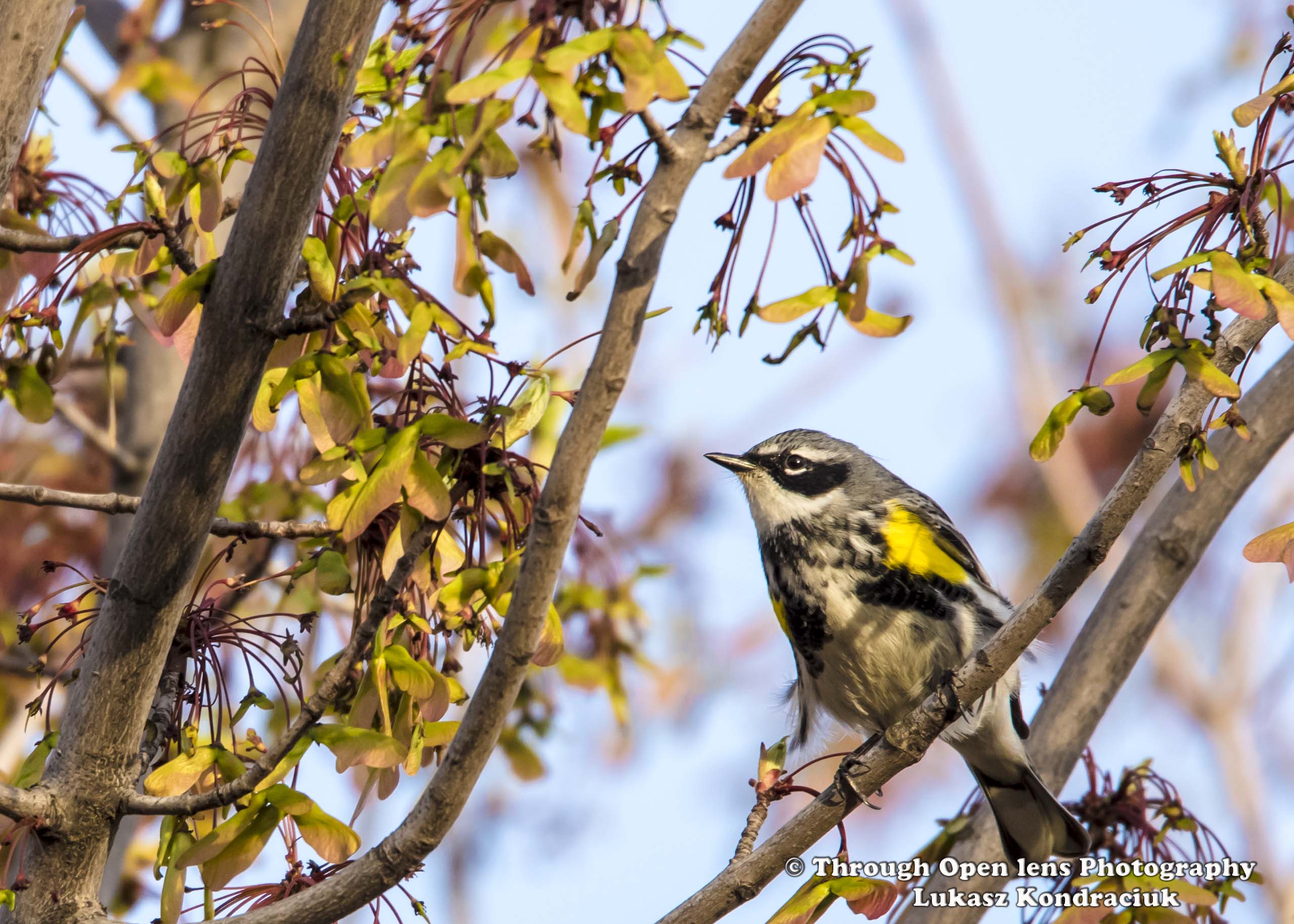
Yellow-Rumped Warbler

F/9.0, 1/320, ISO 400.

Yellow-Rumped Warbler

A magician was working on a cruise ship in the Caribbean.
The audience would be different each week, so the magician
allowed himself to do the same tricks over and over again.
There was only one problem:  The captain’s parrot saw the
shows each week and began to understand how the magician did
every trick.  Once he understood he started shouting in the
middle of the show:
“Look, it’s not the same hat”
“Look, he is hiding the flowers under the table”
“Hey, why are all the cards the Ace of Spades ?”
The magician was furious but couldn’t do anything, it was,
after all, the captain’s parrot.
One day the ship had an accident and sank.  The magician
found himself on a piece of wood in the middle of the ocean
with the parrot, of course.  They stared at each other with
hate, but did not utter a word.
This went on for a day and another and another.
After a week the parrot said:  “OK, I give up.  Where’s
the boat?”

Interesting Fact: The Yellow-rumped Warbler is the only warbler able to digest the waxes found in bayberries and wax myrtles. Its ability to use these fruits allows it to winter farther north than other warblers, sometimes as far north as Newfoundland.  ( https://www.allaboutbirds.org/guide/Yellow-rumped_Warbler/lifehistory )

No. Stop Don’t SWALLOW That!

Tree Swallow

F/ 5.6, 1/500, ISO 125.

Tree Swallow

What do you call a chicken in the 1960’s?

A funky chicken.

Interesting Fact: Migrating and wintering Tree Swallows can form enormous flocks numbering in the hundreds of thousands. They gather about an hour before sunset and form a dense cloud above a roost site (such as a cattail marsh or grove of small trees), swirling around like a living tornado. With each pass, more birds drop down until they are all settled on the roost. ( https://www.allaboutbirds.org/guide/Tree_Swallow/lifehistory )

I Will Meet You In The Morning

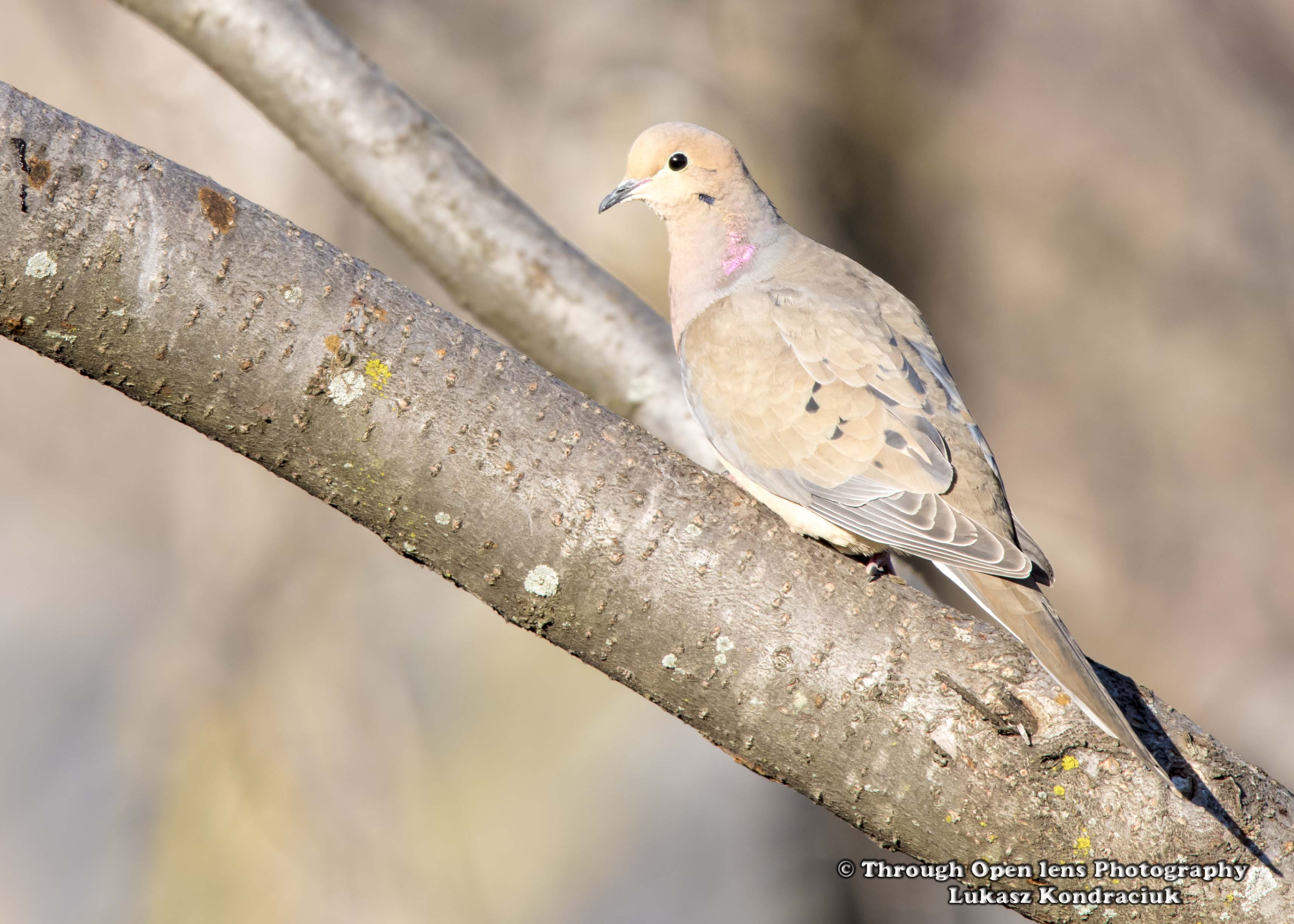
Mourning Dove

F/9.0, 1/320, ISO 320.

Mourning Dove

What soap do birds use?

Dove.

Interesting Fact: Mourning Doves tend to feed busily on the ground, swallowing seeds and storing them in an enlargement of the esophagus called the crop. Once they’ve filled it (the record is 17,200 bluegrass seeds in a single crop!), they can fly to a safe perch to digest the meal. ( https://www.allaboutbirds.org/guide/Mourning_Dove/lifehistory )

Thirsty Thursday!

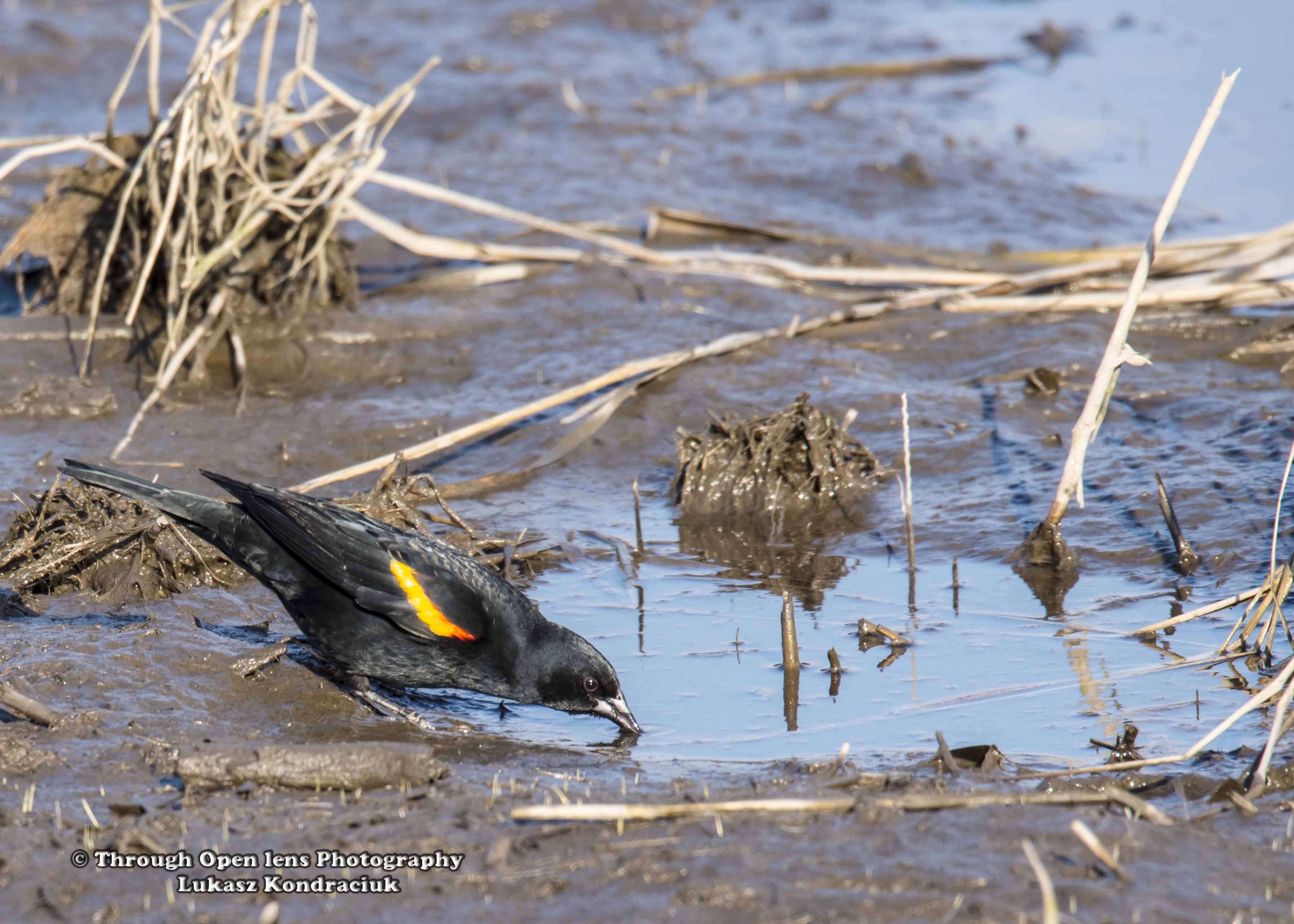
Red-winged Blackbird

F/9.0, 1/320, ISO 320.

Red-winged Blackbird

Where does a blackbird go for a drink?

To a crow bar.

Interesting Fact: The Red-winged Blackbird is a highly polygynous species, meaning males have many female mates – up to 15 in some cases. In some populations 90 percent of territorial males have more than one female nesting on their territories. But all is not as it seems: one-quarter to one-half of nestlings turn out to have been sired by someone other than the territorial male. ( https://www.allaboutbirds.org/guide/Red-winged_Blackbird/lifehistory )

Splash Off!

American Black Duck

F/9.0, 1/320, ISO 320.

American Black Duck

Two monsters went duck-hunting with their dogs but without success. “I know what we’re doing wrong,” said the first one. “What’s that then?” asked the second. “We’re not throwing the dogs high enough!”

Interesting Fact: The colors of the bill and legs are used to determine their age and sex. These differences led to an earlier belief that there were two subspecies, a northern, red-legged race, and a southern “common” one. ( http://identify.whatbird.com/obj/392/overview/American_Black_Duck.aspx )

Don’t Lose Hope When The Sun Goes Down The Stars Come Out

sunset

F/13.0, 1/640, ISO 320.

Some people can tell what time it is by looking at the sun.

But I have never been able to make out the numbers.

Interesting Fact: Sunset colors are typically more brilliant than sunrise colors, because the evening air contains more particles than morning air. ( https://en.wikipedia.org/wiki/Sunset#Historically )


Where flowers bloom, so does hope.

Crocus

F/8.0, 1/250, IOS 320.

Crocus

What did the big flower say to the little one?

You’re really growing, bud!

Interesting Fact: The first crocus seen in the Netherlands, where crocus species are not native, were from corms brought back in the 1560s from Constantinople by the Holy Roman Emperor’s ambassador to the Sublime Porte, Ogier Ghiselin de Busbecq. A few corms were forwarded to Carolus Clusius at the botanical garden in Leiden. By 1620, the approximate date of Ambrosius Bosschaert‘s painting (illustration, below), new garden varieties had been developed, such as the cream-colored crocus feathered with bronze at the base of the bouquet, similar to varieties still on the market. Bosschaert, working from a preparatory drawing to paint his composed piece spanning the whole of spring, exaggerated the crocus so that it passes for a tulip, but its narrow, grass-like leaves give it away. ( https://en.wikipedia.org/wiki/Crocus#History )

Spring Is A Nature’s Way Of Saying “Let’s Party!”

Happy First Day Of Spring!

Narcissus

F/8.0, 1/250, ISO 320.

Narcissus ( Daffodils )

When do people start using their trampoline?

Spring-Time

Interesting Fact: Spring is one of the four conventional temperate seasons, following winter and preceding summer. There are various technical definitions of spring, but local usage of the term varies according to local climate, cultures and customs. When it is spring in the Northern Hemisphere, it will be autumn in the Southern Hemisphere. At the spring equinox, days are approximately 12 hours long with day length increasing as the season progresses. Spring and “springtime” refer to the season, and also to ideas of rebirth, rejuvenation, renewal, resurrection and regrowth. Subtropical and tropical areas have climates better described in terms of other seasons, e.g. dry or wet, monsoonal or cyclonic. Often, cultures have locally defined names for seasons which have little equivalence to the terms originating in Europe. ( https://en.wikipedia.org/wiki/Spring_(season)#Meteorological_reckoning )

I Will Not Run From This Dragon… fly.

dragonfly

F/6.3, 1/800, ISO 800.

Dragonfly

Day 172 / 365

To All The Dads In The World, Happy Father’s Day!

Why was the knight afraid of the bug?

Because it was a dragonfly!

Interesting Fact: Dragonflies were some of the first winged insects to evolve, some 300 million years ago. Modern dragonflies have wingspans of only two to five inches, but fossil dragonflies have been found with wingspans of up to two feet. ( http://www.smithsonianmag.com/science-nature/14-fun-facts-about-dragonflies-96882693/ )