Ready, Set, Go!

Vesper Sparrow

F/7.1, 1/200, ISO 320.

Vesper Sparrow

Couples first day at a resort decided to hit the beach.
When the guy went back to there room to get something to drink, one of the hotel maids was making the bed.
He grabbed his cooler and was on my way out when he paused and asked, “Can we drink beer on the beach?”
“Sure,” she said, “but I have to finish the rest of the rooms beforehand.”

Interesting Fact: The Vesper Sparrow responds quickly to changes in habitat; it is often the first species to occupy reclaimed mine sites and abandon old farm fields as they return to forest.  ( https://www.allaboutbirds.org/guide/Vesper_Sparrow/lifehistory )

Reflection On This

Great Blue Heron 4

F/6.3, 1/100, ISO 320.

Great Blue Heron

How do you prevent a Summer cold?

Catch it in the Winter!

Interesting Fact: The white form of the Great Blue Heron, known as the “great white heron,” is found nearly exclusively in shallow marine waters along the coast of very southern Florida, the Yucatan Peninsula, and in the Caribbean. Where the dark and white forms overlap in Florida, intermediate birds known as “Wurdemann’s herons” can be found. They have the body of a Great Blue Heron, but the white head and neck of the great white heron. (  https://www.allaboutbirds.org/guide/Great_Blue_Heron/lifehistory )

Where Are We?

House Finches

F/10.0, 1/400, ISO 200.

House Finch

What did the bra say to the hat?

You go on ahead while I give these two a lift!

Interesting Fact: The total House Finch population across North America is staggering. Scientists estimate between 267 million and 1.4 billion individuals. ( https://www.allaboutbirds.org/guide/House_Finch/lifehistory )


“Peace Is Not Merely A Distant Goal That We Seek, But A Means By Which We Arrive At That Goal.”

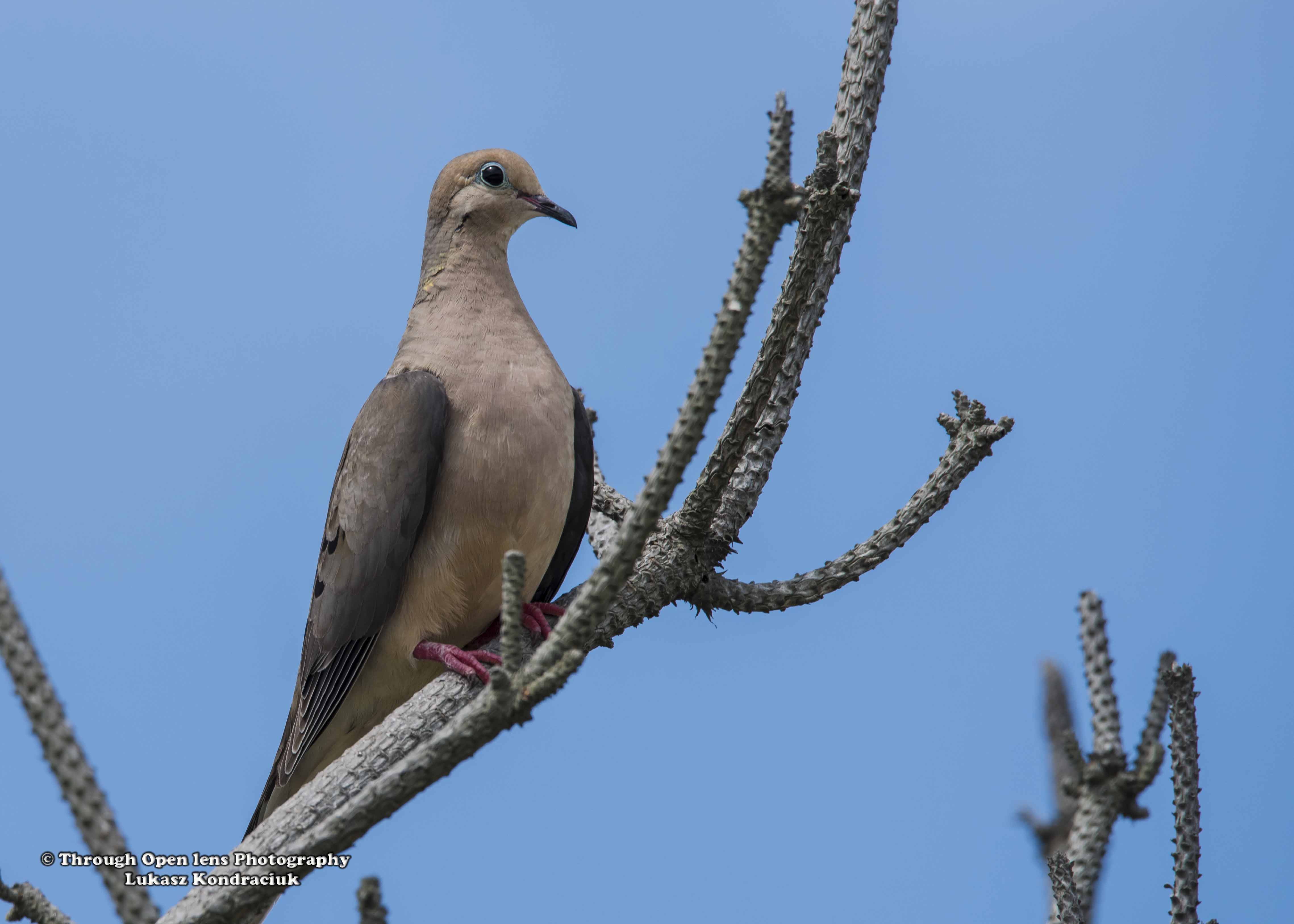
Mourning Dove 1

F/10.0, 1/400, ISO 160.

Mourning Dove

Why did the rubber chicken cross the road?

She wanted to stretch her legs.

Interesting Fact: Mourning Doves eat roughly 12 to 20 percent of their body weight per day, or 71 calories on average. ( https://www.allaboutbirds.org/guide/Mourning_Dove/lifehistory )

AHHHH! You Scared Me!

White-Tailed Deer 3

F/ 7.1, 1/200, ISO 200.

Why do male deer need braces?

Because they have buck teeth!

Interesting Fact: Adult white-tails have reddish-brown coats in summer which fade to a duller grayish-brown in winter. Male deer, called bucks, are easily recognizable in the summer and fall by their prominent set of antlers, which are grown annually and fall off in the winter. Only the bucks grow antlers, which bear a number of tines, or sharp points. During the mating season, also called the rut, bucks fight over territory by using their antlers in sparring matches. ( http://animals.nationalgeographic.com/animals/mammals/white-tailed-deer/ )


I Am Not Crazy… Well, Maybe I Am But You Got To Love Me.

Eastern Towhee 1

F/8.0, 1/250, ISO 250.

Eastern Towhee

Why was the math textbook so sad?

He had a lot of problems!

Interesting Fact: The Eastern Towhee and the very similar Spotted Towhee of western North America used to be considered the same species, the Rufous-sided Towhee. The two forms still occur together in the Great Plains, where they sometimes interbreed. This is a common evolutionary pattern in North American birds – a holdover from when the great ice sheets split the continent down the middle, isolating birds into eastern and western populations that eventually became new species. ( https://www.allaboutbirds.org/guide/Eastern_Towhee/lifehistory )

I Have Evil Plan

Chipmunk

F/6.3, 1/125, ISO 320.

Chipmunk

Two men went hunting. One had been an avid hunter; hunting all his life, the other man was a city boy; hunting for the first time.

The avid hunter told city boy to sit down and not make a sound. So he did.

But when the first man got 100 yards away, he heard a scream.

“I thought I told you to be quiet!” he said.

“I was when the snake bit me,” the man said.

“And I was when the bear attacked me. But when the two chipmunks crawled up my pant leg and said, ‘Should we eat or take them with us,’ I screamed.”

Interesting Fact: Although chipmunks hibernate, they do not store fat. Instead they slowly gnaw away at their summer bounty throughout the winter. ( http://animals.nationalgeographic.com/animals/mammals/chipmunk/ )

So What Are We Staring At?!

Great Black-backed Gull

F/13.0, 1/640, ISO 320.

Great Black-backed Gull  

What do you call a seagull when it flies over the bay?

A bagel.

Interesting Fact: This is the largest gull in the world. Its broad wings and powerful appearance give it a regal look that have impressed naturalists for years. In the words of one early observer: “It surely seemed to be a king among the gulls, a merciless tyrant over its fellows, the largest and strongest of its tribe. No weaker gull dared to intrude upon its feudal domain.” ( https://www.allaboutbirds.org/guide/Great_Black-backed_Gull/lifehistory )

Why You Looking At Me Like That?!

Happy 4th Of July!

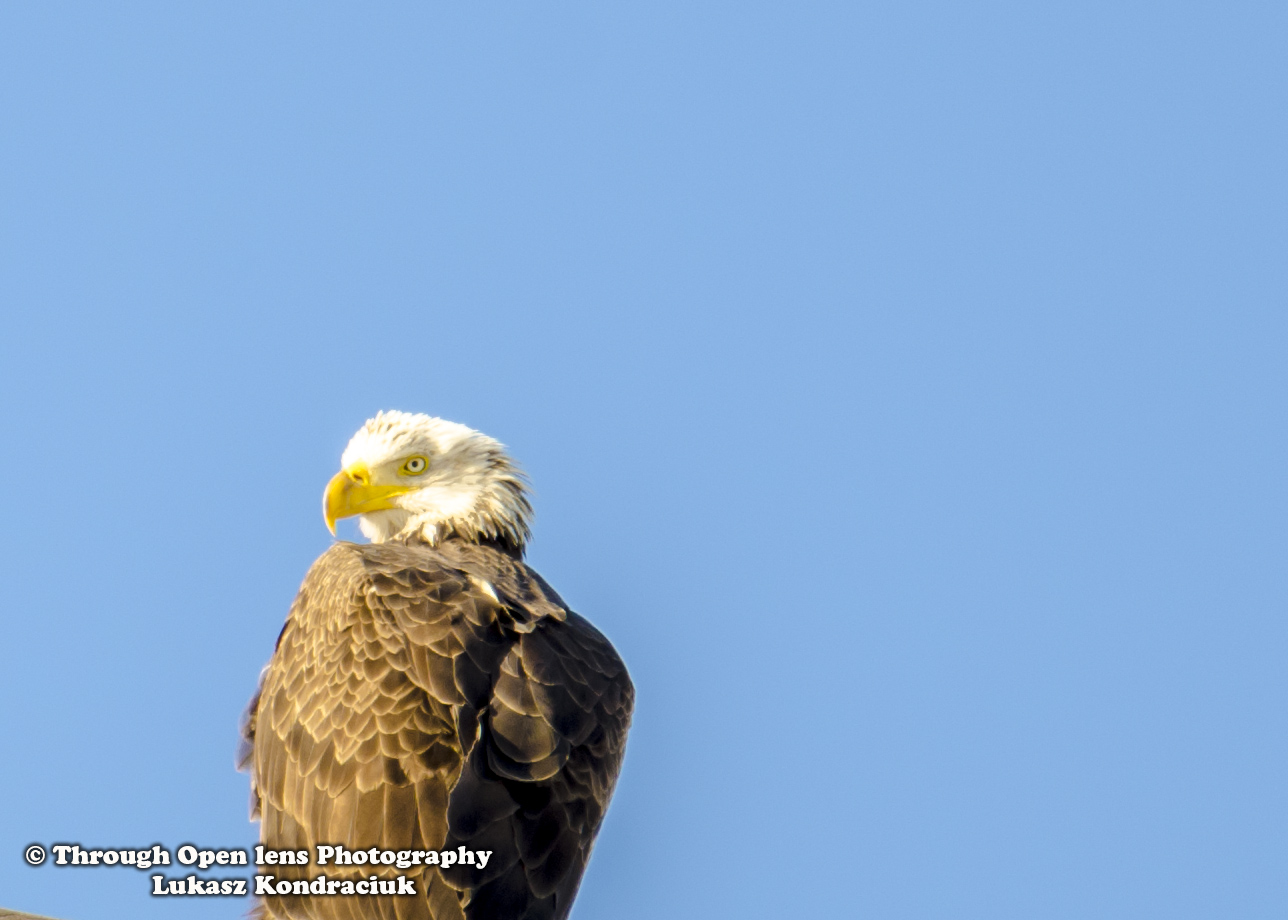
Bald Eagle

F/6.3, 1/320, ISO 200.

Bald Eagle

What do you call a sick eagle?

Ill-eagle!

Interesting Fact: Had Benjamin Franklin prevailed, the U.S. emblem might have been the Wild Turkey. In 1784, Franklin disparaged the national bird’s thieving tendencies and its vulnerability to harassment by small birds. “For my own part,” he wrote, “I wish the Bald Eagle had not been chosen the Representative of our Country. He is a Bird of bad moral Character. He does not get his Living honestly. … Besides he is a rank Coward: The little King Bird not bigger than a Sparrow attacks him boldly and drives him out of the District.”  ( https://www.allaboutbirds.org/guide/Bald_Eagle/lifehistory )