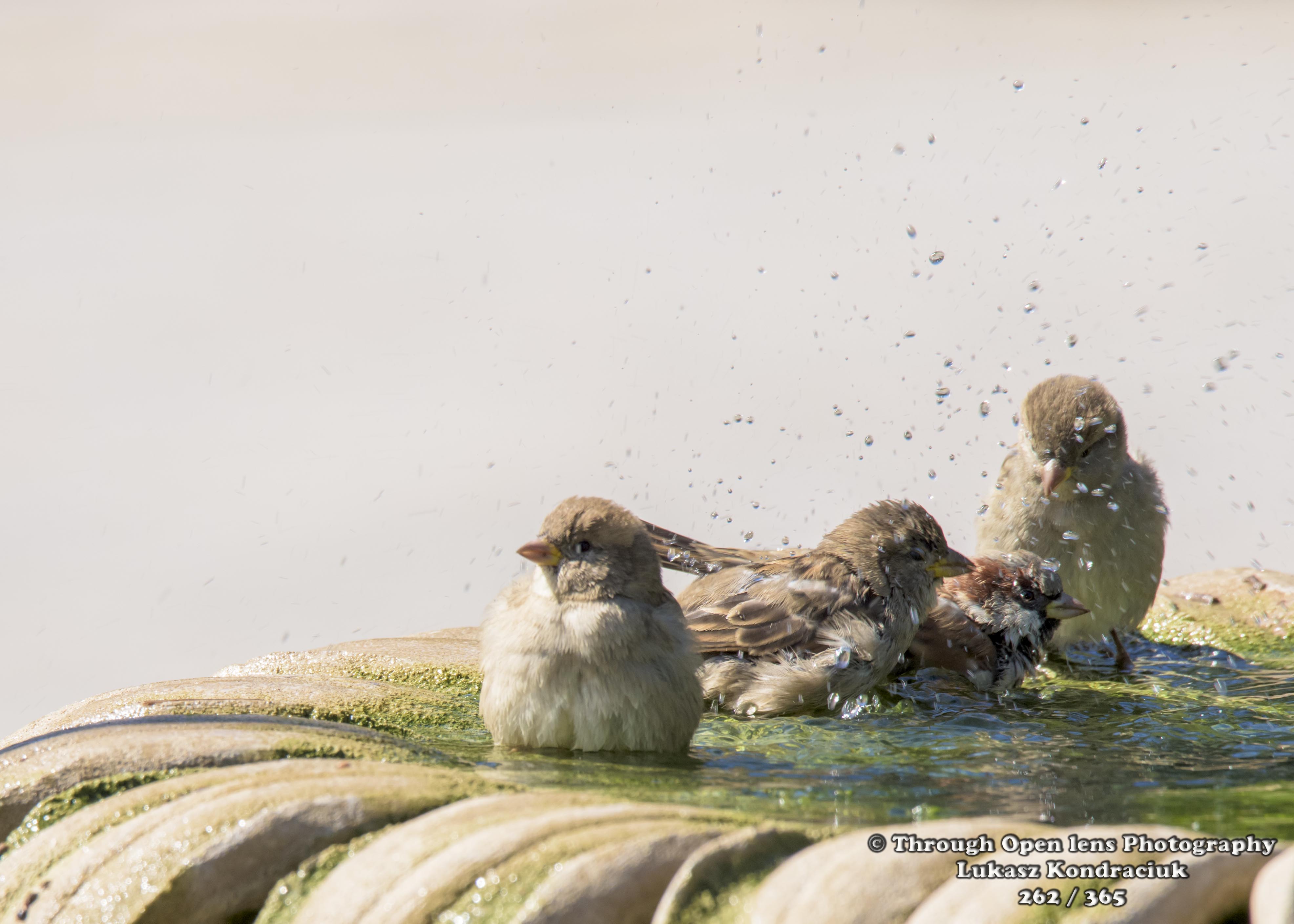
Pool Party!

House Sparrows

F/11.0, 1/400, ISO 400.

House Sparrows

Day 263 / 365

Two small time thieves had been sent by the Big Boss to steal a van load of goods from a bathroom suppliers. One stayed in the van as look out and the other went into the storeroom. Fifteen minutes went by, then half an hour, then an hour, and no sign of him. The look out finally grew impatient and went to look for his partner. Inside the store the two came face to face. “Where have you been?” demanded the worried look out “The boss told me to take a bath, but I couldn’t find the soap and a towel.”

Interesting Fact: House Sparrows in flocks have a pecking order much the way chickens in a farmyard do. You can begin to decipher the standings by paying attention to the black throats of the males. Males with larger patches of black tend to be older and dominant over males with less black. By wearing this information on their feathers, sparrows can avoid some fights and thereby save energy. ( http://www.allaboutbirds.org/guide/House_Sparrow/lifehistory )
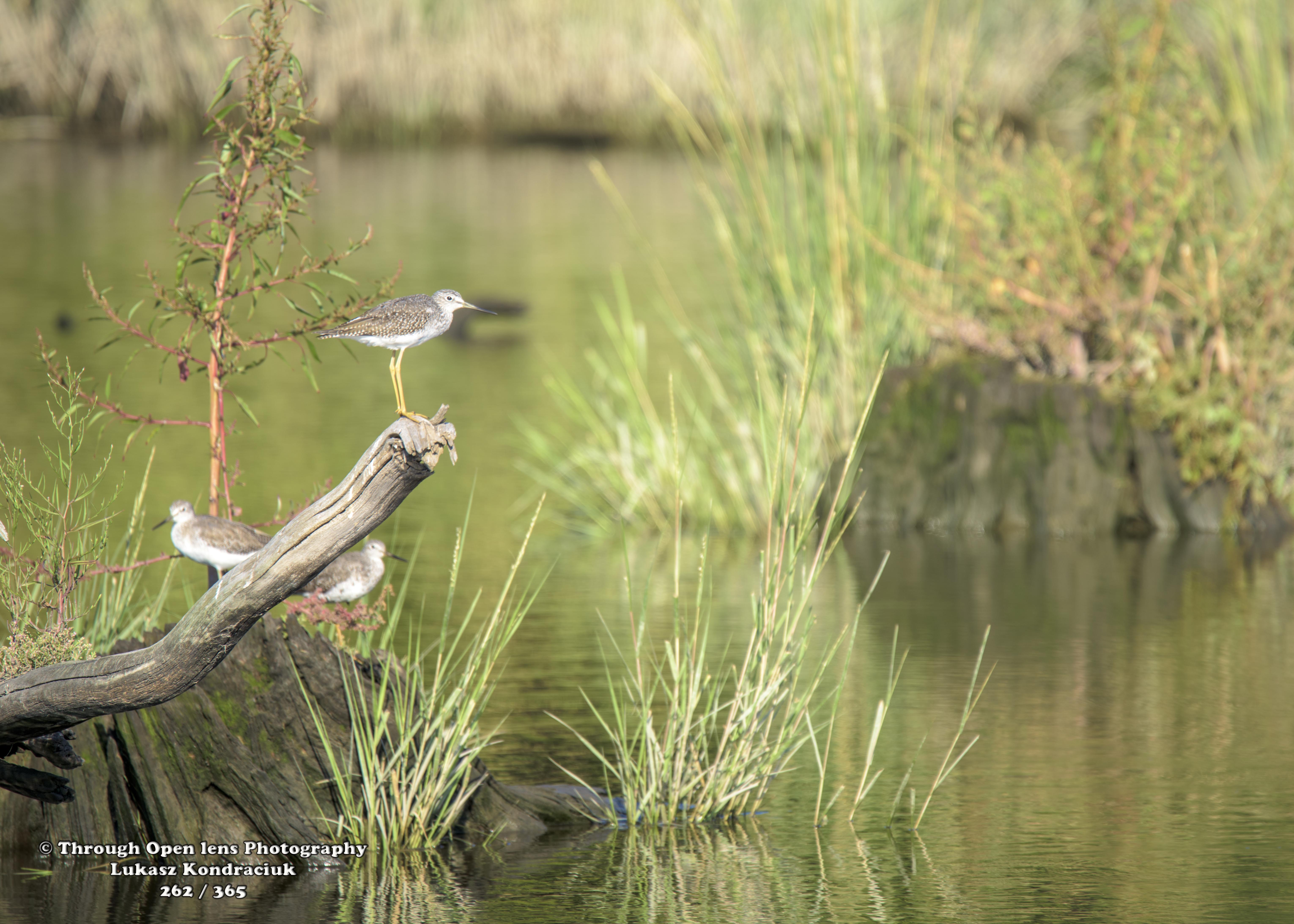
 

High Dive Competition

Greater Yellowlegs 3

F/7.1, 1/160, ISO 100.

Greater Yellowlegs

Day 262 / 365

A man met a gorgeous woman and knew immediately that he wanted to marry her. “But, we don’t know anything about each other,” she said.
“That doesn’t matter,” he replied. “We’ll learn about each other as we go along.”
So, she agreed. They married and went to a beautiful resort for their honeymoon.
One morning, as they were laying by the pool, he got up off of his towel, climbed up to the diving board, and did a two and a half tuck gainer. This was followed by three rotations in a jackknife position, where he straightened out and cut the water like a knife. After a few more demonstrations, he came back and lay down on the towel.
“Wow,” she said, “That was incredible!”
“I used to be an Olympic diving champion,” he explained. “See, I told you we’d learn more about each other as we went along.”
With that, she got up, jumped into the pool, and started swimming laps. After about thirty laps, she climbed back out and lay down on her towel, barely out of breath.
“That was amazing!” he exclaimed. “Were you an Olympic endurance swimmer?”
“No,” she replied, “”I was a hooker in Venice and worked both sides of the canal!”

Interesting Fact:  Although the Greater Yellowlegs is common and widespread, its low densities and tendency to breed in inhospitable, mosquito-ridden muskegs make it one of the least-studied shorebirds on the continent. ( http://www.allaboutbirds.org/guide/Greater_Yellowlegs/lifehistory )


Foggy Morning

foggy morning

F/5.6, 1/125, ISO 280.

Day 261 / 365

What cloud is so lazy because it will not get up?

Fog.

Interesting Fact: Fog begins to form when water vapor condenses into tiny liquid water droplets suspended in the air. The main ways water vapor is added to the air: wind convergence into areas of upward motion;[6] precipitation or virga falling from above;[7] daytime heating evaporating water from the surface of oceans, water bodies, or wet land;[8] transpiration from plants;[9] cool or dry air moving over warmer water;[10] and lifting air over mountains.[11] Water vapor normally begins to condense on condensation nuclei such as dust, ice, and salt in order to form clouds.[12][13] Fog, like its elevated cousin stratus, is a stable cloud deck which tends to form when a cool, stable air mass is trapped underneath a warm air mass. ( https://en.wikipedia.org/wiki/Fog )


Going Down Down Down

American Kestrel 2

F/6.3, 1/1250, ISO 400, Photoshop CS6.

American Kestrel

Day 260 / 365

Teacher: “What is the difference between a bird and fly?”
Student:  “Well…a bird can fly…..but a fly can’t bird.”

Interesting Fact: Unlike humans, birds can see ultraviolet light. This enables kestrels to make out the trails of urine that voles, a common prey mammal, leave as they run along the ground. Like neon diner signs, these bright paths may highlight the way to a meal—as has been observed in the Eurasian Kestrel, a close relative. ( http://www.allaboutbirds.org/guide/American_Kestrel/lifehistory )


Don’t Turn Around, Just Walk Away.

American Robin 1

F/ 6.3, 1/60, ISO 1600.

American Robin

Day 259 / 365

What did the cat say after eating two robins lying in the sun?

I just love baskin’ robins.

Interesting Fact: Robins eat different types of food depending on the time of day: more earthworms in the morning and more fruit later in the day. Because the robin forages largely on lawns, it is vulnerable to pesticide poisoning and can be an important indicator of chemical pollution. ( http://www.allaboutbirds.org/guide/American_Robin/lifehistory )


Move Along There’s Nothing To See Here!

Cooper's Hawk

F/6.3, 1/800, ISO 800.

Cooper’s Hawk

Day 258 / 365

“Look at that speed!” said one hawk to another as the jet fighter plane hurtled over their heads.

“Hmph!” snorted the other. “You would fly fast too if your tail was on fire!”

Interesting Fact: A Cooper’s Hawk captures a bird with its feet and kills it by repeated squeezing. Falcons tend to kill their prey by biting it, but Cooper’s Hawks hold their catch away from the body until it dies. They’ve even been known to drown their prey, holding a bird underwater until it stopped moving. ( http://www.allaboutbirds.org/guide/Coopers_Hawk/lifehistory )


You Make Me Blush!

House Finch

F/ 6.3, 1/640, ISO 800.

House Finch

Day 257 / 365

Why do birds lay eggs?

If they dropped them, they d break!

Interesting Fact: The House Finch was originally a bird of the western United States and Mexico. In 1940 a small number of finches were turned loose on Long Island, New York, after failed attempts to sell them as cage birds (“Hollywood finches”). They quickly started breeding and spread across almost all of the eastern United States and southern Canada within the next 50 years. ( http://www.allaboutbirds.org/guide/House_Finch/lifehistory )

I Don’t Think You Want To Pull His Finger

Skunk

F/6.3, 1/160, ISO 1600.

Skunk

Day 256 / 365

Have you heard the skunk joke?

You don’t want to; it really stinks!

Interesting Fact: Skunks are legendary for their powerful predator-deterrent—a hard-to-remove, horrible-smelling spray. A skunk’s spray is an oily liquid produced by glands under its large tail. To employ this scent bomb, a skunk turns around and blasts its foe with a foul mist that can travel as far as ten feet (three meters). ( http://animals.nationalgeographic.com/animals/mammals/skunk/ )

I Want To Fly Like An Eagle

American Kestrel 1

F/6.3, 1/800, ISO 800.

American Kestrel

Day 255 / 365

Why did the American Kestrel cross the road, roll in the mud, and cross back?

He was a dirty double-crosser!

Interesting Fact: When nature calls, nestling kestrels back up, raise their tails, and squirt feces onto the walls of the nest cavity. The feces dry on the cavity walls and stay off the nestlings. The nest gets to be a smelly place, with feces on the walls and uneaten parts of small animals on the floor. ( http://www.allaboutbirds.org/guide/American_Kestrel/lifehistory )


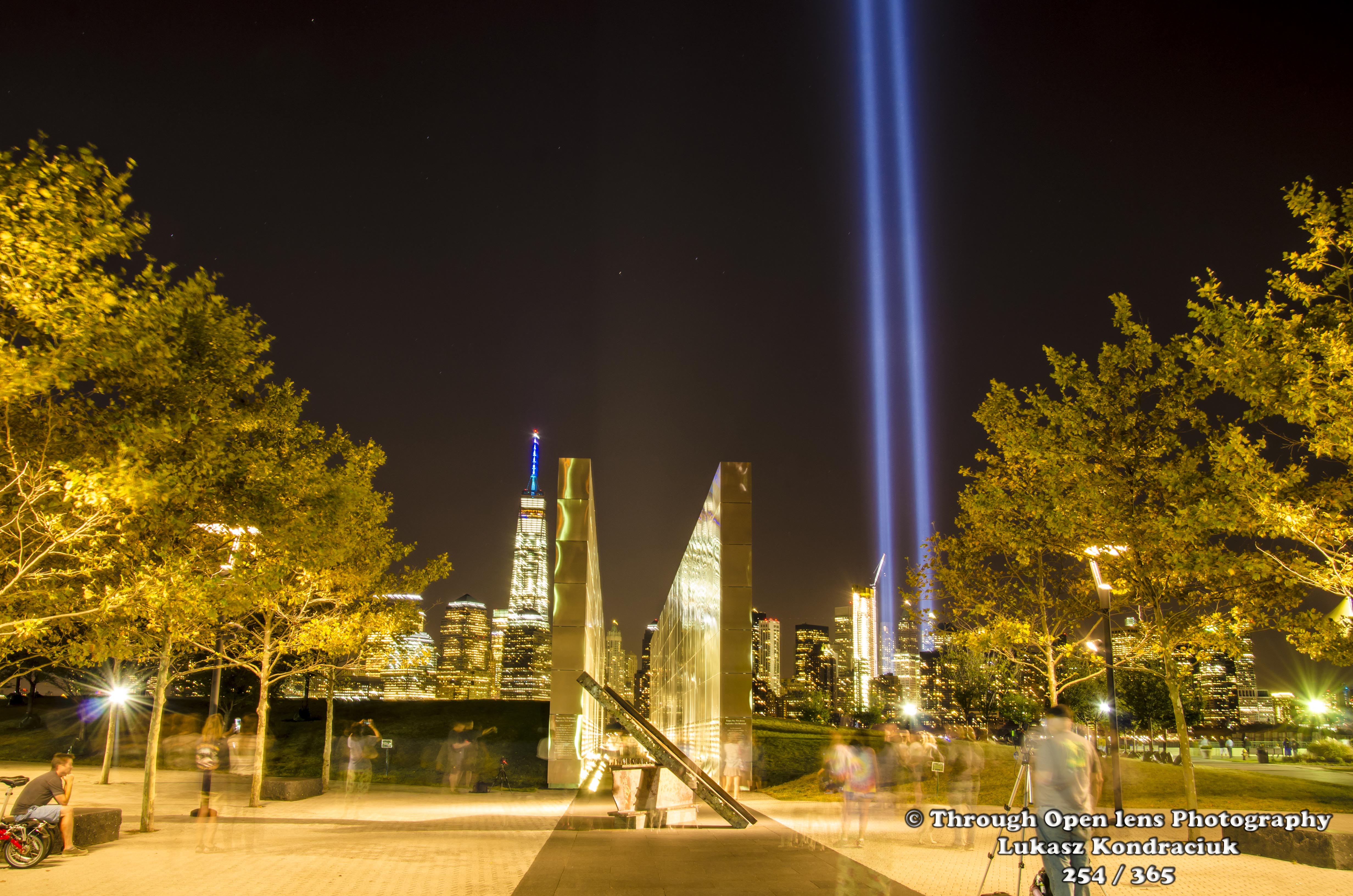
We Remember!

September 11

F/14.0, 30.0, ISO 100.

Day 254 / 365

God Bless all who lost their Lives. We Will Never Forget 9/11.

Interesting Fact:  September 11 is now remembered as Patriot Day in the US in memory of those killed. ( http://www.express.co.uk/life-style/top10facts/509590/Top-10-facts-about-9-11 )