The Water Is Fine Come On In!

American Coot

F/5.6, 1/500, ISO 360.

American Coots

Father: Why did you get such a low score in that exam?

Son: Absence!

Father: You were absent on the day of the exam?

Son: No but the boy who sits next to me was!

Interesting Fact: Although it swims like a duck, the American Coot does not have webbed feet like a duck. Instead, each one of the coot’s long toes has broad lobes of skin that help it kick through the water. The broad lobes fold back each time the bird lifts its foot, so it doesn’t impede walking on dry land, though it supports the bird’s weight on mucky ground. ( https://www.allaboutbirds.org/guide/American_Coot/lifehistory )
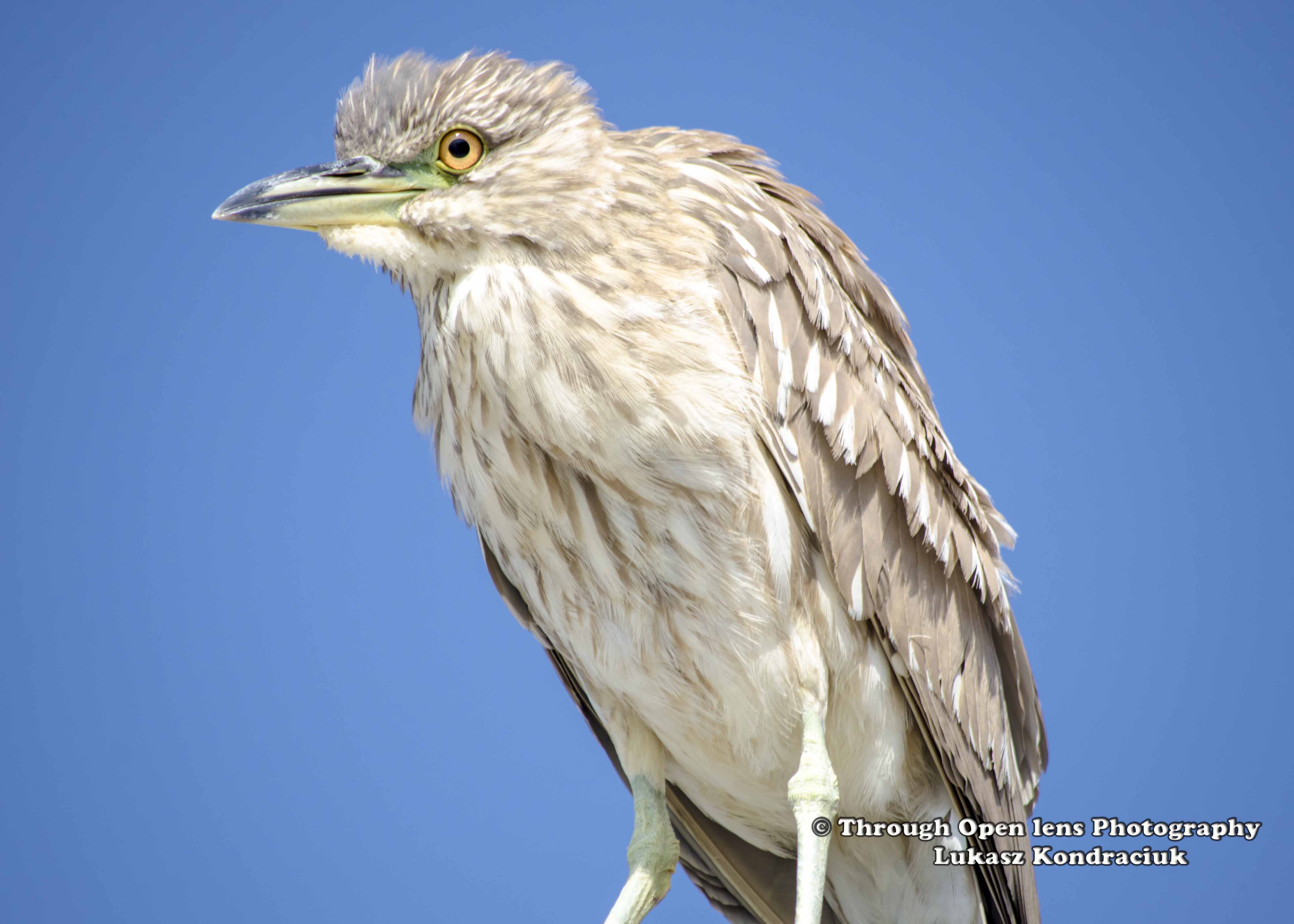
Look Into My Eyes, You Are Getting Sleepy!

Black-crowned Night-Heron 1

F/ 6.3, 1/640, ISO 200.

Black-Crowned Night-Heron ( Juvenile )

How do you wake up Lady gaga?

Poke her face.

Interesting Fact: The familiar evening sight and sound of the Black-crowned Night-Heron was captured in this description from Arthur Bent’s Life Histories of North American Marsh Birds: “How often, in the gathering dusk of evening, have we heard its loud, choking squawk and, looking up, have seen its stocky form, dimly outlined against the gray sky and propelled by steady wing beats, as it wings its way high in the air toward its evening feeding place in some distant pond or marsh!” ( https://www.allaboutbirds.org/guide/Black-crowned_Night-Heron/lifehistory )

Baby Let’s Fly Away

sunset flight

F/9.0, 1/1250, ISO 100.

A day without sunshine is like, well, night.

Interesting Fact: Neglecting atmospheric refraction and the Sun’s non-zero size, whenever and wherever sunset occurs, it is always in the northwest quadrant from the March equinox to the September equinox, and in the southwest quadrant from the September equinox to the March equinox. Sunsets occur almost exactly due west on the equinoxes for all viewers on Earth. Exact calculations of the azimuths of sunset on other dates are complex, but they can be estimated with reasonable accuracy by using the analemma. ( https://en.wikipedia.org/wiki/Sunset#Historically )

I Always Have To Deal With Paparazzis

White-Tailed Deer 1

F/5.6, 1/50, ISO 100.

White-Tailed Deer

Who did Bambi invite to his birthday party?

His nearest and deer-est friends.

Interesting Fact: White-tailed deer, the smallest members of the North American deer family, are found from southern Canada to South America. In the heat of summer they typically inhabit fields and meadows using clumps of broad-leaved and coniferous forests for shade. During the winter they generally keep to forests, preferring coniferous stands that provide shelter from the harsh elements. ( http://animals.nationalgeographic.com/animals/mammals/white-tailed-deer/ )

This Is A Private Area No Peeking!

Red-Eared Slider Turtle 1

F/5.6, 1/200, ISO 100.

Red-Eared Slider Turtle

What do you get when you cross a turtle and a flu shot?

A slow-poke.

Interesting Fact: The red-eared slider (Trachemys scripta elegans), also known as the red-eared terrapin, is a semiaquatic turtle belonging to the family Emydidae. It is a subspecies of the pond slider. It is the most popular pet turtle in the United States and is also popular as a pet in the rest of the world.[2] It has, therefore, become the most commonly traded turtle in the world.[3] It is native to the southern United States and northern Mexico, but has become established in other places because of pet releases, and has become an invasive species in many areas, where it outcompetes native species. The red-eared slider is included in the list of the world’s 100 most invasive species[4] published by the IUCN. ( https://en.wikipedia.org/wiki/Red-eared_slider )


Go Away! I’m Really Focused Here

Great Blue Heron 3

F/7.1, 1/800, ISO 200.

Great Blue Heron

Two neighbors are talking to each other.
First neighbor: Do you know that my dog is so smart, he waits for the newspaper to drop at the doorstep and then delivers it to me?
Second neighbor: Of course, I know that very well.
First neighbor: Really, well then, how?
Second neighbor: My dog came and told me.

Interesting Fact: Great Blue Herons congregate at fish hatcheries, creating potential problems for the fish farmers. A study found that herons ate mostly diseased fish that would have died shortly anyway. Sick fish spent more time near the surface of the water where they were more vulnerable to the herons.  ( https://www.allaboutbirds.org/guide/Great_Blue_Heron/lifehistory )

Can’t Touch Me!

Black-crowned Night-Heron

F/6.3, 1/250 ISO 100.

Black-crowned Night-Heron

Why was the math textbook so sad?

He had a lot of problems!

Interesting Fact: Young Black-crowned Night-Herons leave the nest at the age of 1 month but cannot fly until they are 6 weeks old. They move through the vegetation on foot, joining up in foraging flocks at night. ( https://www.allaboutbirds.org/guide/Black-crowned_Night-Heron/lifehistory )

I Shall Give You Light!

Sandy Hook Light

F/9.0, 1/320, ISO 100.

Sandy Hook Light

What’s the difference between a lighthouse keeper and a jeweler?

One watches seas, and the other sees watches.

Interesting Fact: The light was built to aid mariners entering the southern end of the New York Harbor. It was originally called New York Lighthouse because it was funded through a New York Assembly lottery and a tax on all ships entering the Port of New York. The lighthouse has endured an attempt to destroy it as an aid to British navigation by Benjamin Tupper,[5] and a subsequent occupancy of British soldiers during the Revolutionary War.  ( https://en.wikipedia.org/wiki/Sandy_Hook_Light )

That Will Sting!

hornets

F/ 5.6, 1/500, ISO 400.

Hornets

Wife: “What are you doing?”
Husband : Nothing.
Wife : “Nothing…? You’ve been reading our marriage
certificate for an hour.”
Husband : “I was looking for the expiration date.”

Interesting Fact: Hornets (insects in the genera Vespa and Provespa) are the largest of the eusocial wasps, and are similar in appearance to their close relatives yellow jackets. Some species can reach up to 5.5 cm (2.2 in) in length. They are distinguished from other vespine wasps by the relatively large top margin of the head and by the rounded segment of the abdomen just behind the waist. Worldwide, there are 22 recognized species of Vespa,[1] and three species of Provespa, which are unique amongst hornets in being nocturnal.[2] Most species only occur in the tropics of Asia, though the European hornet (Vespa crabro), is widely distributed throughout Europe, Russia, North America and Northeast Asia. Wasps native to North America in the genus Dolichovespula are commonly referred to as hornets (e.g. baldfaced hornets), but are actually yellowjackets. ( https://en.wikipedia.org/wiki/Hornet )

Bee Mine!

bee

F/ 8.0, 1/200, ISO 100.

Bumblebee

Why did the bee get married?

Because he found his honey

Interesting Fact: Queen hibernates during the winter and starts laying eggs in the spring. She lays 8 to 12 eggs at a time. Young bumblebees emerge after 21 days.  ( http://www.softschools.com/facts/animals/bumblebee_facts/582/ )