Duck Punk!

hooded merganser female

F/6.3, 1/500, ISO 250.

Hooded Merganser ( Female )

Duck Week Continues!

What do ducks like to eat?

Quackers!

Interesting Fact: Hooded Mergansers find their prey underwater by sight. They can actually change the refractive properties of their eyes to improve their underwater vision. In addition, they have an extra eyelid, called a “nictitating membrane,” which is transparent and helps protect the eye during swimming, like a pair of goggles. ( https://www.allaboutbirds.org/guide/Hooded_Merganser/lifehistory )
That’s Quacktastic !

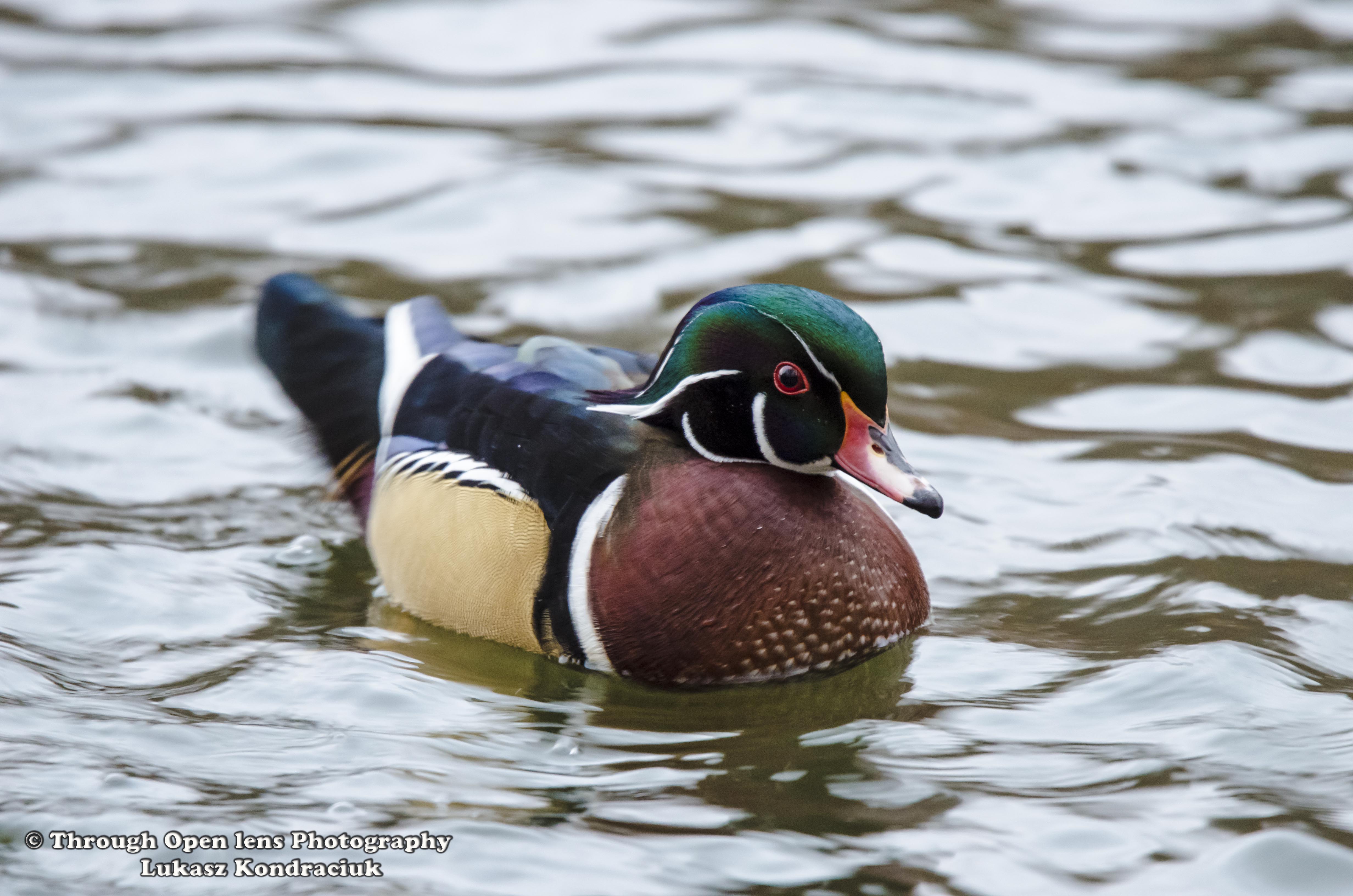
Wood Duck

F/ 6.3, 1/40, ISO 1600.

Wood Duck

Duck Week Continues!

What do you get when you cross a duck with a computer?

A quackintosh.

Interesting Fact: Wood Ducks pair up in January, and most birds arriving at the breeding grounds in the spring are already paired. The Wood Duck is the only North American duck that regularly produces two broods in one year. ( https://www.allaboutbirds.org/guide/Wood_Duck/lifehistory )

Duck Duck Duck Duck Duck Duck Goose!

Duck Duck Goose

F/ 6.3, 1/ 640, ISO 2800.

Green-Winged Teal

Canada Goose

Day 362 / 365

Where did the duck go when he was sick?

To the Ducktor

Interesting Fact: The American and Eurasian forms of the Green-winged Teal were formerly considered different species. The Eurasian teal differ from the American by lacking the vertical white shoulder stripe and having a horizontal white stripe along the back instead. Eurasian teal show up casually each year along both the Pacific and Atlantic coasts. ( https://www.allaboutbirds.org/guide/Green-winged_Teal/lifehistory )

Eat So You Will Be Big And Strong!

White-throated Sparrow

F/ 6.3, 1/60, ISO 320.

White-throated Sparrow

Day 353 / 365

A couple of birds made a date to meet on the ledge outside the tenth floor of a skyscraper. The female was there on time, but the male arrived an hour late. “Where were you? I was worried sick.” “It was such nice day, I decided to walk.”
Interesting Fact: Although they look nothing alike and aren’t particularly closely related, the White-throated Sparrow and the Dark-eyed Junco occasionally mate and produce hybrids. The resulting offspring look like grayish, dully marked White-throated Sparrows with white outer tail feathers. ( https://www.allaboutbirds.org/guide/White-throated_Sparrow/lifehistory )

This is Maverick, I feel the need… …the need for speed!

Red-tailed Hawk

F/ 6.3, 1/800, ISO 800.

Red-tailed Hawk

Day 333 / 365

Why did the Hawk cross the road?

To eat the chicken!

Interesting Fact: Red-tailed Hawks have been seen hunting as a pair, guarding opposite sides of the same tree to catch tree squirrels. ( https://www.allaboutbirds.org/guide/Red-tailed_Hawk/lifehistory )


Keep Your Head Up!

Carolina Wren

F/6.3, 1/800, ISO 800.

Carolina Wren

Day 332 / 365

What is a parrot’s favorite game?

Hide and Speak!

Interesting Fact: Unlike other wren species in its genus, only the male Carolina Wren sings the loud song. In other species, such as the Stripe-breasted Wren of Central America, both members of a pair sing together. The male and female sing different parts, and usually interweave their songs such that they sound like a single bird singing. ( https://www.allaboutbirds.org/guide/Carolina_Wren/lifehistory )


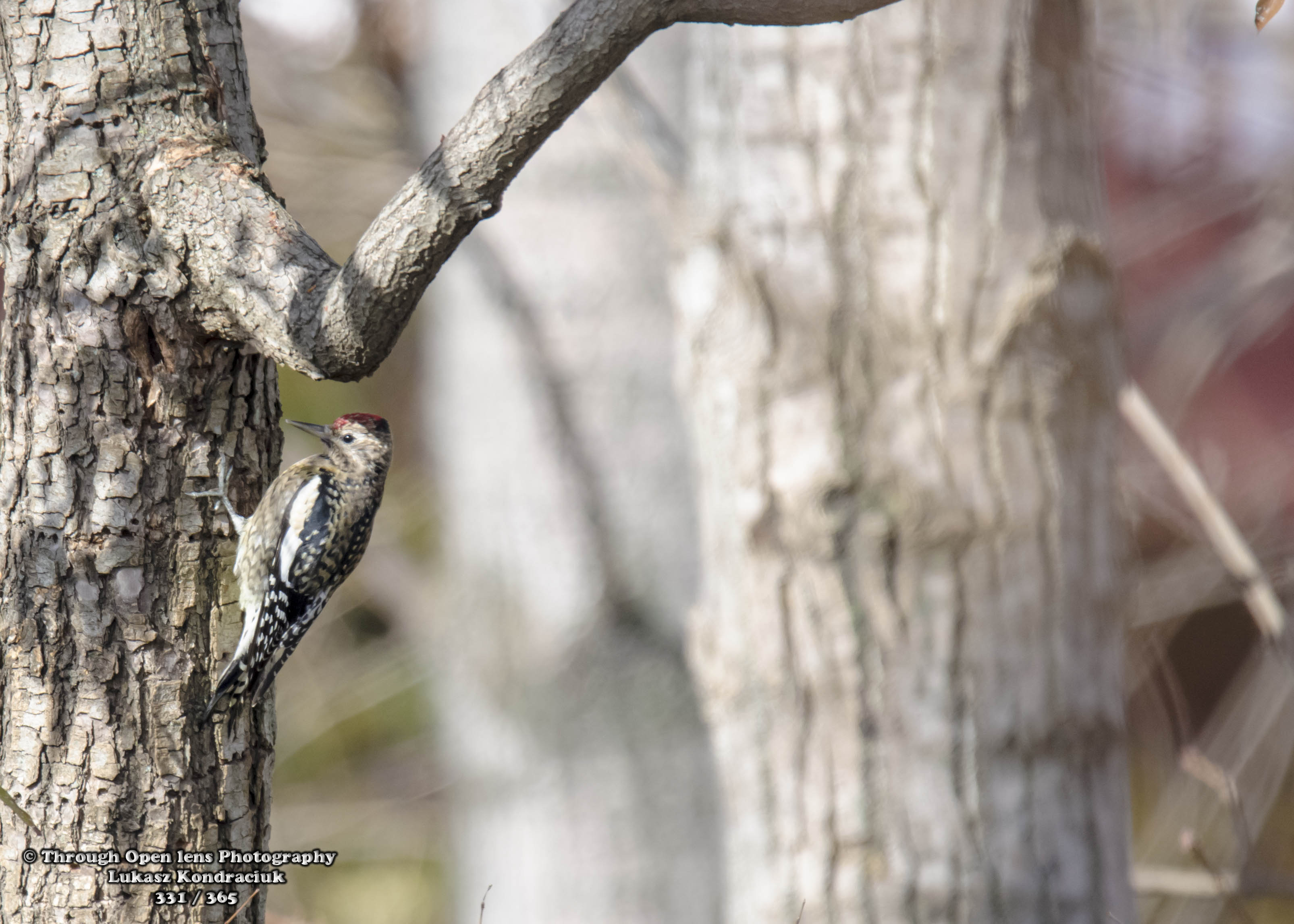
You Would Think, It Would Be Another Knock Knock Joke

Yellow Bellied Sapsucker

F/ 6.3, 1/800, ISO 800.

Yellow Bellied Sapsucker

Day 331 / 365

What do you get if you cross a parrot with a woodpecker?

A bird that talks in mores code!

Interesting Fact: The sapwells made by Yellow-bellied Sapsuckers attract hummingbirds, which also feed off the sap flowing from the tree. In some parts of Canada, Ruby-throated Hummingbirds rely so much on sapwells that they time their spring migration with the arrival of sapsuckers. Other birds as well as bats and porcupines also visit sapsucker sapwells. ( https://www.allaboutbirds.org/guide/Yellow-bellied_Sapsucker/lifehistory )

I’m Glad I’m Not a Turkey!

Dark-eyed Junco

HAPPY THANKSGIVING EVERONE!!!

F/ 6.3, 1/640, ISO 900.

Dark-eyed Junco 

Day 330 / 365

Chicken talking to the turkey: “Only Thanksgiving and Christmas??? You’re lucky, with us its any Sunday.”

Interesting Fact: Juncos are the “snowbirds” of the middle latitudes. Over most of the eastern United States, they appear as winter sets in and then retreat northward each spring. Some juncos in the Appalachian Mountains remain there all year round, breeding at the higher elevations. These residents have shorter wings than the migrants that join them each winter. Longer wings are better suited to flying long distances, a pattern commonly noted among other studies of migratory vs. resident species.  ( https://www.allaboutbirds.org/guide/Dark-eyed_Junco/lifehistory )

How Much Wood Could A Woodchuck Chuck, If A Woodchuck Could Chuck Wood?

Groundhog

F/6.3, 1/60, ISO 640.

Groundhog (Woodchuck)

Day 302 / 365

How much wood would a woodchuck chuck if a woodchuck could chuck wood?

He would chuck, he would, as much as he could, and chuck as much wood as a woodchuck would if a woodchuck could chuck wood.

Interesting Fact: Groundhogs hibernate meaning they spend their winters sleeping.  They hibernate from October to late March. Groundhogs prepare for hibernation by putting on weight.  Then they live off the fat until they come out of hibernation. ( http://www.kidsplayandcreate.com/fun-groundhog-facts-and-groundhog-day-facts-for-kids/ )


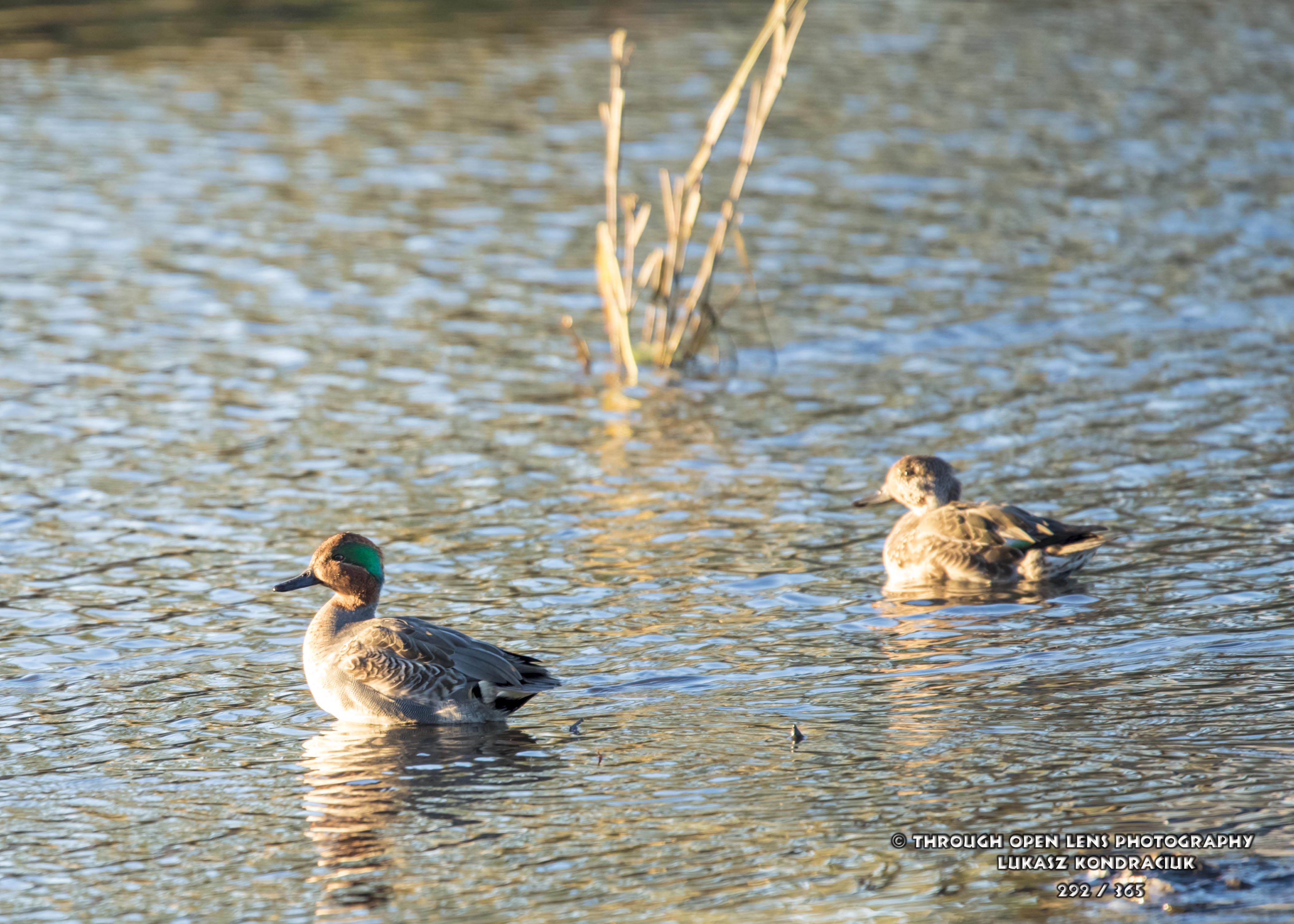
Hooked On Quack!

Green-winged Teal

F/6.3, 1/160, ISO 500.

Green-Winged Teal

Day 292 / 365

A duck, a skunk and a deer went out for dinner at a restaurant one night.

When it came time to pay,

the skunk didn’t have a scent,

the deer didn’t have a buck,

so they put the meal on the duck’s bill.

Interesting Fact: Green-winged Teal, more than any other species of duck, prefer to seek food on mud flats. Where mud flats are lacking, they prefer shallow marshes or temporarily flooded agricultural lands. They usually eat vegetative matter consisting of seeds, stems, and leaves of aquatic and emergent vegetation. ( http://www.withmephotographyblog.com/8-interesting-facts-about-the-green-winged-teal )