My Pillow Just Slapped Me Upside The Head And Said What Are You Still Doing Up!

Griffith Observatory

F/10.0, 30.0, ISO 100.

Griffith Observatory

California Week

How can you go without sleep for seven days and not be tired?

Sleep at night.

Interesting Fact: 3,015 acres (12.20 km2) of land surrounding the observatory was donated to the City of Los Angeles by Colonel Griffith J. Griffith on December 16, 1896.[1] In his will Griffith donated funds to build an observatory, exhibit hall, and planetarium on the donated land. Griffith’s objective was to make astronomy accessible by the public, as opposed to the prevailing idea that observatories should be located on remote mountaintops and restricted to scientists. ( https://en.wikipedia.org/wiki/Griffith_Observatory#History )

Fly Free!!

Black Skimmer

F/5.6, 1/250, ISO 400.

Black Skimmer

California Week

How long do chickens work?

Around the cluck!

Interesting Fact: Although the Black Skimmer is active throughout the day, it is largely crepuscular (active in the dawn and dusk) and even nocturnal. Its use of touch to catch fish lets it be successful in low light or darkness.  ( https://www.allaboutbirds.org/guide/Black_Skimmer/lifehistory )

California Dreaming

Santa Monica Pier

F/ 16.0, 10.0, ISO 100.

Santa Monica Pier  

California Week

What did the boat say to the pier?

What’s up, dock?

Interesting Fact: Santa Monica has had several piers over the years; however, the current Santa Monica Pier is actually two adjoining piers that long had separate owners. The long, narrow Municipal Pier opened September 9, 1909,[4] primarily to carry sewer pipes beyond the breakers,[5] and had no amenities. The short, wide adjoining Pleasure Pier to the south, a.k.a. Newcomb Pier, was built in 1916 by Charles I. D. Looff and his son Arthur, amusement park pioneers.[6] Attractions on the Pleasure Pier eventually included the Santa Monica Looff Hippodrome building (which now houses the current carousel and is listed on the National Register of Historic Places), the Blue Streak Racer wooden roller coaster (which was purchased from the defunct Wonderland amusement park in San Diego), the Whip, merry-go-rounds, Wurlitzer organs, and a funhouse. ( https://en.wikipedia.org/wiki/Santa_Monica_Pier#History )

That Water Is Freezing I Am Not Going In!

Black-Crowned Night-Heron

F/9.0, 1/1250, ISO 800.

Black-Crowned Night-Heron

What do you get if you cross a parrot with a shark?

A bird that will talk you ear off!

Interesting Fact: A breeding Black-crowned Night-Heron will brood any chick that is placed in its nest. The herons apparently don’t distinguish between their own offspring and nestlings from other parents. ( https://www.allaboutbirds.org/guide/Black-crowned_Night-Heron/lifehistory )

The Mighty Duck!

Hooded Merganser

F/6.3, 1/200, ISO 1600.

Hooded Merganser

What did the duck carry his schoolbooks in?

His Quackpack!

Interesting Fact: Hooded Merganser ducklings leave their nest cavity within 24 hours of hatching. First, their mother checks the area around the nest and calls to the nestlings from ground level. From inside the nest, the little fluffballs scramble up to the entrance hole and then flutter to the ground, which may be 50 feet or more below them. In some cases they have to walk half a mile or more with their mother to the nearest body of water. ( https://www.allaboutbirds.org/guide/Hooded_Merganser/lifehistory )


I Fly So High, I Can Reach The Sky!

Rough Legged Hawk

F/ 8.0, 1/320, ISO 100.

Rough Legged Hawk ( Dark  )

Is chicken soup good for your health?

Not if you’re the chicken!

Interesting Fact: Nonbreeding adults eat about a quarter-pound of food daily, or a tenth of their body mass—that’s about 5 small mammals. Nestlings start feeding themselves (swallowing lemmings whole) at about 16 days old. It’s estimated that a brood of 2 nestlings requires 26 pounds of food during the 40 days between hatching to fledging. ( https://www.allaboutbirds.org/guide/Rough-legged_Hawk/lifehistory )


Spot Me If You Can!

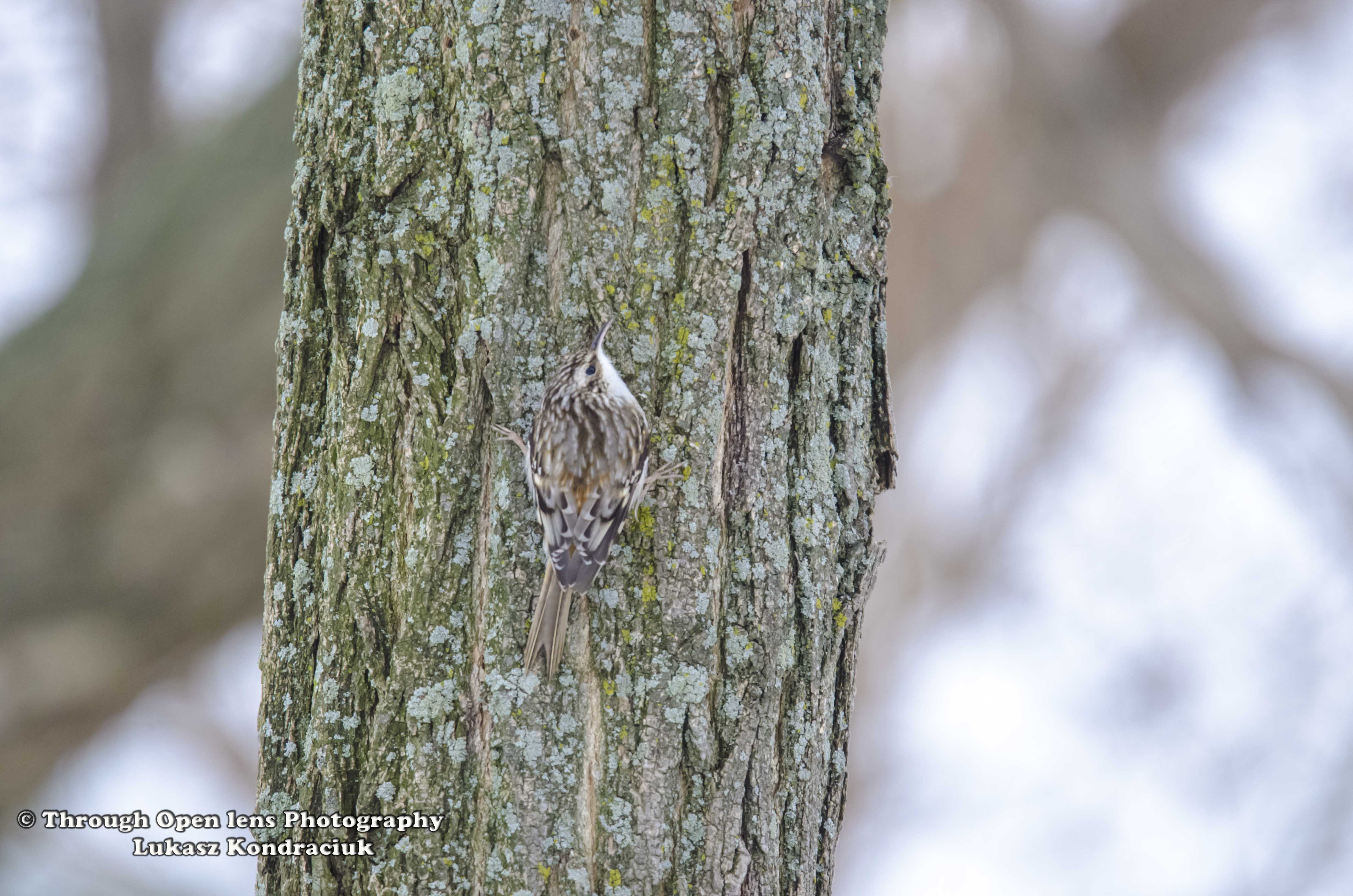
Brown Creeper

F/6.3, 1/200, ISO 1600.

Brown Creeper

What do you call a bunch of chickens playing hide-and-seek?

Fowl play!

Interesting Fact: Brown Creepers burn an estimated 4–10 calories (technically, kilocalories) per day, a tiny fraction of a human’s daily intake of about 2,000 kilocalories. By eating a single spider, a creeper gains enough energy to climb nearly 200 feet vertically. ( https://www.allaboutbirds.org/guide/Brown_Creeper/lifehistory )

Monkey Say Monkey Do!

Snow monkey

Happy Chinese New Year!!  The Year Of The MONKEY.

F/5.6, 1/200, ISO 800.

Snow Monkey

A policeman in the big city stops a man in a car with a monkey in the front seat.
“What are you doing with that monkey?” He exclaimed, “You should take it to the zoo.”
The following week, the same policeman sees the same man with the monkey again in the front seat, with both of them wearing sunglasses. The policeman pulls him over.
“I thought you were going to take that monkey to the zoo!”
The man replied, “I did. We had such a good time we are going to the beach this weekend!”


Interesting Fact: Snow monkeys are known as the one of the cleverest species of monkeys. They learn easily and share new skills and hunting (or eating) techniques with other members of the troop and with their offspring.  ( http://www.softschools.com/facts/animals/snow_monkey_facts/106/ )


Interesting Fact: Chinese New Year is an important Chinese festival celebrated at the turn of the traditional lunisolar Chinese calendar. It is also known as the Spring Festival, the literal translation of the modern Chinese name. Celebrations traditionally run from the evening preceding the first day, to the Lantern Festival on the 15th day of the first calendar month. The first day of the New Year falls on the new moon between 21 January and 20 February.[2] In 2016, the first day of Chinese New Year falls on Monday, February 8th. ( https://en.wikipedia.org/wiki/Chinese_New_Year#History )


I Will Wait For You!

Great Blue Heron 1

F/ 5.0, 1/125, ISO 800.

Great Blue Heron

Why did the chicken cross the road half way?

He wanted to lay it on the line!

Interesting Fact:  Despite their impressive size, Great Blue Herons weigh only 5 to 6 pounds thanks in part to their hollow bones—a feature all birds share. ( https://www.allaboutbirds.org/guide/Great_Blue_Heron/lifehistory )

LA LA LA LA!!!

White throated Sparrow

F/ 9.0, 1/320, ISO 320.

White-throated Sparrow

What do you call a rooster who wakes you up at the same time every morning ?

An alarm cluck !

Interesting Fact: White-throated Sparrows typically nest on or near the ground. Occasional nests are built up to 15 feet off the ground in conifers. Usually, these nests are second attempts after a pair has had a ground nest robbed by a predator. ( https://www.allaboutbirds.org/guide/White-throated_Sparrow/lifehistory )