It’s About To Get Real!

common merganser female and swan

F/ 7.1, 1/1600, ISO 400.

Common Merganser ( Female )

Mute Swan 

Duck Week Continues!

What do baby swans dance to?

Cygnet-ure-tunes!

Interesting Fact: Young Common Mergansers leave their nest hole within a day or so of hatching. The flightless chicks leap from the nest entrance and tumble to the forest floor. The mother protects the chicks, but they catch all of their own food. They start by diving for aquatic insects and switch over to fish at about 12 days old. ( https://www.allaboutbirds.org/guide/Common_Merganser/lifehistory )
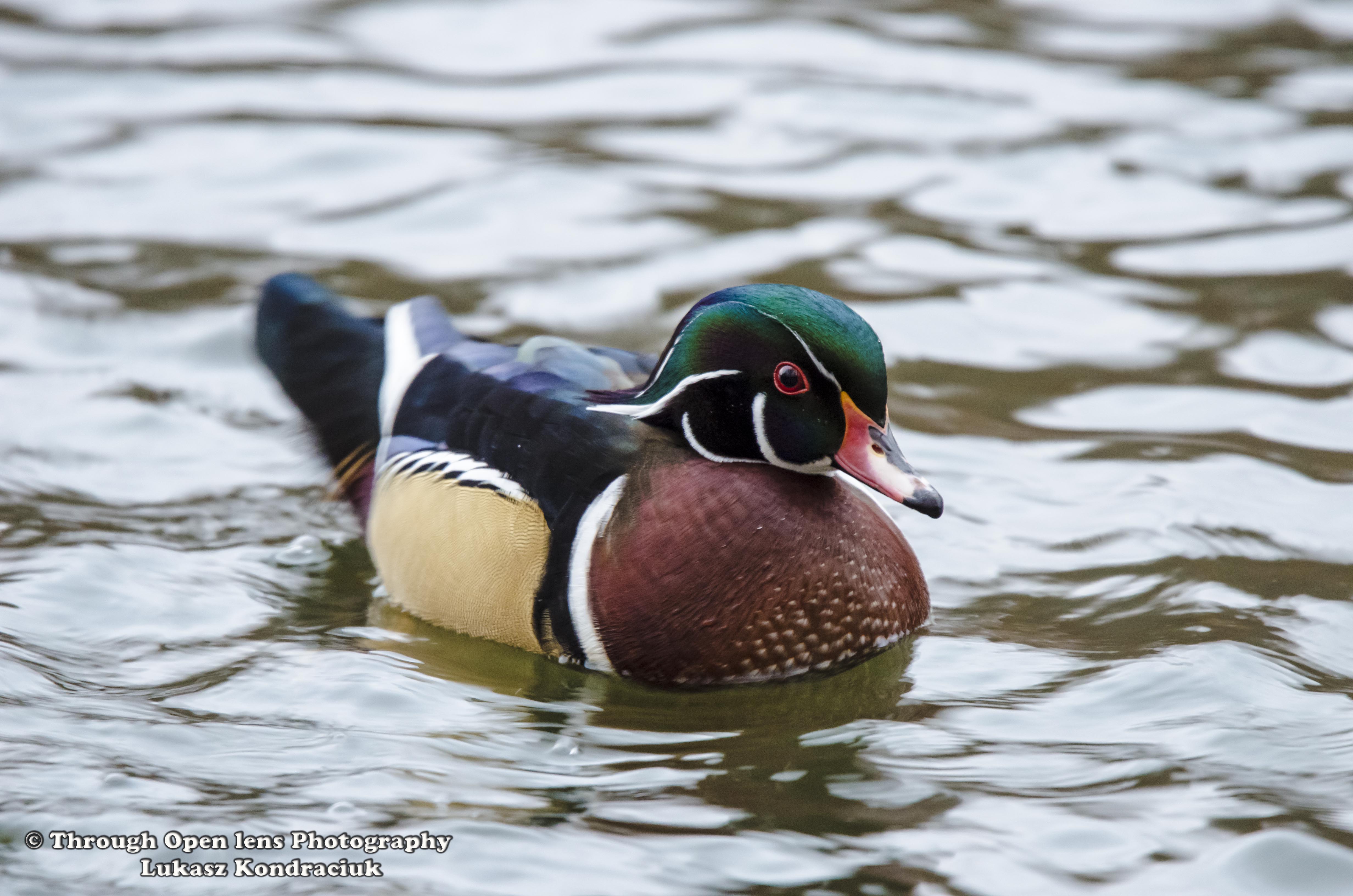
That’s Quacktastic !

Wood Duck

F/ 6.3, 1/40, ISO 1600.

Wood Duck

Duck Week Continues!

What do you get when you cross a duck with a computer?

A quackintosh.

Interesting Fact: Wood Ducks pair up in January, and most birds arriving at the breeding grounds in the spring are already paired. The Wood Duck is the only North American duck that regularly produces two broods in one year. ( https://www.allaboutbirds.org/guide/Wood_Duck/lifehistory )

Click! Click! Snap!

cartoon photography

F/16.0, 1/60, ISO 160.

Day 350 / 365

Top ten reasons to date a photographer:

  1. They work well in the dark
  2. They’re used to funny smells
  3. They make things develop
  4. They work well on many settings
  5. They know how to focus
  6. They can make big things look small and small things look big
  7. They work well from many different angles
  8. They zoom in and out. And in and out and in and out and in and out…
  9. They shoot in many different locations
  10. They can find the beauty in anything

Interesting Fact: Color photography is almost as old as black-and-white, with early experiments including John Herschel‘s Anthotype prints in 1842, the pioneering work of Louis Ducos du Hauron in the 1860s, and the Lippmann process unveiled in 1891, but for many years color photography remained little more than a laboratory curiosity. It first became a widespread commercial reality with the introduction of Autochrome plates in 1907, but the plates were very expensive and not suitable for casual snapshot-taking with hand-held cameras. The mid-1930s saw the introduction of Kodachrome and Agfacolor Neu, the first easy-to-use color films of the modern multi-layer chromogenic type. These early processes produced transparencies for use in slide projectors and viewing devices, but color prints became increasingly popular after the introduction of chromogenic color print paper in the 1940s. The needs of the motion picture industry generated a number of special processes and systems, perhaps the best-known being the now-obsolete three-strip Technicolor process. ( https://en.wikipedia.org/wiki/Photograph#History )


This is Maverick, I feel the need… …the need for speed!

Red-tailed Hawk

F/ 6.3, 1/800, ISO 800.

Red-tailed Hawk

Day 333 / 365

Why did the Hawk cross the road?

To eat the chicken!

Interesting Fact: Red-tailed Hawks have been seen hunting as a pair, guarding opposite sides of the same tree to catch tree squirrels. ( https://www.allaboutbirds.org/guide/Red-tailed_Hawk/lifehistory )


Keep Your Head Up!

Carolina Wren

F/6.3, 1/800, ISO 800.

Carolina Wren

Day 332 / 365

What is a parrot’s favorite game?

Hide and Speak!

Interesting Fact: Unlike other wren species in its genus, only the male Carolina Wren sings the loud song. In other species, such as the Stripe-breasted Wren of Central America, both members of a pair sing together. The male and female sing different parts, and usually interweave their songs such that they sound like a single bird singing. ( https://www.allaboutbirds.org/guide/Carolina_Wren/lifehistory )


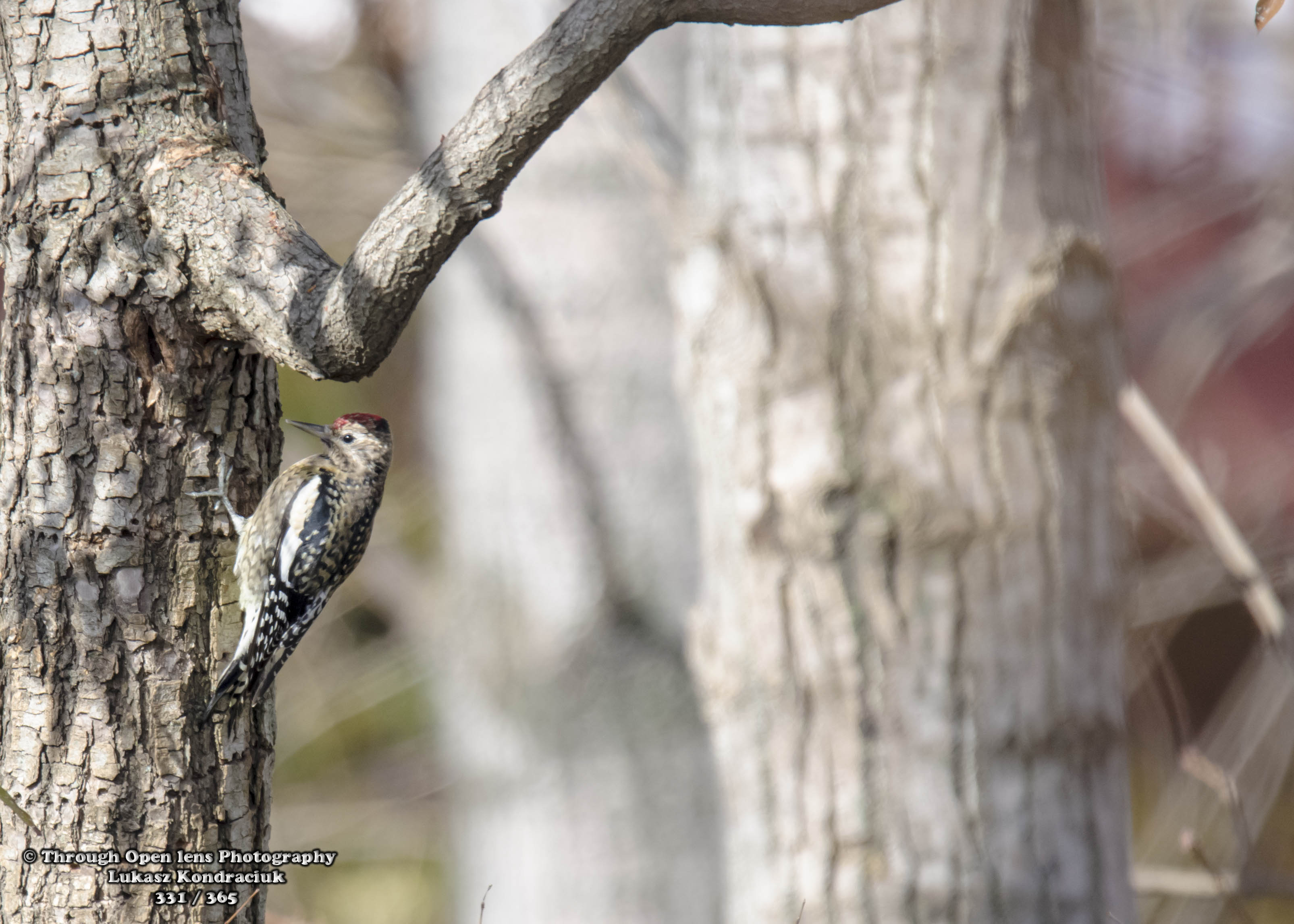
You Would Think, It Would Be Another Knock Knock Joke

Yellow Bellied Sapsucker

F/ 6.3, 1/800, ISO 800.

Yellow Bellied Sapsucker

Day 331 / 365

What do you get if you cross a parrot with a woodpecker?

A bird that talks in mores code!

Interesting Fact: The sapwells made by Yellow-bellied Sapsuckers attract hummingbirds, which also feed off the sap flowing from the tree. In some parts of Canada, Ruby-throated Hummingbirds rely so much on sapwells that they time their spring migration with the arrival of sapsuckers. Other birds as well as bats and porcupines also visit sapsucker sapwells. ( https://www.allaboutbirds.org/guide/Yellow-bellied_Sapsucker/lifehistory )

I’m Just Hanging Out

Golden-crowned Kinglet

F/6.3, 1/500, ISO 800.

Golden-crowned Kinglet

Day 289 / 365

When is the best time to buy birds?

When they’re going cheap!

Interesting Fact: The tiny Golden-crowned Kinglet is hardier than it looks, routinely wintering in areas where nighttime temperatures can fall below –40° Fahrenheit. ( https://www.allaboutbirds.org/guide/Golden-crowned_Kinglet/lifehistory )

Foggy Morning

foggy morning

F/5.6, 1/125, ISO 280.

Day 261 / 365

What cloud is so lazy because it will not get up?

Fog.

Interesting Fact: Fog begins to form when water vapor condenses into tiny liquid water droplets suspended in the air. The main ways water vapor is added to the air: wind convergence into areas of upward motion;[6] precipitation or virga falling from above;[7] daytime heating evaporating water from the surface of oceans, water bodies, or wet land;[8] transpiration from plants;[9] cool or dry air moving over warmer water;[10] and lifting air over mountains.[11] Water vapor normally begins to condense on condensation nuclei such as dust, ice, and salt in order to form clouds.[12][13] Fog, like its elevated cousin stratus, is a stable cloud deck which tends to form when a cool, stable air mass is trapped underneath a warm air mass. ( https://en.wikipedia.org/wiki/Fog )


Going Down Down Down

American Kestrel 2

F/6.3, 1/1250, ISO 400, Photoshop CS6.

American Kestrel

Day 260 / 365

Teacher: “What is the difference between a bird and fly?”
Student:  “Well…a bird can fly…..but a fly can’t bird.”

Interesting Fact: Unlike humans, birds can see ultraviolet light. This enables kestrels to make out the trails of urine that voles, a common prey mammal, leave as they run along the ground. Like neon diner signs, these bright paths may highlight the way to a meal—as has been observed in the Eurasian Kestrel, a close relative. ( http://www.allaboutbirds.org/guide/American_Kestrel/lifehistory )


Don’t Turn Around, Just Walk Away.

American Robin 1

F/ 6.3, 1/60, ISO 1600.

American Robin

Day 259 / 365

What did the cat say after eating two robins lying in the sun?

I just love baskin’ robins.

Interesting Fact: Robins eat different types of food depending on the time of day: more earthworms in the morning and more fruit later in the day. Because the robin forages largely on lawns, it is vulnerable to pesticide poisoning and can be an important indicator of chemical pollution. ( http://www.allaboutbirds.org/guide/American_Robin/lifehistory )