Party On My Log!

Double-crested Cormorants

F/ 6.3, 1/500, ISO 320.

Double-crested Cormorants

Day 230 / 365

Which side of the Cormorant has the most feathers?

The outside.

Interesting Fact: Cormorants often stand in the sun with their wings spread out to dry. They have less preen oil than other birds, so their feathers can get soaked rather than shedding water like a duck’s. Though this seems like a problem for a bird that spends its life in water, wet feathers probably make it easier for cormorants to hunt underwater with agility and speed. ( http://www.allaboutbirds.org/guide/Double-crested_Cormorant/lifehistory#at_food )


Hungry Much!

First course meal.  Crab.

Double-crested Cormorant

F/ 6.3, 1/1000, ISO 500.

Double-crested Cormorant

Day 163 / 365

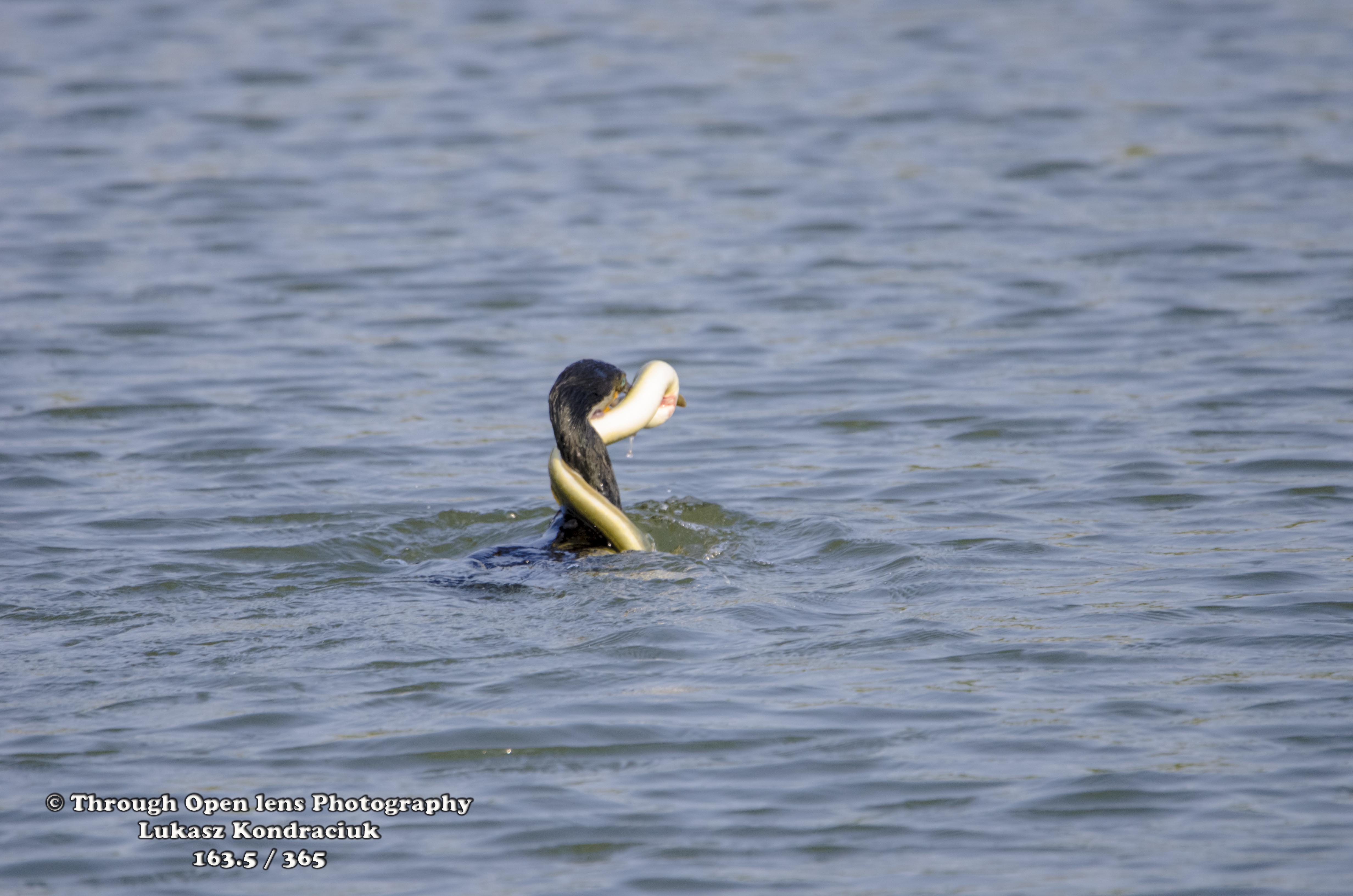
Second course meal.  Eel.

Double-crested Cormorant 1

F/6.3,  1/1000, ISO 720.

Don’t forget, you are what you eat.

Interesting Fact: A cormorant’s diet is almost all fish, with just a few insects, crustaceans, or amphibians. They eat a wide variety of fish (more than 250 species have been reported), and they have impressive fishing technique: diving and chasing fish underwater with powerful propulsion from webbed feet. The tip of a cormorant’s upper bill is shaped like a hook, which is helpful for catching prey. When cormorants happen to catch a crustacean like a crayfish, they exhibit a little flair in eating it—hammering the prey on the water to shake its legs off, then flipping it in the air and catching it headfirst for easy swallowing. ( http://www.allaboutbirds.org/guide/Double-crested_Cormorant/lifehistory#at_food )