It’s The Little Things That Makes Life Big

F/5.0, 1/60, ISO 320.

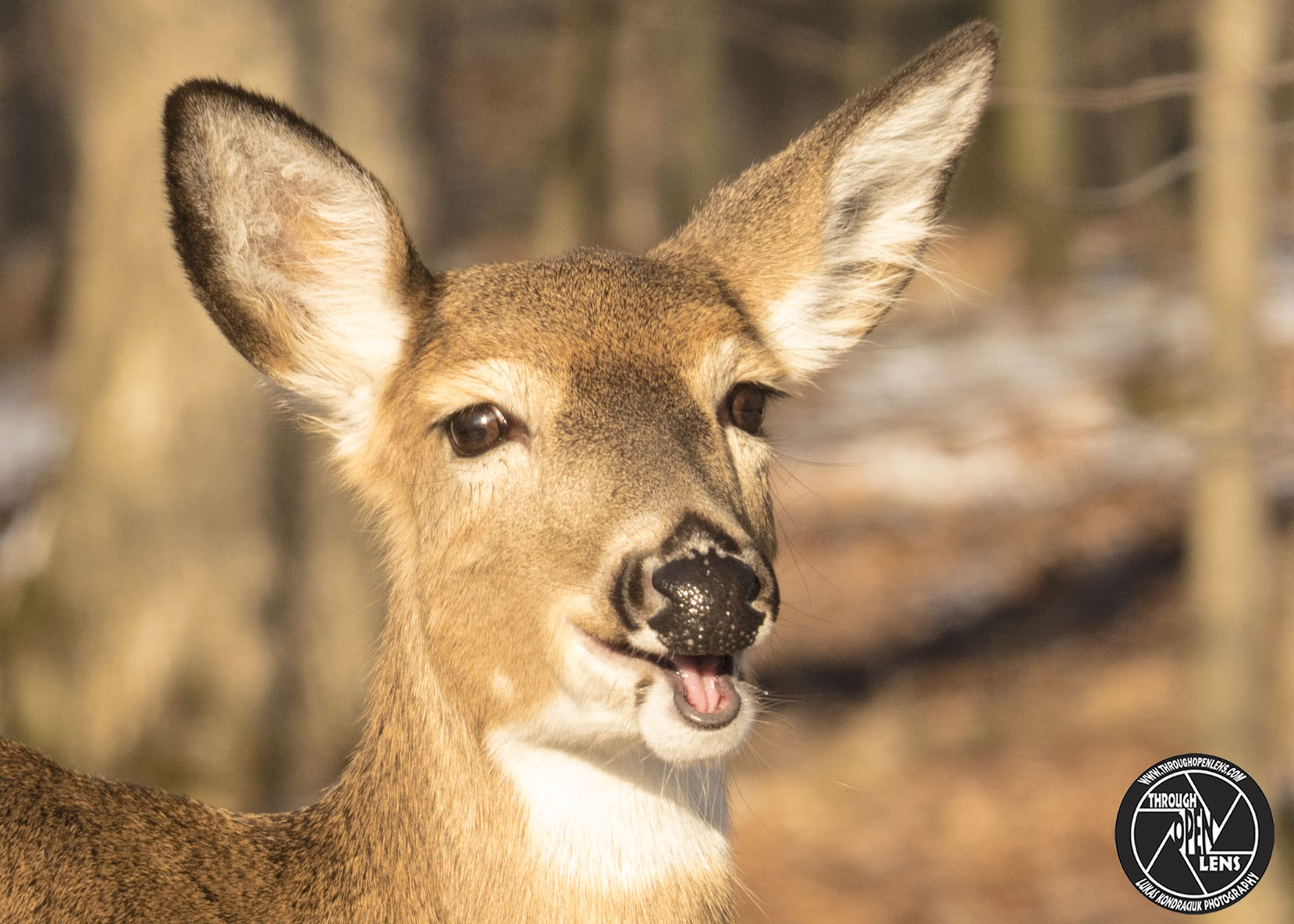
White-Tailed Deer Fawn

How do you save a deer during hunting season?

You hang on for deer life.

Interesting Fact: White-tailed deer hide their fawns on the forest floor or in tall grass to keep them safe. ( http://www.nationalgeographic.com/animals/mammals/w/white-tailed-deer/ )

Dear Life, When I Said ” Can My Day Get Any Worst” It Was A Rhetorical Question Not A Challenge.

F/6.3, 1/250, ISO 800.

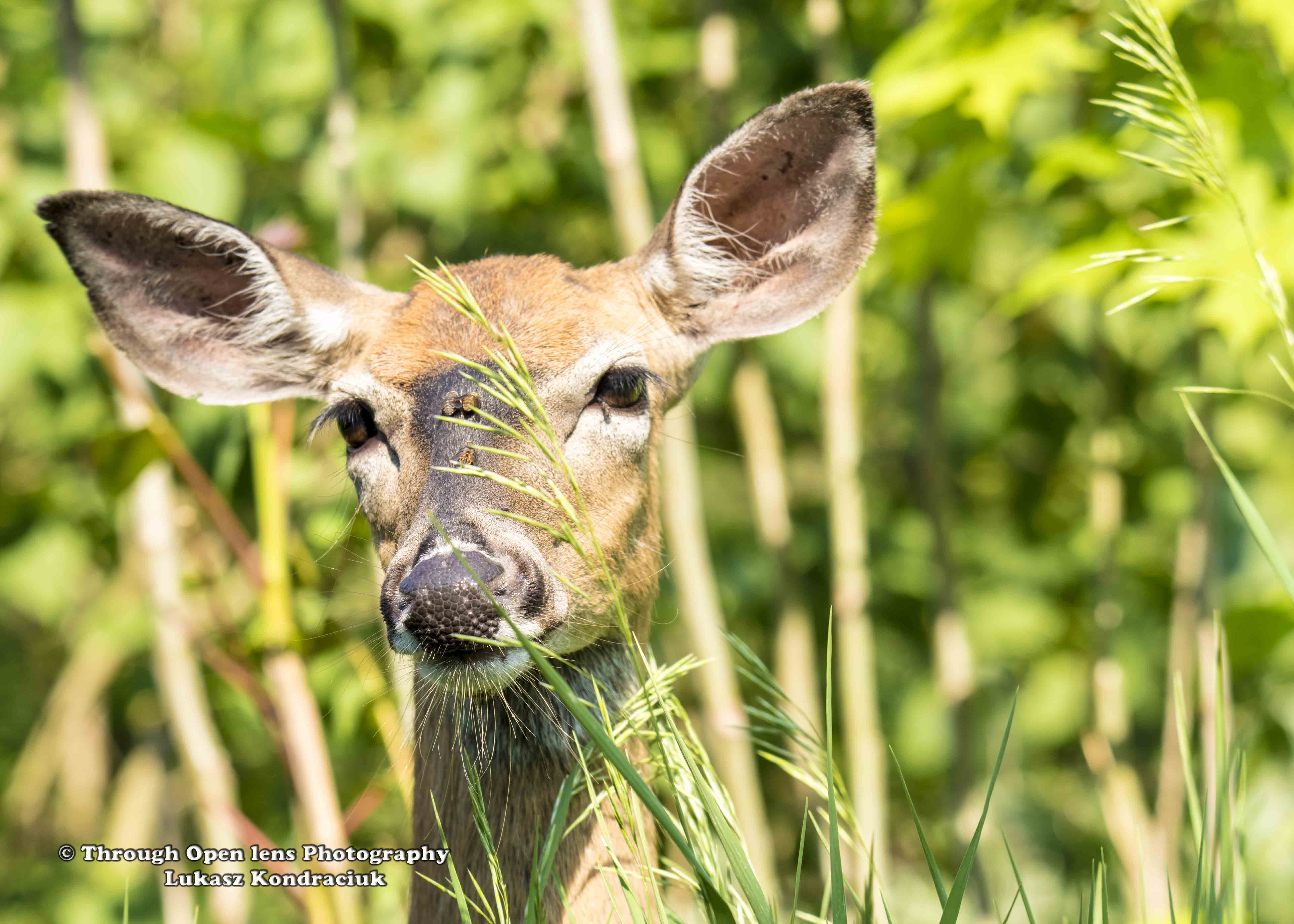
White-Tailed Deer ( Fawn )

Which branch of the military do babies join?

The infantry!

Interesting Fact: White tailed deer can run as fast as 36 mph, jump as high as 8 1/2 feet, and leap as far as 30 feet. They are also very good swimmers. ( https://www.brighthub.com/environment/science-environmental/articles/48142.aspx )


All Good Things Are Wild And Free

white-tailed-deer-buck

F/6.3, 1/100, ISO 200.

White-Tailed Deer

What is the difference between beer nuts and deer nuts?

Beer nuts cost a buck twenty-five. Deer nuts are under a buck!

Interesting Fact: The male white tailed deer, buck, normally weighs about 130-300 pounds. The female, doe, weighs about 90-200 pounds. The average height is 3 feet. ( http://www.brighthub.com/environment/science-environmental/articles/48142.aspx )


Hey Handsome!

F/9.0, 1/320, ISO 250.

White-Tailed Deer

Did you hear the joke about the butter?

I do not think I should tell you because you might spread it around…

Interesting Fact: Males compete for the opportunity of breeding females. Sparring among males determines a dominance hierarchy.[61] Bucks attempt to copulate with as many females as possible, losing physical condition, since they rarely eat or rest during the rut. The general geographical trend is for the rut to be shorter in duration at increased latitude. Many factors determine how intense the “rutting season” will be; air temperature is a major one. Any time the temperature rises above 40 °F (4 °C), the males do much less traveling looking for females, else they will be subject to overheating or dehydrating. Another factor for the strength in rutting activity is competition. If numerous males are in a particular area, then they compete more for the females. If fewer males or more females are present, then the selection process will not need to be as competitive. ( https://en.wikipedia.org/wiki/White-tailed_deer )

I See What You Did There!

White-Tailed Deer 2

F/8.0, 1/250, ISO 250.

White-Tailed Deer

Teacher: Who answers my next question, can go home.
One boy throws his bag out the window.
Teacher: Who just threw that?
Boy: Me and I’m going home now.

Interesting Fact: In the wild, white-tails, particularly the young, are preyed upon by bobcats, mountain lions, and coyotes. They use speed and agility to outrun predators, sprinting up to 30 miles (48 kilometers) per hour and leaping as high as 10 feet (3 meters) and as far as 30 feet (9 meters) in a single bound. ( http://animals.nationalgeographic.com/animals/mammals/white-tailed-deer/ )

I Always Have To Deal With Paparazzis

White-Tailed Deer 1

F/5.6, 1/50, ISO 100.

White-Tailed Deer

Who did Bambi invite to his birthday party?

His nearest and deer-est friends.

Interesting Fact: White-tailed deer, the smallest members of the North American deer family, are found from southern Canada to South America. In the heat of summer they typically inhabit fields and meadows using clumps of broad-leaved and coniferous forests for shade. During the winter they generally keep to forests, preferring coniferous stands that provide shelter from the harsh elements. ( http://animals.nationalgeographic.com/animals/mammals/white-tailed-deer/ )

Look Over Here!

White-Tailed Deer

F/6.3, 1/200, ISO 720.

White-Tailed Deer

What do you get when you cross Bambi with a ghost?

Bamboo.

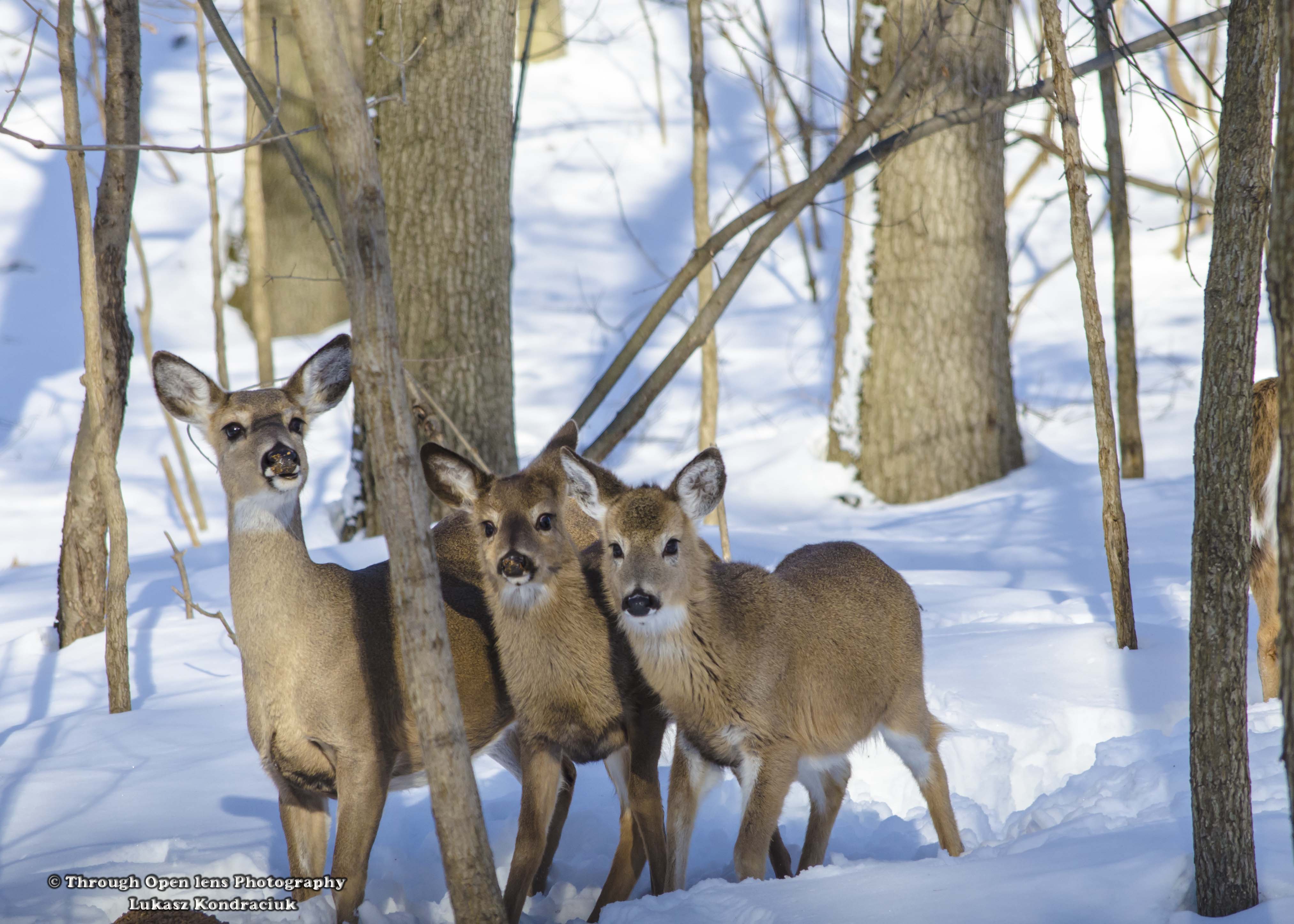
Interesting Fact: Female deer, called does, give birth to one to three young at a time, usually in May or June and after a gestation period of seven months. Young deer, called fawns, wear a reddish-brown coat with white spots that helps them blend in with the forest. ( http://animals.nationalgeographic.com/animals/mammals/white-tailed-deer/ )

Im Quite Fawned Of You My Deer

deer

F/6.3, 1/640, ISO 200.

Deer

Two hunters were dragging their dead deer back to their car. Another hunter approached pulling his along too.
“Hey, I don’t want to tell you how to do something … but I can tell you that it’s much easier if you drag the deer in the other direction. Then the antlers won’t dig into the ground.”
After the third hunter left, the two decided to try it.
A little while later one hunter said to the other, “You know, that guy was right. This is a lot easier!”
“Yeah, but we’re getting farther from the truck,” the other added.

Interesting Fact:  “White-tailed” refers to the white underside of the deer’s tail, which it displays and wags when it senses danger. ( http://animals.nationalgeographic.com/animals/mammals/white-tailed-deer/ )