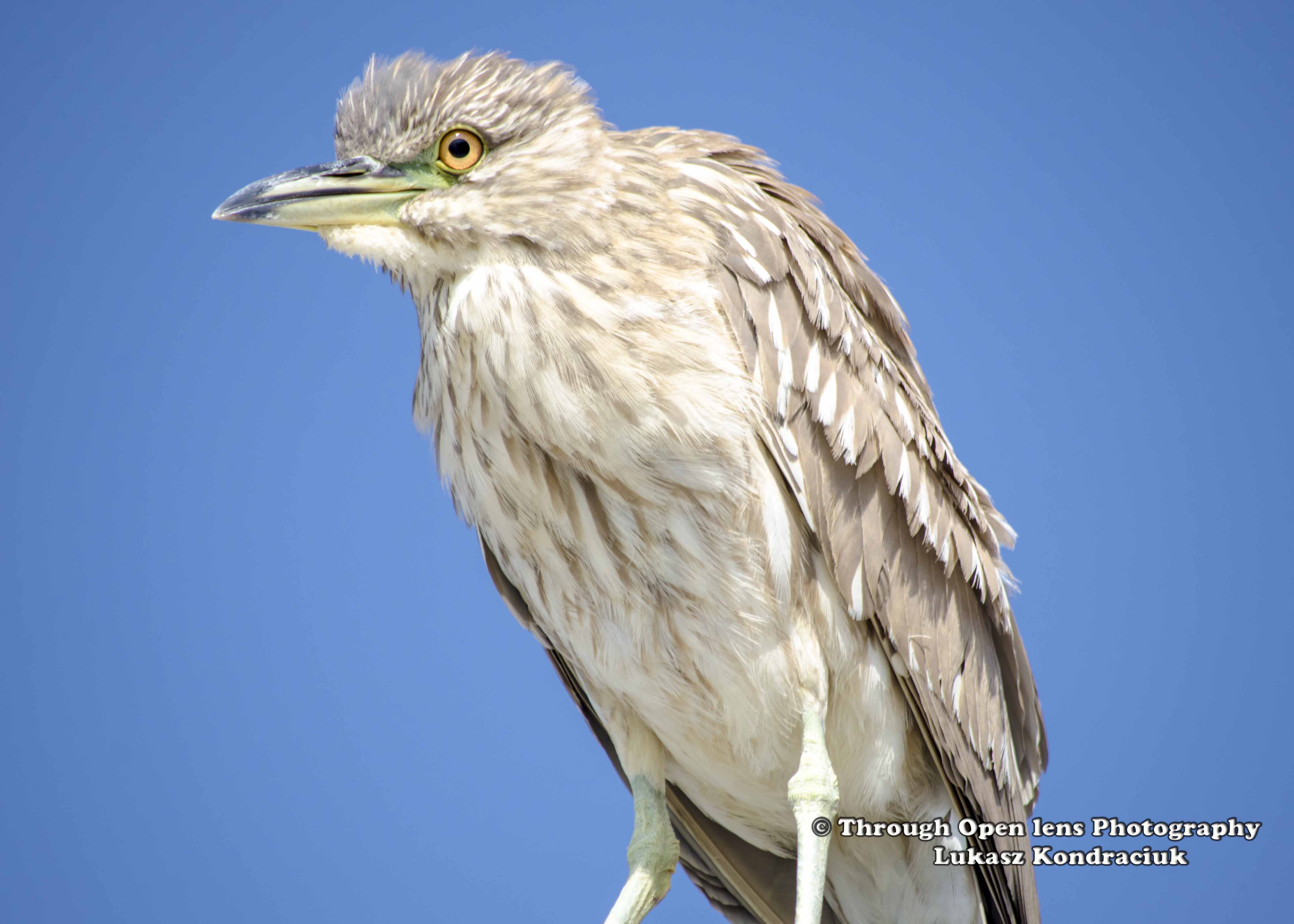
Look Into My Eyes, You Are Getting Sleepy!

Black-crowned Night-Heron 1

F/ 6.3, 1/640, ISO 200.

Black-Crowned Night-Heron ( Juvenile )

How do you wake up Lady gaga?

Poke her face.

Interesting Fact: The familiar evening sight and sound of the Black-crowned Night-Heron was captured in this description from Arthur Bent’s Life Histories of North American Marsh Birds: “How often, in the gathering dusk of evening, have we heard its loud, choking squawk and, looking up, have seen its stocky form, dimly outlined against the gray sky and propelled by steady wing beats, as it wings its way high in the air toward its evening feeding place in some distant pond or marsh!” ( https://www.allaboutbirds.org/guide/Black-crowned_Night-Heron/lifehistory )

Don’t Let Yesterday Take Up Too Much Of Today

Red-tailed Hawk 1

F/10.0, 1/400, ISO 250.

Red-tailed Hawk

What do u call a police officer that works in bed?

A undercover cop.

Interesting Fact: Courting Red-tailed Hawks put on a display in which they soar in wide circles at a great height. The male dives steeply, then shoots up again at an angle nearly as steep. After several of these swoops he approaches the female from above, extends his legs, and touches her briefly. Sometimes, the pair grab onto one other, clasp talons, and plummet in spirals toward the ground before pulling away. ( https://www.allaboutbirds.org/guide/Red-tailed_Hawk/lifehistory )

Have You Tried Deez Nuts!

Squirrel

F/6.3, 1/80, ISO 250.

Squirrel

Why do squirrels swim on their back?

To keep their nuts dry!

Interesting Fact: Squirrels tend to run in erratic paths. This is intended to deceive potential predators as to its chosen direction so that it may escape. ( http://www.onekind.org/education/animals_a_z/squirrel )

Because I’m Bad, I’m Bad, Really, Really Bad

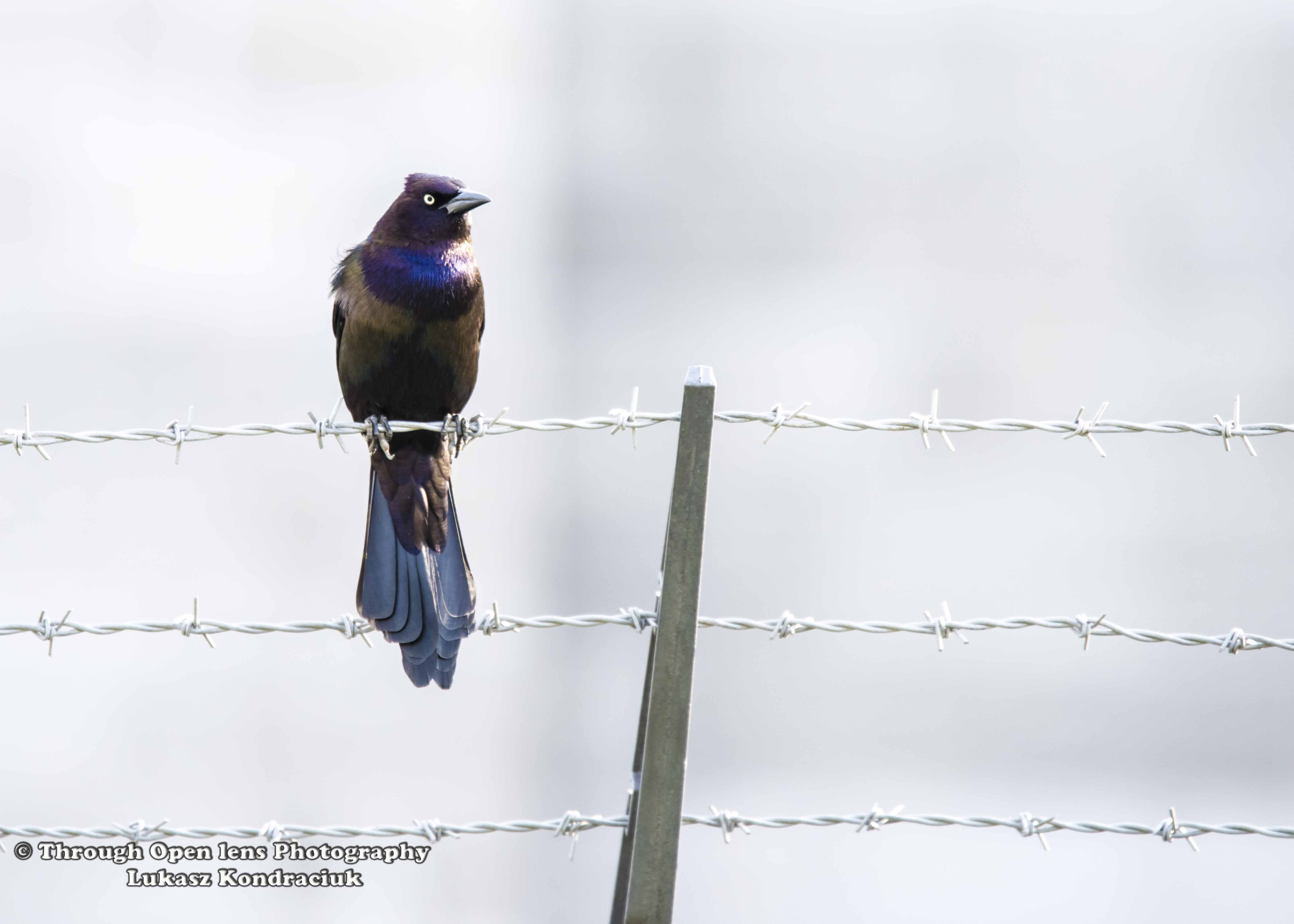
Common Grackle 1

F/7.1, 1/200, ISO 320.

Common Grackle  

A guy walks into an antique store and buys a grandfather clock, he walks out of the shop with it and accidentally walks into a drunk guy. (they both fall over and the clock gets smashed to bits)
The guy says to the drunk, “Why don’t you watch where your going?” and the drunk says, “Why don’t you carry a wrist watch like everybody else?”

Interesting Fact: You might see a Common Grackle hunched over on the ground, wings spread, letting ants crawl over its body and feathers. This is called anting, and grackles are frequent practitioners among the many bird species that do it. The ants secrete formic acid, the chemical in their stings, and this may rid the bird of parasites. In addition to ants, grackles have been seen using walnut juice, lemons and limes, marigold blossoms, chokecherries, and mothballs in a similar fashion. ( https://www.allaboutbirds.org/guide/Common_Grackle/lifehistory )

Baby Let’s Fly Away

sunset flight

F/9.0, 1/1250, ISO 100.

A day without sunshine is like, well, night.

Interesting Fact: Neglecting atmospheric refraction and the Sun’s non-zero size, whenever and wherever sunset occurs, it is always in the northwest quadrant from the March equinox to the September equinox, and in the southwest quadrant from the September equinox to the March equinox. Sunsets occur almost exactly due west on the equinoxes for all viewers on Earth. Exact calculations of the azimuths of sunset on other dates are complex, but they can be estimated with reasonable accuracy by using the analemma. ( https://en.wikipedia.org/wiki/Sunset#Historically )

I Always Have To Deal With Paparazzis

White-Tailed Deer 1

F/5.6, 1/50, ISO 100.

White-Tailed Deer

Who did Bambi invite to his birthday party?

His nearest and deer-est friends.

Interesting Fact: White-tailed deer, the smallest members of the North American deer family, are found from southern Canada to South America. In the heat of summer they typically inhabit fields and meadows using clumps of broad-leaved and coniferous forests for shade. During the winter they generally keep to forests, preferring coniferous stands that provide shelter from the harsh elements. ( http://animals.nationalgeographic.com/animals/mammals/white-tailed-deer/ )

This Is A Private Area No Peeking!

Red-Eared Slider Turtle 1

F/5.6, 1/200, ISO 100.

Red-Eared Slider Turtle

What do you get when you cross a turtle and a flu shot?

A slow-poke.

Interesting Fact: The red-eared slider (Trachemys scripta elegans), also known as the red-eared terrapin, is a semiaquatic turtle belonging to the family Emydidae. It is a subspecies of the pond slider. It is the most popular pet turtle in the United States and is also popular as a pet in the rest of the world.[2] It has, therefore, become the most commonly traded turtle in the world.[3] It is native to the southern United States and northern Mexico, but has become established in other places because of pet releases, and has become an invasive species in many areas, where it outcompetes native species. The red-eared slider is included in the list of the world’s 100 most invasive species[4] published by the IUCN. ( https://en.wikipedia.org/wiki/Red-eared_slider )


Can’t Touch Me!

Black-crowned Night-Heron

F/6.3, 1/250 ISO 100.

Black-crowned Night-Heron

Why was the math textbook so sad?

He had a lot of problems!

Interesting Fact: Young Black-crowned Night-Herons leave the nest at the age of 1 month but cannot fly until they are 6 weeks old. They move through the vegetation on foot, joining up in foraging flocks at night. ( https://www.allaboutbirds.org/guide/Black-crowned_Night-Heron/lifehistory )
Let’s Get In Formation!

Mute Swan & Babies

F/ 7.1, 1/800, ISO 200.

Mute Swan and Cygnets

A three year old walked over to a pregnant lady while waiting with his mother in the doctors office.
He inquisitively ask the lady, “Why is your stomach so big?”
She replied, “I’m having a baby.”
With big eyes, he asked, “Is the baby in your stomach?”
She said, “He sure is.”
Then the little boy, with a puzzled look, asked, “Is it a good baby?”
She said, “Oh, yes. It’s a real good baby.”
With an even more surprised and shocked look, he asked…
“Then why did you eat him?”

Interesting Fact: Hans Christian Andersen’s fairly tale The Ugly Duckling chronicles the woes and triumphs of a young, Mute Swan that hatches in a clutch of duck eggs but goes on to become a beautiful swan. Some speculate that the book was based on Andersen’s own less-than-handsome looks as a youngster. ( https://www.allaboutbirds.org/guide/mute_swan/lifehistory )

Swimming For The Gold

Muskrat

F/ 6.3, 1/125, ISO 500.

Muskrat

What did one lab rat say to the other?

I’ve got my scientist so well trained that every time I push the buzzer, he brings me a snack.

Interesting Fact: Muskrats normally live in groups consisting of a male and female pair and their young. During the spring, they often fight with other muskrats over territory and potential mates. Many are injured or killed in these fights. Muskrat families build nests to protect themselves and their young from cold and predators. In streams, ponds or lakes, muskrats burrow into the bank with an underwater entrance. These entrances are 6–8 in (15–20 cm) wide. In marshes, push-ups are constructed from vegetation and mud. These push-ups are up to 3 ft (91 cm) in height. In snowy areas, they keep the openings to their push-ups closed by plugging them with vegetation, which they replace every day. Some muskrat push-ups are swept away in spring floods and have to be replaced each year. Muskrats also build feeding platforms in wetlands. They help maintain open areas in marshes, which helps to provide habitat for aquatic birds. ( https://en.wikipedia.org/wiki/Muskrat )