We Are Always Landing On Our Feet

Common Merganser

F/8.0, 1/2000, ISO 800.

Common Merganser

Duck Week Last Day

A duck walks into a bar and says to the bar tender “I’ll have a beer”.

The bartender says “Hey! where did you come from?”

The duck says “I’m working the construction site across the street”.

And the bartender says, “Well why are you working construction when you could be making millions in the circus?”

And the duck said “What would the circus want with a brick laying duck?”


Interesting Fact: You may see gulls trailing flocks of foraging Common Mergansers. They wait for the ducks to come to the surface and then try to steal their prey rather than fishing on their own. Occasionally even a Bald Eagle will try to steal a fish from a merganser. ( https://www.allaboutbirds.org/guide/Common_Merganser/lifehistory )

And They’re Off!

Hooded Mergansers

F/ 6.3, 1/400, ISO 1600.

Hooded Mergansers

Duck Week Continues!

A circus owner walked into a bar to see everyone crowded about a table watching a little show. On the table was an upside down pot and a duck tap dancing on it. The circus owner was so impressed that he offered to buy the duck from its owner. After some wheeling and dealing, they settled for $10,000 for the duck and the pot. Three days later the circus owner runs back to the bar in anger, “Your duck is a ripoff! I put him on the pot before a whole audience, and he didn’t dance a single step!” “So?” asked the ducks former owner, “did you remember to light the candle under the pot?”

Interesting Fact: Along with Wood Ducks and other cavity-nesting ducks, Hooded Mergansers often lay their eggs in other females’ nests. This is called “brood parasitism” and is similar to the practice of Brown-headed Cowbirds, except that the ducks only lay eggs in nests of their own species. Female Hooded Mergansers can lay up to about 13 eggs in a clutch, but nests have been found with up to 44 eggs in them. ( https://www.allaboutbirds.org/guide/Hooded_Merganser/lifehistory )

I Hear You Loud And Clear!

Ruddy Duck

F/ 9.0, 1/320, ISO 250.

Ruddy Duck

Duck Week Continues!

A duck walks into a bar, sits down at the barstool, and waits for the bartender. The bartender walks up, hands the duck a menu, waits a while, and comes back to take his order. “What’ll it be?” the bartender says.

The duck says, “I think I’ll have the grapes.”

“Well, I’m sorry sir, but this is a bar, we don’t serve grapes here. Now, I’ll let you look a bit longer and wave when you know what you want.”

The duck looks at the menu, then waves the bartender down.

“Ok, you got your order?” The duck nods, saying, “I’ll think I’ll have the grapes.”

The bartender, kind of peeved from the duck, says, “Look Mac, we don’t have any grapes here. This is a bar. We don’t serve grapes, so what will you have?!”

The duck looks at him in the eyes and says, “I’ll have the grapes.”

The bartender, enraged, shouts, “If you ask for the grapes one more time I’m going to nail your feathered a** to the barstool!!” The bartender cools off a bit. “Now what will you get?!”

“Got any nails?”

“OF COURSE WE DON’T HAVE ANY NAILS! WHAT DO YOU THINK THIS IS? A HARDWARE STORE?”

“Good, got any grapes?”

Interesting Fact: Ruddy Ducks get harassed by Horned Grebes, Pied-billed Grebes, and American Coots during the breeding season. The grebes sometimes attack Ruddy Ducks from below the water, a behavior known as “submarining.” ( https://www.allaboutbirds.org/guide/Ruddy_Duck/lifehistory )

It’s About To Get Real!

common merganser female and swan

F/ 7.1, 1/1600, ISO 400.

Common Merganser ( Female )

Mute Swan 

Duck Week Continues!

What do baby swans dance to?

Cygnet-ure-tunes!

Interesting Fact: Young Common Mergansers leave their nest hole within a day or so of hatching. The flightless chicks leap from the nest entrance and tumble to the forest floor. The mother protects the chicks, but they catch all of their own food. They start by diving for aquatic insects and switch over to fish at about 12 days old. ( https://www.allaboutbirds.org/guide/Common_Merganser/lifehistory )

Duck Punk!

hooded merganser female

F/6.3, 1/500, ISO 250.

Hooded Merganser ( Female )

Duck Week Continues!

What do ducks like to eat?

Quackers!

Interesting Fact: Hooded Mergansers find their prey underwater by sight. They can actually change the refractive properties of their eyes to improve their underwater vision. In addition, they have an extra eyelid, called a “nictitating membrane,” which is transparent and helps protect the eye during swimming, like a pair of goggles. ( https://www.allaboutbirds.org/guide/Hooded_Merganser/lifehistory )

That’s Quacktastic !

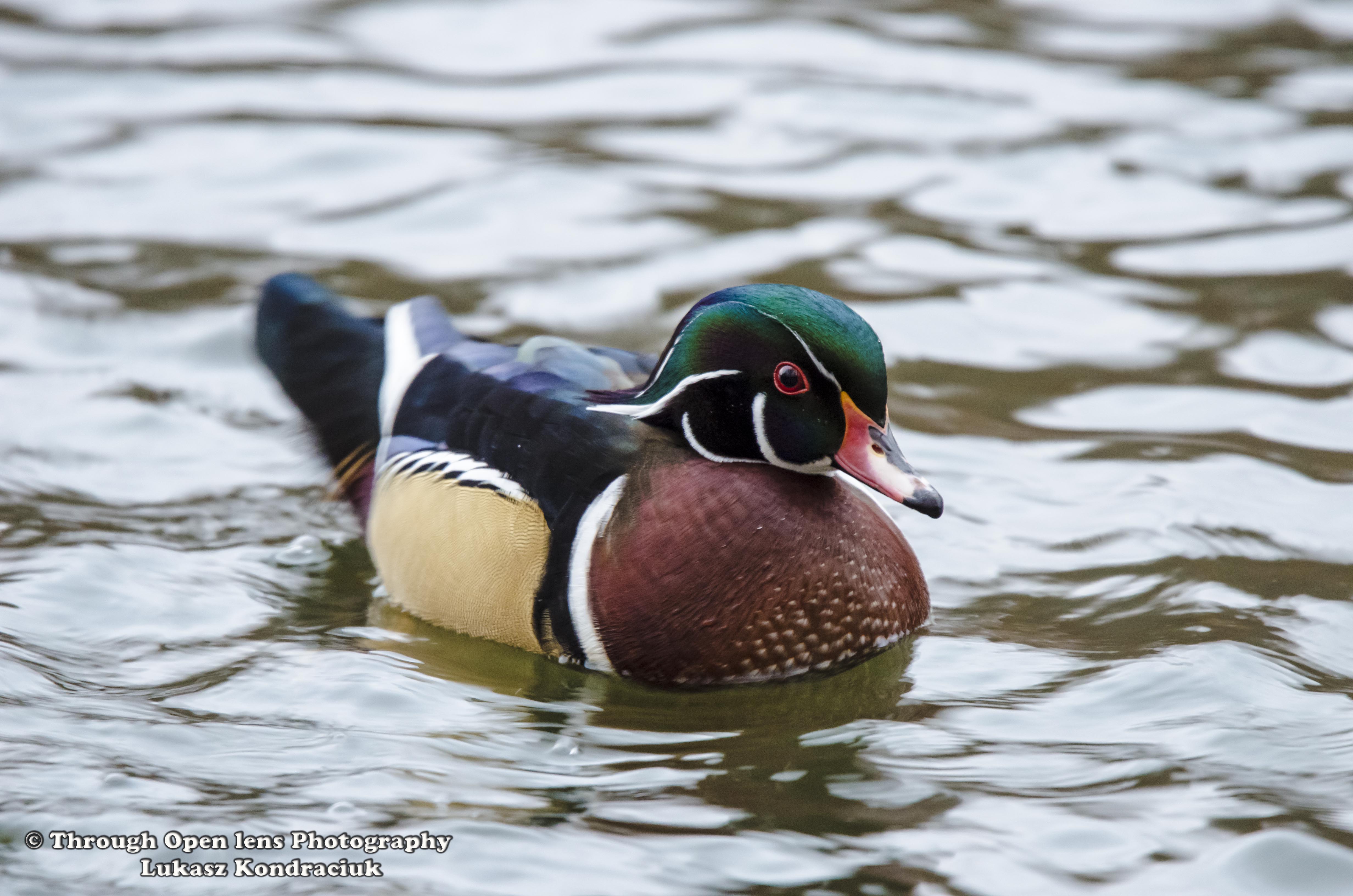
Wood Duck

F/ 6.3, 1/40, ISO 1600.

Wood Duck

Duck Week Continues!

What do you get when you cross a duck with a computer?

A quackintosh.

Interesting Fact: Wood Ducks pair up in January, and most birds arriving at the breeding grounds in the spring are already paired. The Wood Duck is the only North American duck that regularly produces two broods in one year. ( https://www.allaboutbirds.org/guide/Wood_Duck/lifehistory )

Swimming With Purpose!

Harlequin Duck

F/ 10.0, 1/400, ISO 400.

Harlequin Duck

Duck Week!

What time does a duck wake up?

At the quack of dawn!

Interesting Fact: When engaged in behavioral interactions, the Harlequin Duck gives distinctly unducklike squeaks, the source of one of its local names: sea mouse. ( https://www.allaboutbirds.org/guide/Harlequin_Duck/lifehistory )

What’s Up?

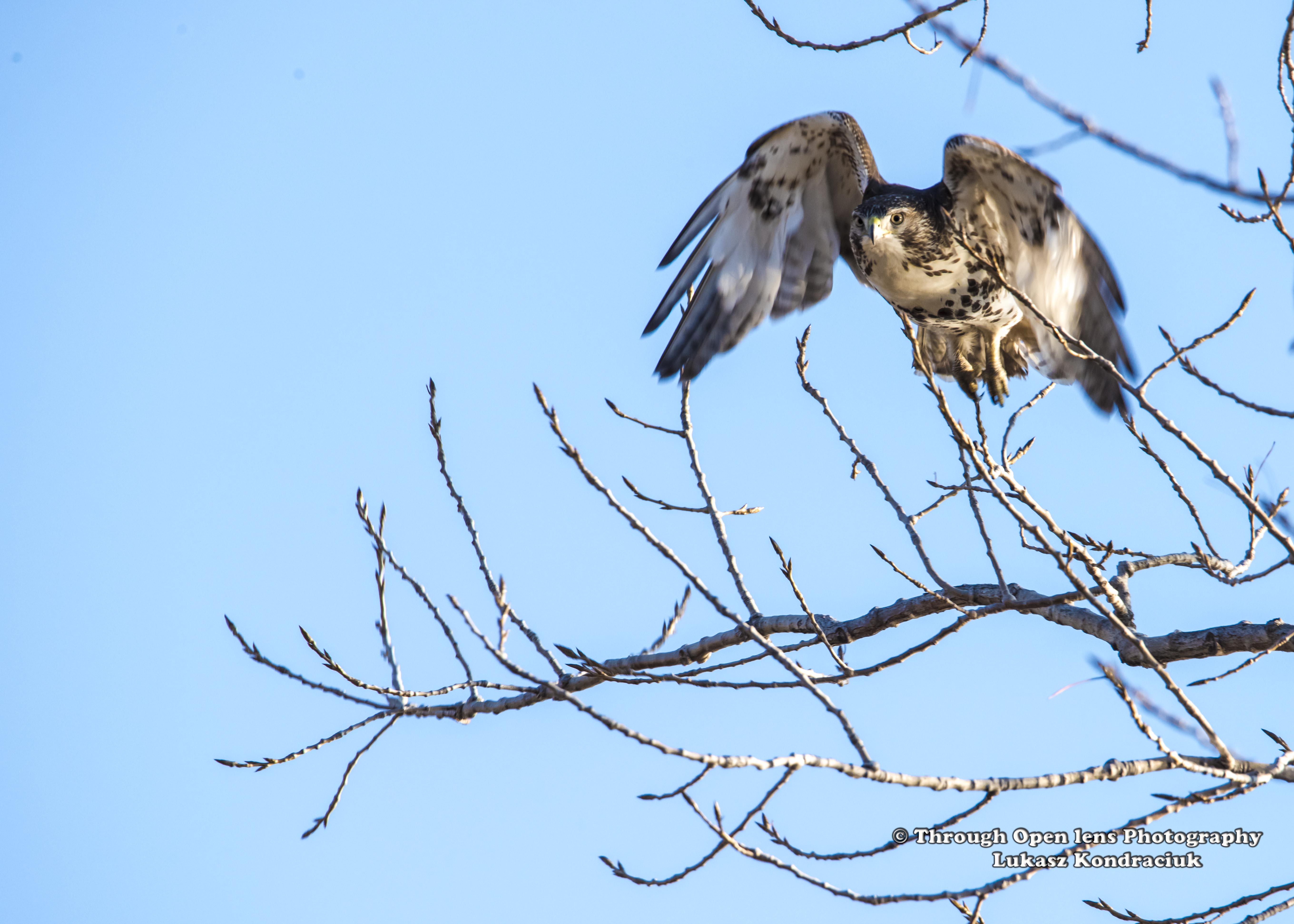
Red tailed Hawk

F/11.0, 1/500, ISO400.

Red-tailed Hawk

What is a parrot’s favorite game?

Hide and Speak!

Interesting Fact: The “Harlan’s Hawk” breeds in Alaska and northwestern Canada, and winters on the southern Great Plains. This very dark form of the Red-tailed Hawk has a marbled white, brown, and gray tail instead of a red one. It’s so distinctive that it was once considered a separate species, until ornithologists discovered many individuals that were intermediate between Harlan’s and more typical Red-tailed Hawks. ( https://www.allaboutbirds.org/guide/Red-tailed_Hawk/lifehistory )

Duck Duck Duck Duck Duck Duck Goose!

Duck Duck Goose

F/ 6.3, 1/ 640, ISO 2800.

Green-Winged Teal

Canada Goose

Day 362 / 365

Where did the duck go when he was sick?

To the Ducktor

Interesting Fact: The American and Eurasian forms of the Green-winged Teal were formerly considered different species. The Eurasian teal differ from the American by lacking the vertical white shoulder stripe and having a horizontal white stripe along the back instead. Eurasian teal show up casually each year along both the Pacific and Atlantic coasts. ( https://www.allaboutbirds.org/guide/Green-winged_Teal/lifehistory )

Birds Go Tweet Tweet!

Northern Cardinal

F/ 8.0, 1/250, ISO 500.

Northern Cardinal

Day 361 / 365

The mail carrier had a registered letter that needed a signature for a party on his route. Receiving no response to his knock on the front door, he went around to the back door which he found open, except for the screen door. He knocked. A high pitch voice from inside said, “Come in.”Upon entering the kitchen, he was confronted by the largest German Shepard he had ever seen. The dog bared his fangs menacingly, forcing the mail man against the wall. The mail man shouted, “Lady, call off you dog before he eats me alive.” The only response he got was that same high pitch voice coming from the next room saying, “Come in.”Pressing his body against the wall, he slowly worked his way to the door way leading to the next room. Looking around, he saw the room was empty, except for a parrot in a cage. After the threat from the huge dog, he was becoming quite irate and said to the parrot.”Darn you, don’t you know any words besides ‘Come in?”Without a moments hesitation the parrot responded, “Sic him!!!”

Interesting Fact: Northern Cardinals hop through low branches and forage on or near the ground. Cardinals commonly sing and preen from a high branch of a shrub. The distinctive crest can be raised and pointed when agitated or lowered and barely visible while resting. You typically see cardinals moving around in pairs during the breeding season, but in fall and winter they can form fairly large flocks of a dozen to several dozen birds. During foraging, young birds give way to adults and females tend to give way to males. Cardinals sometimes forage with other species, including Dark-eyed Juncos, White-throated Sparrows, other sparrow species, Tufted Titmice, goldfinches, and Pyrrhuloxias. They fly somewhat reluctantly on their short, round wings, taking short trips between thickets while foraging. Pairs may stay together throughout winter, but up to 20 percent of pairs split up by the next season. ( https://www.allaboutbirds.org/guide/Northern_Cardinal/lifehistory )