Welcome To The Thunderdome!

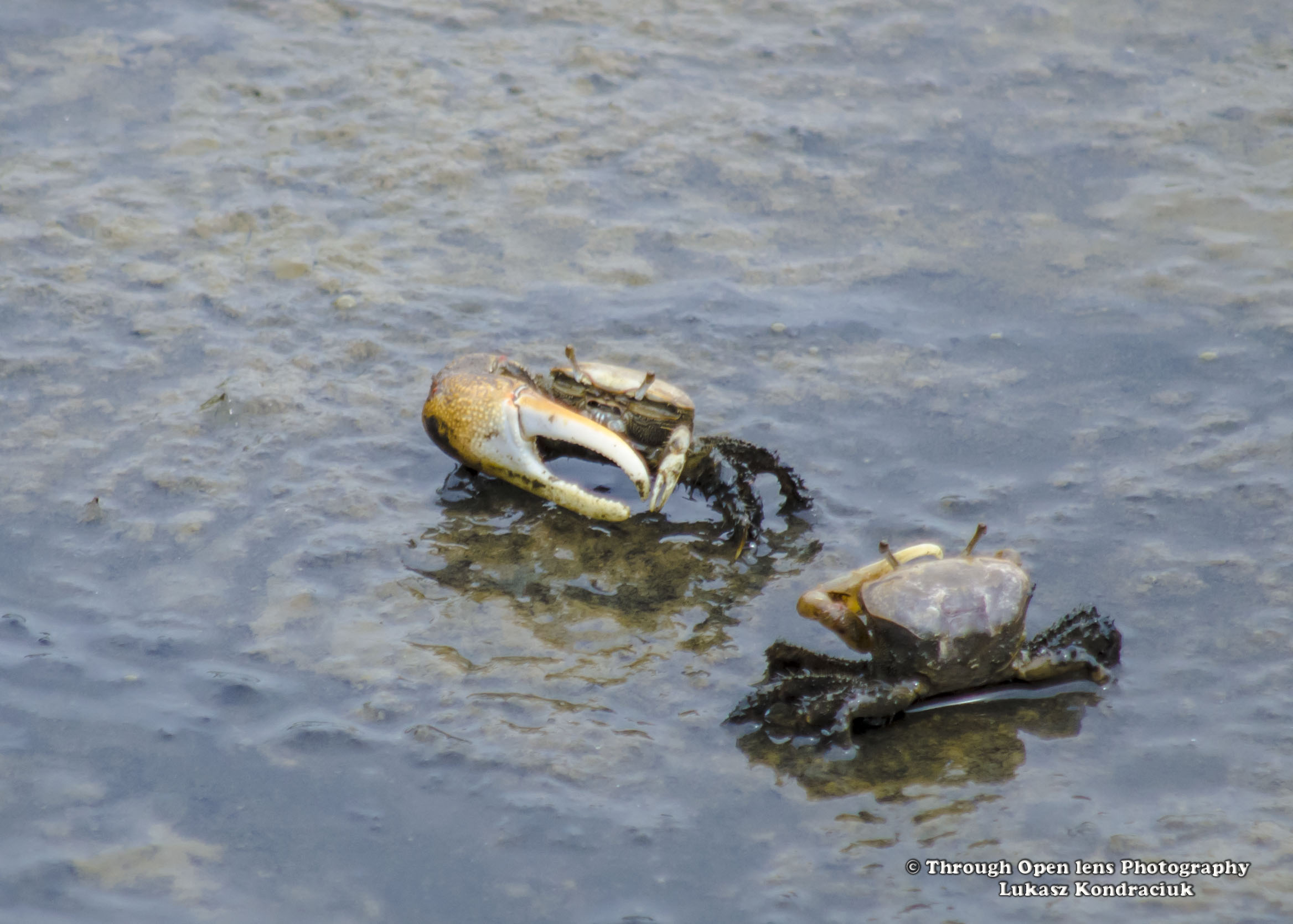
Fiddler crabs

F/5.6, 1/500, ISO 220.

Fiddler crabs

A lonely female crab was walking down the beach one evening when she noticed a male crab coming toward her—but he was walking straight and not sideways!
Impressed by his talent, she decided to marry him immediately.
The next morning she noticed him walking sideways like any ordinary crab! She asked, “What happened? Yesterday you were able to walk straight!”
He answered “What?! I can’t get that drunk every day!”.

Interesting Fact: Male versus male competition also occurs as fighting with the major claws.[9] If a male loses his larger claw, the smaller one will begin to grow larger and the lost claw will regenerate into a new (small) claw. For at least some species of fiddler crabs, however, the small claw remains small, while the larger claw regenerates over a period of several molts, being about half its former size after the first molt. The female fiddler carries her eggs in a mass on the underside of her body. She remains in her burrow during a two week gestation period, after which she ventures out to release her eggs into the receding tide. The larvae remain planktonic for a further two weeks.  ( https://en.wikipedia.org/wiki/Fiddler_crab#Life_cycle )
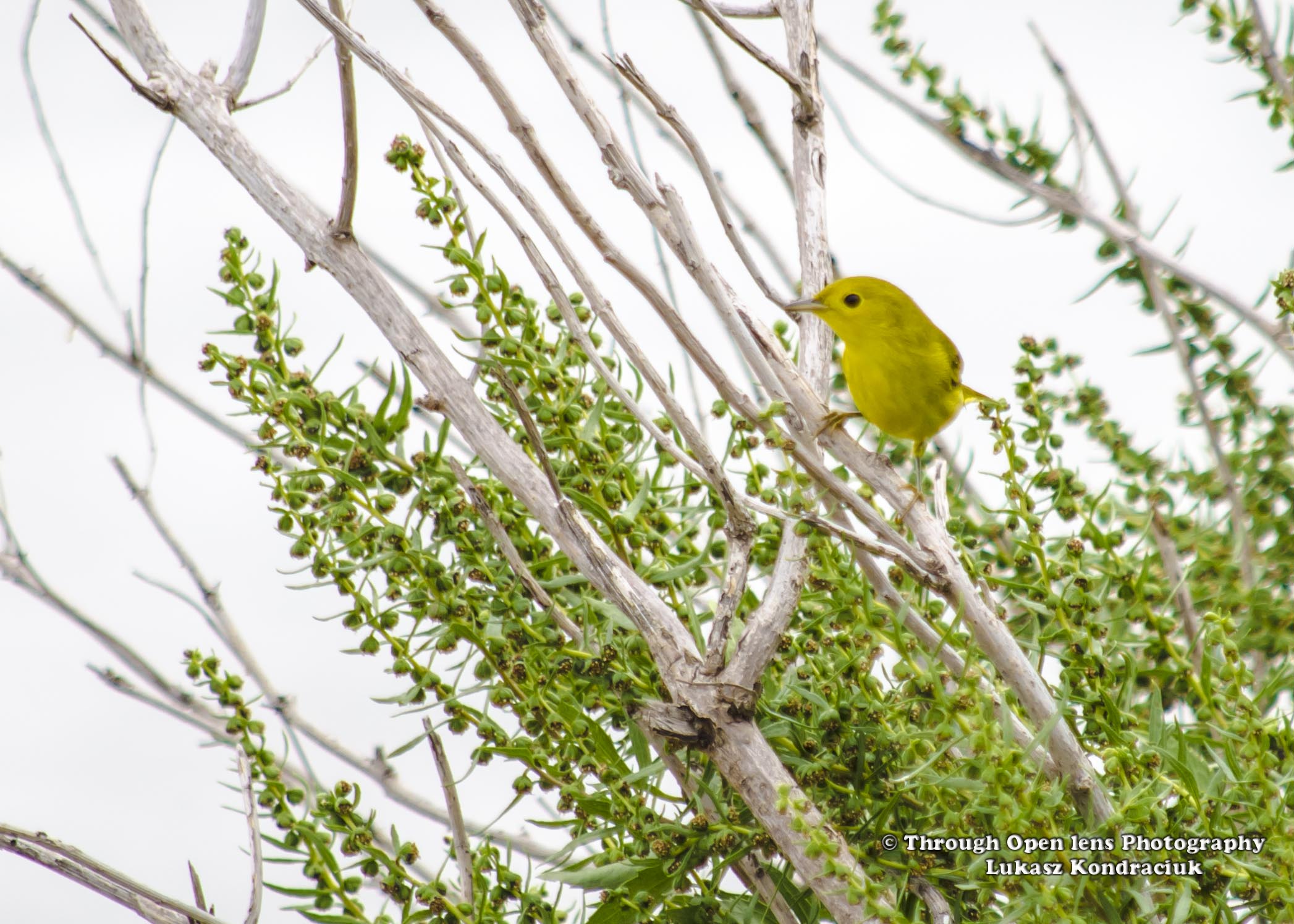
They Call Me Mellow Yellow

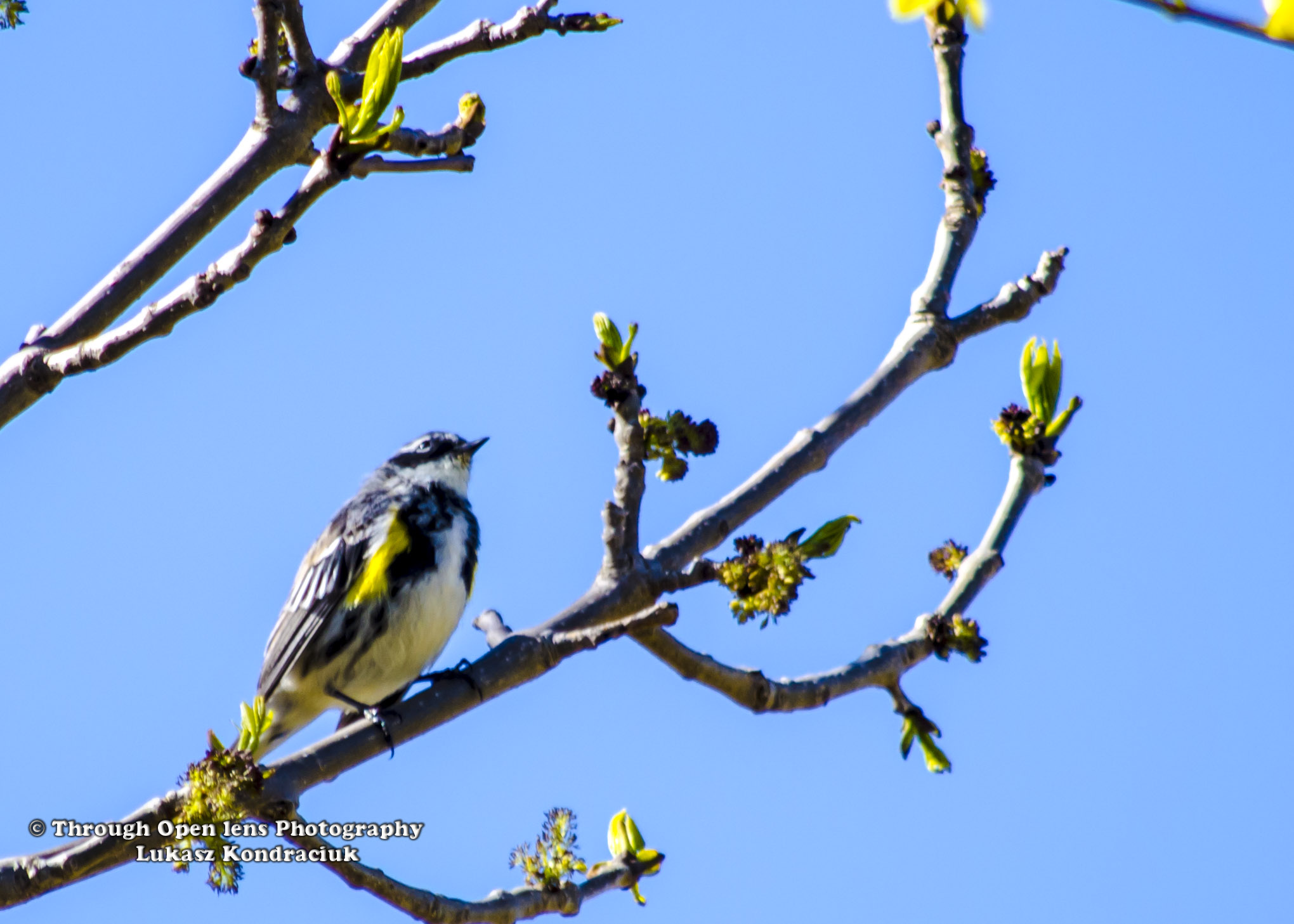
Yellow Warbler

F/ 6.3, 1/640, ISO 200.

Yellow Warbler

A lady went to a pet shop.
“I’d like to buy two yellow canaries,” she told the owner.
“We don’t have any canaries, but we have these,” the owner
said, as he showed the lady some pale green parakeets.
“That’s not what I’m looking for,” the lady stated.
But the pet store owner refused to give up. He said, “Just
think of them as yellow canaries that aren’t quite ripe yet.”

Interesting Fact: Life can be dangerous for a small bird. Yellow Warblers have occasionally been found caught in the strands of an orb weaver spider’s web. ( https://www.allaboutbirds.org/guide/Yellow_Warbler/lifehistory )

Come Visit My Branch

Magnolia Warbler

F/5.6, 1/400, ISO 100.

Magnolia Warbler

Two birds in a tree looking down on a man washing his car.

“If he doesn’t hurry up and finish,” says one bird to the 15other, “I’ll shit myself.”

Interesting Fact: Though it has very specific habitat preferences in the breeding season, the Magnolia Warbler occupies a very broad range of habitats in winter:  from sea level to 1,500 meters elevation, and most landscape types, except cleared fields. ( https://www.allaboutbirds.org/guide/Magnolia_Warbler/lifehistory )

Come On In The Water Is Fine

Semipalmated Plover

F/6.3, 1/640, ISO 200.

Semipalmated Plover

Why do birds in a nest always agree?

Because they don’t want to fall out.

Interesting Fact: The Semipalmated Plover has been seen to swim short distances across small water channels during foraging while on migration. Chicks also swim short distances to follow parents to small islets on shallow lakes. ( https://www.allaboutbirds.org/guide/Semipalmated_Plover/lifehistory )


Tern It Up!

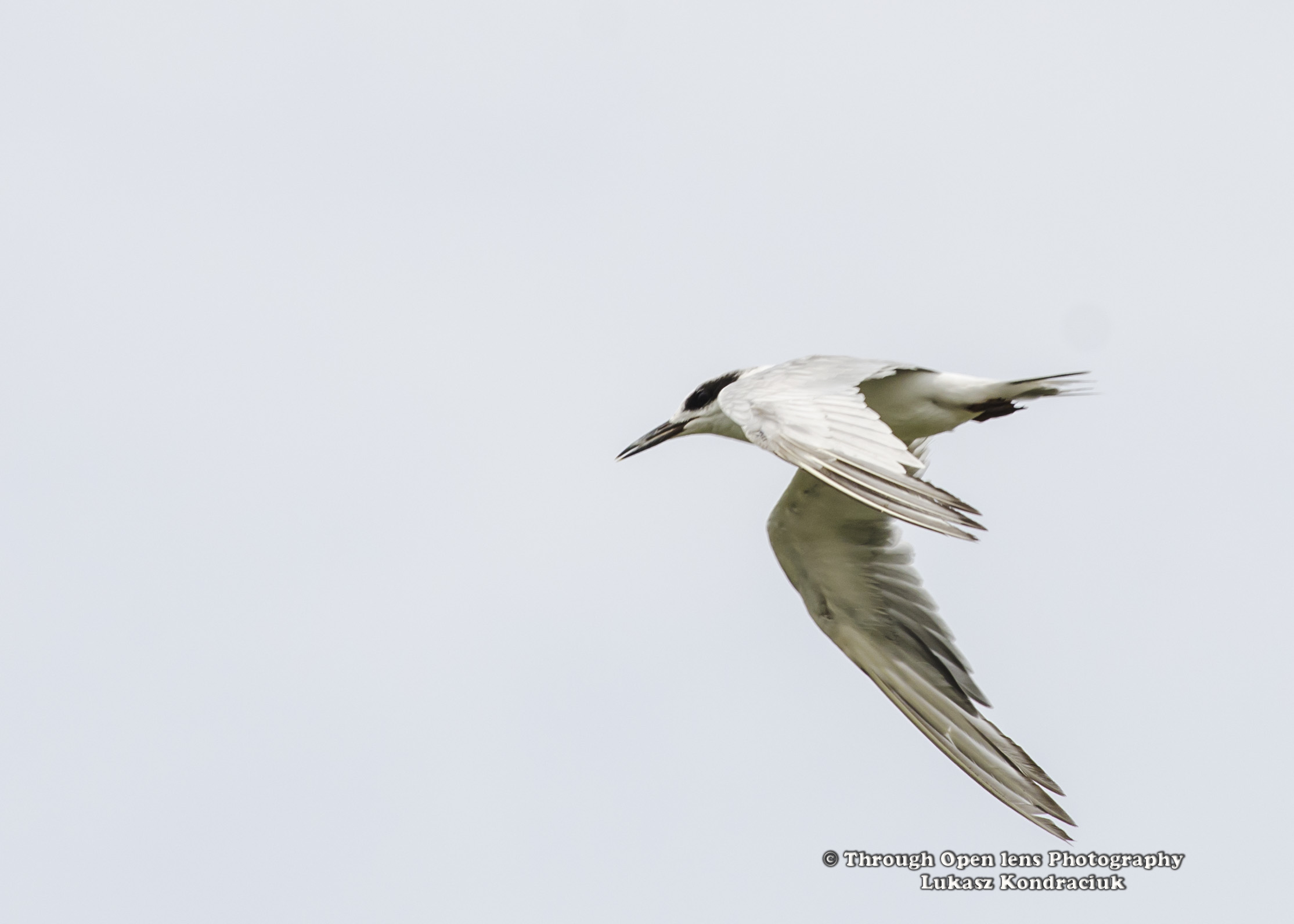
Forster's Tern

F/8.0, 1/1000, ISO 200.

Forster’s Tern

What did the bird say when her boyfriend bought her the wrong perfume?

Cheep cheep!

Interesting Fact: Forster’s Tern is the only tern restricted almost entirely to North America throughout the year. ( https://www.allaboutbirds.org/guide/Forsters_Tern/lifehistory )

Is This How You Do Locust Pose?

Red-Eared Slider Turtle

F/5.6, 1/400, ISO 100.

Red-Eared Slider Turtle 

What happens when your kids want to buy a tortoise?

You shell out a lot of money.

Interesting Fact: Reptiles do not hibernate, but actually brumate; while they become less active, they do occasionally rise to the surface for food or air. Brumation can occur to varying degrees. In the wild, red-eared sliders brumate over the winter at the bottoms of ponds or shallow lakes. They generally become inactive in October, when temperatures fall below 10 °C (50 °F).[9] During this time, the turtles enter a state of sopor, during which they do not eat or defecate, they remain nearly motionless, and the frequency of their breathing falls. Individuals usually brumate underwater, but they have also been found under banks and rocks, and in hollow stumps. In warmer winter climates, they can become active and come to the surface for basking. When the temperature begins to drop again, however, they quickly return to a brumation state. Sliders generally come up for food in early March to as late as the end of April. ( https://en.wikipedia.org/wiki/Red-eared_slider )

Feed Me!

Heermann's Gull

F/7.1, 1/800, ISO 200.

Heermann’s Gull

If someone ever says, “What are you staring at?”

Say “I don’t know, give me a minute.”

Interesting Fact: The Heermann’s Gull, like many other gulls, frequently steals food from other birds. The Brown Pelican is a frequent victim. An adult Heermann’s Gull is most likely to try to steal food from an adult pelican, and an immature gull is more likely to steal from an immature pelican. ( https://www.allaboutbirds.org/guide/Heermanns_Gull/lifehistory )

And I Ran, I Ran So Far Away!

Sanderling

F/7.1, 1/800, ISO 200.

Sanderling

Did you hear about the race between the lettuce and the tomato?

The lettuce was a “head” and the tomato was trying to “ketchup”!

Interesting Fact: The Sanderling’s mating system varies from area to area and possibly from year to year. Sanderlings are usually monogamous, but in some cases the female breeds with multiple males in a row within a single breeding season. ( https://www.allaboutbirds.org/guide/Sanderling/lifehistory )

Walk With Purpose!

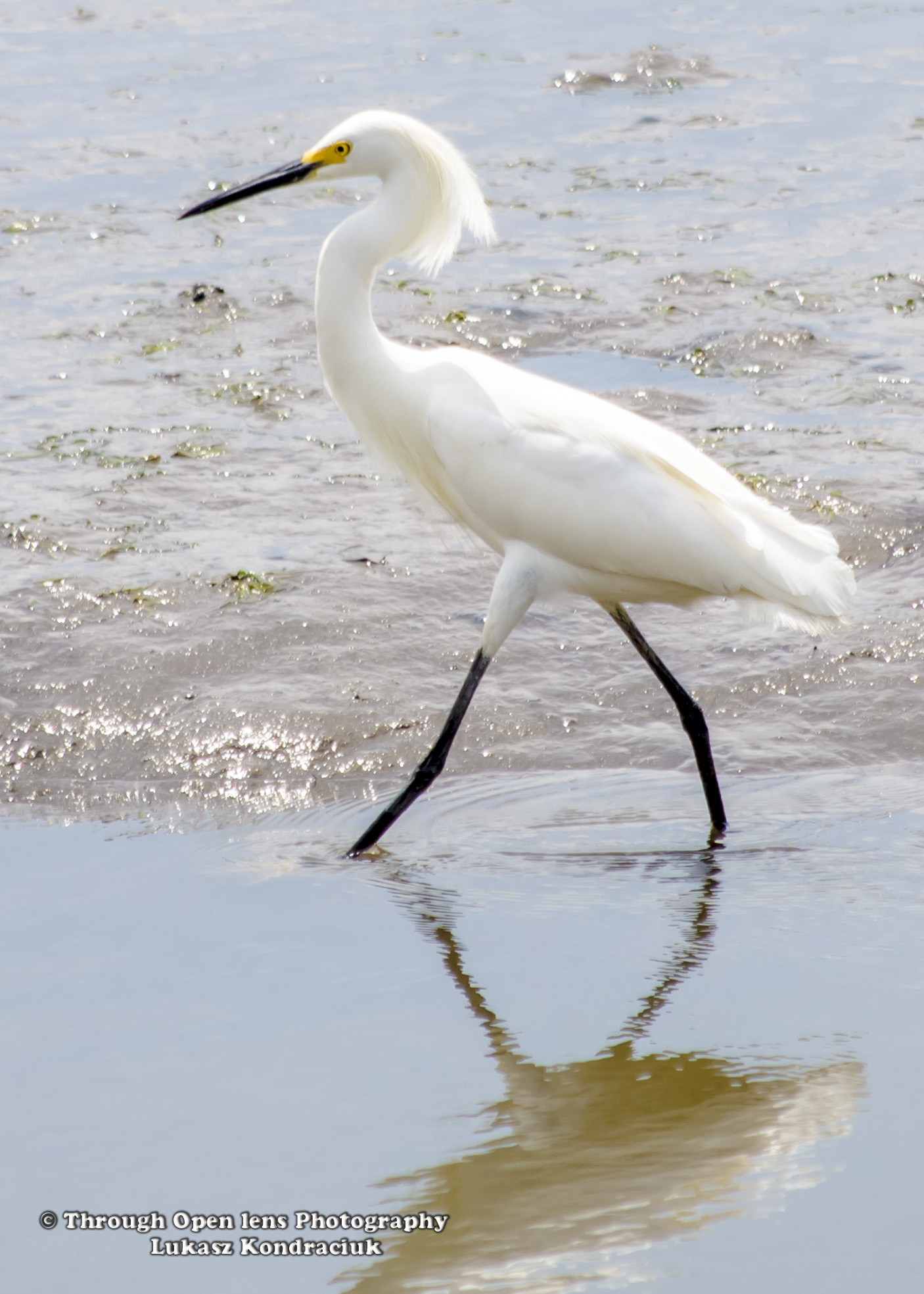
Snowy Egret

F/5.6 , 1/500, ISO 200.

Snowy Egret

Knock! Knock!

Who’s there?

Dozen.

Dozen who?

Dozen anyone want to let me in?

Interesting Fact: Male and female Snowy Egrets take turns incubating their eggs. As one mate takes over for the other, it sometimes presents a stick, almost as if passing a baton. Both parents continue caring for the young when they hatch. ( https://www.allaboutbirds.org/guide/Snowy_Egret/lifehistory )

Oops I Pierce The Sky!

Pierce The Sky

F/ 11.0, 1/500, ISO 100.

How much do pirates pay to get their ears pierced?

A Buccaneer!

Interesting Fact: In the field of astronomy, the sky is also called the celestial sphere. This is viewed from Earth’s surface as an imaginary dome where the sun, stars, planets, and the moon are seen to be traveling. The celestial sphere is conventionally divided into regions called constellations. Usually, the term sky is used informally as the point of view from the Earth’s surface; however, the meaning and usage can vary. In some cases, such as in discussing the weather, the sky refers to only the lower, more dense portions of the atmosphere. ( https://en.wikipedia.org/wiki/Sky )