Do Ants Carry Ten Times Their Own Weight In Emotional Baggage?

F/8.0, 1/200, ISO 320.

Ant

Why was the baby ant confused?

Because all his uncles were ants.

Interesting Fact: Ants communicate with each other using pheromones, sounds, and touch.[71] The use of pheromones as chemical signals is more developed in ants, such as the red harvester ant, than in other hymenopteran groups. Like other insects, ants perceive smells with their long, thin, and mobile antennae. The paired antennae provide information about the direction and intensity of scents. Since most ants live on the ground, they use the soil surface to leave pheromone trails that may be followed by other ants. In species that forage in groups, a forager that finds food marks a trail on the way back to the colony; this trail is followed by other ants, these ants then reinforce the trail when they head back with food to the colony. When the food source is exhausted, no new trails are marked by returning ants and the scent slowly dissipates. This behaviour helps ants deal with changes in their environment. For instance, when an established path to a food source is blocked by an obstacle, the foragers leave the path to explore new routes. If an ant is successful, it leaves a new trail marking the shortest route on its return. Successful trails are followed by more ants, reinforcing better routes and gradually identifying the best path. ( https://en.wikipedia.org/wiki/Ant#Behaviour_and_ecology )


It’s My Honey, And I Want It Now!

F/5.6, 1/125, ISO 500.

Bumble Bee

What do you call a bee born in May?

A maybe!

Interesting Fact: Unlike the honeybee, bumblebees will not die after stinging. They can sting as much as they want. Luckily, they are not aggressive and they will sting only in self defense. ( http://www.softschools.com/facts/animals/bumblebee_facts/582/ )

Should I Get A Tatoo Of A Human on My Back?

F/8.0, 1/250, ISO 250.

Butterfly

What do Butterfly learn at school?

Mothmatics !

Interesting Fact:  Butterflies are often polymorphic, and many species make use of camouflage, mimicry and aposematism to evade their predators. Some, like the monarch and the painted lady, migrate over long distances. Many butterflies are attacked by parasites or parasitoids, including wasps, protozoans, flies, and other invertebrates, or are preyed upon by other organisms. Some species are pests because in their larval stages they can damage domestic crops or trees; other species are agents of pollination of some plants. Larvae of a few butterflies (e.g., harvesters) eat harmful insects, and a few are predators of ants, while others live as mutualists in association with ants. Culturally, butterflies are a popular motif in the visual and literary arts. ( https://en.wikipedia.org/wiki/Butterfly )

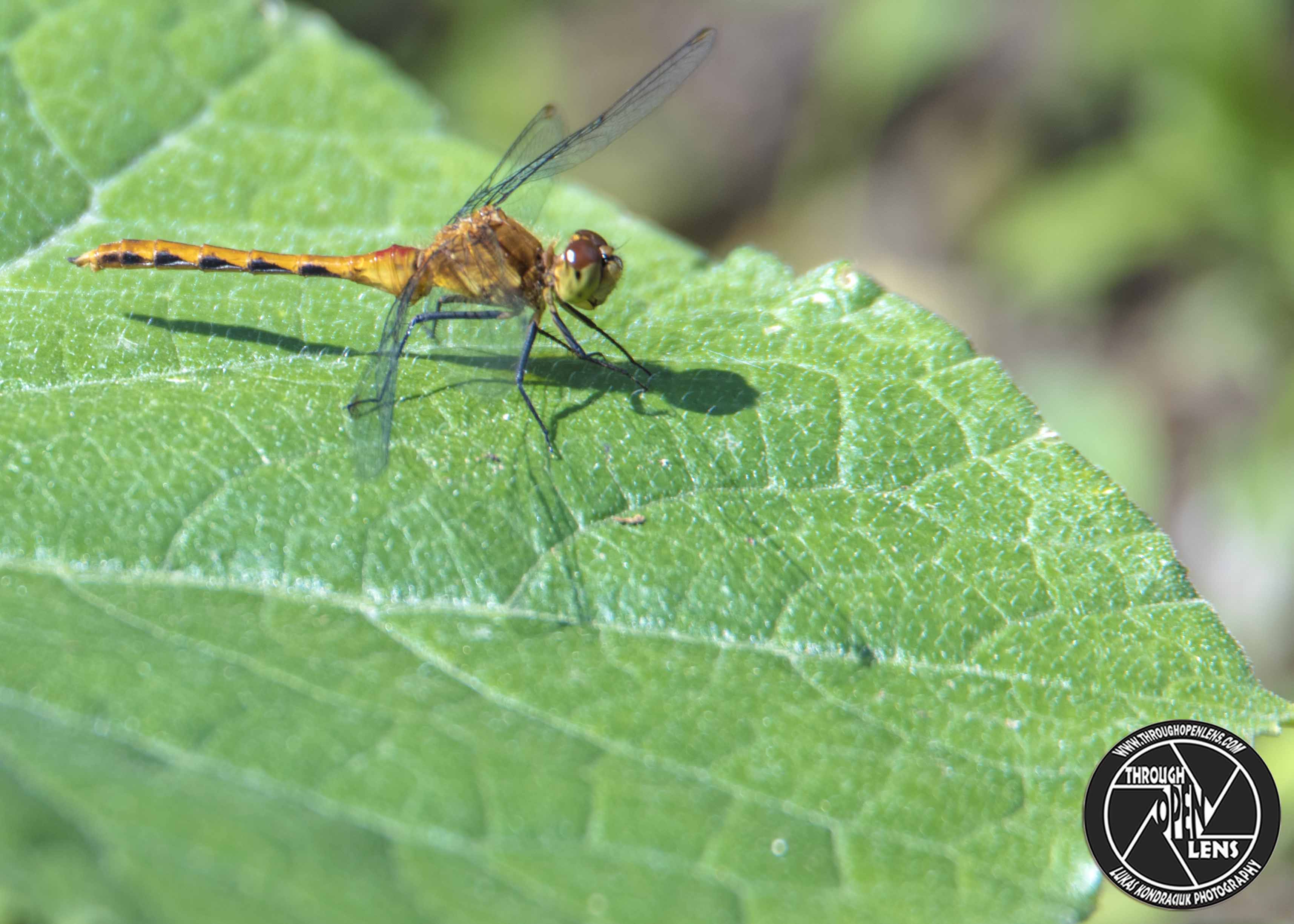
Let Me Give You The Skinney

F/7.1, 1/200, ISO 200.

Dragonfly

What do you get when you cross a parrot with a shark?

An animal that talks your head off.

Interesting Fact: Old and unreliable claims are made that dragonflies such as the southern giant darner can fly up to 60 miles per hour (97 km/h).[50] However, the greatest reliable flight speed records are for other types of insects.[51] In general, large dragonflies like the hawkers have a maximum speed of 10–15 metres per second (22–34 mph) with average cruising speed of about 4.5 metres per second (10 mph).[52] Dragonflies can fly at 100 body-lengths per second, and three lengths per second backwards. ( https://en.wikipedia.org/wiki/Dragonfly#Flight )

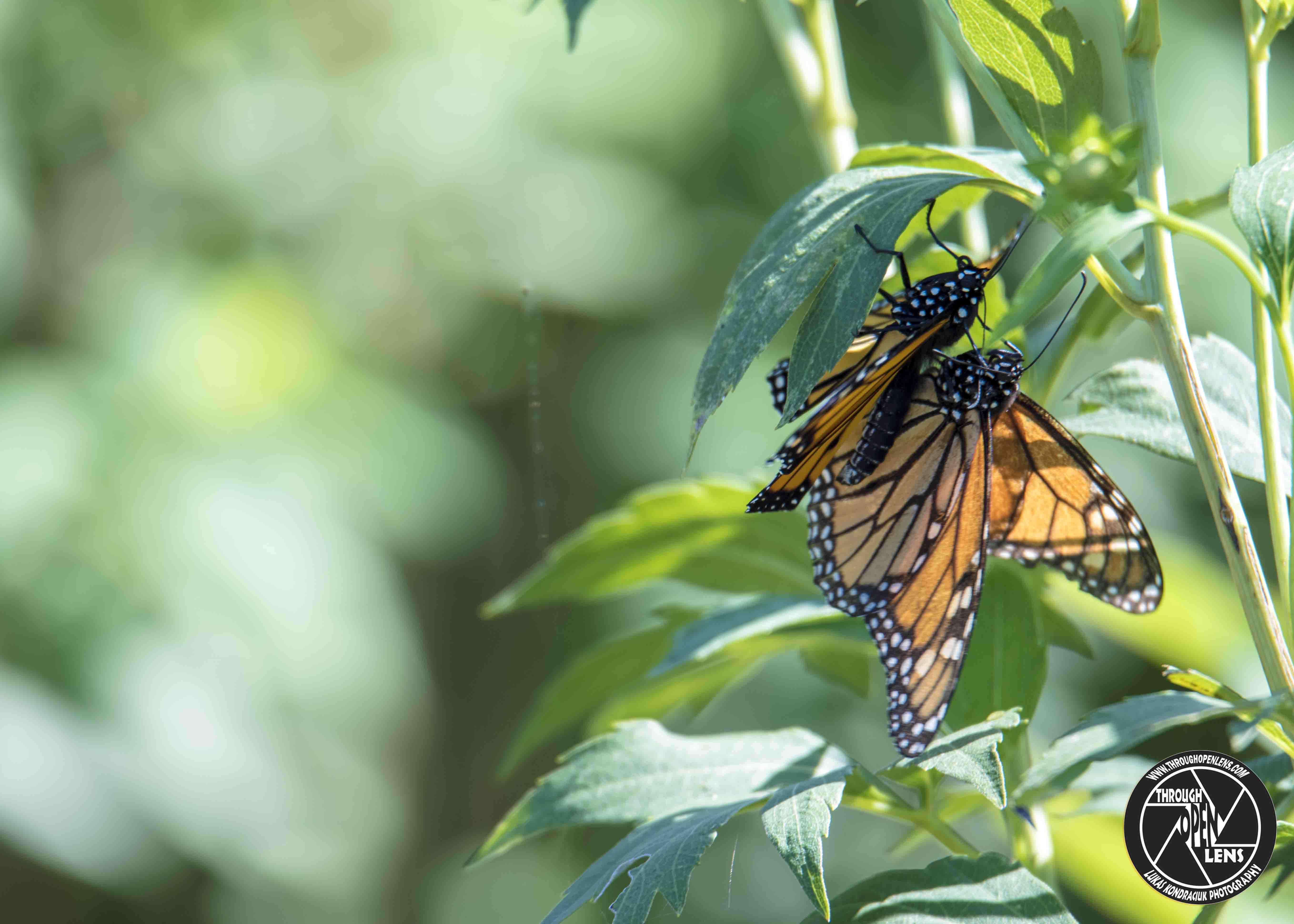
Social Butterfly!

F/6.3, 1/160, ISO 160.

Butterfly

What do you call a belt with a watch on it?

A waist of time.

Interesting Fact:  Butterflies in their adult stage can live from a week to nearly a year depending on the species. Many species have long larval life stages while others can remain dormant in their pupal or egg stages and thereby survive winters.[30] The Melissa Arctic (Oeneis melissa) overwinters twice as a caterpillar.[31] Butterflies may have one or more broods per year. The number of generations per year varies from temperate to tropical regions with tropical regions showing a trend towards multivoltinism. ( https://en.wikipedia.org/wiki/Butterfly#Biology )

When Butterflies Fall In Love, Do They Feel Humans In Their Stomach?

F/6.3, 1/100, ISO 320.

Butterfly

What did the grape say when it was stepped on?

Nothing, it just let out a little wine.

Interesting Fact:  Butterflies are insects in the macrolepidopteranclade Rhopalocera from the orderLepidoptera, which also includes moths. Adult butterflies have large, often brightly coloured wings, and conspicuous, fluttering flight. The group comprises the large superfamilyPapilionoidea, which contains at least one former group, the skippers (formerly the superfamily “Hesperioidea”) and the most recent analyses suggest it also contains the moth-butterflies (formerly the superfamily “Hedyloidea”). Butterfly fossils date to the Paleocene, which was about 56 million years ago.  ( https://en.wikipedia.org/wiki/Butterfly )

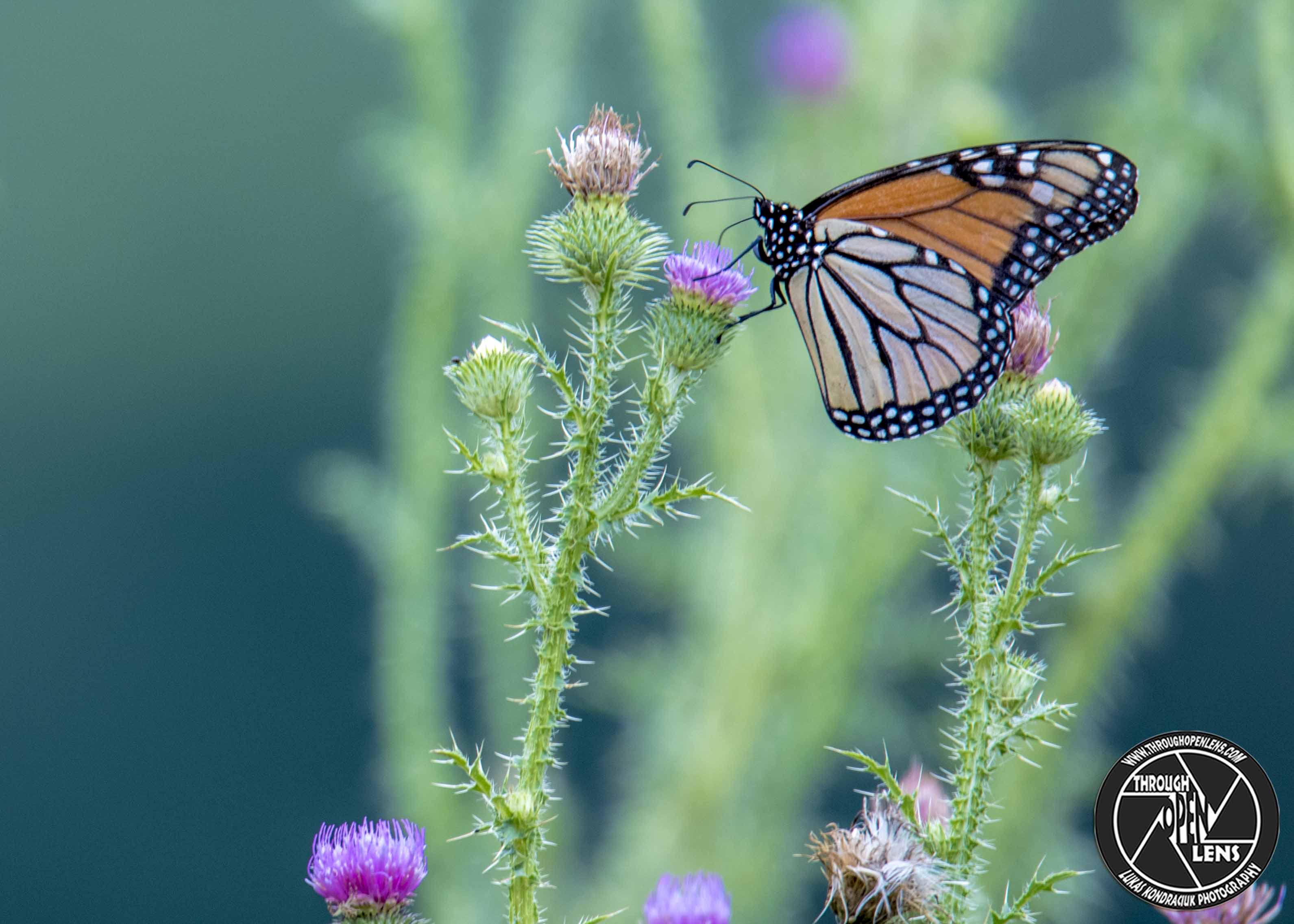
You Really CHANGED!

F/9.0, 1/320, ISO 320.

Butterfly

What’s the secret to telling a good postman joke?

It’s all in the delivery

Interesting Fact: Butterflies feed primarily on nectar from flowers. Some also derive nourishment from pollen,[54] tree sap, rotting fruit, dung, decaying flesh, and dissolved minerals in wet sand or dirt. Butterflies are important as pollinators for some species of plants. In general, they do not carry as much pollen load as bees, but they are capable of moving pollen over greater distances.[55] Flower constancy has been observed for at least one species of butterfly. ( https://en.wikipedia.org/wiki/Butterfly )


We Bee-Long Together

F/5.6, 1/500, ISO 250.

Bumblebees

What kind of exercise do lazy people do?

Diddly-squats.

Interesting Fact: The bumblebee tongue (the proboscis) is a long, hairy structure that extends from a sheath-like modified maxilla. The primary action of the tongue is lapping, that is, repeated dipping of the tongue into liquid.[29] The tip of the tongue probably acts as a suction cup and during lapping, nectar may be drawn up the proboscis by capillary action. When at rest or flying, the proboscis is kept folded under the head. The longer the tongue, the deeper the bumblebee can probe into a flower and bees probably learn from experience which flower source is best-suited to their tongue length.[30] Bees with shorter proboscides, like Bombus bifarius, have a more difficult time foraging nectar relative to other bumblebees with longer proboscides; to overcome this disadvantage, B. bifarius workers were observed to lick the back of spurs on the nectar duct, which resulted in a small reward. ( https://en.wikipedia.org/wiki/Bumblebee )