Stay Fly!

Bald Eagle ( Juvenile )

F/11.0,1/500, ISO 320.

Bald Eagle ( Juvenile )

How does a eagle greet the its prey in the water ?

“Pleased to eat you.”

Interesting Fact: Rather than do their own fishing, Bald Eagles often go after other creatures’ catches. A Bald Eagle will harass a hunting Osprey until the smaller raptor drops its prey in midair, where the eagle swoops it up. A Bald Eagle may even snatch a fish directly out of an Osprey’s talons. Fishing mammals (even people sometimes) can also lose prey to Bald Eagle piracy. See an example here. ( https://www.allaboutbirds.org/guide/Bald_Eagle/lifehistory )

I Have A Very Particular Set Of Skills To Find You

Merlin

F/11.0, 1/500, ISO 250.

Merlin

Two birds in a tree looking down on a man washing his car.
“If he doesn’t hurry up and finish,” says one bird to the
other, “I’ll poop myself.”

Interesting Fact: Merlins don’t build their own nests. Instead, they take over the old nests of other raptors or crows. They also use magpie nests, sometimes laying eggs right on top of the nest’s dome rather than inside the cavity. ( https://www.allaboutbirds.org/guide/Merlin/lifehistory )

This Way To The Airport, We Flying South!

Wild Turkeys

F/6.3, 1/125, ISO 320.

Wild Turkeys  

A lady was picking through the frozen turkeys at the grocery store, but couldn’t find one big enough for her family. She asked the stock boy, ‘Do these turkeys get any bigger?’

The stock boy answered, ‘No ma’am, they’re dead.’

Interesting Fact: When they need to, Turkeys can swim by tucking their wings in close, spreading their tails, and kicking. ( https://www.allaboutbirds.org/guide/Wild_Turkey/lifehistory )

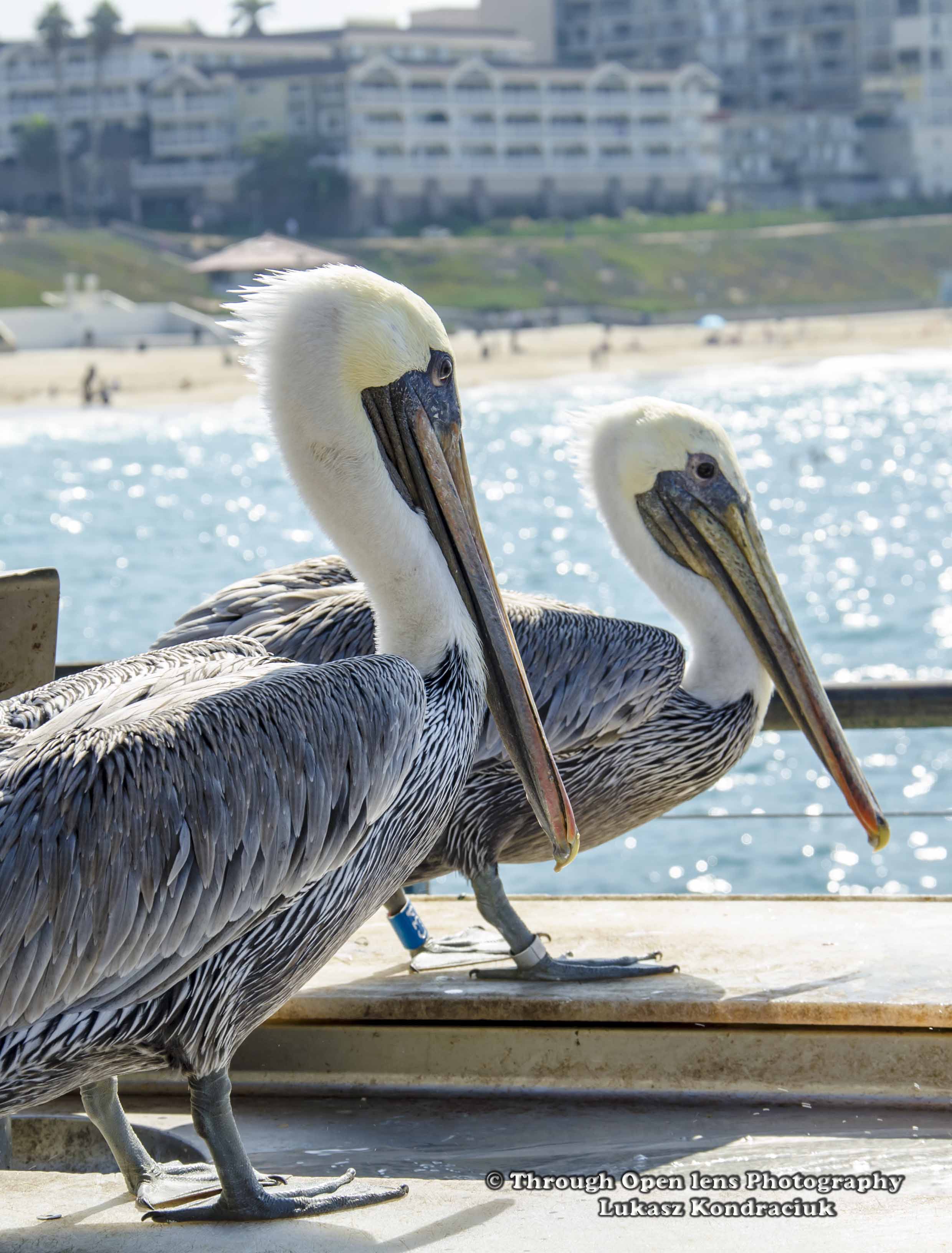
Okay, Don’t Make Any Sudden Moves. Hop Inside My Mouth… If You Want To Live.

Brown Pelicans

F/8.0, 1/250, ISO 100.

Brown Pelicans

California Week Two 

Why was the pelican kicked out of the hotel?

Because he had a big bill!

Interesting Fact: While the Brown Pelican is draining the water from its bill after a dive, gulls often try to steal the fish right out of its pouch—sometimes while perching on the pelican’s head. Pelicans themselves are not above stealing fish, as they follow fishing boats and hang around piers for handouts. ( https://www.allaboutbirds.org/guide/Brown_Pelican/lifehistory )

Reverse Mohawk Is In!

Elegant Tern

F/5.6, 1/500, ISO 220.

Elegant Tern

California Week Two 

A sailor trying to sneak back to his ship about 3 o’clock in the morning was spotted by a chief petty officer who ordered him to explain his tardiness. The lame explanation didn’t work. “Take this broom and sweep every link on this anchor chain by morning or it’s the brig for you,” the chief said. The sailor began to sweep, but a tern landed on the broom handle and he couldn’t continue. He yelled at the bird, but it didn’t budge. He finally plucked it off the broom and gave it a toss. But the bird came right back and again landed on the handle. Over and over, the same routine was repeated. A toss, one sweep, and the bird was back. When morning came, the chief also was back. “What have you been doing all night? This chain is no cleaner than when you started!” “Honest, chief,” said the sailor, “I tossed a tern all night and couldn’t sweep a link.”

Interesting Fact: Unlike some of the smaller white terns, it is not very aggressive toward potential predators, relying on the sheer density of the nests and nesting close to other more aggressive species such as Heermann’s Gulls to avoid predation. ( http://identify.whatbird.com/obj/467/_/Elegant_Tern.aspx )


Hum With Me

Rufous Hummingbird

F/ 5.6, 1/125, ISO 100.

Rufous Hummingbird

California Week

Why do hummingbirds hum?

Because they forgot the words!

Interesting Fact: The Rufous Hummingbird makes one of the longest migratory journeys of any bird in the world, as measured by body size. At just over 3 inches long, its roughly 3,900-mile movement (one-way) from Alaska to Mexico is equivalent to 78,470,000 body lengths. In comparison, the 13-inch-long Arctic Tern’s one-way flight of about 11,185 mi is only 51,430,000 body lengths. (AAB) ( https://www.allaboutbirds.org/guide/Rufous_Hummingbird/lifehistory )


Fly Free!!

Black Skimmer

F/5.6, 1/250, ISO 400.

Black Skimmer

California Week

How long do chickens work?

Around the cluck!

Interesting Fact: Although the Black Skimmer is active throughout the day, it is largely crepuscular (active in the dawn and dusk) and even nocturnal. Its use of touch to catch fish lets it be successful in low light or darkness.  ( https://www.allaboutbirds.org/guide/Black_Skimmer/lifehistory )

That Water Is Freezing I Am Not Going In!

Black-Crowned Night-Heron

F/9.0, 1/1250, ISO 800.

Black-Crowned Night-Heron

What do you get if you cross a parrot with a shark?

A bird that will talk you ear off!

Interesting Fact: A breeding Black-crowned Night-Heron will brood any chick that is placed in its nest. The herons apparently don’t distinguish between their own offspring and nestlings from other parents. ( https://www.allaboutbirds.org/guide/Black-crowned_Night-Heron/lifehistory )

The Mighty Duck!

Hooded Merganser

F/6.3, 1/200, ISO 1600.

Hooded Merganser

What did the duck carry his schoolbooks in?

His Quackpack!

Interesting Fact: Hooded Merganser ducklings leave their nest cavity within 24 hours of hatching. First, their mother checks the area around the nest and calls to the nestlings from ground level. From inside the nest, the little fluffballs scramble up to the entrance hole and then flutter to the ground, which may be 50 feet or more below them. In some cases they have to walk half a mile or more with their mother to the nearest body of water. ( https://www.allaboutbirds.org/guide/Hooded_Merganser/lifehistory )