Ice Ice Baby!

Northern Pintail Duck

F/ 6.3, 1/500, ISO 280.

Northern Pintail Duck

Why did the bride refuse to get married in an igloo?

She got cold feet.

Interesting Fact:  The Northern Pintail is among the earliest nesting ducks in North America, beginning shortly after ice-out in many northern areas.  ( https://www.allaboutbirds.org/guide/Northern_Pintail/lifehistory )

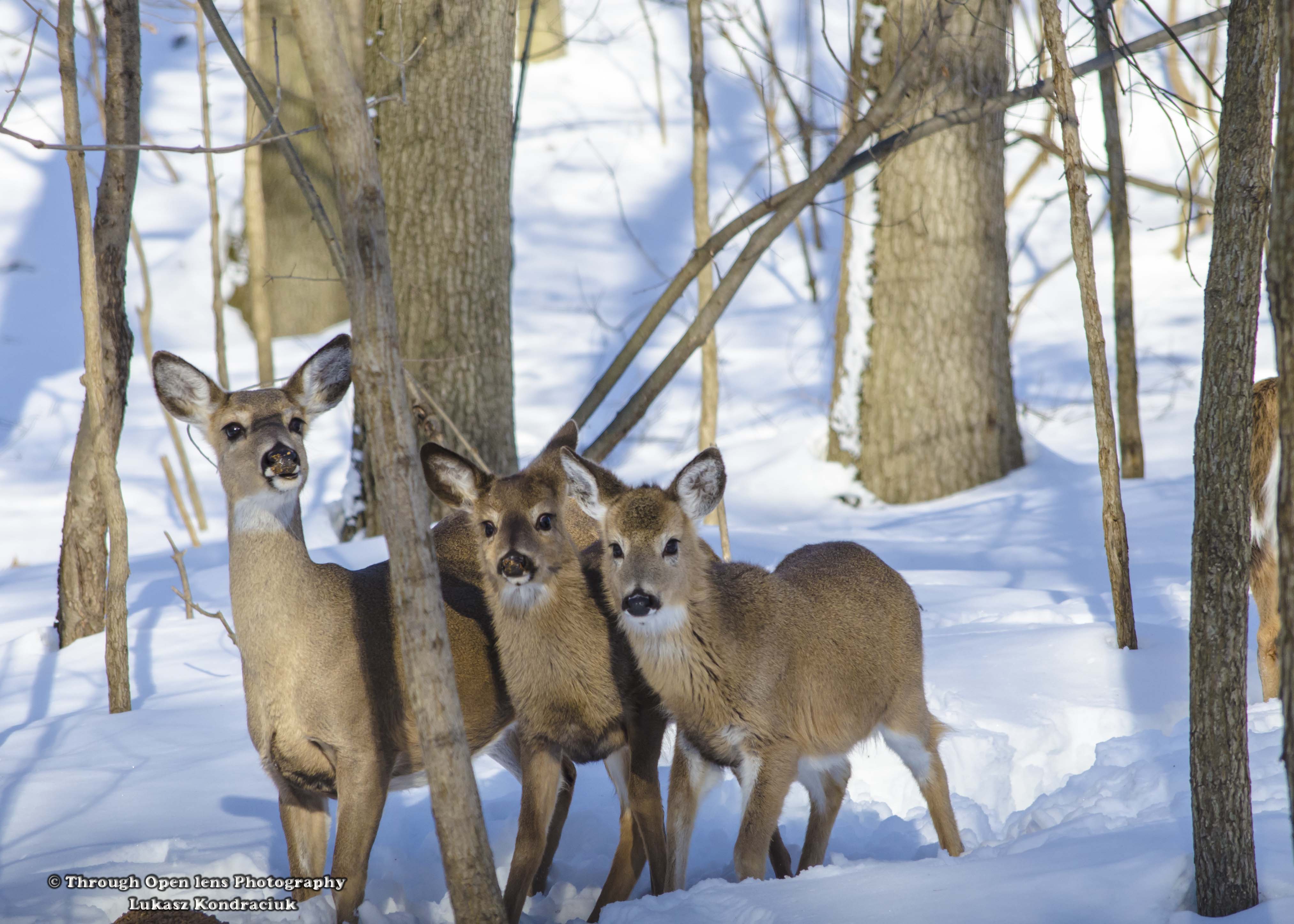
Im Quite Fawned Of You My Deer

deer

F/6.3, 1/640, ISO 200.

Deer

Two hunters were dragging their dead deer back to their car. Another hunter approached pulling his along too.
“Hey, I don’t want to tell you how to do something … but I can tell you that it’s much easier if you drag the deer in the other direction. Then the antlers won’t dig into the ground.”
After the third hunter left, the two decided to try it.
A little while later one hunter said to the other, “You know, that guy was right. This is a lot easier!”
“Yeah, but we’re getting farther from the truck,” the other added.

Interesting Fact:  “White-tailed” refers to the white underside of the deer’s tail, which it displays and wags when it senses danger. ( http://animals.nationalgeographic.com/animals/mammals/white-tailed-deer/ )


SNOW!!! And Away I GO!!!

Common Merganser flying

F/5.3, 1/160, ISO 800.

Common Merganser

What did the parrot say when he saw a duck?

Polly want a quacker!

Interesting Fact: Common Mergansers are sometimes called sawbills, fish ducks, or goosanders. The word “merganser” comes from the Latin and roughly translates to “plunging goose”—a good name for this very large and often submerged duck. ( https://www.allaboutbirds.org/guide/Common_Merganser/lifehistory )

The Mask Of Waxwing!

Cedar Waxwing

F/11.0, 1/500, ISO 400.

Cedar Waxwing

Why didn’t the chicken skeleton cross the road?

Because he didn’t have enough guts

Interesting Fact: The Cedar Waxwing is one of the few North American birds that specializes in eating fruit. It can survive on fruit alone for several months. Brown-headed Cowbirds that are raised in Cedar Waxwing nests typically don’t survive, in part because the cowbird chicks can’t develop on such a high-fruit diet. ( https://www.allaboutbirds.org/guide/Cedar_Waxwing/lifehistory )


Got Crabs?

Common Loon


F/ 10.0, 1/400, ISO 800.

Common Loon ( Juvenile )

Did you hear about the crab that went to the seafood disco?

He pulled a muscle

Interesting Fact: The Common Loon swims underwater to catch fish, propelling itself with its feet. It swallows most of its prey underwater. The loon has sharp, rearward-pointing projections on the roof of its mouth and tongue that help it keep a firm hold on slippery fish. ( https://www.allaboutbirds.org/guide/Common_Loon/lifehistory )


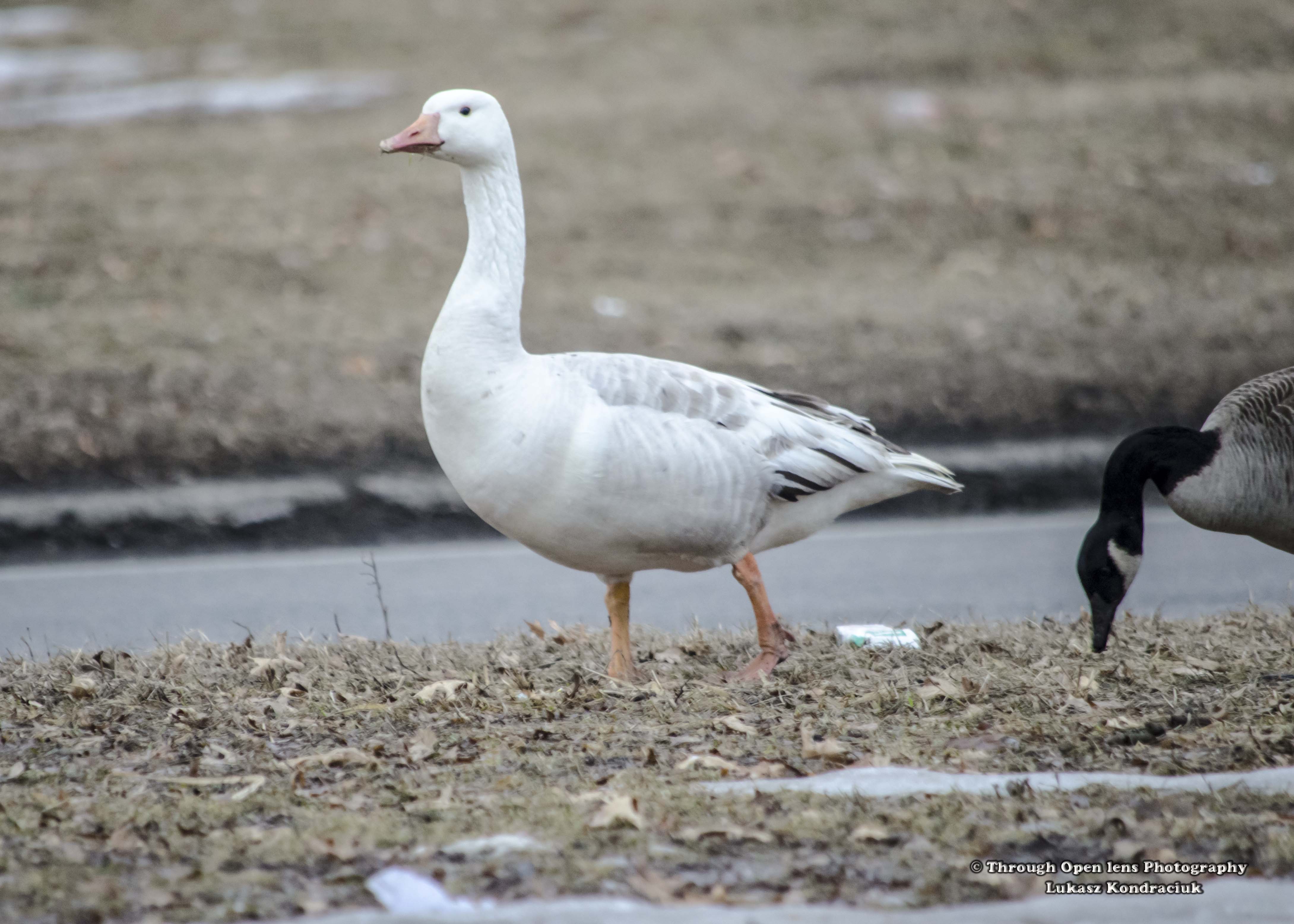
Silly Goose!

Snow Goose

F/ 5.6, 1/125, ISO 1600.

Snow Goose

What grows down, when it grows up?

A goose.

Interesting Fact:  Snow Goose hunting in the eastern United States was stopped in 1916 because of low population levels. Hunting was allowed again in 1975 after populations had recovered. Since then, their populations have continued to grow, to the point that some areas of tundra nesting habitat are starting to suffer. ( https://www.allaboutbirds.org/guide/Snow_Goose/lifehistory )

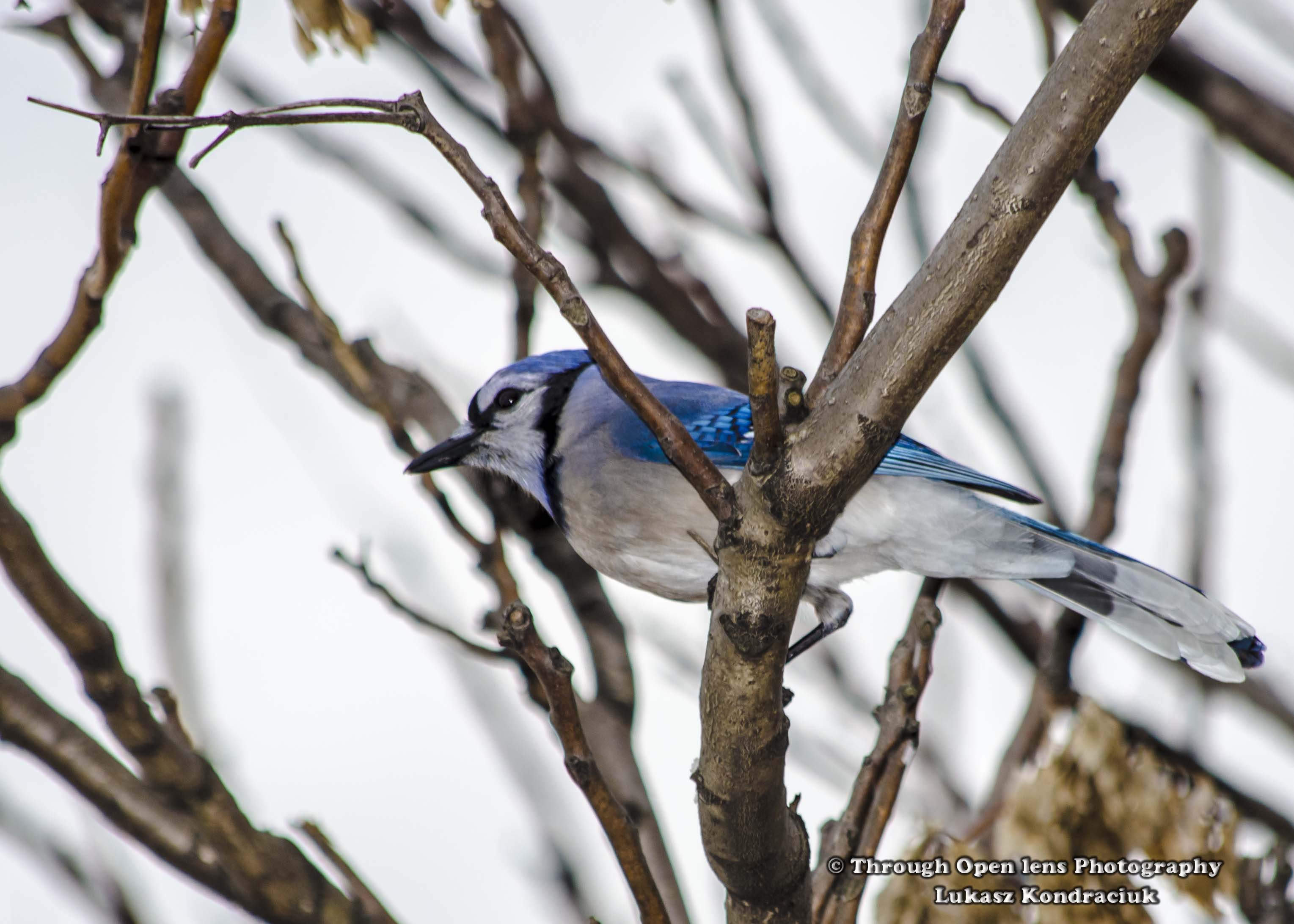
Feeling A Little Blue Today

Blue Jay

F/7.1, 1/200, ISO 100.

Blue Jay

What bird is always sad?

The blue jay!

Interesting Fact:  The Blue Jay frequently mimics the calls of hawks, especially the Red-shouldered Hawk. These calls may provide information to other jays that a hawk is around, or may be used to deceive other species into believing a hawk is present. (  https://www.allaboutbirds.org/guide/Blue_Jay/lifehistory )

Just Pecking Away!

Red-Bellied Woodpecker


F/ 6.3, 1/125, ISO 800.

Red-Bellied Woodpecker

I went to the zoo today and asked if they had any talking parrots.

The zookeeper said they didn’t, but they had a woodpecker that knew morse code.

Interesting Fact: You may occasionally see a Red-bellied Woodpecker flying quickly and erratically through the forest, abruptly changing direction, alighting for an instant and immediately taking off again, keeping up a quick chatter of calls. Scientists categorize this odd behavior as a type of play that probably helps young birds practice the evasive action they may one day need. ( https://www.allaboutbirds.org/guide/Red-bellied_Woodpecker/lifehistory )

Where’s The Beef?!

Black Vulture

F/5.6, 1/125, ISO 800.

Black Vulture

Two vultures were in the desert eating a dead clown. The first vulture asks the second vulture: “Does this taste funny to you?”

Interesting Fact: Turkey Vultures have an excellent sense of smell, but Black Vultures aren’t nearly as accomplished sniffers. To find food they soar high in the sky and keep an eye on the lower-soaring Turkey Vultures. When a Turkey Vulture’s nose detects the delicious aroma of decaying flesh and descends on a carcass, the Black Vulture follows close behind. ( https://www.allaboutbirds.org/guide/Black_Vulture/lifehistory )

Freezing Wipeout!

surfing wipeouts

F/11.0, 1/500, ISO 800.

Two surfers are at getting ready to paddle out: Surfer one: “Hey, guess what! I got a new longboard for my wife!” Surfer two: “Great trade!”

Interesting Fact: For centuries, surfing was a central part of ancient Polynesian culture. Surfing may have first been observed by Europeans at Tahiti in 1767 by Samuel Wallis and the crew members of the Dolphin who were the first Europeans to visit the island in June of that year. Another candidate is the botanist Joseph Banks[2] being part of the first voyage of James Cook on the HMS Endeavour, who arrived on Tahiti on 10 April 1769. Lieutenant James King was the first person to write about the art of surfing on Hawaii when he was completing the journals of Captain James Cook upon Cook’s death in 1779. ( https://en.m.wikipedia.org/wiki/Surfing )