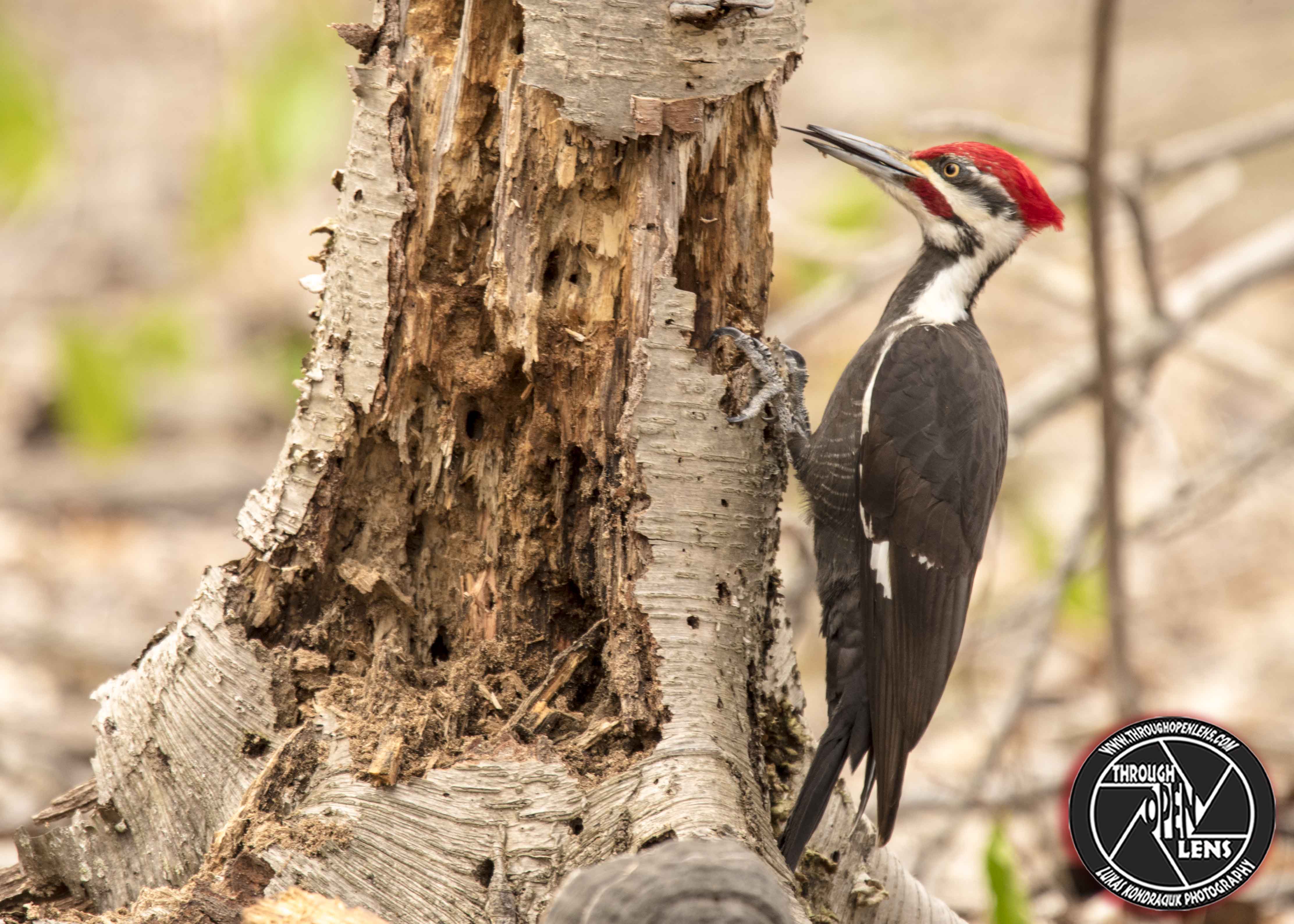
This Tree Taste Really Weird To Me?!

F/6.3, 1/160, ISO 320.

Pileated Woodpecker

Why did the belt go to jail?

Because it held up a pair of pants!

Interesting Fact: The Pileated Woodpecker digs characteristically rectangular holes in trees to find ants. These excavations can be so broad and deep that they can cause small trees to break in half. ( https://www.allaboutbirds.org/guide/Pileated_Woodpecker/lifehistory )

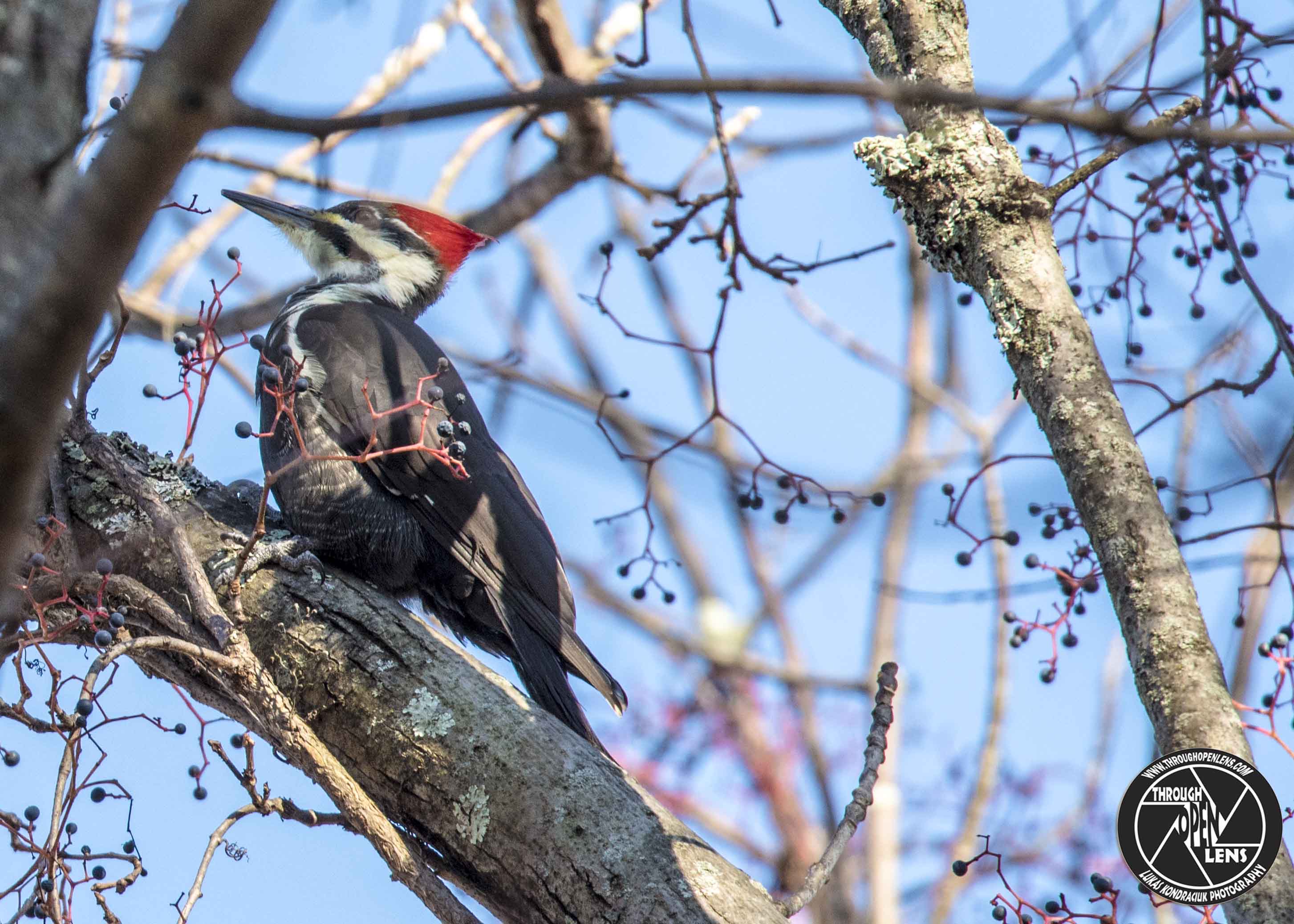
Peck Me If You Can!

F/9.0, 1/1250, ISO 800.

Red-Bellied Woodpecker

Why did the owl, owl?

Because the woodpecker would peck ‘er!

Interesting Fact: A Red-bellied Woodpecker can stick out its tongue nearly 2 inches past the end of its beak. The tip is barbed and the bird’s spit is sticky, making it easier to snatch prey from deep crevices. Males have longer, wider-tipped tongues than females, possibly allowing a breeding pair to forage in slightly different places on their territory and maximize their use of available food. ( https://www.allaboutbirds.org/guide/Red-bellied_Woodpecker/lifehistory )


Peck Like There Is No Tomorrow!

F/9.0, 1/320, ISO 400.

Pileated Woodpecker 

Why do mummies make great spies?

They’re good at keeping things under wraps.

Interesting Fact: Pileated Woodpeckers forage in large, dead wood—standing dead trees, stumps, or logs lying on the forest floor. They make impressive rectangular excavations that can be a foot or more long and go deep inside the wood. These holes pursue the tunnels of carpenter ants, the woodpecker’s primary food. The birds also use their long, barbed tongues to extract woodboring beetle larvae (which can be more than an inch long) or termites lying deep in the wood. ( https://www.allaboutbirds.org/guide/Pileated_Woodpecker/lifehistory )

Keep On Knockin!

F/8.0, 1/800, ISO 800.

Red-Bellied Woodpecker 

What did one traffic light say to the other?

Don’t look at me while I’m changing!

Interesting Fact: These birds often stick to main branches and trunks of trees, where they hitch in classic woodpecker fashion, leaning away from the trunk and onto their stiff tail feathers as they search for food hiding in bark crevices. ( https://www.allaboutbirds.org/guide/Red-bellied_Woodpecker/lifehistory )