Don’t Let Anyone Bring You Down. Make Today The Best Day Of Your Life.

F/7.1, 1/200, ISO 400.

Northern Flicker

Why are frogs always so happy?

They eat what ever bugs them.

Interesting Fact: Northern Flickers generally nest in holes in trees like other woodpeckers. Occasionally, they’ve been found nesting in old, earthen burrows vacated by Belted Kingfishers or Bank Swallows. ( https://www.allaboutbirds.org/guide/Northern_Flicker/overview )

If You Can’t Reach It You Don’t Need It!

F/10.0, 1/400, ISO 400.

Pileated Woodpecker

How are a husband and a cat similar when it comes to housework?

They both hide when they see the vacuum cleaner.

Interesting Fact: The feeding excavations of a Pileated Woodpecker are so extensive that they often attract other birds. Other woodpeckers, as well as House Wrens, may come and feed there. ( https://www.allaboutbirds.org/guide/Pileated_Woodpecker )


I Know A Morse Code!

F/6.3, 1/640, ISO 2200.

Yellow-Bellied Sapsucker

Why are gold fish orange?

The water makes them rusty!

Interesting Fact: The Yellow-bellied Sapsucker is the only woodpecker in eastern North America that is completely migratory. Although a few individuals remain throughout much of the winter in the southern part of the breeding range, most head farther south, going as far south as Panama. Females tend to migrate farther south than do males. ( https://www.allaboutbirds.org/guide/Yellow-bellied_Sapsucker/overview )

Check Out Deez Nuts!

F/6.3, 1/80, ISO 400. 

Downy Woodpecker

What is the difference between beer nuts and deer nuts?

Beer nuts cost a buck twenty-five. Deer nuts are under a buck!

Interesting Fact: Downy Woodpeckers eat mainly insects, including beetle larvae that live inside wood or tree bark as well as ants and caterpillars. They eat pest insects including corn earworm, tent caterpillars, bark beetles, and apple borers. About a quarter of their diet consists of plant material, particularly berries, acorns, and grains. ( https://www.allaboutbirds.org/guide/Downy_Woodpecker/lifehistory )

I’m Buggin’ Out!

F/6.3, 1/80, ISO 320.

Downy Woodpecker

What did the salad say to the fridge?

Shut the door, I’m dressing!

Interesting Fact: Both male and female excavate the nest hole, a job that takes 1 to 3 weeks. Entrance holes are round and 1-1.5 inches across. Cavities are 6-12 inches deep and widen toward the bottom to make room for eggs and the incubating bird. The cavity is lined only with wood chips. ( https://www.allaboutbirds.org/guide/Downy_Woodpecker/lifehistory )

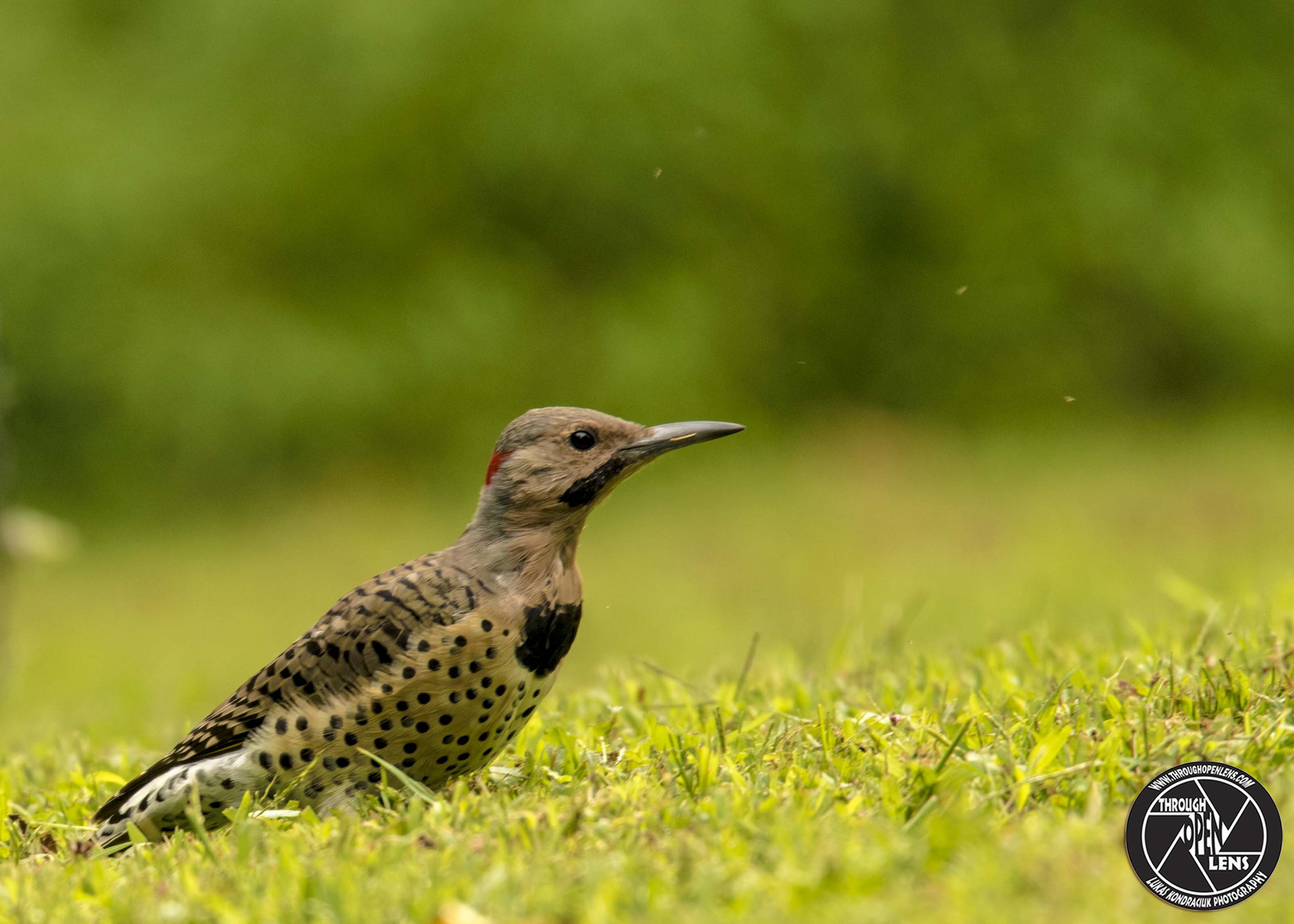
PLEASE KEEP ON THE GRASS! LIE DOWN! ROLL AROUND IN IT! FORGET ALL YOUR RESPONSIBILITES!

F/7.1, 1/200, ISO 400.

Northern Flicker

What do you call a Happy Cowboy?

A Jolly Rancher

Interesting Fact: Northern Flickers don’t act like typical woodpeckers. They mainly forage on the ground, sometimes among sparrows and blackbirds. When flushed, flickers often perch erect on thin horizontal branches rather than hitching up or around a tree trunk. Flickers do fly Iike most woodpeckers do, rising and falling smoothly as they intersperse periods of flapping with gliding. ( https://www.allaboutbirds.org/guide/Northern_Flicker/lifehistory )

Something Is Flickering!

F/6.3, 1/160, ISO 640.

Northern Flicker

What did the math book say to its therapist?

I’ve got a lot of problems.

Interesting Fact: Northern Flickers usually excavate nest holes in dead or diseased tree trunks or large branches. In northern North America look for nests in trembling aspens, which are susceptible to a heartrot that makes for easy excavation. Unlike many woodpeckers, flickers often reuse cavities that they or another species excavated in a previous year. Nests are generally placed 6-15 feet off the ground, but on rare occasions can be over 100 feet high. Northern Flickers have been known to nest in old burrows of Belted Kingfishers or Bank Swallows. ( https://www.allaboutbirds.org/guide/Northern_Flicker/lifehistory )

Come Hang Out With Me.

F/11.0, 1/500, ISO 320.

Red-Bellied Woodpecker

What did the triangle say to the circle?

Your pointless!

Interesting Fact: Nests in dead trees (hardwoods or pines), dead limbs of live trees, and fence posts. The same pair may nest in the same tree year after year, but typically excavate a new cavity each year, often placing the new one beneath the previous year’s.  ( https://www.allaboutbirds.org/guide/Red-bellied_Woodpecker/lifehistory )


Keep Looking Up That’s The Secret Of Life

F/7.1, 1/200, ISO 320.

Pileated Woodpecker

What did one eyeball say to the other eyeball?

Between you and me something smells.

Interesting Fact: A Pileated Woodpecker pair stays together on its territory all year round. It will defend the territory in all seasons, but will tolerate new arrivals during the winter. ( https://www.allaboutbirds.org/guide/Pileated_Woodpecker/lifehistory )

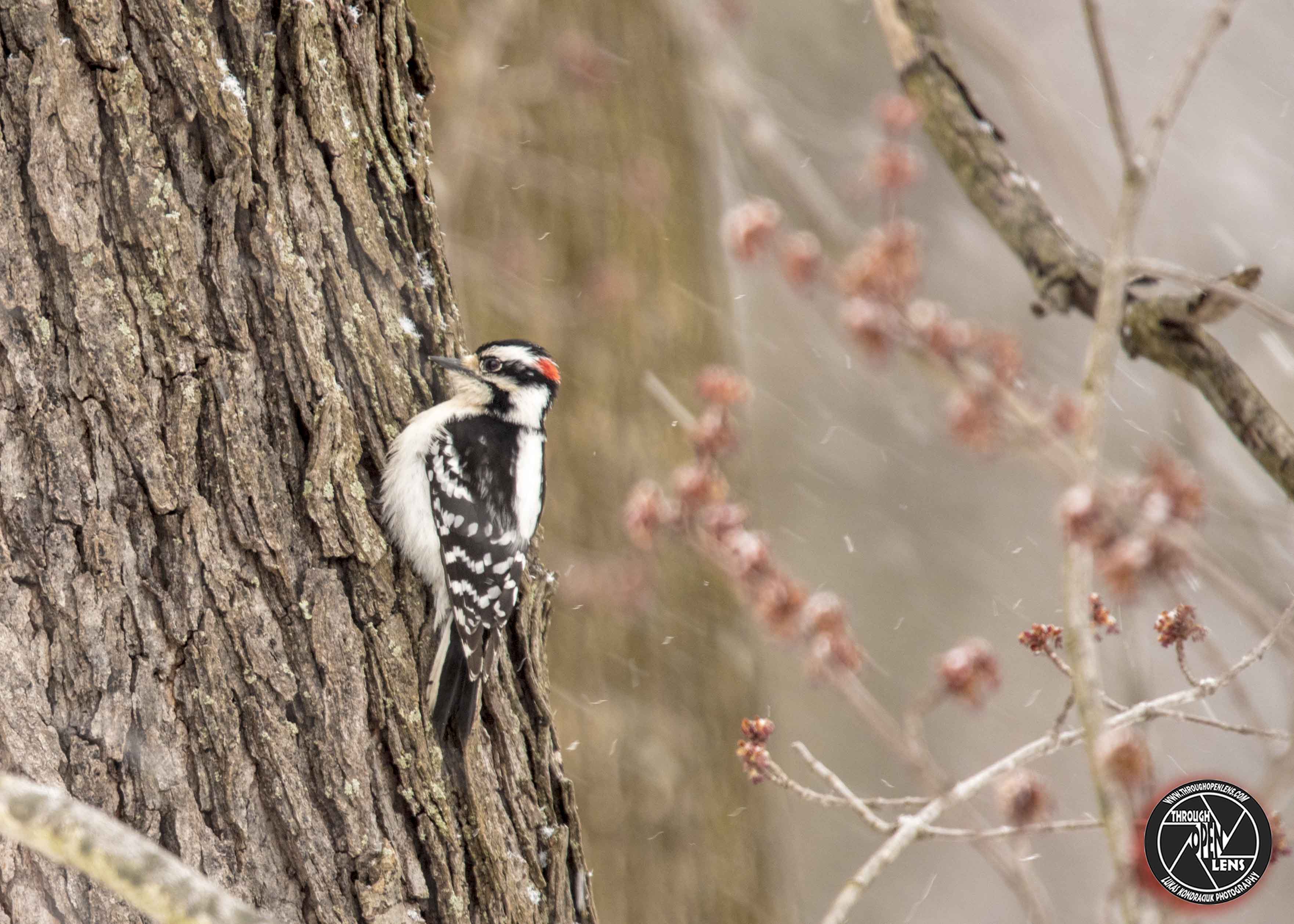
Stop Knocking And Come In Its Snowing Out There

F/6.3, 1/60, 500.

Downy Woodpecker

What do snowmen eat for breakfast?

Frosted Flakes.

Interesting Fact: An active woodpecker that moves quickly over tree trunks, branches, and stems of grasses and wildflowers, characteristically leaning against its stiffened tail feathers for support. Downy Woodpeckers move horizontally and downwards on trees much more readily than most other woodpeckers. You may also see them perched atop tall weeds such as goldenrod in late summer, hammering away at a plant gall to get at the larva inside. Occasionally hops on the ground for food.  ( https://www.allaboutbirds.org/guide/Downy_Woodpecker/lifehistory )