Well I Hope The Neighbors Like This Song

black-capped-chickadee-branch

F/9.0, 1/320, ISO 320, Photoshop CS6.

Black-capped Chickadee

What kind of music are balloons afraid of?

Pop Music.

Interesting Fact: Winter flocks with chickadees serving as the nucleus contain mated chickadee pairs and nonbreeders, but generally not the offspring of the adult pairs within that flock. Other species that associate with chickadee flocks include nuthatches, woodpeckers, kinglets, creepers, warblers and vireos. ( https://www.allaboutbirds.org/guide/Black-capped_Chickadee/lifehistory )

 

I Get Knocked Down But I Get Up Again You Are Never Gonna Keep Me Down

mallard-duck

F/7.1, 1/200, ISO 250.

Mallard Duck

What did the duck say when he bought lipstick?

“Put it on my bill.”

Interesting Fact: Ducks are strong fliers; migrating flocks of Mallards have been estimated traveling at 55 miles per hour. ( https://www.allaboutbirds.org/guide/Mallard/lifehistory )

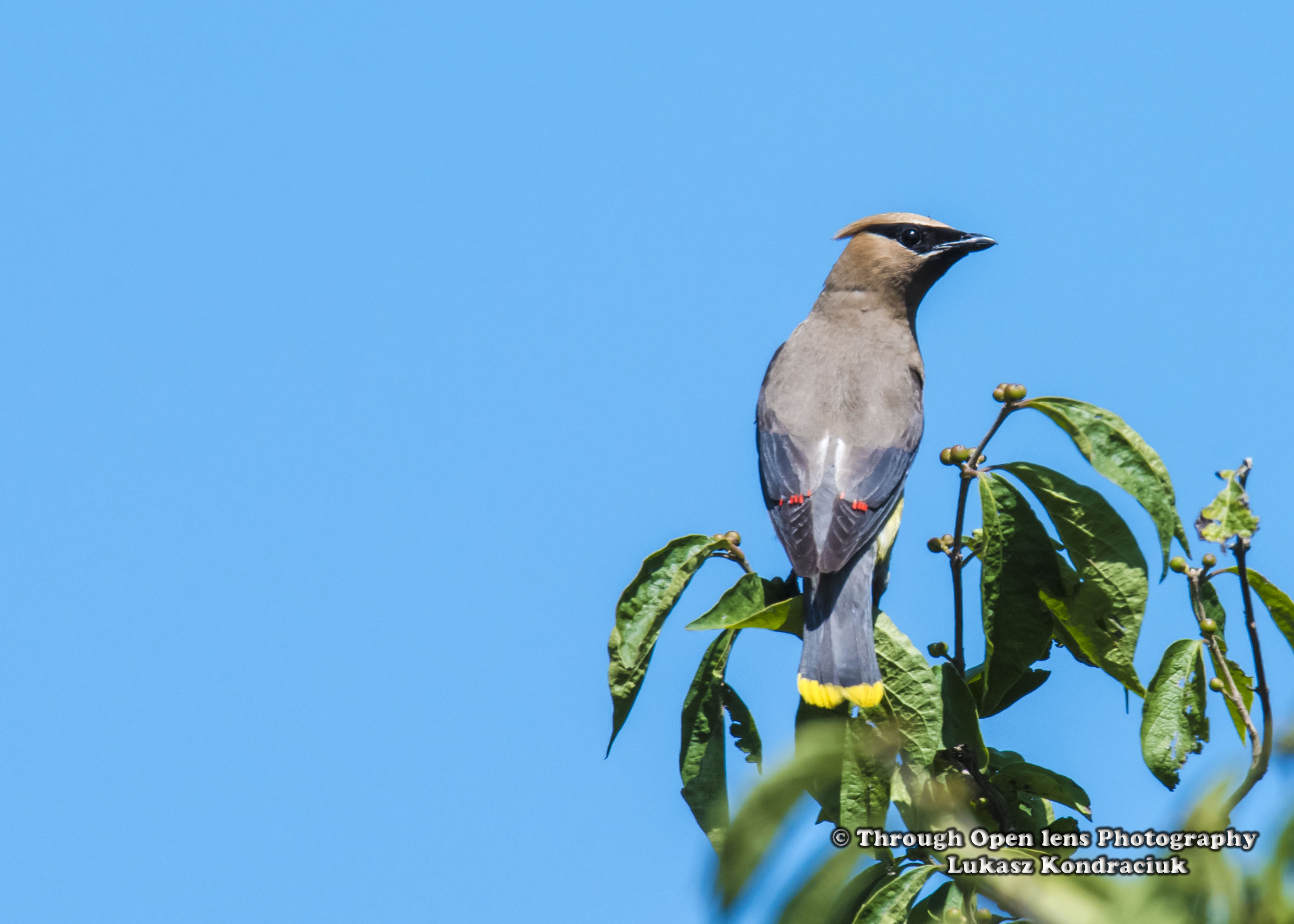
Don’t You Forget About Me

cedar-waxwing-1

F/ 11.0, 1/500, ISO 250.

Cedar Waxwing

What did the pencil sharpener say to the pencil?

Stop going in circles and get to the point! 

Interesting Fact: Cedar Waxwings with orange instead of yellow tail tips began appearing in the northeastern U.S. and southeastern Canada in the 1960s. The orange color is the result of a red pigment picked up from the berries of an introduced species of honeysuckle. If a waxwing eats enough of the berries while it is growing a tail feather, the tip of the feather will be orange. ( https://www.allaboutbirds.org/guide/Cedar_Waxwing/lifehistory )

I Believe I Can Fly!

Franklin's Gull 1

F/14.0, 1/640, ISO 320.

Franklin’s Gull

What did the pig say at the beach on a hot summer’s day?

I’m bacon!

Interesting Fact: In breeding plumage, and sometimes in nonbreeding plumage as well, the Franklin’s Gull often shows a rosy pink cast (rarely salmon) on its chest and abdomen. This color is most apparent on the shafts and bases of its feathers. The color fades as the breeding season progresses as the pigment is broken down by sunlight.  ( https://www.allaboutbirds.org/guide/Franklins_Gull/lifehistory )


I’m Walking Here!

Common Grackle 2

F/6.3, 1/1600, ISO 250.

Common Grackle 

How do men exercise at the beach?

By sucking in their stomach every time they see a girl in a bikini.

Interesting Fact: Common Grackles are resourceful foragers. They sometimes follow plows to catch invertebrates and mice, wade into water to catch small fish, pick leeches off the legs of turtles, steal worms from American Robins, raid nests, and kill and eat adult birds. ( https://www.allaboutbirds.org/guide/Common_Grackle/lifehistory )

Talk Derby To Me!

Saratoga Race

F/ 5.6, 1/1250, ISO 400.

Saratoga Race

Why was the horse naked?

Because the jockey fell off.

Interesting Fact: Saratoga Springs was the site of standardbred racing as early as 1847.[3] On August 3, 1863, casino operator and future congressman John Morrissey organized the first thoroughbred race card on the track previously used for harness racing (and now the location of the Oklahoma Training Track).[4] The current course was opened across the street from the old standardbred track the following year.[5] Among those instrumental to the creation of the Saratoga Race Course were John Hunter (later the first chairman of The Jockey Club), William R. Travers, John Morrissey, and Cornelius Vanderbilt.

Ready, Set, Go!

Vesper Sparrow

F/7.1, 1/200, ISO 320.

Vesper Sparrow

Couples first day at a resort decided to hit the beach.
When the guy went back to there room to get something to drink, one of the hotel maids was making the bed.
He grabbed his cooler and was on my way out when he paused and asked, “Can we drink beer on the beach?”
“Sure,” she said, “but I have to finish the rest of the rooms beforehand.”

Interesting Fact: The Vesper Sparrow responds quickly to changes in habitat; it is often the first species to occupy reclaimed mine sites and abandon old farm fields as they return to forest.  ( https://www.allaboutbirds.org/guide/Vesper_Sparrow/lifehistory )

Reflection On This

Great Blue Heron 4

F/6.3, 1/100, ISO 320.

Great Blue Heron

How do you prevent a Summer cold?

Catch it in the Winter!

Interesting Fact: The white form of the Great Blue Heron, known as the “great white heron,” is found nearly exclusively in shallow marine waters along the coast of very southern Florida, the Yucatan Peninsula, and in the Caribbean. Where the dark and white forms overlap in Florida, intermediate birds known as “Wurdemann’s herons” can be found. They have the body of a Great Blue Heron, but the white head and neck of the great white heron. (  https://www.allaboutbirds.org/guide/Great_Blue_Heron/lifehistory )

Where Are We?

House Finches

F/10.0, 1/400, ISO 200.

House Finch

What did the bra say to the hat?

You go on ahead while I give these two a lift!

Interesting Fact: The total House Finch population across North America is staggering. Scientists estimate between 267 million and 1.4 billion individuals. ( https://www.allaboutbirds.org/guide/House_Finch/lifehistory )


Now That Is Fresh Sushi

Great Egret

F/6.3, 1/640, ISO 200.

Great Egret

What kind of music should you listen to while fishing?

Something catchy!

Interesting Fact: The Great Egret is the symbol of the National Audubon Society, one of the oldest environmental organizations in North America. Audubon was founded to protect birds from being killed for their feathers.  ( https://www.allaboutbirds.org/guide/great_egret/lifehistory )