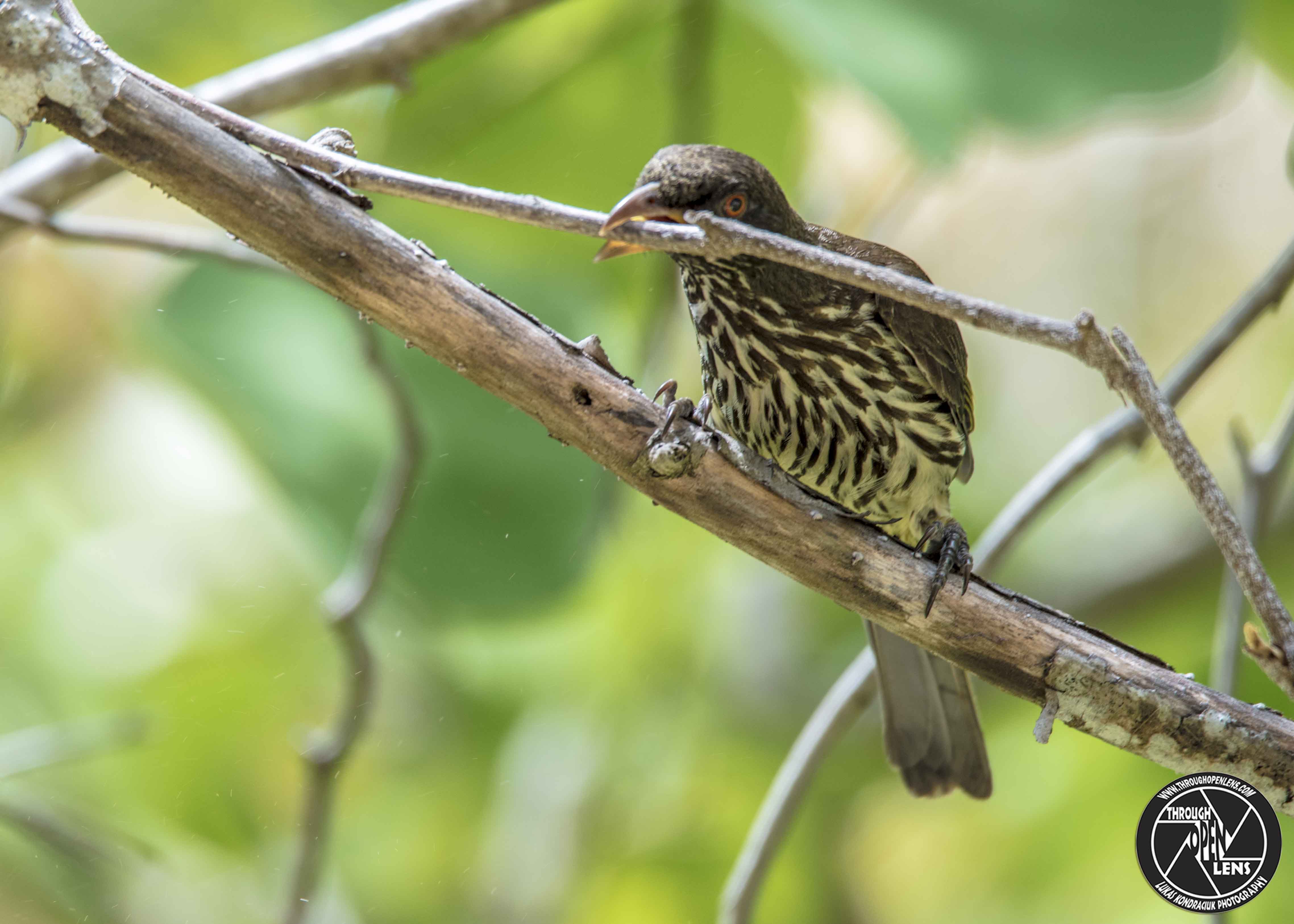
Careful I Bite!

F/7.1, 1/200, ISO 160.

Palmchat

What did the Zen Buddhist say to the hotdog vendor?

Make me one with everything.

Interesting Fact: Palmchats are about 20 cm (8 in) in length. They are olive-brown above, and cream-buff, heavily streaked with brown, below. Their rumps and the edges of their primary feathers are dark yellow-green. They have strong yellow bills and russet eyes. They lack the soft silky plumage of the waxwings or silky-flycatchers. Adults are alike in appearance; immature birds have dark throats. ( https://en.wikipedia.org/wiki/Palmchat )

So High!

F/11.0, 1/500, ISO 320.

Hispaniolan Amazon Parrot

What did the cat say after eating two robins lying in the sun?

I just love baskin’ robins.

Interesting Fact: As with other amazons, it prefers forested areas where food is plentiful. This parrot lives in the wood forests in Haiti and the Dominican Republic. However over the recent years they have been captured out of their natural habitat illegally for pet trades or just to keep them as pets which are very popular in the Dominican Republic. Right now[when?] the population ranges from 10,000 to 19,000 in the wild and decreasing. ( https://en.wikipedia.org/wiki/Hispaniolan_amazon )

Sometime You Have To Flip Out And Go Crazy To Make A Point!

F/9.0, 1/320, ISO 320.

Greater Antillean grackle

Where does a bee keep his stinger?

In his honey!

Interesting Fact: The Greater antillean Grackle will eat anything that can fit in its mouth.They eat fruits,bread, plant matter,and small Vertebrates and invertebrates. ( https://en.wikipedia.org/wiki/Greater_Antillean_grackle )

That Moment That You Realize It Wasn’t A Fart!

F/6.3, 1/125, ISO 400.

White-cheeked pintail

When is a door sweet and tasty?

When its jammed!

Interesting Fact: The white-cheeked pintail feeds on aquatic plants and small creatures obtained by dabbling. The nest is on the ground under vegetation and near water. ( https://en.wikipedia.org/wiki/White-cheeked_pintail )

Just Because I’m Awake Doesn’t Mean I’m Ready To Do Things.

F/8.0, 1/250, ISO 250.

Tricolored Heron ( Juvenile )

What is a bee that cant make up his mind?

A maybe.

Interesting Fact: Angsty teenagers aren’t just a human phenomenon. As Tricolored Herons get older they often lunge and snap at their parents when they arrive at the nest with food. To appease the youngsters, parents greet them with bows. ( https://www.allaboutbirds.org/guide/Tricolored_Heron/overview )

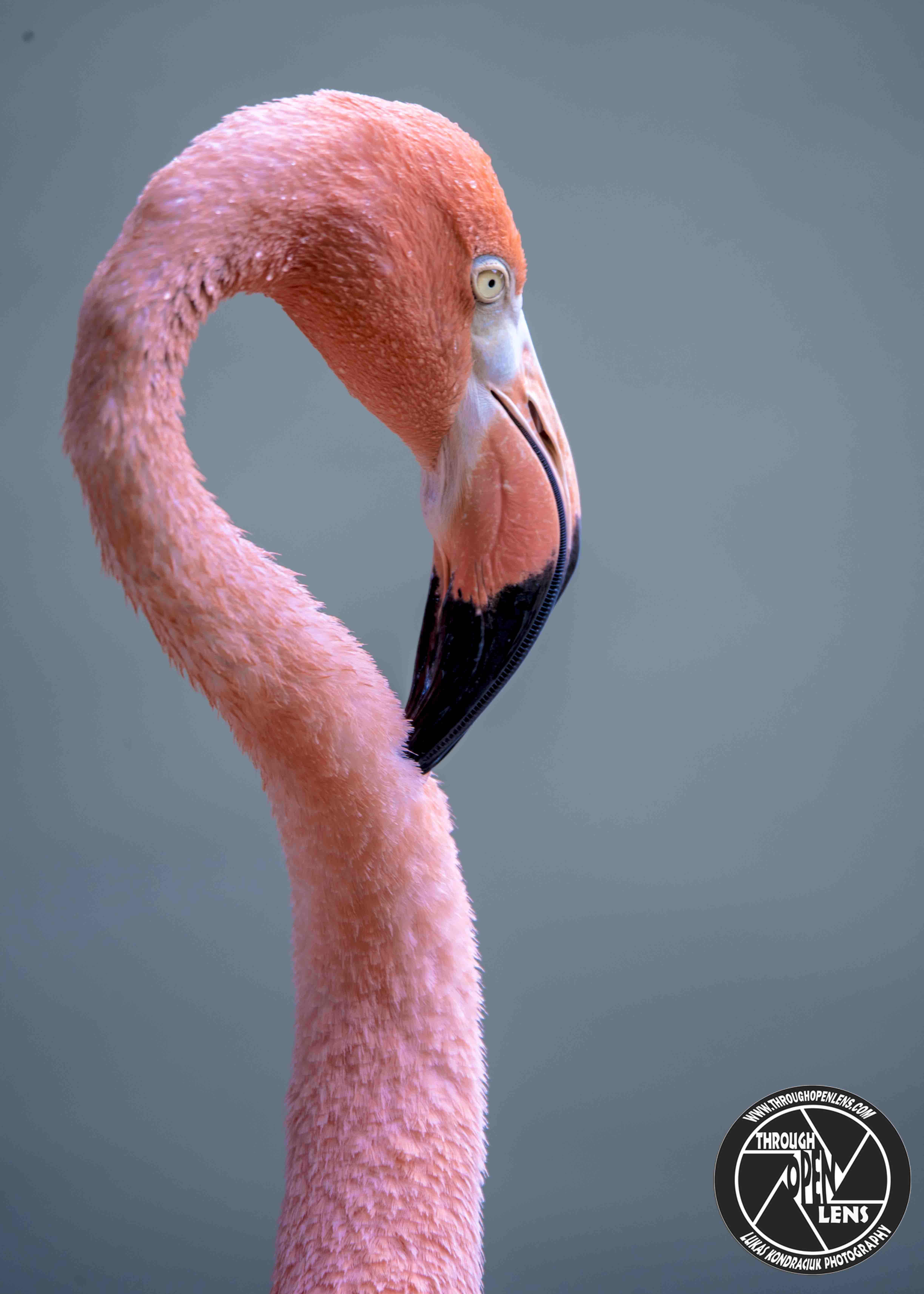
So Much On My Mind It’s A Wonder My Neck Doesn’t Snap.

F/6.3, 1/50, ISO 200.

American Flamingo 

What did one hat say to the other?

You stay here, I’ll go on a head.

Interesting Fact: The American flamingo has adapted to its shallow-water environment in several ways. It has evolved long legs and large webbed feet to wade and stir up the bottom of the water bed to bring up their food source to then be retrieved. To feed, it has evolved a specialized beak which is hooked downward and features marginal lamellae on the upper mandible, and inner and outer lamellae on both the upper and lower mandibles. These are adapted for filtering out differently sized food from water.[16] Depending on the food source in their area, diets depend on the exact morphology of their beaks on what can and cannot be strained out of them. It submerges its head under water to retrieve its food, and may have its head under water for long times, which requires it to hold its breath. Factors which affect the habitat choice of American flamingos are environmental temperatures, water depth, food source, accessibility of an area, and the presence of vegetation beds in feeding areas. If available food items do not meet the needs of the flamingos or the temperature is not appropriate to their requirements, they move to a better feeding or more temperate area. ( https://en.wikipedia.org/wiki/American_flamingo )

Don’t worry, I’m not gonna do what you all think I’m gonna do, which is, you know, FLIP OUT!

F/9.0, 1/320, ISO 320.

Greater Antillean Grackle

What do you call a broke Santa?jerry

It’s Saint-NICKEL-LESS

Interesting Fact: The Greater Antillean grackle (Quiscalus niger) is a grackle found throughout the Greater Antilles as well as smaller, nearby islands. Like all Quiscalus grackles, it is a rather large, gregarious bird.[2] It lives largely in heavily settled areas. It is also known as the ‘kling-kling’. ( https://en.wikipedia.org/wiki/Greater_Antillean_grackle )

Hi There!

F/7.1, 1/200, ISO 400.

Hispaniolan Amazon Parrots

What goes tick tick woof woof?

A watch dog.

Interesting Fact: As with other amazons, it prefers forested areas where food is plentiful. This parrot lives in the wood forests in Haiti and the Dominican Republic. However over the recent years they have been captured out of their natural habitat illegally for pet trades or just to keep them as pets which are very popular in the Dominican Republic. Right now[when?] the population ranges from 10,000 to 19,000 in the wild and decreasing. ( https://en.wikipedia.org/wiki/Hispaniolan_amazon )

Double Take!

F/8.0, 1/250, ISO 250.

White-Cheeked Pintail

What kind of water do you put into a waterbed?

Spring water.

Interesting Fact: It is found in the CaribbeanSouth America, and the Galápagos Islands.[4] It occurs on waters with some salinity, such as brackish lakes, estuaries and mangrove swamps. ( https://en.wikipedia.org/wiki/White-cheeked_pintail )

Welcome To The Jungle We Got Fun And Games!

F/9.0, 1/320, ISO 800.

Hispaniolan Amazon Parrots

What is a mattress’ favorite season?

Spring.

Interesting Fact: Its natural habitats are subtropical or tropical dry forestsubtropical or tropical moist lowland forest, subtropical or tropical moist montane forest, and plantations. It is threatened in its home range by habitat loss and the capture of individuals for the pet trade. ( https://en.wikipedia.org/wiki/Hispaniolan_amazon )