
F/22.0, 1/30, ISO 125.
Brant
What did the goose say when the pillowmaker knocked at his door?
“I’ll be down in a minute.”
Interesting Fact: They have the shortest tail of any goose. ( http://identify.whatbird.com/obj/290/_/Brant.aspx )

F/22.0, 1/30, ISO 125.
Brant
What did the goose say when the pillowmaker knocked at his door?
“I’ll be down in a minute.”
Interesting Fact: They have the shortest tail of any goose. ( http://identify.whatbird.com/obj/290/_/Brant.aspx )
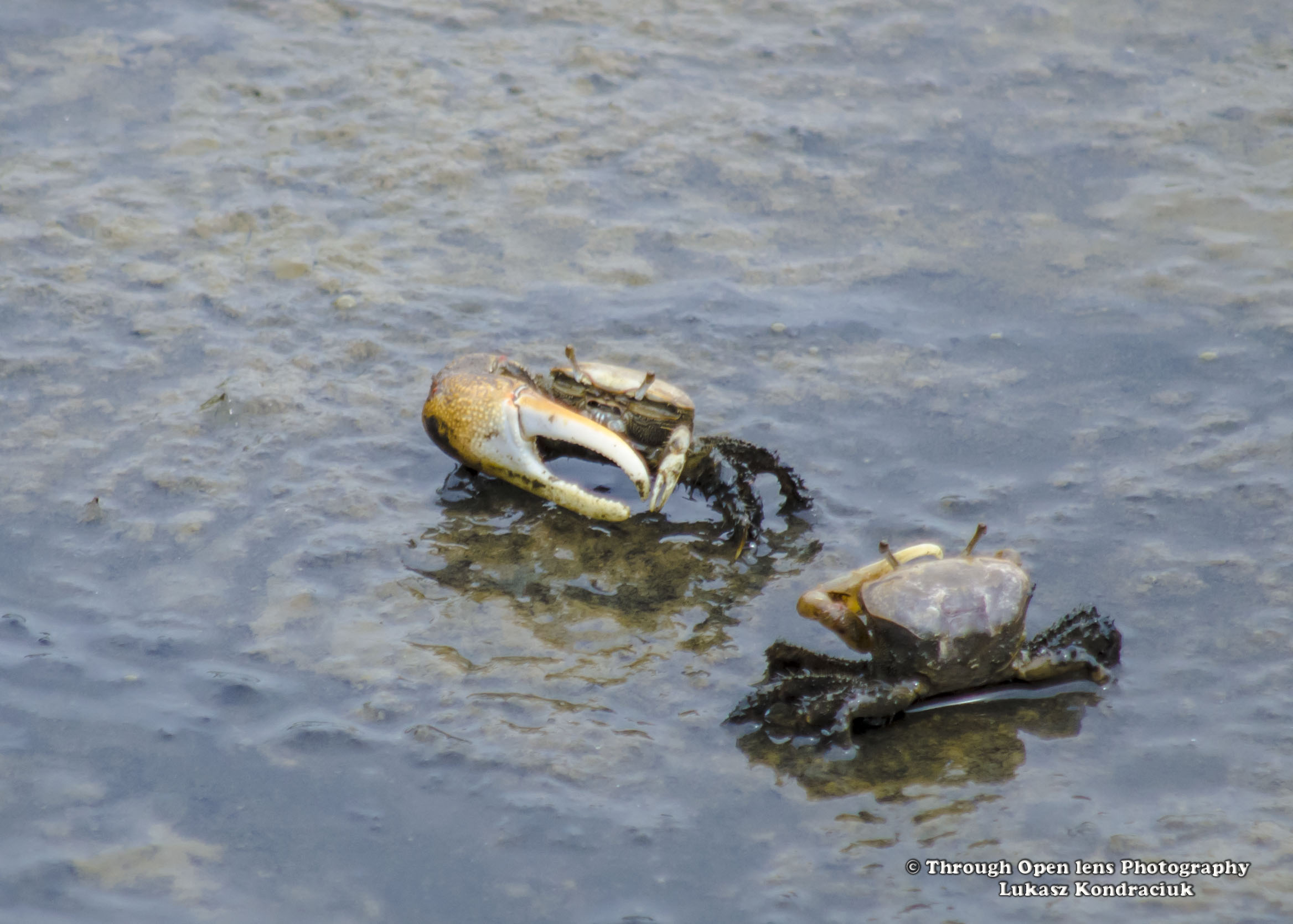
F/5.6, 1/500, ISO 220.
Fiddler crabs
A lonely female crab was walking down the beach one evening when she noticed a male crab coming toward her—but he was walking straight and not sideways!
Impressed by his talent, she decided to marry him immediately.
The next morning she noticed him walking sideways like any ordinary crab! She asked, “What happened? Yesterday you were able to walk straight!”
He answered “What?! I can’t get that drunk every day!”.
Interesting Fact: Male versus male competition also occurs as fighting with the major claws.[9] If a male loses his larger claw, the smaller one will begin to grow larger and the lost claw will regenerate into a new (small) claw. For at least some species of fiddler crabs, however, the small claw remains small, while the larger claw regenerates over a period of several molts, being about half its former size after the first molt. The female fiddler carries her eggs in a mass on the underside of her body. She remains in her burrow during a two week gestation period, after which she ventures out to release her eggs into the receding tide. The larvae remain planktonic for a further two weeks. ( https://en.wikipedia.org/wiki/Fiddler_crab#Life_cycle )

F/6.3, 1/640, ISO 200.
Semipalmated Plover
Why do birds in a nest always agree?
Because they don’t want to fall out.
Interesting Fact: The Semipalmated Plover has been seen to swim short distances across small water channels during foraging while on migration. Chicks also swim short distances to follow parents to small islets on shallow lakes. ( https://www.allaboutbirds.org/guide/Semipalmated_Plover/lifehistory )

F/5.6, 1/400, ISO 100.
Red-Eared Slider Turtle
What happens when your kids want to buy a tortoise?
You shell out a lot of money.
Interesting Fact: Reptiles do not hibernate, but actually brumate; while they become less active, they do occasionally rise to the surface for food or air. Brumation can occur to varying degrees. In the wild, red-eared sliders brumate over the winter at the bottoms of ponds or shallow lakes. They generally become inactive in October, when temperatures fall below 10 °C (50 °F).[9] During this time, the turtles enter a state of sopor, during which they do not eat or defecate, they remain nearly motionless, and the frequency of their breathing falls. Individuals usually brumate underwater, but they have also been found under banks and rocks, and in hollow stumps. In warmer winter climates, they can become active and come to the surface for basking. When the temperature begins to drop again, however, they quickly return to a brumation state. Sliders generally come up for food in early March to as late as the end of April. ( https://en.wikipedia.org/wiki/Red-eared_slider )

F/7.1, 1/800, ISO 200.
Sanderling
Did you hear about the race between the lettuce and the tomato?
The lettuce was a “head” and the tomato was trying to “ketchup”!
Interesting Fact: The Sanderling’s mating system varies from area to area and possibly from year to year. Sanderlings are usually monogamous, but in some cases the female breeds with multiple males in a row within a single breeding season. ( https://www.allaboutbirds.org/guide/Sanderling/lifehistory )
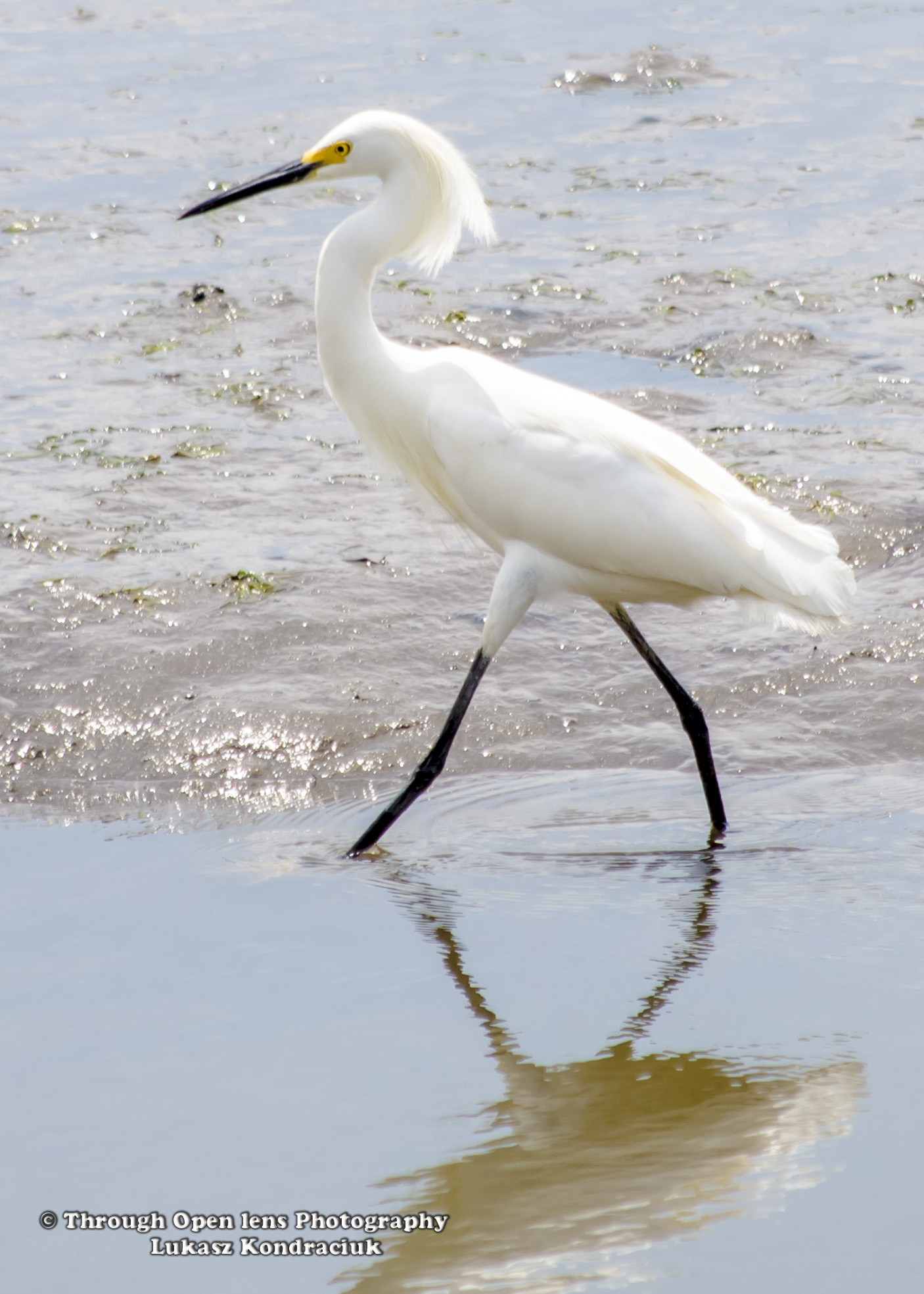
F/5.6 , 1/500, ISO 200.
Snowy Egret
Knock! Knock!
Who’s there?
Dozen.
Dozen who?
Dozen anyone want to let me in?
Interesting Fact: Male and female Snowy Egrets take turns incubating their eggs. As one mate takes over for the other, it sometimes presents a stick, almost as if passing a baton. Both parents continue caring for the young when they hatch. ( https://www.allaboutbirds.org/guide/Snowy_Egret/lifehistory )
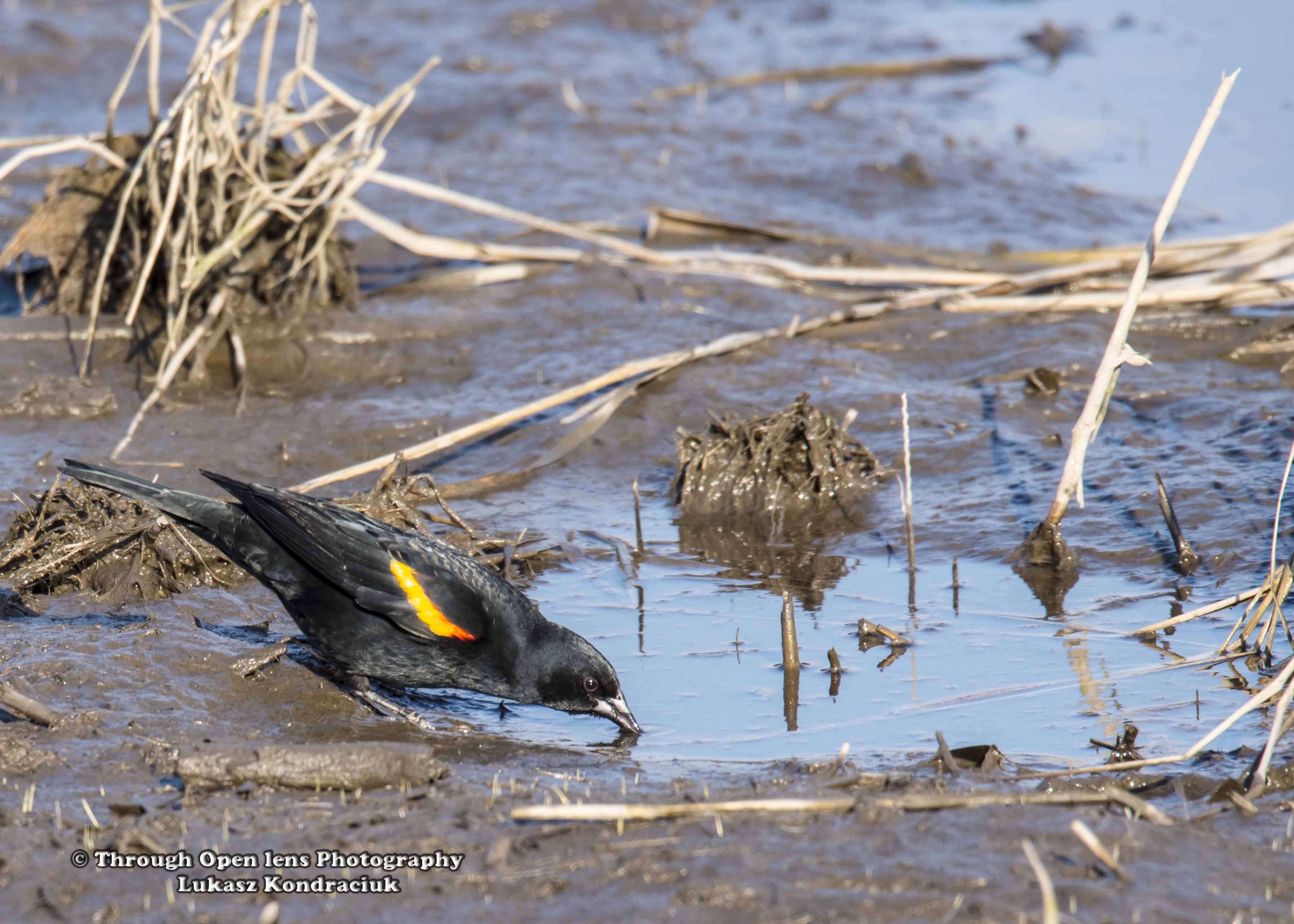
F/9.0, 1/320, ISO 320.
Red-winged Blackbird
Where does a blackbird go for a drink?
To a crow bar.
Interesting Fact: The Red-winged Blackbird is a highly polygynous species, meaning males have many female mates – up to 15 in some cases. In some populations 90 percent of territorial males have more than one female nesting on their territories. But all is not as it seems: one-quarter to one-half of nestlings turn out to have been sired by someone other than the territorial male. ( https://www.allaboutbirds.org/guide/Red-winged_Blackbird/lifehistory )

F/9.0, 1/320, ISO 320.
American Black Duck
Two monsters went duck-hunting with their dogs but without success. “I know what we’re doing wrong,” said the first one. “What’s that then?” asked the second. “We’re not throwing the dogs high enough!”
Interesting Fact: The colors of the bill and legs are used to determine their age and sex. These differences led to an earlier belief that there were two subspecies, a northern, red-legged race, and a southern “common” one. ( http://identify.whatbird.com/obj/392/overview/American_Black_Duck.aspx )

F/10.0, 1/400, ISO 400.
Harlequin Duck
What do you call a crate of ducks?
A box of quackers!
Interesting Fact: Also called the Sea mouse because of its very unducklike squeaks. Other names include Circus duck or painted duck for its beautiful colors. ( http://identify.whatbird.com/obj/360/overview/Harlequin_Duck.aspx )

F/5.6, 1/500, ISO 200.
Marbled Godwit
Why does it take pirates so long to learn the alphabet?
Because they spend years at C!
Interesting Fact: It often inserts its entire bill into the mud, and its head is totally submerged at times. ( http://identify.whatbird.com/obj/251/overview/Marbled_Godwit.aspx )
 Through Open Lens