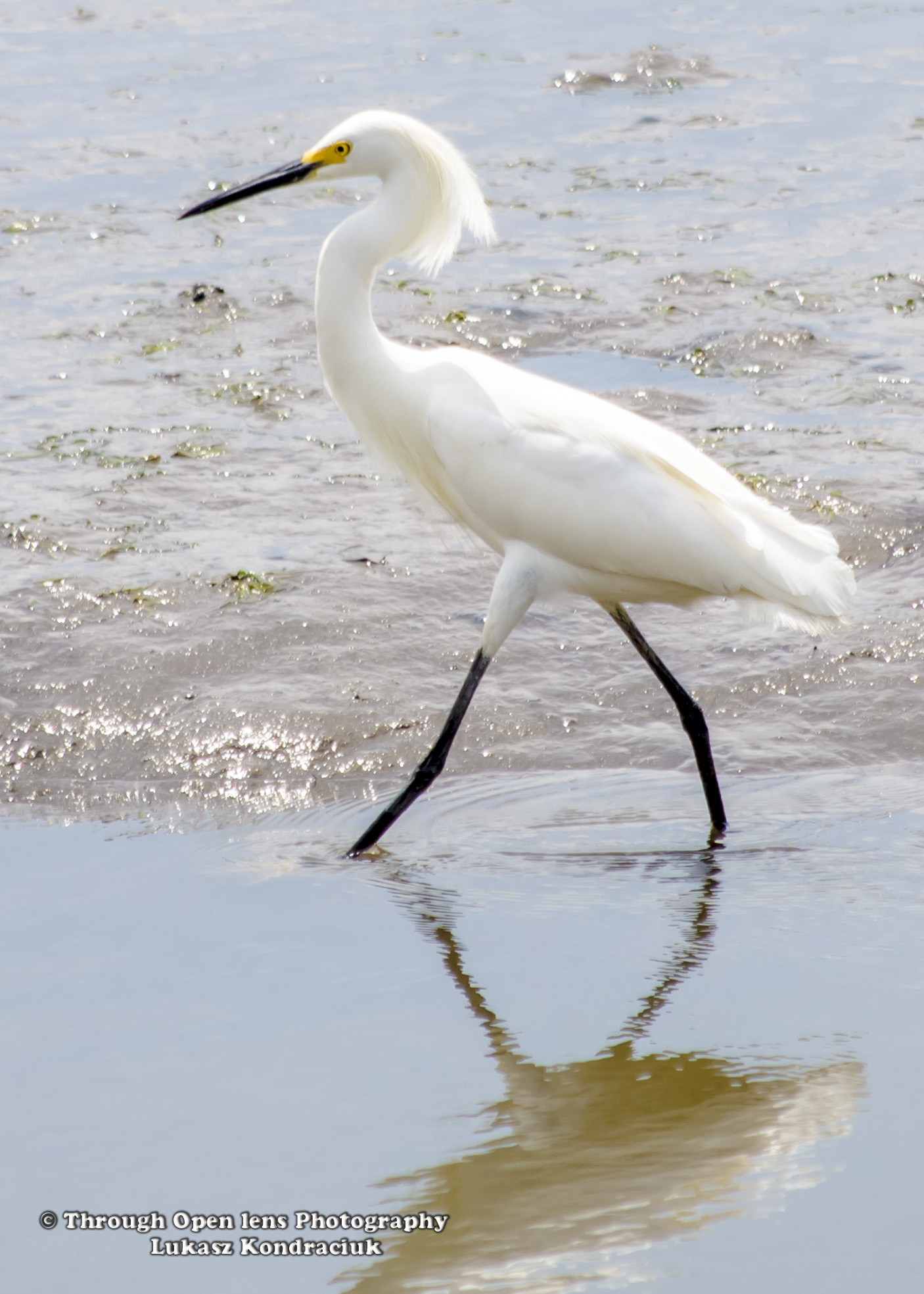
Walk With Purpose!

Snowy Egret

F/5.6 , 1/500, ISO 200.

Snowy Egret

Knock! Knock!

Who’s there?

Dozen.

Dozen who?

Dozen anyone want to let me in?

Interesting Fact: Male and female Snowy Egrets take turns incubating their eggs. As one mate takes over for the other, it sometimes presents a stick, almost as if passing a baton. Both parents continue caring for the young when they hatch. ( https://www.allaboutbirds.org/guide/Snowy_Egret/lifehistory )

Oops I Pierce The Sky!

Pierce The Sky

F/ 11.0, 1/500, ISO 100.

How much do pirates pay to get their ears pierced?

A Buccaneer!

Interesting Fact: In the field of astronomy, the sky is also called the celestial sphere. This is viewed from Earth’s surface as an imaginary dome where the sun, stars, planets, and the moon are seen to be traveling. The celestial sphere is conventionally divided into regions called constellations. Usually, the term sky is used informally as the point of view from the Earth’s surface; however, the meaning and usage can vary. In some cases, such as in discussing the weather, the sky refers to only the lower, more dense portions of the atmosphere. ( https://en.wikipedia.org/wiki/Sky )

I Need A Hug!

Common Tern 1

F/7.1, 1/800, ISO 200.

Common Tern

Knock! Knock!

Who’s there?

Lettuce.

Lettuce who?

Lettuce in already!

Interesting Fact: Common Terns living along the coast drink salt water. They do not seek fresh water even when it is available nearby. Like many seabirds, they have nasal glands that excrete the excess salt. ( https://www.allaboutbirds.org/guide/Common_Tern/lifehistory )

Hi I’m Steven, Steven SeaGull

Franklin's Gull

F/7.1, 1/800, ISO 200.

Franklin’s Gull

Why do sea-gulls fly over the sea?

Because if they flew over the bay they would be bagels!

Interesting Fact: The floating nest of the Franklin’s Gull gradually sinks as the material below the water surface decays, and it requires continual maintenance. Both parents add new nest material daily until one or two weeks before departing the colony. Older chicks also add nest material from the immediate vicinity of the nest. ( https://www.allaboutbirds.org/guide/Franklins_Gull/lifehistory )

No. Stop Don’t SWALLOW That!

Tree Swallow

F/ 5.6, 1/500, ISO 125.

Tree Swallow

What do you call a chicken in the 1960’s?

A funky chicken.

Interesting Fact: Migrating and wintering Tree Swallows can form enormous flocks numbering in the hundreds of thousands. They gather about an hour before sunset and form a dense cloud above a roost site (such as a cattail marsh or grove of small trees), swirling around like a living tornado. With each pass, more birds drop down until they are all settled on the roost. ( https://www.allaboutbirds.org/guide/Tree_Swallow/lifehistory )

Happy Easter To Everybunny!

Cottontail Rabbit

F/5.6, 1/250, ISO 400.

Cottontail Rabbit

What do you call a bunny with a large brain?

An egghead.

Interesting Fact: They browse at night on grasses and herbs and are fond of garden fare such as peas and, of course, lettuce. In winter, their diet becomes a bit coarse and consists of bark, twigs, and buds. During the day, cottontails often remain hidden in vegetation. If spotted, they flee from prey with a zigzag pattern, sometimes reaching speeds of up to 18 miles (29 kilometers) an hour. ( http://animals.nationalgeographic.com/animals/mammals/cottontail-rabbit/ )

And Now My Beak Is Stuck!

Marbled Godwit

F/5.6, 1/500, ISO 200.

Marbled Godwit

Why does it take pirates so long to learn the alphabet?

Because they spend years at C!

Interesting Fact: It often inserts its entire bill into the mud, and its head is totally submerged at times. ( http://identify.whatbird.com/obj/251/overview/Marbled_Godwit.aspx )

Don’t Stick Your Beak Where It Doesn’t Belong

Ring-billed Gull

F/9.0, 1/200, ISO 100.

Ring-billed Gull

What do you get when you cross a bird and a lawn mower?

Shredded tweet.

Interesting Fact: Many, if not most, Ring-billed Gulls return to breed at the colony where they hatched. Once they have bred, they are likely to return to the same breeding spot each year, often nesting within a few meters of the last year’s nest site. Many individuals return to the same wintering sites each winter too.  ( https://www.allaboutbirds.org/guide/Ring-billed_Gull/lifehistory )

Unless You Spread Your Wings, You’ll Never Know How High You Can Fly!

Mallard wings

F/6.3, 1/640, ISO 200.

Mallard

What says “Quick, Quick”?

A duck with the hiccups.

Interesting Fact: The standard duck’s quack is the sound of a female Mallard. Males don’t quack; they make a quieter, rasping sound. ( https://www.allaboutbirds.org/guide/Mallard/lifehistory )

I’m Blue Da Ba Dee Da Ba Die…

Blue Jay 1

F/6.3, 1/125, ISO 800.

Blue Jay

How do blue jays stay fit?

Wormups.

Interesting Fact: Thousands of Blue Jays migrate in flocks along the Great Lakes and Atlantic coasts, but much about their migration remains a mystery. Some are present throughout winter in all parts of their range. Young jays may be more likely to migrate than adults, but many adults also migrate. Some individual jays migrate south one year, stay north the next winter, and then migrate south again the next year. No one has worked out why they migrate when they do. ( https://www.allaboutbirds.org/guide/Blue_Jay/lifehistory )