Hey What’s Going On Down There, Keep It Down!

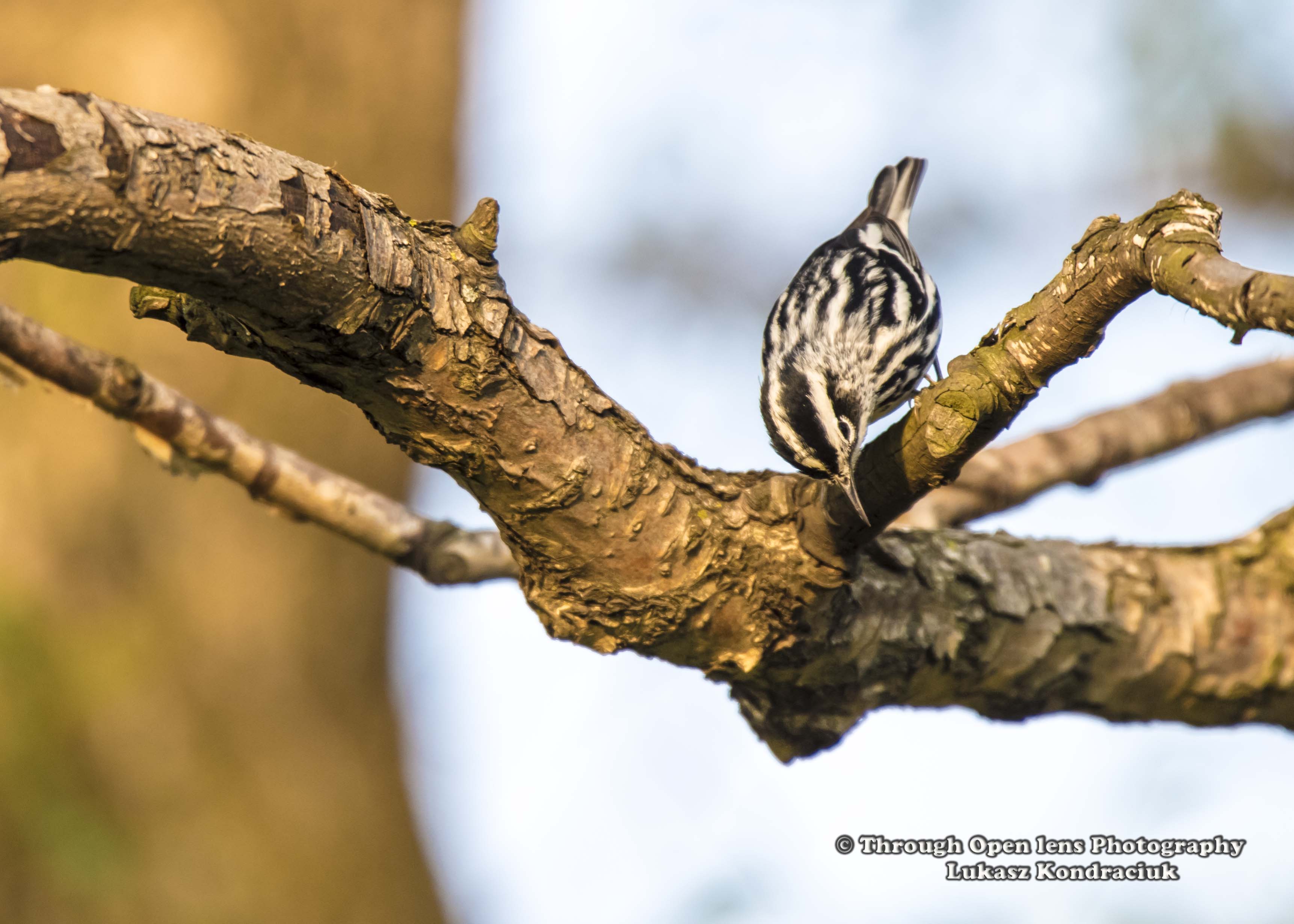
Black and white Warbler

F/7.1, 1/200, ISO 320.

Black-and-white Warbler

A couple of hunters are out in the woods when one of them falls to the ground. He doesn’t seem to be breathing, his eyes are rolled back in his head. The other guy whips out his cell phone and calls the emergency services. He gasps to the operator: “My friend is dead! What can I do?”

The operator, in a calm soothing voice says: “Just take it easy. I can help. First, let’s make sure he’s dead.” There is a silence, then a shot is heard.

The guy’s voice comes back on the line. He says: “OK, now what?

Interesting Fact: As warblers go, Black-and-white Warblers are combative: they’ll attack and fight with other species that enter their territory, including Black-capped Chickadees, Red-breasted Nuthatches, and American Redstarts. This aggressive behavior extends to the wintering grounds, where they defend territories and when feeding in mixed flocks will drive other Black-and-white Warblers away. ( https://www.allaboutbirds.org/guide/Black-and-white_Warbler/lifehistory )

 

Spring Is In The Air Everywhere I Look Around

Spring Flowers

F/8.0, 1/250, ISO 250.

What did the tree wear to the pool party?

Swimming trunks!

Interesting Fact: In spring, the Earth‘s axis is tilted toward the sun, increasing the number of daylight hours and bringing warmer weather that causes plants to bring forth new growth.  ( http://www.22facts.com/spring/ )

Feed Me!

Heermann's Gull

F/7.1, 1/800, ISO 200.

Heermann’s Gull

If someone ever says, “What are you staring at?”

Say “I don’t know, give me a minute.”

Interesting Fact: The Heermann’s Gull, like many other gulls, frequently steals food from other birds. The Brown Pelican is a frequent victim. An adult Heermann’s Gull is most likely to try to steal food from an adult pelican, and an immature gull is more likely to steal from an immature pelican. ( https://www.allaboutbirds.org/guide/Heermanns_Gull/lifehistory )

And I Ran, I Ran So Far Away!

Sanderling

F/7.1, 1/800, ISO 200.

Sanderling

Did you hear about the race between the lettuce and the tomato?

The lettuce was a “head” and the tomato was trying to “ketchup”!

Interesting Fact: The Sanderling’s mating system varies from area to area and possibly from year to year. Sanderlings are usually monogamous, but in some cases the female breeds with multiple males in a row within a single breeding season. ( https://www.allaboutbirds.org/guide/Sanderling/lifehistory )

Oops I Pierce The Sky!

Pierce The Sky

F/ 11.0, 1/500, ISO 100.

How much do pirates pay to get their ears pierced?

A Buccaneer!

Interesting Fact: In the field of astronomy, the sky is also called the celestial sphere. This is viewed from Earth’s surface as an imaginary dome where the sun, stars, planets, and the moon are seen to be traveling. The celestial sphere is conventionally divided into regions called constellations. Usually, the term sky is used informally as the point of view from the Earth’s surface; however, the meaning and usage can vary. In some cases, such as in discussing the weather, the sky refers to only the lower, more dense portions of the atmosphere. ( https://en.wikipedia.org/wiki/Sky )

Let’s Get Back On Track!

High Line Park

F/7.1, 1/200, ISO 320.

How do trees access the internet?

They log on.

Interesting Fact: The High Line (also known as the High Line Park) is a 1.45-mile-long (2.33 km) New York City linear park built in Manhattan on an elevated section of a disused New York Central Railroad spur called the West Side Line.[1] Inspired by the 3-mile (4.8-kilometer) Promenade plantée (tree-lined walkway), a similar project in Paris completed in 1993, the High Line has been redesigned and planted as an aerial greenway and rails-to-trails park. (

Quack Pack!

Harlequin Ducks

F/10.0, 1/400, ISO 400.

Harlequin Duck  

What do you call a crate of ducks?

A box of quackers!

Interesting Fact: Also called the Sea mouse because of its very unducklike squeaks. Other names include Circus duck or painted duck for its beautiful colors. ( http://identify.whatbird.com/obj/360/overview/Harlequin_Duck.aspx )

A Change May Be Just Around The Corner!

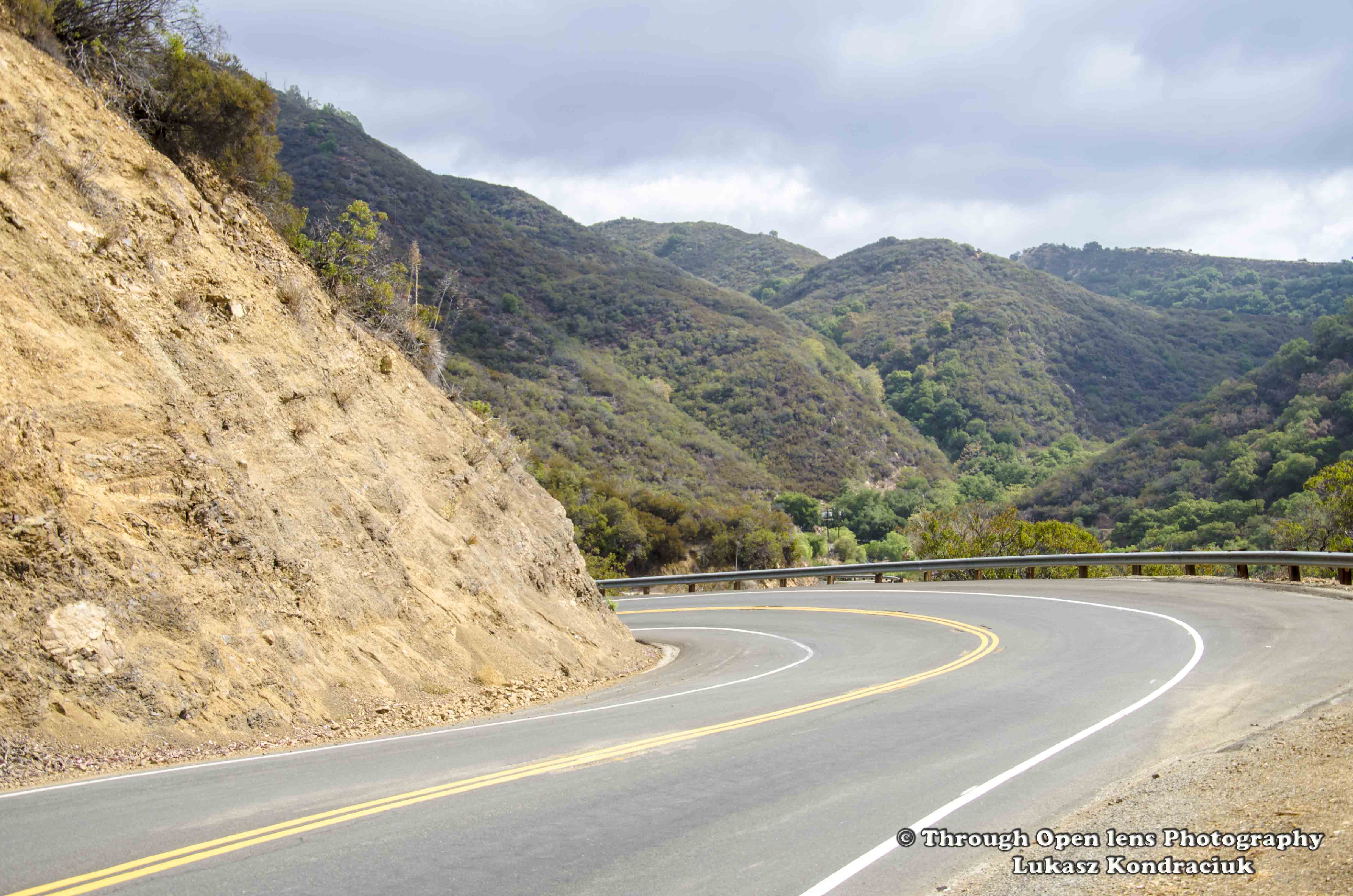
canyon road malibu

F/ 8.0 , 1/250, ISO 100.

California Week Two

Why didn’t the bicycle cross the road?

Because it was two tired

Interesting Fact: Explorer Juan Rodríguez Cabrillo is believed to have moored at Malibu Lagoon, at the mouth of Malibu Creek, to obtain fresh water in 1542. The Spanish presence returned with the California mission system, and the area was part of Rancho Topanga Malibu Sequit—a 13,000-acre (53 km2) land grant—in 1802. That ranch passed intact to Frederick Hastings Rindge in 1891. He and his widow, May K. Rindge, guarded their privacy zealously by hiring guards to evict all trespassers and fighting a lengthy court battle to prevent the building of a Southern Pacific railroad line through the ranch. Interstate Commerce Commission regulations would not support a railroad condemning property in order to build tracks that paralleled an existing line, so Frederick H. Rindge decided to build his own railroad through his property first. He died, and May K. Rindge followed through with the plans, building a line starting just inside the ranch’s property eastern boundary at Las Flores Canyon, and running 15 miles westward, past Pt. Dume. ( https://en.wikipedia.org/wiki/Malibu,_California#History )

Okay, Don’t Make Any Sudden Moves. Hop Inside My Mouth… If You Want To Live.

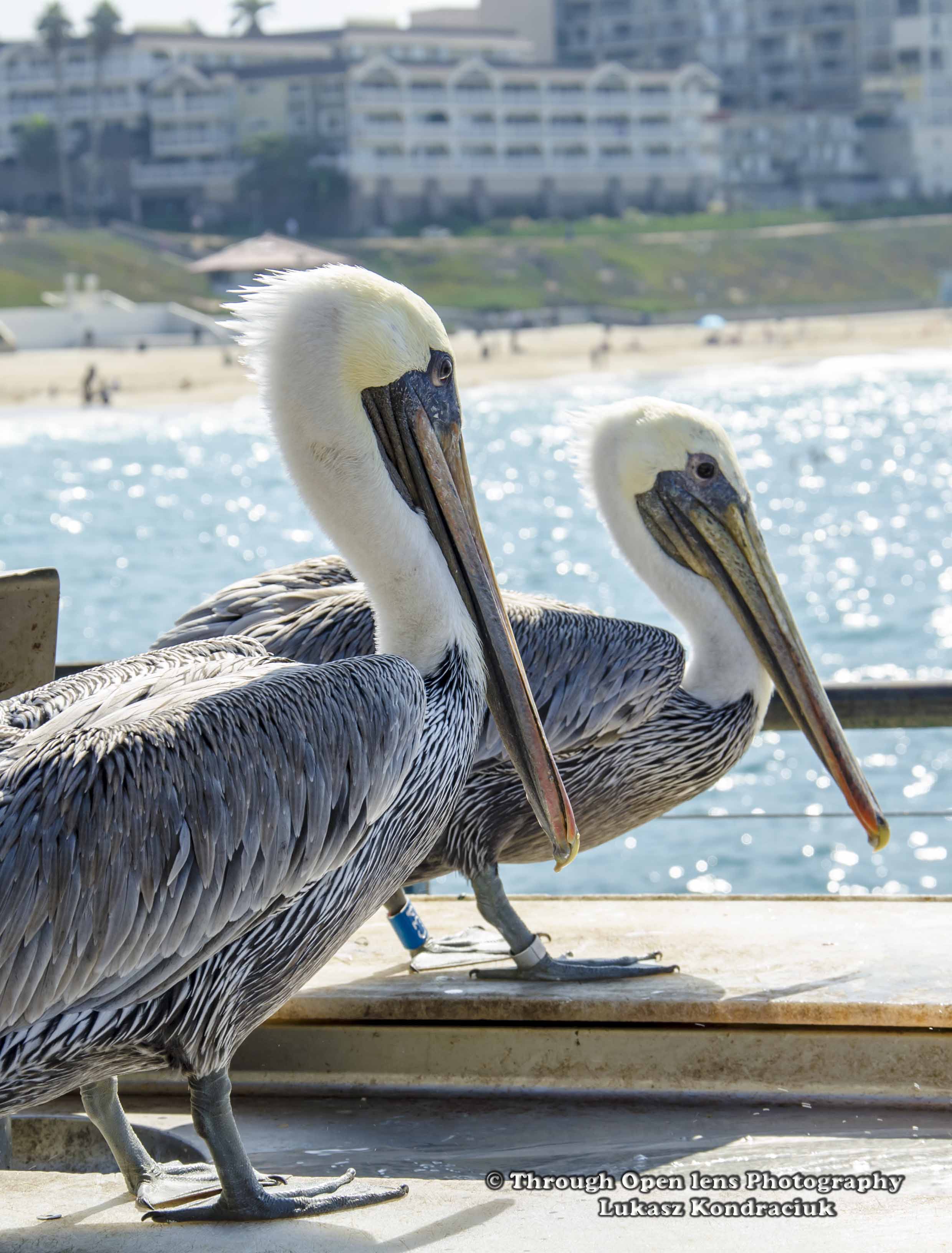
Brown Pelicans

F/8.0, 1/250, ISO 100.

Brown Pelicans

California Week Two 

Why was the pelican kicked out of the hotel?

Because he had a big bill!

Interesting Fact: While the Brown Pelican is draining the water from its bill after a dive, gulls often try to steal the fish right out of its pouch—sometimes while perching on the pelican’s head. Pelicans themselves are not above stealing fish, as they follow fishing boats and hang around piers for handouts. ( https://www.allaboutbirds.org/guide/Brown_Pelican/lifehistory )

Reverse Mohawk Is In!

Elegant Tern

F/5.6, 1/500, ISO 220.

Elegant Tern

California Week Two 

A sailor trying to sneak back to his ship about 3 o’clock in the morning was spotted by a chief petty officer who ordered him to explain his tardiness. The lame explanation didn’t work. “Take this broom and sweep every link on this anchor chain by morning or it’s the brig for you,” the chief said. The sailor began to sweep, but a tern landed on the broom handle and he couldn’t continue. He yelled at the bird, but it didn’t budge. He finally plucked it off the broom and gave it a toss. But the bird came right back and again landed on the handle. Over and over, the same routine was repeated. A toss, one sweep, and the bird was back. When morning came, the chief also was back. “What have you been doing all night? This chain is no cleaner than when you started!” “Honest, chief,” said the sailor, “I tossed a tern all night and couldn’t sweep a link.”

Interesting Fact: Unlike some of the smaller white terns, it is not very aggressive toward potential predators, relying on the sheer density of the nests and nesting close to other more aggressive species such as Heermann’s Gulls to avoid predation. ( http://identify.whatbird.com/obj/467/_/Elegant_Tern.aspx )