If A Turtle Loses It’s Shell Is It Naked Or Homeless?

F/7.1, 1/200, ISO 200.

Common Snapping Turtle

What kind of photos does a turtle take?

Shellfies.

Interesting Fact: In their environment, they are at the top of the food chain, causing them to feel less fear or aggression in some cases. When they encounter a species unfamiliar to them such as humans, in rare instances, they will become curious and survey the situation and even more rarely may bump their nose on a leg of the person standing in the water. Although snapping turtles have fierce dispositions,[16] when they are encountered in the water or a swimmer approaches, they will slip quietly away from any disturbance or may seek shelter under mud or grass nearby.[17] Common snapping turtles are very aggressive if caught, and have a strong enough bite to easily amputate human fingers. ( https://en.wikipedia.org/wiki/Common_snapping_turtle#Behavior )
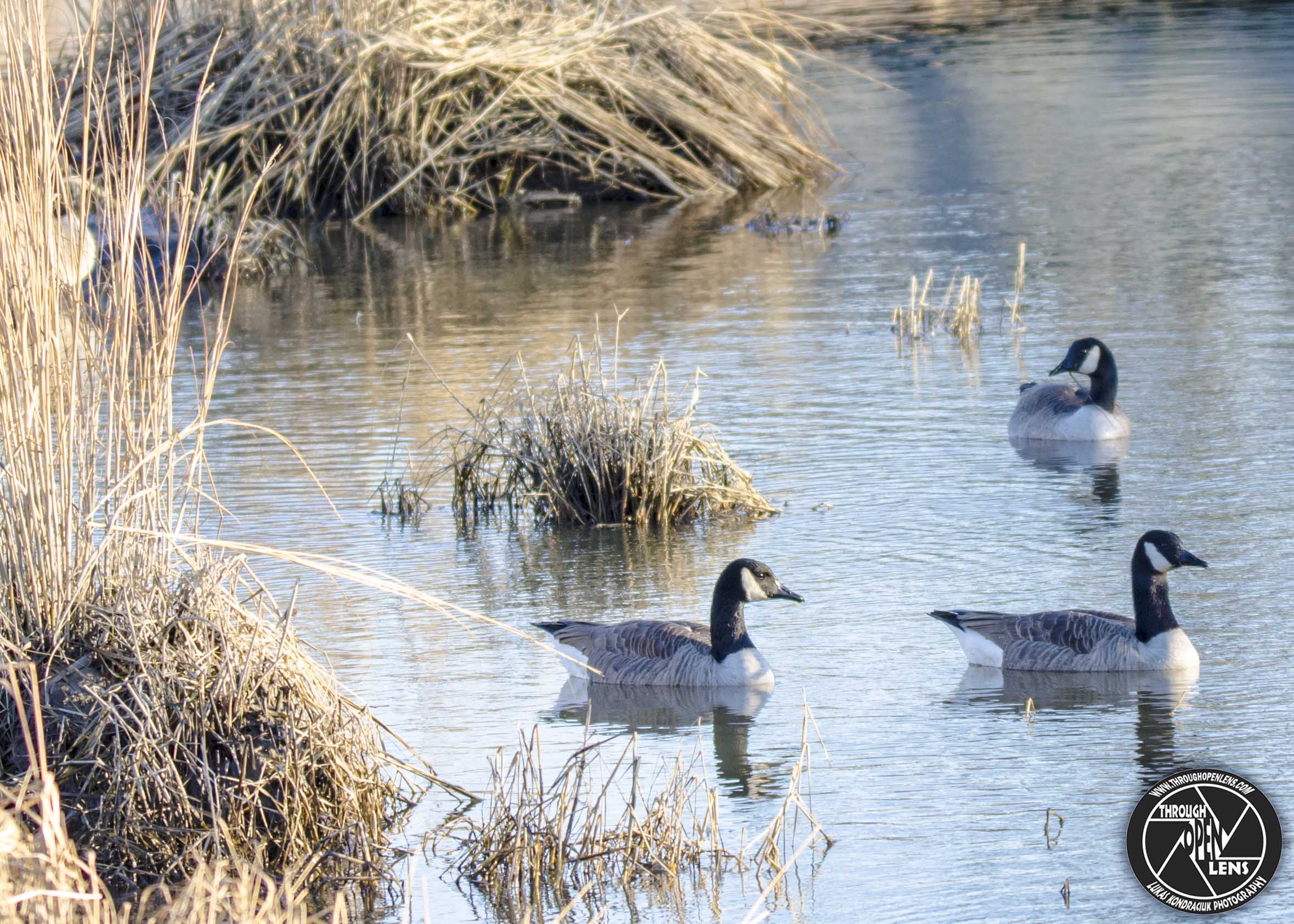
Laugh And The World Laughs With You, Cackle Maniacally And People Back Away From You Slowly

cackling-goose

F/5.0, 1/400, ISO 400.

Cackling Goose

What did the 30 degree angle say to the 90 degree angle?

“You think you’re always right!”

Interesting Fact: The Cackling Goose was long considered just a small race of the Canada Goose. The smallest four of the eleven recognized races were recently determined to be distinct enough to be their own species. Cackling Goose includes the races known as Taverner’s, Richardson’s, Aleutian, and Cackling geese. Confusingly, the “Lesser Canada Goose” is still a race of the Canada Goose. ( https://www.allaboutbirds.org/guide/Cackling_Goose/lifehistory )

Well I Hope The Neighbors Like This Song

black-capped-chickadee-branch

F/9.0, 1/320, ISO 320, Photoshop CS6.

Black-capped Chickadee

What kind of music are balloons afraid of?

Pop Music.

Interesting Fact: Winter flocks with chickadees serving as the nucleus contain mated chickadee pairs and nonbreeders, but generally not the offspring of the adult pairs within that flock. Other species that associate with chickadee flocks include nuthatches, woodpeckers, kinglets, creepers, warblers and vireos. ( https://www.allaboutbirds.org/guide/Black-capped_Chickadee/lifehistory )


Just CHILLING !

heineken

F/10.0, 1/640, ISO 400.

A bee goes into a bar,

It comes out 2 hours later buzzing

Interesting Fact: On 15 February 1864, Gerard Adriaan Heineken (1841–1893)[5][6] got his wealthy mother to buy De Hooiberg (The Haystack) brewery in Amsterdam, a popular working-class brand founded in 1592. In 1873 after hiring a Dr. Elion (student of Louis Pasteur) to develop Heineken-A Yeast for Bavarian bottom fermentation, the HBM (Heineken’s Bierbrouwerij Maatschappij) was established, and the first Heineken brand beer was brewed. In 1875 Heineken won the Medaille D’Or at the International Maritime Exposition in Paris, then began to be shipped there regularly, after which Heineken sales topped 64,000 hectolitres (1.7 million U.S. gallons), making them the biggest beer exporter to France. ( https://en.wikipedia.org/wiki/Heineken#History )

You Haven’t Seen The Last Of Me

butterfly-3

F/ 7.1, 1/200, ISO 160.

Why did summer catch autumn?

Because autumn is fall.

Interesting Fact: Butterflies have the typical four-stage insect life cycle. Winged adults lay eggs on the food plant on which their larvae, known as caterpillars, will feed. The caterpillars grow, sometimes very rapidly, and when fully developed, pupate in a chrysalis. When metamorphosis is complete, the pupal skin splits, the adult insect climbs out, and after its wings have expanded and dried, it flies off. Some butterflies, especially in the tropics, have several generations in a year, while others have a single generation, and a few in cold locations may take several years to pass through their whole life cycle. ( https://en.wikipedia.org/wiki/Butterfly )

I Get Knocked Down But I Get Up Again You Are Never Gonna Keep Me Down

mallard-duck

F/7.1, 1/200, ISO 250.

Mallard Duck

What did the duck say when he bought lipstick?

“Put it on my bill.”

Interesting Fact: Ducks are strong fliers; migrating flocks of Mallards have been estimated traveling at 55 miles per hour. ( https://www.allaboutbirds.org/guide/Mallard/lifehistory )

Don’t You Forget About Me

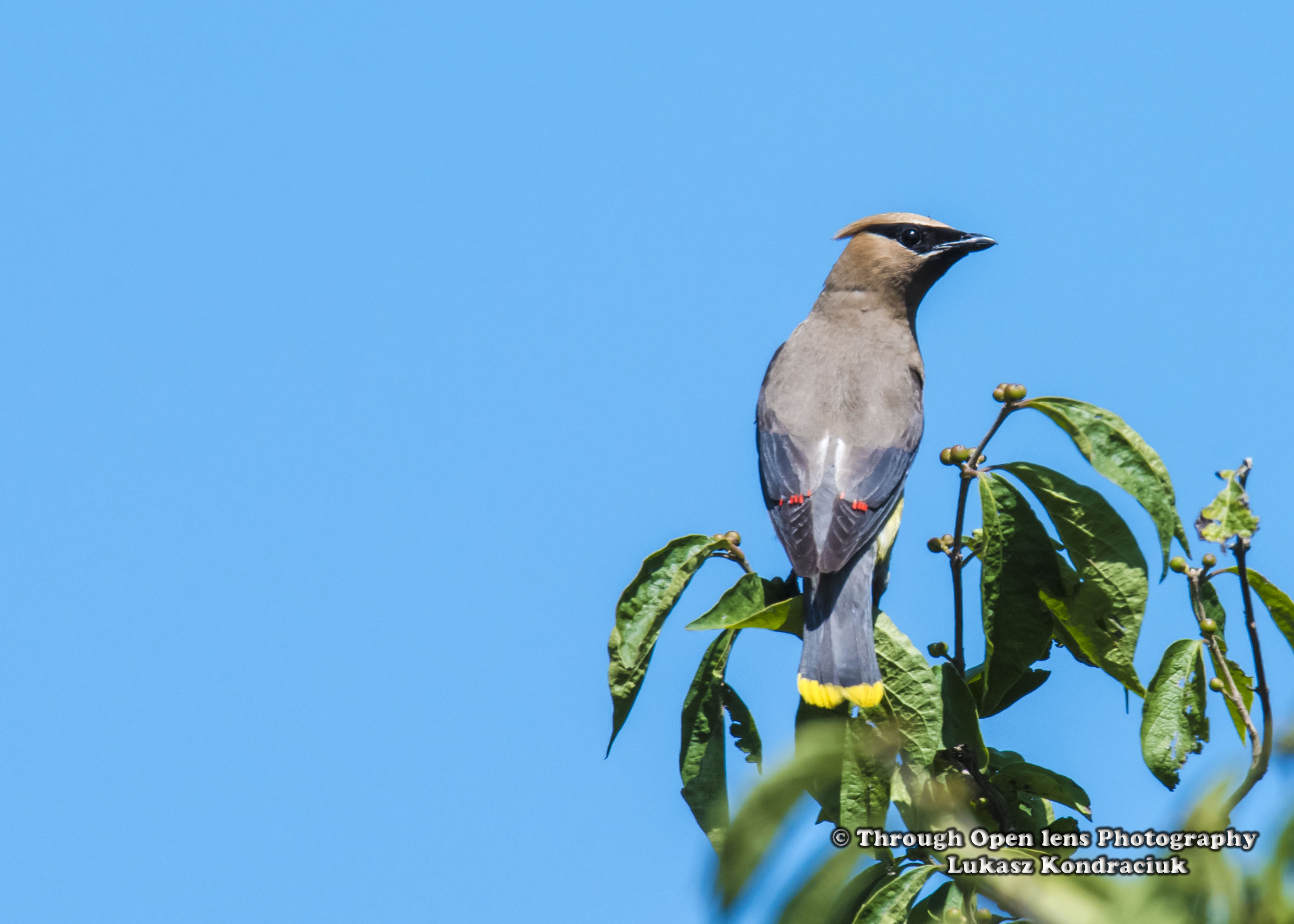
cedar-waxwing-1

F/ 11.0, 1/500, ISO 250.

Cedar Waxwing

What did the pencil sharpener say to the pencil?

Stop going in circles and get to the point! 

Interesting Fact: Cedar Waxwings with orange instead of yellow tail tips began appearing in the northeastern U.S. and southeastern Canada in the 1960s. The orange color is the result of a red pigment picked up from the berries of an introduced species of honeysuckle. If a waxwing eats enough of the berries while it is growing a tail feather, the tip of the feather will be orange. ( https://www.allaboutbirds.org/guide/Cedar_Waxwing/lifehistory )

I Believe I Can Fly!

Franklin's Gull 1

F/14.0, 1/640, ISO 320.

Franklin’s Gull

What did the pig say at the beach on a hot summer’s day?

I’m bacon!

Interesting Fact: In breeding plumage, and sometimes in nonbreeding plumage as well, the Franklin’s Gull often shows a rosy pink cast (rarely salmon) on its chest and abdomen. This color is most apparent on the shafts and bases of its feathers. The color fades as the breeding season progresses as the pigment is broken down by sunlight.  ( https://www.allaboutbirds.org/guide/Franklins_Gull/lifehistory )


I’m Walking Here!

Common Grackle 2

F/6.3, 1/1600, ISO 250.

Common Grackle 

How do men exercise at the beach?

By sucking in their stomach every time they see a girl in a bikini.

Interesting Fact: Common Grackles are resourceful foragers. They sometimes follow plows to catch invertebrates and mice, wade into water to catch small fish, pick leeches off the legs of turtles, steal worms from American Robins, raid nests, and kill and eat adult birds. ( https://www.allaboutbirds.org/guide/Common_Grackle/lifehistory )

Lazy Like A Log

Log

F/11.0, 1/500, ISO 320.

Pretend you’re in a box, under the ocean, and there’s no way out. How do you survive?

You stop pretending!

Interesting Fact: Beaches became popular as tourist attractions during the 18th century. Today, beachside towns and beach resort areas are a magnet for tourist who come to sunbathe, swim, stroll the beach, build sandcastles, surf and bodyboard. ( http://www.sciencekids.co.nz/sciencefacts/earth/beaches.html )