Do Whatever Floats Your Boat… As Long As It Doesn’t Sink Mine.

F/5.6, 1/200, ISO 100.

California Sea Lion

A man walks into a bar where the only other occupant is a seal.
he orders a beer and hears the seal say “I like your tie.” confused the man ignores the seal.
But every few minutes the seal calls out another complement.
When the bartender comes the man asks “what’s with the mammal?”
to that the bartender replies “oh that is our seal of approval”

Interesting Fact: California sea lions may hunt continuously for up to 30 hours, with each dive lasting three to five minutes. ( http://animals.nationalgeographic.com/animals/mammals/california-sea-lion/ )

Someone Called Me Lazy Today, I Almost Replied.

california-sea-lions

F/9.0, 1/125, ISO 100.

California Sea Lions

Why do seals swim in salt water?

Because pepper water makes them sneeze!

Interesting Fact: These pinnipeds live along the rocky Pacific Ocean coastlines of western North America. Huge colonies can be seen gathered on seaside rocks, and even on man-made structures, for breeding and for birthing. Males gather harems of females to their sides in competition to sire young pups, which are born on land. ( http://www.nationalgeographic.com/animals/mammals/c/california-sea-lion/ )


I Am Not Liable If You Falling Asleep Count Sheep!

F/8.0, 1/250, ISO 320.

Sheep

What do you call a sheep that is always quiet?

A shhhheep!

Interesting Fact: The exact line of descent between domestic sheep and their wild ancestors is unclear.[1] The most common hypothesis states that Ovis aries is descended from the Asiatic (O. orientalis) species of mouflon.[2]:5 Sheep were among the first animals to be domesticated by humankind (although the domestication of dogs may be over 20,000 years earlier); the domestication date is estimated to fall between 11,000 and 9,000 B.C in Mesopotamia.[2]:4[3]:11–14[4]:2[5] The rearing of sheep for secondary products, and the resulting breed development, began in either southwest Asia or western Europe.[6] Initially, sheep were kept solely for meat, milk and skins. Archaeological evidence from statuary found at sites in Iran suggests that selection for woolly sheep may have begun around 6000 BC,[2]:5[3]:11 and the earliest woven wool garments have been dated to two to three thousand years later. ( https://en.wikipedia.org/wiki/Sheep#History )

Car Is In Garage We Will Poop On The Roof Then!

Brown Pelicans 1

F/5.6, 1/500, ISO 250.

Brown Pelicans

Do you know what the white stuff in bird poop is?

That’s bird poop, too!

Interesting Fact: Pelicans incubate their eggs with the skin of their feet, essentially standing on the eggs to keep them warm. In the mid-twentieth century the pesticide DDT caused pelicans to lay thinner eggs that cracked under the weight of incubating parents. After nearly disappearing from North America in the 1960s and 1970s, Brown Pelicans made a full comeback thanks to pesticide regulations. ( https://www.allaboutbirds.org/guide/Brown_Pelican/lifehistory )


The Water Is Fine Come On In!

American Coot

F/5.6, 1/500, ISO 360.

American Coots

Father: Why did you get such a low score in that exam?

Son: Absence!

Father: You were absent on the day of the exam?

Son: No but the boy who sits next to me was!

Interesting Fact: Although it swims like a duck, the American Coot does not have webbed feet like a duck. Instead, each one of the coot’s long toes has broad lobes of skin that help it kick through the water. The broad lobes fold back each time the bird lifts its foot, so it doesn’t impede walking on dry land, though it supports the bird’s weight on mucky ground. ( https://www.allaboutbirds.org/guide/American_Coot/lifehistory )

Look Into My Eyes, You Are Getting Sleepy!

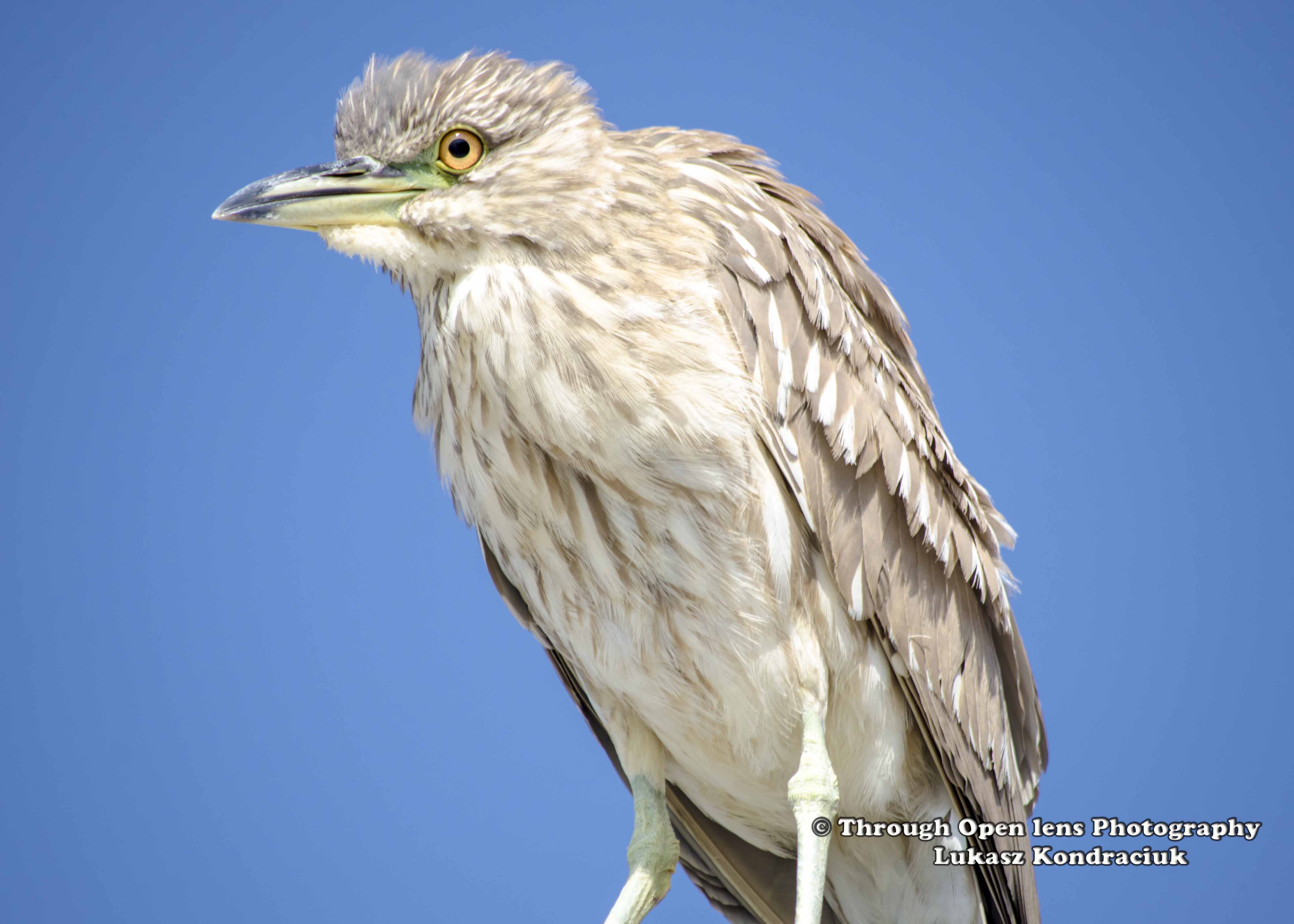
Black-crowned Night-Heron 1

F/ 6.3, 1/640, ISO 200.

Black-Crowned Night-Heron ( Juvenile )

How do you wake up Lady gaga?

Poke her face.

Interesting Fact: The familiar evening sight and sound of the Black-crowned Night-Heron was captured in this description from Arthur Bent’s Life Histories of North American Marsh Birds: “How often, in the gathering dusk of evening, have we heard its loud, choking squawk and, looking up, have seen its stocky form, dimly outlined against the gray sky and propelled by steady wing beats, as it wings its way high in the air toward its evening feeding place in some distant pond or marsh!” ( https://www.allaboutbirds.org/guide/Black-crowned_Night-Heron/lifehistory )

Can’t Touch Me!

Black-crowned Night-Heron

F/6.3, 1/250 ISO 100.

Black-crowned Night-Heron

Why was the math textbook so sad?

He had a lot of problems!

Interesting Fact: Young Black-crowned Night-Herons leave the nest at the age of 1 month but cannot fly until they are 6 weeks old. They move through the vegetation on foot, joining up in foraging flocks at night. ( https://www.allaboutbirds.org/guide/Black-crowned_Night-Heron/lifehistory )

And Now My Beak Is Stuck!

Marbled Godwit

F/5.6, 1/500, ISO 200.

Marbled Godwit

Why does it take pirates so long to learn the alphabet?

Because they spend years at C!

Interesting Fact: It often inserts its entire bill into the mud, and its head is totally submerged at times. ( http://identify.whatbird.com/obj/251/overview/Marbled_Godwit.aspx )

Reverse Mohawk Is In!

Elegant Tern

F/5.6, 1/500, ISO 220.

Elegant Tern

California Week Two 

A sailor trying to sneak back to his ship about 3 o’clock in the morning was spotted by a chief petty officer who ordered him to explain his tardiness. The lame explanation didn’t work. “Take this broom and sweep every link on this anchor chain by morning or it’s the brig for you,” the chief said. The sailor began to sweep, but a tern landed on the broom handle and he couldn’t continue. He yelled at the bird, but it didn’t budge. He finally plucked it off the broom and gave it a toss. But the bird came right back and again landed on the handle. Over and over, the same routine was repeated. A toss, one sweep, and the bird was back. When morning came, the chief also was back. “What have you been doing all night? This chain is no cleaner than when you started!” “Honest, chief,” said the sailor, “I tossed a tern all night and couldn’t sweep a link.”

Interesting Fact: Unlike some of the smaller white terns, it is not very aggressive toward potential predators, relying on the sheer density of the nests and nesting close to other more aggressive species such as Heermann’s Gulls to avoid predation. ( http://identify.whatbird.com/obj/467/_/Elegant_Tern.aspx )