Down The Rabbit Hole!

F/8.0, 1/250, ISO 250.

Desert Cottontail Rabbit 

What is a tree’s favorite drink?

Root beer!

Interesting Fact: The lifespan of a cottontail that reaches adulthood averages less than two years, depending on the location.[6] Unfortunately for the cottontail, almost every local carnivore larger or faster than the lagomorph is its predator. Some predators, like snakes for example, are familiar with the area inhabited by the cottontails, and can catch and eat the young at will; the mother is unable to defend the litter. Although cottontails are highly active sexually, and mated pairs have multiple litters throughout the year, few young survive to adulthood. Those that survive grow quickly and are full grown at three months. ( https://en.wikipedia.org/wiki/Desert_cottontail )

 

Hey, these are my nuts!

F/5.6, 1/160, ISO 800.

Eastern Chipmunk

Why did the skeleton burp?

Because it didn’t have the guts to fart.

Interesting Fact: A chipmunk’s cheeks can expand to three times the size of its head and they have pouches in their cheeks where they hold their food until they get back to store it in their burrows ( http://www.pets4homes.co.uk/pet-advice/fun-interesting-facts-about-chipmunks.html )


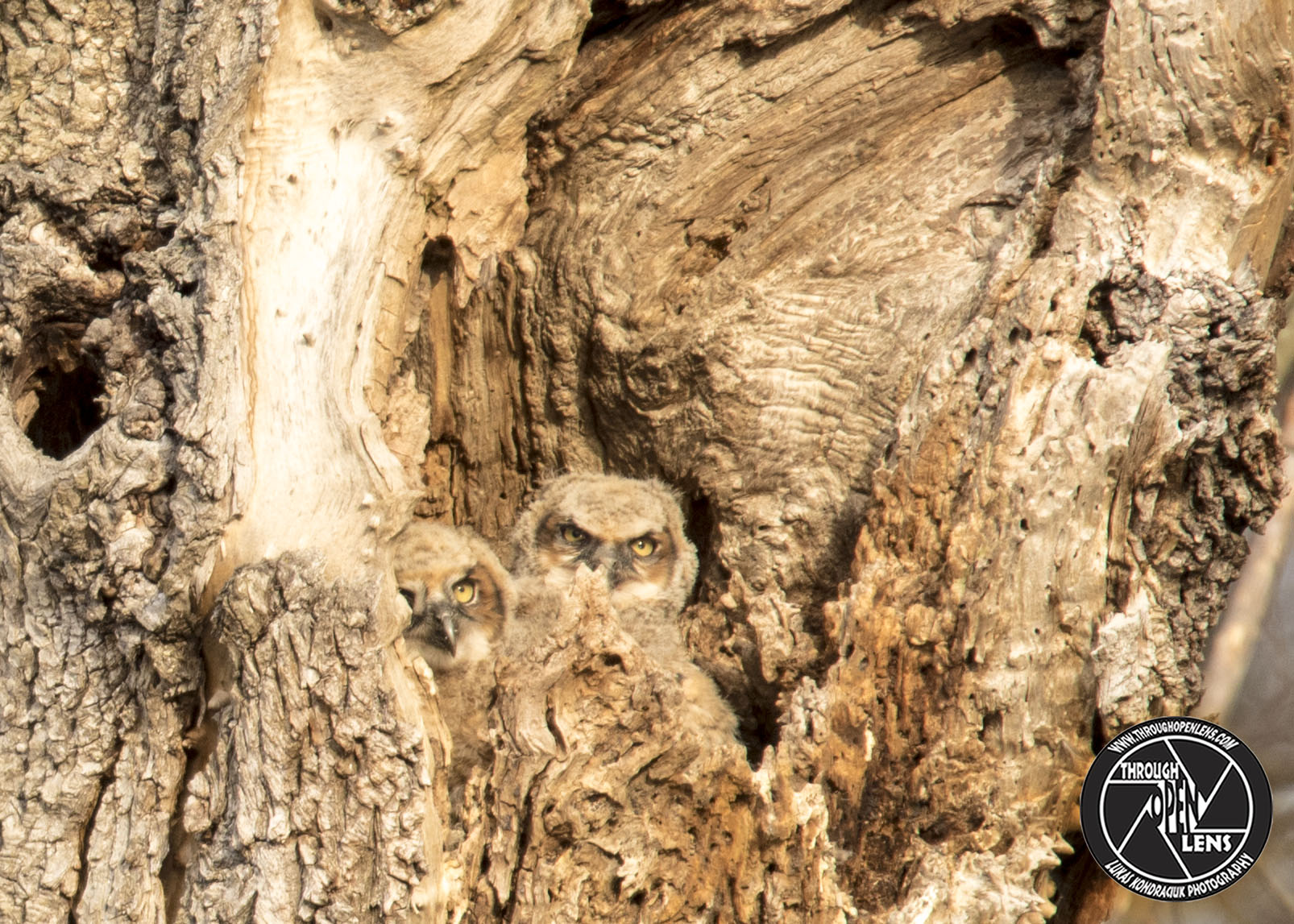
OWL We Need Is Love!

F/8.0, 1/200, ISO 320.

Great Horned Owlets

 Why did the owl, owl?

Because the woodpecker would peck ‘er!

Interesting Fact: Great Horned Owls typically nest in trees such as cottonwood, juniper, beech, pine, and others. They usually adopt a nest that was built by another species, but they also use cavities in live trees, dead snags, deserted buildings, cliff ledges, and human-made platforms. In the Yukon they nest in white spruces with “witches’ brooms,” which are clumps of dense foliage caused by a fungus. They occasionally nest on the ground. Pairs may roost together near the future nest site for several months before laying eggs.  ( https://www.allaboutbirds.org/guide/Great_Horned_Owl/lifehistory )

Fast and Furry-ous!

F/7.1, 1/200, ISO 250.

Chipmunk

Why was the chipmunk late for work?

Traffic was NUTS.

Interesting Fact: Depending on species, chipmunks can be gray to reddish-brown in color with contrasting dark and light stripes on the sides of their face and across their back and tail. They range in size from the least chipmunk, which, at 7.2 to 8.5 inches and 1.1 to 1.8 ounces, is the smallest chipmunk, to the eastern chipmunk, which grows up to 11 inches and weighs as much as 4.4 ounces. ( http://www.nationalgeographic.com/animals/mammals/group/chipmunks/ )


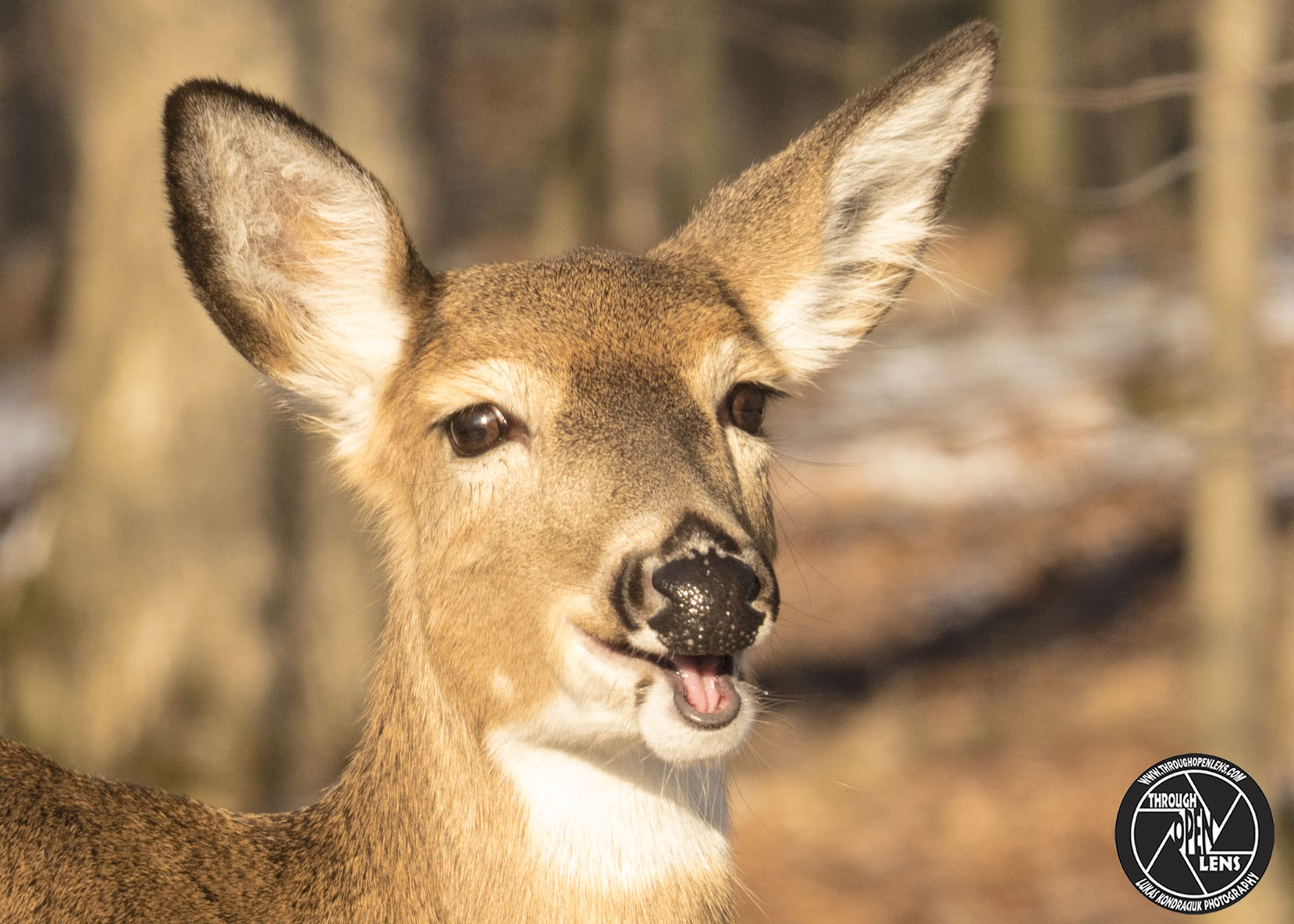
Hey Handsome!

F/9.0, 1/320, ISO 250.

White-Tailed Deer

Did you hear the joke about the butter?

I do not think I should tell you because you might spread it around…

Interesting Fact: Males compete for the opportunity of breeding females. Sparring among males determines a dominance hierarchy.[61] Bucks attempt to copulate with as many females as possible, losing physical condition, since they rarely eat or rest during the rut. The general geographical trend is for the rut to be shorter in duration at increased latitude. Many factors determine how intense the “rutting season” will be; air temperature is a major one. Any time the temperature rises above 40 °F (4 °C), the males do much less traveling looking for females, else they will be subject to overheating or dehydrating. Another factor for the strength in rutting activity is competition. If numerous males are in a particular area, then they compete more for the females. If fewer males or more females are present, then the selection process will not need to be as competitive. ( https://en.wikipedia.org/wiki/White-tailed_deer )

Excuse Me?! I Hear Everything That You Saying! 

Boston Terrier

F/ 5.6, 1/60, ISO 200.

Boston Terrier

Day 297 / 365

What does this dog and my phone have in common?

They both have collar I.D.

Interesting Fact: The Boston terrier breed originated around 1870, when Robert C. Hooper of Boston, purchased a dog, Judge from Edward Burnett known later as Hooper’s Judge, who was of a Bull and Terrier type lineage. Hooper’s Judge is either directly related to the original Bull and Terrier breeds of the 19th and early 20th centuries, or Judge is the result of modern English Bulldogs being crossed into terriers created in the 1860s for show purposes, like the White English Terrier. The American Kennel Club cites Hooper’s Judge as the ancestor of almost all true modern Boston Terriers. ( https://en.m.wikipedia.org/wiki/Boston_Terrier )

I’m Cute And Cuddly. But I Will Steal Your Stuff When You Are Not Looking!

Chinchilla

F/5.6, 1/60, ISO 800.

Chinchilla

Day 239 / 365

A man went to visit a friend and was amazed to find him playing chess with his Chinchilla. He watched the game in astonishment for a while. “I can hardly believe my eyes!” he exclaimed. “That’s the smartest chinchilla I’ve ever seen.”

“Nah, he’s not so smart,” the friend replied. “I’ve beaten him three games out of five.”

Interesting Fact: Chinchillas see with their whiskers. Even though they have big eyes, the eyes are under developed, making the Chinchilla not see well with it. They have long whiskers which can grow half the length of their body to help them ‘see’ or rather feel things around them. ( http://chinchilla.co/chinchilla-facts/ )

Got Milk?

gabriela

F/5.6, 1/60, ISO 800.

Day 213 / 365

Why don’t cows have any money?
Because farmers milk them dry

Interesting Fact: Babies typically need 210 mg. of calcium a day to develop healthy bones and teeth. ( http://www.milkunleashed.com/whats-happening/milk-facts.html )