Today I Will Be Happier Than A Bird With A French Fry!

F/8.0, 1/250, ISO 250.

Carolina Wren

What did one plate say to the other?

Dinners on me.

Interesting Fact: Carolina Wrens nest in open cavities 3–6 feet off the ground, in trees, overhangs and stumps. The first nest is sometimes built on vegetation-shaded ground. Near homes, they’re versatile nesters, making use of discarded flowerpots, mailboxes, propane-tank covers, and a variety of other items. Their nests have even been found in old coat pockets and boots. Males often build multiple nests before the pair makes a final selection. ( https://www.allaboutbirds.org/guide/Carolina_Wren/lifehistory )

You Make Me Blush!

F/10.0, 1/400, ISO 250.

House Finch

Why are some fish at the bottom of the ocean?

Because they dropped out of school!

Interesting Fact:  House Finches were introduced to Oahu from San Francisco sometime before 1870. They had become abundant on all the major Hawaiian Islands by 1901 ( https://www.allaboutbirds.org/guide/House_Finch )

Believe You Can And You’re Halfway There.

F/10.0, 1/400, ISO 400.

Dark-eyed Junco

Why did the golfer wear two pairs of pants?

In case he got a hole in one.

Interesting Fact: The female chooses the nest site, typically in a depression or niche on sloping ground, rock face, or amid the tangled roots of an upturned tree. Around people, juncos may nest in or underneath buildings. Occasionally, juncos nest above the ground on horizontal branches (rarely as high as 45 feet), window ledges, and in hanging flower pots or light fixtures. ( https://www.allaboutbirds.org/guide/Dark-eyed_Junco/lifehistory )

Hey You! Yeah You!

F/8.0, 1/250, ISO 320.

Carolina Wren

Three guys are stranded in a desert. They stubble upon a magic genie lamp.

The genie grants each of them one wish.

The first guy wishes to be back home. Wish granted.

The second guy wishes the same. Wish granted.

The third guy says, “It feels very lonely here now, I wish my friends were with me…” Wish granted.

Interesting Fact:Carolina Wrens usually go about their business alone or in pairs; after nestlings have fledged, you may see family groups feeding together. Feeding on or near the ground, the wrens run, hop, and flit around leaf litter and tangled vegetation; they dodge in and out of dark spaces created by downed trees, decaying logs, old stumps, and upturned roots. ( https://www.allaboutbirds.org/guide/Carolina_Wren/lifehistory

He Went Thataway!

F/8.0, 1/250, ISO 320.

White-breasted Nuthatch

A wife complains to her husband: “Just look at that couple down the road, how lovely they are. He keeps holding her hand, kissing her, holding the door for her, why can’t you do the same?”

The husband: “Are you mad? I barely know the woman!”

Interesting Fact: White-breasted Nuthatches live in pairs year round and chase other nuthatches from their territory. Agitated birds fan their tails, flick their wings, or raise the feathers of the back. A bird backing down from a confrontation typically raises its bill and tail, and droops its wings. In winter White-breasted Nuthatches join groups of chickadees, titmice, and woodpeckers to forage.  ( https://www.allaboutbirds.org/guide/White-breasted_Nuthatch/lifehistory#behavior

Monday Blues

F/7.1, 1/200, ISO 400.

Eastern Bluebird 

Where does Capitan Hook go shopping?

Second hand stores.

Interesting Fact: Eastern Bluebirds eat mostly insects, wild fruit and berries. Occasionally, Eastern Bluebirds have also been observed capturing and eating larger prey items such as shrews, salamanders, snakes, lizards and tree frogs. ( Eastern Bluebird Overview, All About Birds, Cornell Lab of Ornithology )


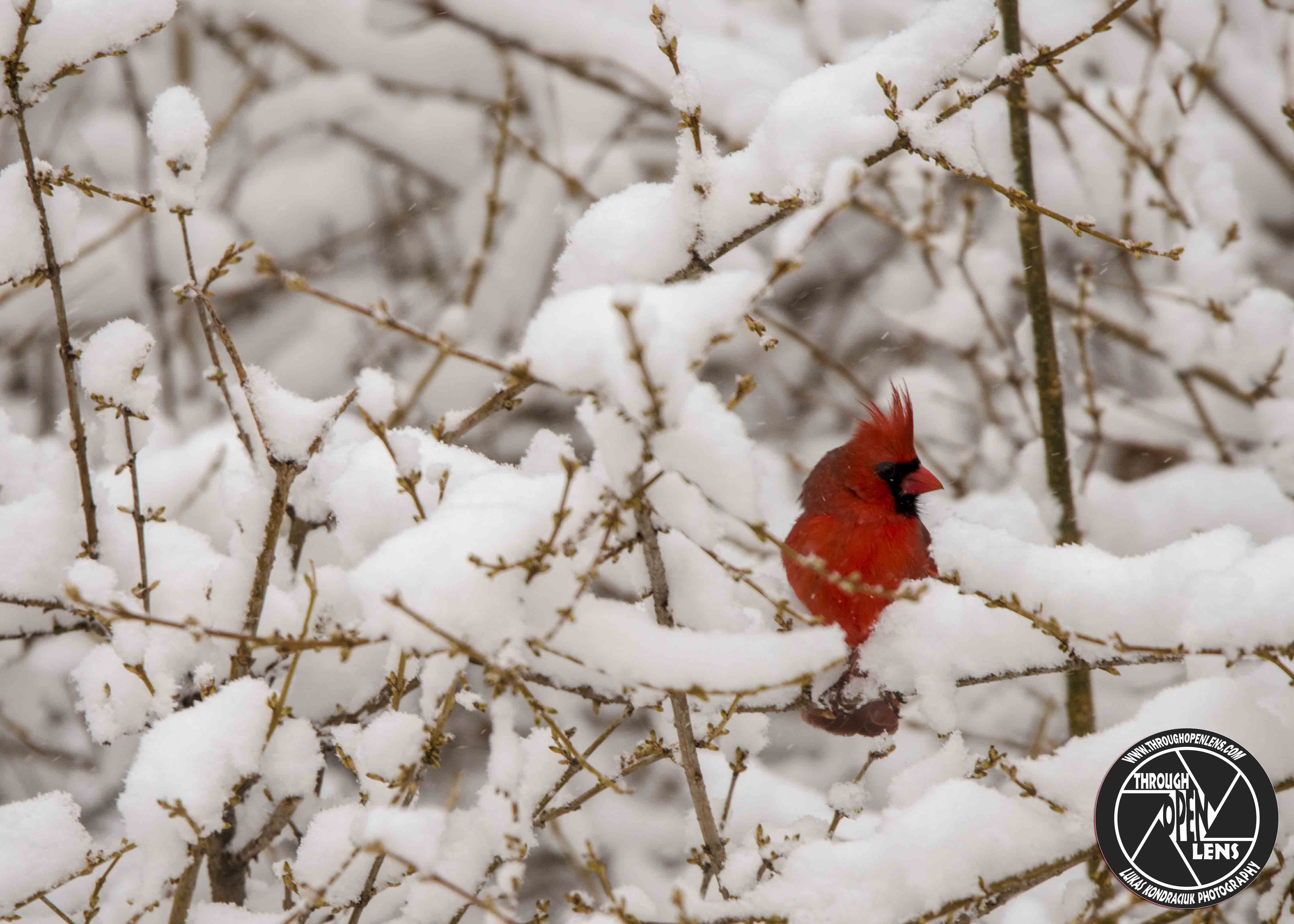
Snow Way!

F/8.0, 1/250, ISO 400.

Northern Cardinal ( Male )

In the class room

Bobby: ” Can I go the toilet? ” 

Teacher: ” Say the alphabet ”

Bobby: ” ABCDEFGHIJKLMNOQRSTUVWXYZ “

Teacher: “Where’s the P “

Bobby: ” Half way down my leg “

Interesting Fact: Northern Cardinals hop through low branches and forage on or near the ground. Cardinals commonly sing and preen from a high branch of a shrub. The distinctive crest can be raised and pointed when agitated or lowered and barely visible while resting. You typically see cardinals moving around in pairs during the breeding season, but in fall and winter they can form fairly large flocks of a dozen to several dozen birds. ( https://www.allaboutbirds.org/guide/Northern_Cardinal/lifehistory#behavior )

I Got Blue More Than You!

F/7.1, 1/200, ISO 320.

Eastern Bluebird

In Court:

Judge: “Why did you steal the car?”

Defendant: “Your Honour I had to get to work.”

Judge: “Why didn’t you take the bus?”

Defendant: I don’t have a driver’s license for the bus.

Interesting Fact: Eastern Bluebirds occur across eastern North America and south as far as Nicaragua. Birds that live farther north and in the west of the range tend to lay more eggs than eastern and southern birds.  ( https://www.allaboutbirds.org/guide/Eastern_Bluebird )

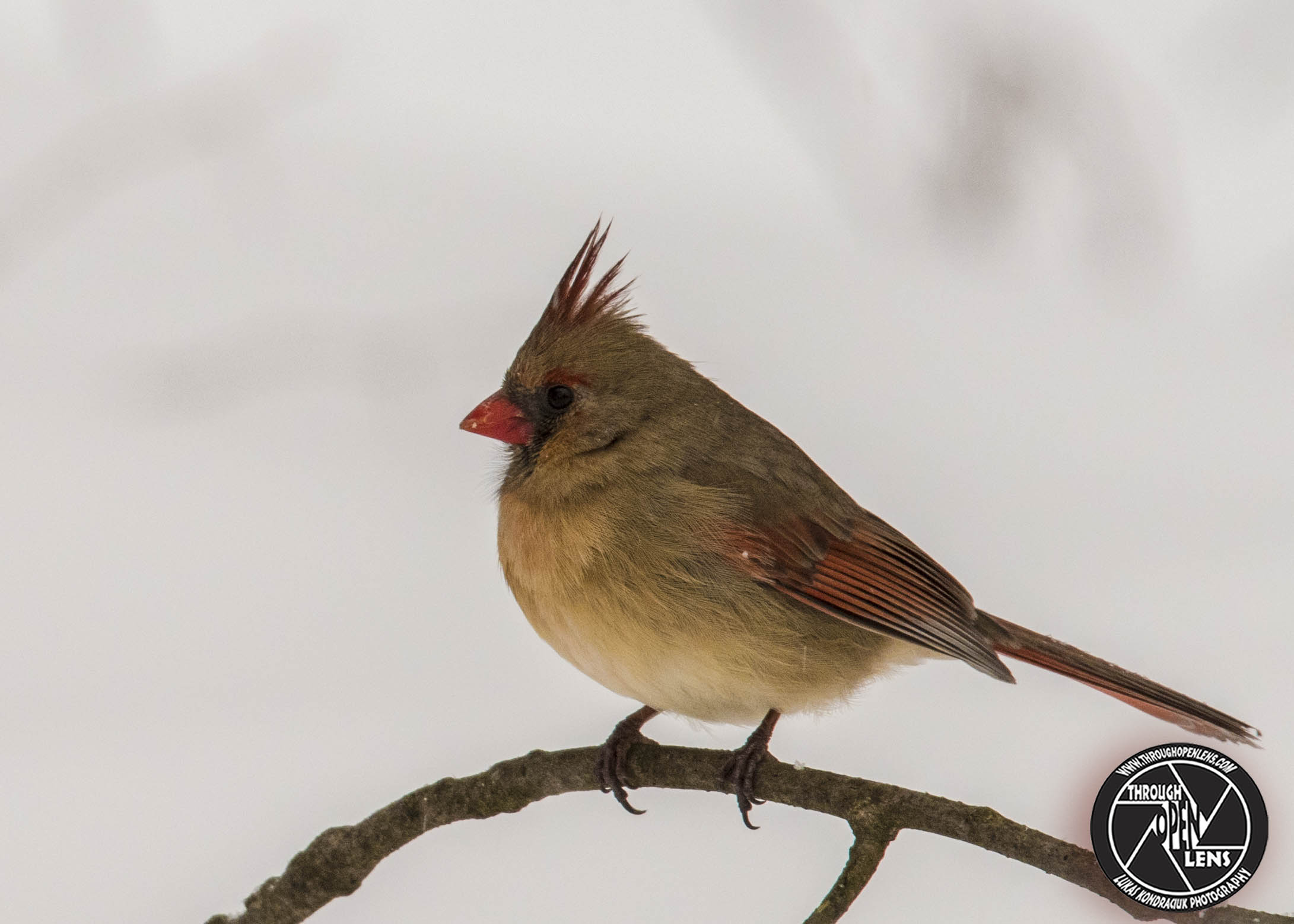
Sorry. Yesterday Was The Deadline For All Complaints.

F/9.0, 1/320, ISO 500.

Northern Cardinal ( Female )

What do you give an elephant that’s going to be sick?

Plenty of space!

Interesting Fact: Males sometimes bring nest material to the female, who does most of the building. She crushes twigs with her beak until they’re pliable, then turns in the nest to bend the twigs around her body and push them into a cup shape with her feet. The cup has four layers: coarse twigs (and sometimes bits of trash) covered in a leafy mat, then lined with grapevine bark and finally grasses, stems, rootlets, and pine needles. The nest typically takes 3 to 9 days to build; the finished product is 2-3 inches tall, 4 inches across, with an inner diameter of about 3 inches. Cardinals usually don’t use their nests more than once. ( https://www.allaboutbirds.org/guide/Northern_Cardinal/lifehistory )

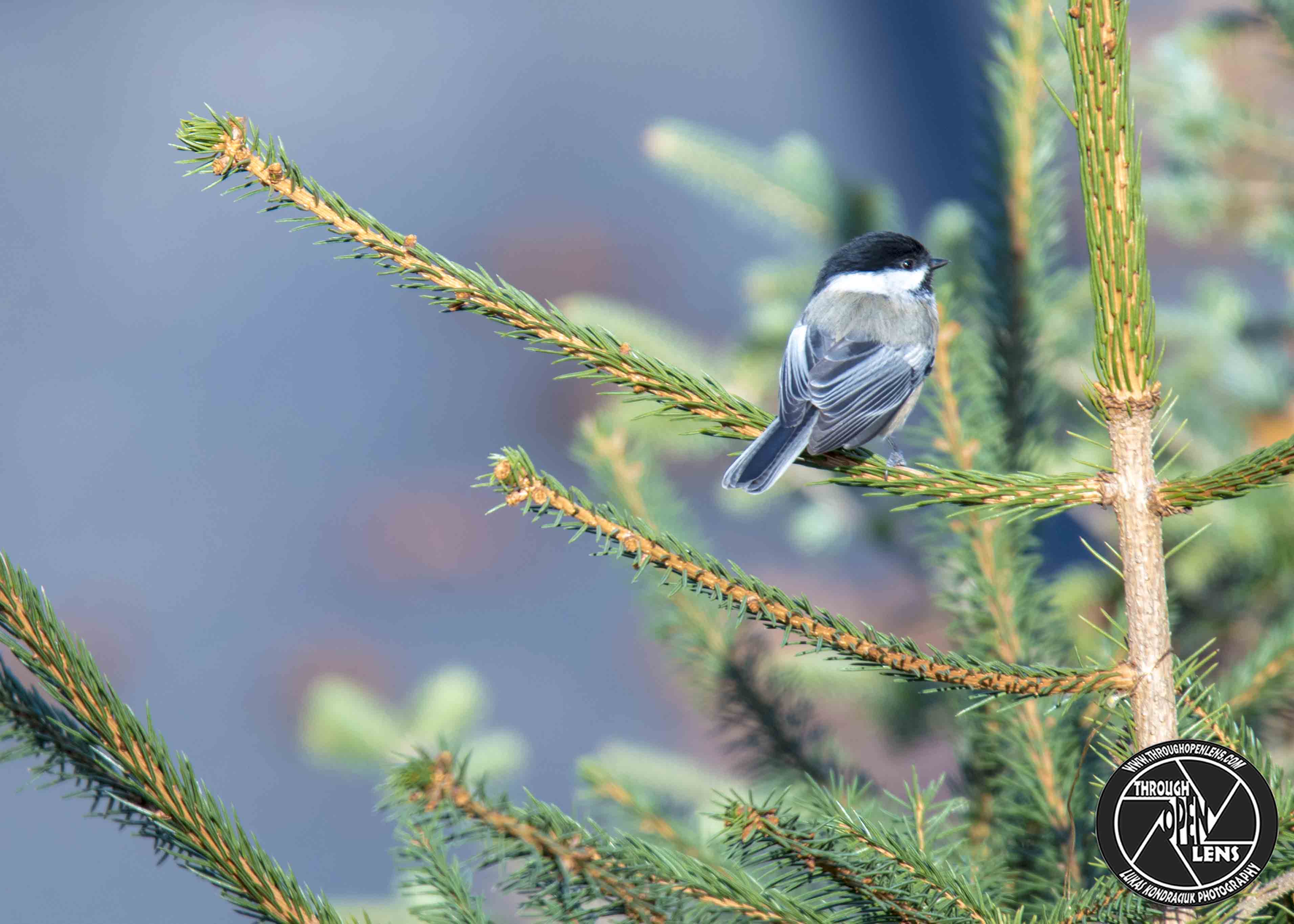
Sometimes I Pretend To Be Normal But It Gets Boring. So I Go Back To Being Me.

F/7.1, 1/200, ISO 250.

Black-capped Chickadee 

What’s the difference between a cat and a frog?

A Cat has nine lives but a Frog croaks every night!

Interesting Fact: Even when temperatures are far below zero, chickadees virtually always sleep in their own individual cavities. In rotten wood, they can excavate nesting and roosting holes entirely on their own. ( https://www.allaboutbirds.org/guide/Black-capped_Chickadee )