At The Quack Of Dawn

F/6.3, 1/160, ISO 250.

Wood Duck

What do you get when a duck bends over?

Buttquack

Interesting Fact: Wood Ducks feed by dabbling or short, shallow dives. They are strong fliers and can reach speeds of 30 mph. Wood Ducks are not territorial, with the exception that a male may fight off other males that approach his mate too closely. ( https://www.allaboutbirds.org/guide/Wood_Duck/lifehistory )


Wet And Wild!

F/5.6, 1/500, ISO 100.

Mallard Ducks

What season is it when you are on a trampoline?

Spring time.

Interesting Fact: Mallards are generalist foragers and will eat a wide variety of food. They don’t dive, but dabble to feed, tipping forward in the water to eat seeds and aquatic vegetation. They also roam around on the shore and pick at vegetation and prey on the ground. During the breeding season, they eat mainly animal matter including aquatic insect larvae, earthworms, snails and freshwater shrimp. During migration, many Mallards consume largely agricultural seed and grain. In city parks, they readily accept handouts from parkgoers.  ( https://www.allaboutbirds.org/guide/Mallard/lifehistory )

If A Turtle Loses It’s Shell Is It Naked Or Homeless?

F/7.1, 1/200, ISO 200.

Common Snapping Turtle

What kind of photos does a turtle take?

Shellfies.

Interesting Fact: In their environment, they are at the top of the food chain, causing them to feel less fear or aggression in some cases. When they encounter a species unfamiliar to them such as humans, in rare instances, they will become curious and survey the situation and even more rarely may bump their nose on a leg of the person standing in the water. Although snapping turtles have fierce dispositions,[16] when they are encountered in the water or a swimmer approaches, they will slip quietly away from any disturbance or may seek shelter under mud or grass nearby.[17] Common snapping turtles are very aggressive if caught, and have a strong enough bite to easily amputate human fingers. ( https://en.wikipedia.org/wiki/Common_snapping_turtle#Behavior )

Look Out I’m A Biter!

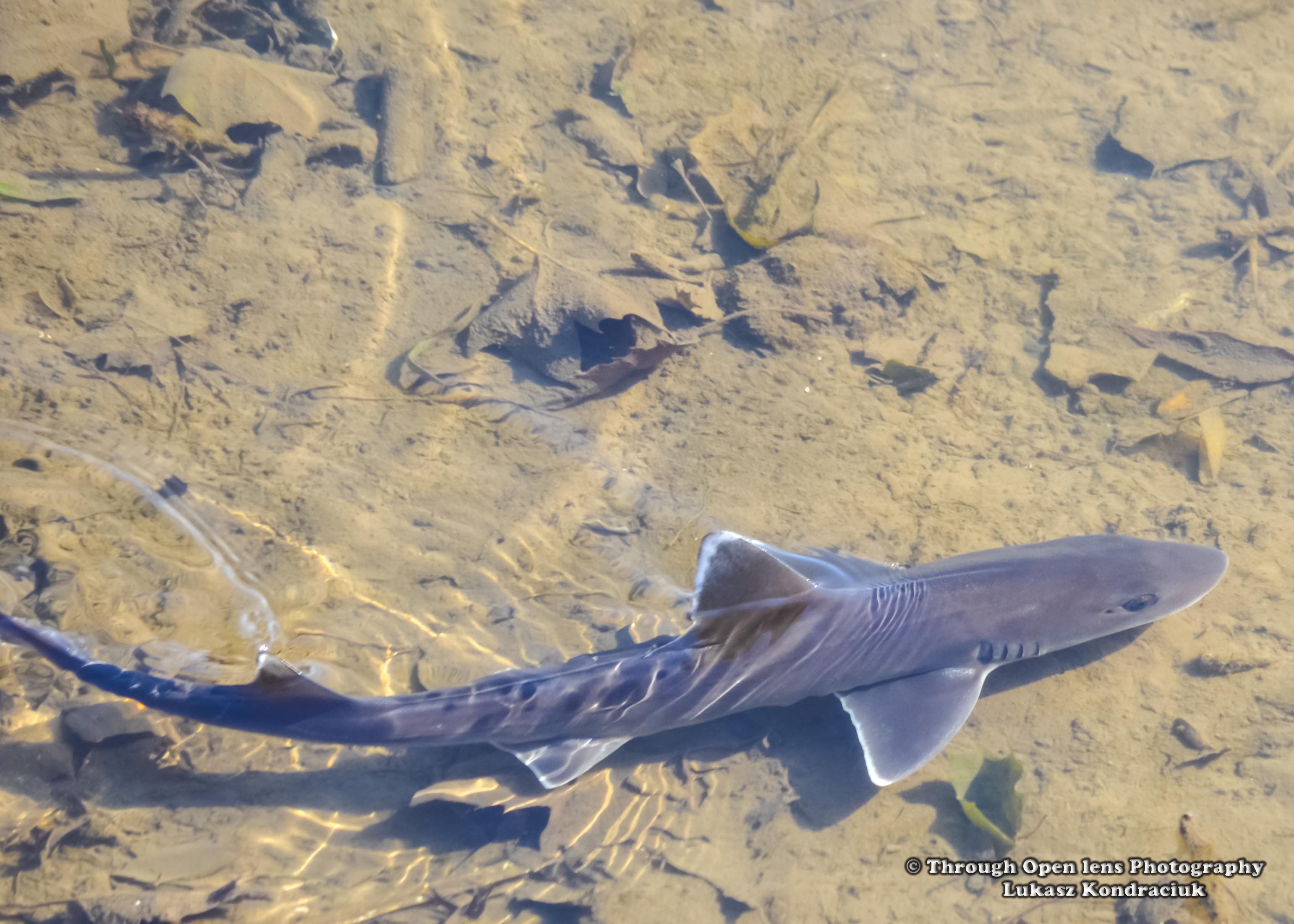
Shark Week 2016

Bull Shark

F/5.6, 1/500, ISO 320.

Deadliest Shark In The World

Bull Shark ( Baby )

For five years, two sharks and a dolphin have worked side by side every day as window washers, and every night after work they stopped for a drink. One day, disaster struck, and the dolphin fell to his death. The police came to the site and began asking questions. “Where does he live?” The sharks shrugged their shoulders. “Is he married?” The sharks didn’t know. “What is his name?” The sharks shrugged again. “You worked with this guy for five years and you don’t know anything about him?” the cop asked. “I know something about him,” one shark volunteered. “He has two assholes.” “What are you talking about?” said the cop. “Well,” said the shark, “Whenever we go for a drink after work the bartended says, ‘Here comes the dolphin with the two assholes.'”

Interesting Fact:  Bull sharks are aggressive, common, and usually live near high-population areas like tropical shorelines. They are not bothered by brackish and freshwater, and even venture far inland via rivers and tributaries. ( http://animals.nationalgeographic.com/animals/fish/bull-shark/ )


Swimming For The Gold

Muskrat

F/ 6.3, 1/125, ISO 500.

Muskrat

What did one lab rat say to the other?

I’ve got my scientist so well trained that every time I push the buzzer, he brings me a snack.

Interesting Fact: Muskrats normally live in groups consisting of a male and female pair and their young. During the spring, they often fight with other muskrats over territory and potential mates. Many are injured or killed in these fights. Muskrat families build nests to protect themselves and their young from cold and predators. In streams, ponds or lakes, muskrats burrow into the bank with an underwater entrance. These entrances are 6–8 in (15–20 cm) wide. In marshes, push-ups are constructed from vegetation and mud. These push-ups are up to 3 ft (91 cm) in height. In snowy areas, they keep the openings to their push-ups closed by plugging them with vegetation, which they replace every day. Some muskrat push-ups are swept away in spring floods and have to be replaced each year. Muskrats also build feeding platforms in wetlands. They help maintain open areas in marshes, which helps to provide habitat for aquatic birds. ( https://en.wikipedia.org/wiki/Muskrat )

Quack Quack Mother Ducker!

Bufflehead Duck 1

F/10.0, 1/400, ISO 250.

Bufflehead Duck 

The Teacher says to the class: Who ever stands up is stupid
*Nobody stands up*
Teacher: I said who ever stands up is STUPID!
*Little Johnny stands up*
Teacher: Johnny, do you really think that you are stupid?
Little Johnny: No Mrs, I just thought that maybe you are lonely being the only one standing.

Interesting Fact: Bufflehead normally live only in North America, but in winter they occasionally show up elsewhere, including Kamchatka, Japan, Greenland, Iceland, the British Isles, Belgium, France, Finland, and Czechoslovakia. In some of these cases, the birds may have escaped from captivity. ( https://www.allaboutbirds.org/guide/Bufflehead/lifehistory )

Lifeguard Is On Duty!

Canada Goose And Goslings

F/5.6, 1/500, ISO 200.

Canada Goose And Goslings 

Why won’t they allow elephants in public swimming pools?

Because they might let down their trunks.

Interesting Fact: Individual Canada Geese from most populations make annual northward migrations after breeding. Nonbreeding geese, or those that lost nests early in the breeding season, may move anywhere from several kilometers to more than 1500 km northward. There they take advantage of vegetation in an earlier state of growth to fuel their molt. Even members of “resident” populations, which do not migrate southward in winter, will move north in late summer to molt.  ( https://www.allaboutbirds.org/guide/Canada_Goose/lifehistory )

Just Got My Hair Did!

This Post Is Dedicated To Amber Hope It Will Bring A Smile To Your Face!

Red-breasted Merganser Female

F/9.0, 1/320, ISO 200.

Red-breasted Merganser ( Female )

Three guys, stranded on a desert island, find a magic lantern containing a genie, who grants them each one wish. The first guy wishes he was off the island and back home. The second guy wishes the same. The third guy says “I’m lonely. I wish my friends were back here.”

Interesting Fact: Red-breasted Merganser: Breeds in Alaska and across northern Canada to Newfoundland and south to the Great Lakes. Spends winters chiefly along the coasts from Alaska south to northern Mexico, from Maritime Provinces south to Florida, and along the Gulf Coast. Preferred habitat for breeding includes wooded lakes and tundra ponds; found mainly on saltwater during winter. ( http://identify.whatbird.com/obj/115/overview/Red-breasted_Merganser.aspx )

Quack Pack!

Harlequin Ducks

F/10.0, 1/400, ISO 400.

Harlequin Duck  

What do you call a crate of ducks?

A box of quackers!

Interesting Fact: Also called the Sea mouse because of its very unducklike squeaks. Other names include Circus duck or painted duck for its beautiful colors. ( http://identify.whatbird.com/obj/360/overview/Harlequin_Duck.aspx )