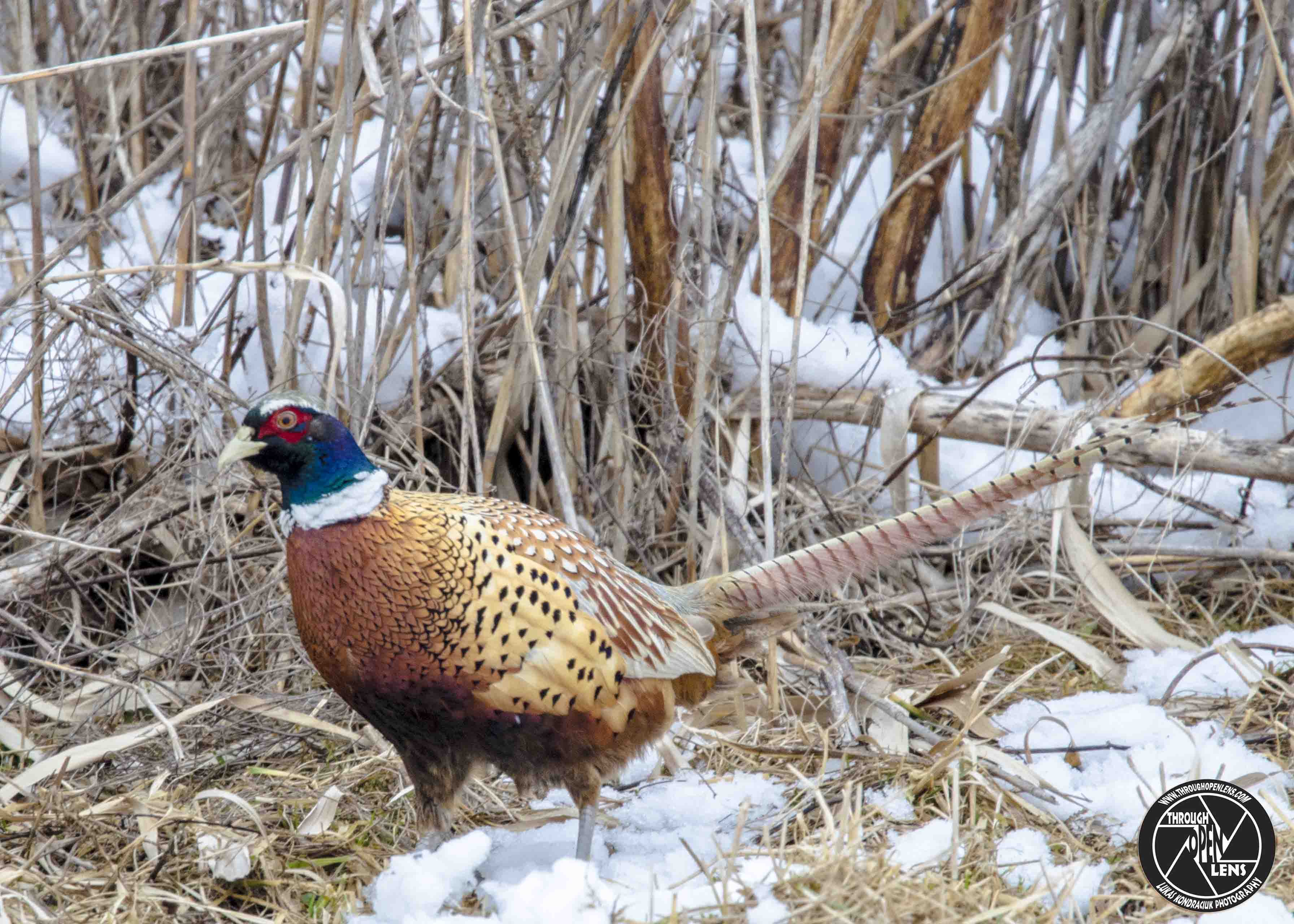
You Are Full Of It!

F/6.3, 1/250, ISO 1600.

Ring-Necked Pheasant

How do snowmen get around?

They ride an icicle!

Interesting Fact: Male Ring-necked Pheasants may harass other ground-nesting birds, such as the Gray Partridge and the Greater Prairie-Chicken. Female pheasants sometimes lay their own eggs in these birds’ nests. This may explain why some male pheasants have been seen chasing away male prairie-chickens and courting females—the pheasants may have been raised in prairie-chicken nests and imprinted on the wrong species. ( https://www.allaboutbirds.org/guide/Ring-necked_Pheasant# )

I Don’t Give A Duck!

F/10.0, 1/400, ISO 250.

Bufflehead Duck male

Why was the snowman looking through the carrots?

He was picking his nose!

Interesting Fact: During the winter, look for these tiny, black-and-white ducks in sheltered coves along the Atlantic or Pacific coast, or on inland ponds in southern North America. While foraging they spend half their time underwater, so scan carefully and patiently. ( https://www.allaboutbirds.org/guide/Bufflehead/ )


Don’t Be Jealous Of My Beak.

F/9.0, 1/320, ISO 640.

Common Loon 

Why is sex like math?

You add a bed, subtract the clothes, divide the legs, and pray there’s no multiplying!

Interesting Fact: A hungry loon family can put away a lot of fish. Biologists estimate that loon parents and their 2 chicks can eat about a half-ton of fish over a 15-week period.  ( https://www.allaboutbirds.org/guide/Common_Loon )

Why The Long Face?

F/6.3, 1/160, ISO 200.

Common Eider 

What did one toilet say to the other toilet?

You look a bit flushed.

Interesting Facts: This species dives for crustaceans and molluscs, with mussels being a favoured food. The eider will eat mussels by swallowing them whole; the shells are then crushed in their gizzard and excreted. When eating a crab, the eider will remove all of its claws and legs, and then eat the body in a similar fashion. ( https://en.wikipedia.org/wiki/Common_eider )