He Tried To Imagine The Sound Of The Color Red

F/8.0, 1/250, ISO 800.

Scarlet Tanager

What happened when the two antennas got married?

Well, the ceremony was kinda boring, but the reception was great!

Interesting Fact: The female Scarlet Tanager sings a song similar to the male’s, but softer, shorter, and less harsh. She sings in answer to the male’s song and while she is gathering nesting material. ( https://www.allaboutbirds.org/guide/Scarlet_Tanager/overview )

Never Wrestle With A Pig. You Both Get Dirty And The Pig Loves It….

F/5.6, 1/100, ISO 320.

Duroc pig

What do you call a pig with no legs?

A groundhog.

Interesting Fact: The Duroc pig is an older breed of domestic pig. The breed was developed in the United States and formed the basis for many mixed-breed commercial hogs.  ( https://en.wikipedia.org/wiki/Duroc_pig )

I Am Not Liable If You Falling Asleep Count Sheep!

F/8.0, 1/250, ISO 320.

Sheep

What do you call a sheep that is always quiet?

A shhhheep!

Interesting Fact: The exact line of descent between domestic sheep and their wild ancestors is unclear.[1] The most common hypothesis states that Ovis aries is descended from the Asiatic (O. orientalis) species of mouflon.[2]:5 Sheep were among the first animals to be domesticated by humankind (although the domestication of dogs may be over 20,000 years earlier); the domestication date is estimated to fall between 11,000 and 9,000 B.C in Mesopotamia.[2]:4[3]:11–14[4]:2[5] The rearing of sheep for secondary products, and the resulting breed development, began in either southwest Asia or western Europe.[6] Initially, sheep were kept solely for meat, milk and skins. Archaeological evidence from statuary found at sites in Iran suggests that selection for woolly sheep may have begun around 6000 BC,[2]:5[3]:11 and the earliest woven wool garments have been dated to two to three thousand years later. ( https://en.wikipedia.org/wiki/Sheep#History )

Tomorrow Belongs To Those Who Can Hear It Coming

F/10.0, 1/400, ISO 160.

Eduardo Kobra Art “David Bowie” In Jersey City

What Do You Call A Person Who Can’t Flip Pancakes?

A Flip Flop

Interesting Fact:Eduardo Kobra (born January 1, 1976) is a Brazilian street artist. He is notable for painting murals, usually depicting portraits with a technique of repeating squares and triangles. Kobra utilizes bright colors and bold lines while staying true to a kaleidoscope theme throughout his art. ( https://en.wikipedia.org/wiki/Eduardo_Kobra )

I Trying To Get My Duck In The Row But I Got Geese Instead!

F/7.1, 1/200, ISO 250.

Canada Goose and Goslings

What did the triangle say to the circle?

Your pointless!

Interesting Fact:  In spring and summer, geese concentrate their feeding on grasses and sedges, including skunk cabbage leaves and eelgrass. During fall and winter, they rely more on berries and seeds, including agricultural grains, and seem especially fond of blueberries. They’re very efficient at removing kernels from dry corn cobs. Two subspecies have adapted to urban environments and graze on domesticated grasses year round. ( https://www.allaboutbirds.org/guide/Canada_Goose/lifehistory )

Look Up In The Sky!

F/13.0, 1/640, ISO 250.

MH-53E Sea Dragon

What did the candle say to the other candle?

I’m going out tonight

Interesting Fact: The CH-53 was the product of the U.S. Marines’ “Heavy Helicopter Experimental” (HH(X)) competition begun in 1962. Sikorsky‘s S-65 was selected over Boeing Vertol‘s modified CH-47 Chinook version. The prototype YCH-53A first flew on 14 October 1964.[1] The helicopter was designated “CH-53A Sea Stallion” and delivery of production helicopters began in 1966.[2] The first CH-53As were powered by two General Electric T64-GE-6 turboshaft engines with 2,850 shp (2,125 kW) and had a maximum gross weight of 46,000 lb (20,865 kg) including 20,000 lb (9,072 kg) in payload. ( https://en.wikipedia.org/wiki/Sikorsky_CH-53E_Super_Stallion#Specifications_(CH-53E) )

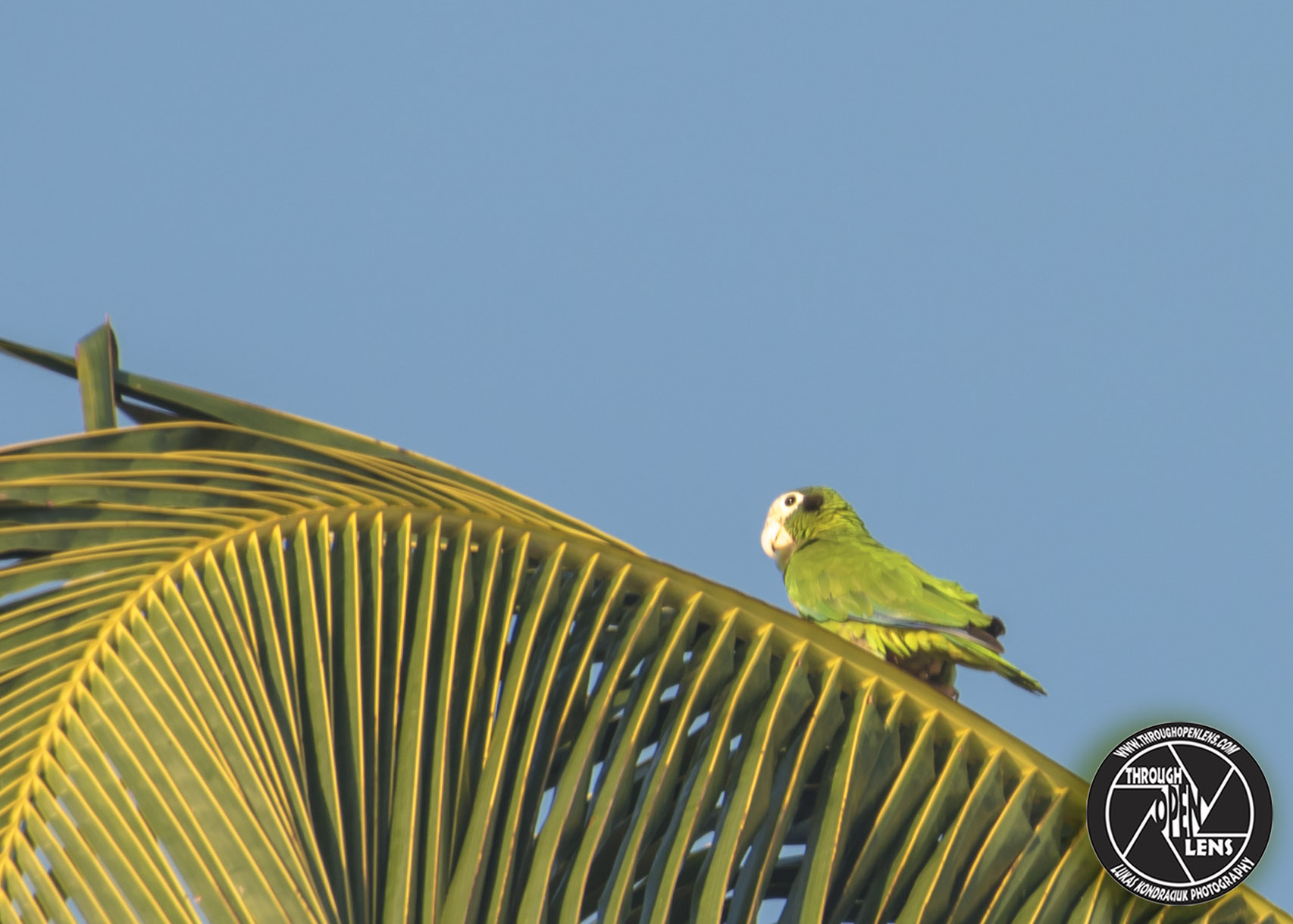
Of Course I Talk To Myself… Sometimes I Need Expert Advice.

F/6.3, 1/160, ISO 125.

Hispaniolan amazon or Hispaniolan parrot

What do you get when you cross a parrot with a shark?

An animal that talks your head off.

Interesting Fact: As with other amazons, it prefers forested areas where food is plentiful. This parrot lives in the wood forests in Haiti and the Dominican Republic. However over the recent years they have been captured out of their natural habitat illegally for pet trades or just to keep them as pets which are very popular in the Dominican Republic. Right now[when?] the population ranges from 10,000 to 19,000 in the wild and decreasing. ( https://en.wikipedia.org/wiki/Hispaniolan_amazon#Habitat_and_distribution )

Call Me A Teddy Bear Again!

F/6.3, 1/50, ISO 2000.

American Black Bear

Why don’t bears like fast food?

Because they can’t catch it!

Interesting Fact: Solitary animals, black bears roam large territories, though they do not protect them from other bears. Males might wander a 15- to 80-square-mile home range. ( https://www.nationalgeographic.com/animals/mammals/a/american-black-bear/ )

I Wanna Go Fast!

F/6.3, 1/60, ISO 400.

White-throated Sparrow

Two state officials are talking  “I don’t know what people have against us, We haven’t done anything.”

Interesting Fact:  Males are typically dominant over females, but whether an individual is white-striped or tan-striped seems to have no bearing on status. When pairing up, white-striped forms tend to choose tan-striped individuals, and vice versa. Pairs stay together for the summer, but birds often choose new partners the next year.  ( https://www.allaboutbirds.org/guide/White-throated_Sparrow/lifehistory )

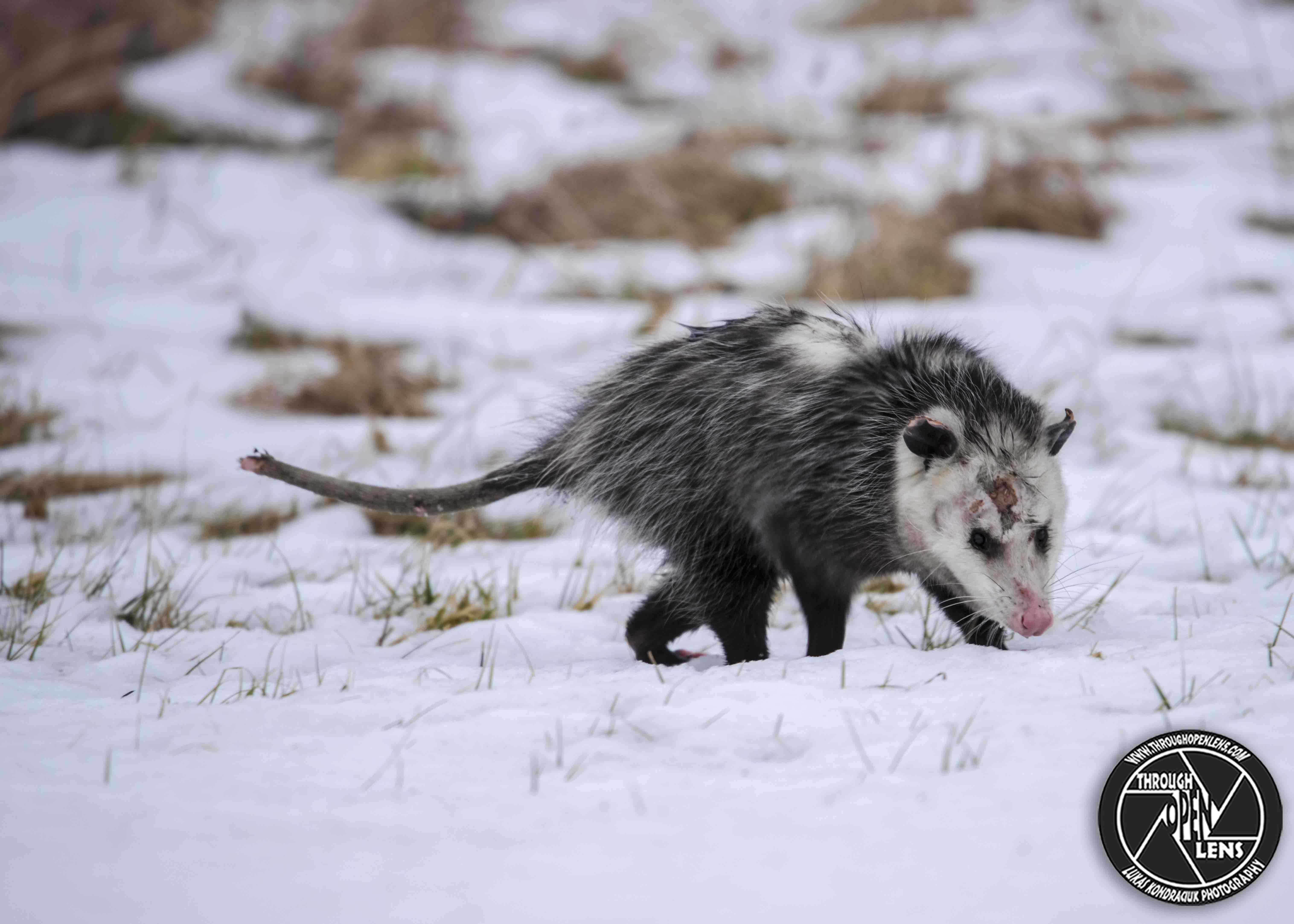
If You Want To Go Running With Me, You’d Better Be Prepared To Walk A Lot.

F/6.3, 1/80, ISO 400.

Opossums

A 3 years old boy sits near a pregnant woman.

Boy: Why do you look so fat?

Pregnant woman: I have a baby inside me.

Boy: Is it a good baby?

Pregnant woman: Yes, it is a very good baby.

Boy: Then why did you eat it?!

Interesting Fact:  These animals are most famous for “playing possum.” When threatened by dogs, foxes, or bobcats, opossums sometimes flop onto their sides and lie on the ground with their eyes closed or staring fixedly into space. They extend their tongues and generally appear to be dead. This ploy may put a predator off its guard and allow the opossum an opportunity to make its escape. ( https://www.nationalgeographic.com/animals/mammals/group/opossums/ )