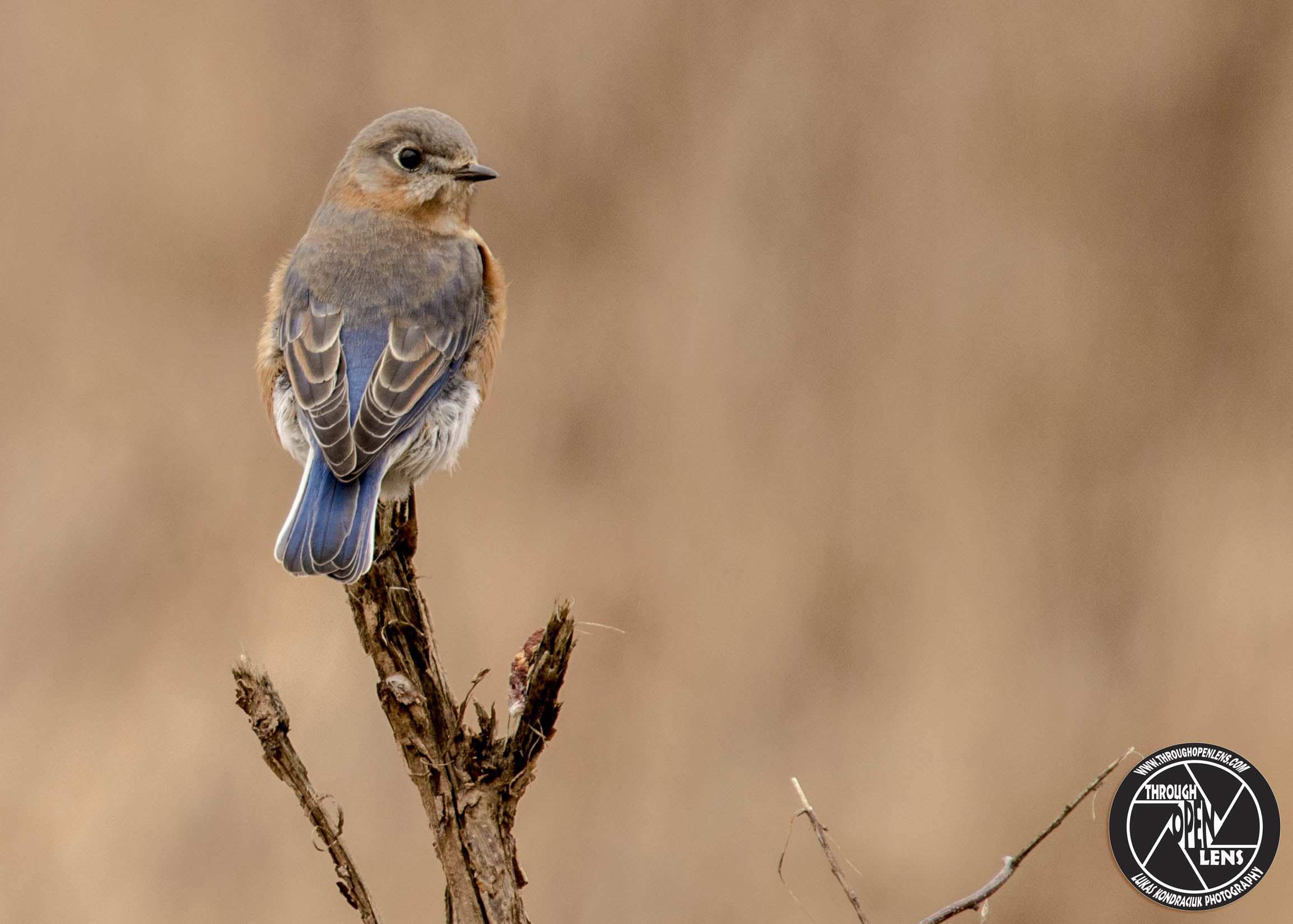
You’re My Boy Blue!

F/7.1, 1/200, ISO 400.

Eastern Bluebird

Why don’t they play poker in the jungle?

Too many cheetahs.

Interesting Fact: This small, brightly colored thrush typically perches on wires and fence posts overlooking open fields. The birds forage by fluttering to the ground to grab an insect, or occasionally by catching an insect in midair. Bluebirds can sight their tiny prey items from 60 feet or more away. They fly fairly low to the ground, and with a fast but irregular pattern to their wingbeats. ( https://www.allaboutbirds.org/guide/Eastern_Bluebird/lifehistory )


I’m Feeling A Little Froggy!

F/6.3, 1/50, ISO 500.

Southern Leopard Frog

Want to hear a dirty joke?

The white horse fell in the mud.

Interesting Fact: This frog lives in many types of shallow freshwater habitat and sometimes in slightly brackish water. It is usually found close to water but it can stay on dry land for long periods of time.[8] During warmer months it moves away from the water for most of the time.[10] It is mostly nocturnal,[10] but it can be active during the day and the night, especially during rainfall. It breeds in the winter and spring, and sometimes in the fall; heavy periods of rainfall trigger breeding.[8] The egg mass is connected to aquatic vegetation.[9] It typically nests communally in cooler weather, and individually in warmer weather.[11][12] Eggs hatch in 4 days to nearly two weeks.[10] The tadpoles take 50 to 75 days to develop to adulthood. ( https://en.wikipedia.org/wiki/Southern_leopard_frog )

It’s Not Easy Being Green

F/6.3, 1/60, ISO 640.

Northern Green Frog

What’s the difference between a cat and a frog?

A Cat has nine lives but a Frog croaks every night!

Interesting Fact:  The northern green frog (Lithobates clamitans melanota[2]) is a subspecies of the green frog, Lithobates clamitans. It is native to the northeastern North America and has been introduced to British Columbia.[3] Its mating call sounds like the single note of a plucked banjo. It is also quite common in the pet trade. ( https://en.wikipedia.org/wiki/Northern_green_frog )

If You’re Feeling Blue Try Painting Yourself A Different Color

F/6.3, 1/160, ISO 1000.

Eastern Bluebird

What starts with a P, ends with an E, and has a million letters in it?

Post Office!

Interesting Fact: The male Eastern Bluebird displays at his nest cavity to attract a female. He brings nest material to the hole, goes in and out, and waves his wings while perched above it. That is pretty much his contribution to nest building; only the female Eastern Bluebird builds the nest and incubates the eggs.  ( https://www.allaboutbirds.org/guide/Eastern_Bluebird/lifehistory )

I Am Going Bananas. Thats What I Say To My Bananas Before I Leave The House.

F/7.1, 1/200, ISO 400.

Eastern Bluebird

What did the penny say to the other penny?

We make perfect cents.

Interesting Fact: Eastern Bluebirds eat mostly insects, wild fruit and berries. Occasionally, Eastern Bluebirds have also been observed capturing and eating larger prey items such as shrews, salamanders, snakes, lizards and tree frogs.  ( https://www.allaboutbirds.org/guide/Eastern_Bluebird# )

Monday Blues

F/7.1, 1/200, ISO 400.

Eastern Bluebird 

Where does Capitan Hook go shopping?

Second hand stores.

Interesting Fact: Eastern Bluebirds eat mostly insects, wild fruit and berries. Occasionally, Eastern Bluebirds have also been observed capturing and eating larger prey items such as shrews, salamanders, snakes, lizards and tree frogs. ( Eastern Bluebird Overview, All About Birds, Cornell Lab of Ornithology )


I Got Blue More Than You!

F/7.1, 1/200, ISO 320.

Eastern Bluebird

In Court:

Judge: “Why did you steal the car?”

Defendant: “Your Honour I had to get to work.”

Judge: “Why didn’t you take the bus?”

Defendant: I don’t have a driver’s license for the bus.

Interesting Fact: Eastern Bluebirds occur across eastern North America and south as far as Nicaragua. Birds that live farther north and in the west of the range tend to lay more eggs than eastern and southern birds.  ( https://www.allaboutbirds.org/guide/Eastern_Bluebird )

Blue Me!

F/6.3, 1/160, ISO 400.

Eastern Bluebird

Doctor is talking to a patient.

Doctor:  “Do you do sports?”

Patient:  “Does sex count?”

Doctor:  “Yes.”

Patient:  “Then no.”

Interesting Fact: Eastern Bluebirds typically have more than one successful brood per year. Young produced in early nests usually leave their parents in summer, but young from later nests frequently stay with their parents over the winter.  ( https://www.allaboutbirds.org/guide/Eastern_Bluebird/lifehistory )
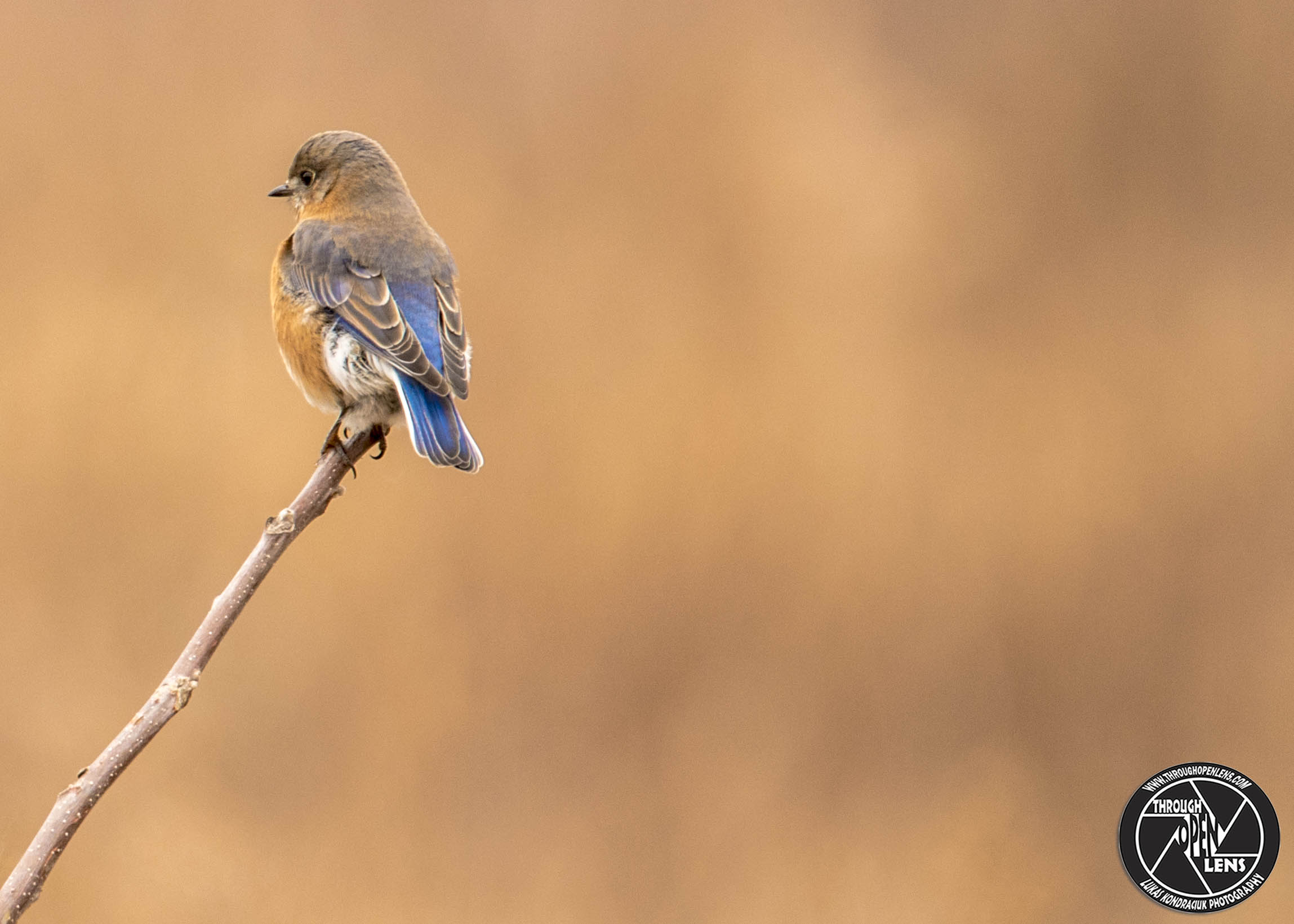
Hee That Loves The Tree, Loves The Branch.

F/7.1, 1/200, ISO 1000.

Green Heron

What do you call an alligator in a vest?

An Investigator

Interesting Fact: Like many herons, the Green Heron tends to wander outside of its breeding range after the nesting season is over. Most of the wanderers stay nearby as they search for good feeding habitat, but some travel long distances. Individuals have turned up as far away as England and France. ( https://www.allaboutbirds.org/guide/Green_Heron/lifehistory )

I Am Too Busy Working On My Own Grass To Notice If Yours Is Greener

F/6.3, 1/250, ISO 640.

Muskrat

Why is sex like math?

You add a bed, subtract the clothes, divide the legs, and pray there’s no multiplying!

Interesting Fact: Muskrats provide an important food resource for many other animals, including minkfoxescoyoteswolveslynxbobcatsbearseaglessnakesalligators, and large owls and hawksOtterssnapping turtles, and large fish such as pike prey on baby muskrats. Caribou and elk sometimes feed on the vegetation which makes up muskrat push-ups during the winter when other food is scarce for them.[24] In their introduced range in the former Soviet Union, the muskrat’s greatest predator is the golden jackal. They can be completely eradicated in shallow water bodies, and during the winter of 1948–49 in the Amu Darya (river in central Asia), muskrats constituted 12.3% of jackal faeces contents, and 71% of muskrat houses were destroyed by jackals, 16% of which froze and became unsuitable for muskrat occupation. Jackals also harm the muskrat industry by eating muskrats caught in traps or taking skins left out to dry. ( https://en.wikipedia.org/wiki/Muskrat#Behavior )