Ask Us About Our Hole?

F/6.3, 1/125, ISO 320.

Eastern chipmunks

What do you call a rooster who wakes you up at the same time every morning?

An alarm cluck!

Interesting Fact: The eastern chipmunk defends its burrow and lives a solitary life, except during mating season. Females usually produce one or two litters of three to five young.[5] The two breeding seasons are from February to April and from June to August. During the winter, the chipmunk may enter long periods of torpor, but does not truly hibernate. ( https://en.wikipedia.org/wiki/Eastern_chipmunk )


Down The Rabbit Hole!

F/8.0, 1/250, ISO 250.

Desert Cottontail Rabbit 

What is a tree’s favorite drink?

Root beer!

Interesting Fact: The lifespan of a cottontail that reaches adulthood averages less than two years, depending on the location.[6] Unfortunately for the cottontail, almost every local carnivore larger or faster than the lagomorph is its predator. Some predators, like snakes for example, are familiar with the area inhabited by the cottontails, and can catch and eat the young at will; the mother is unable to defend the litter. Although cottontails are highly active sexually, and mated pairs have multiple litters throughout the year, few young survive to adulthood. Those that survive grow quickly and are full grown at three months. ( https://en.wikipedia.org/wiki/Desert_cottontail )


Everyday May Not Be Good, But There Is Something Good In Everyday.

F/9.0, 1/250, ISO 320.

Muskrat

Why did the dog sit in the shade?

Because he didn’t want to be a hot dog!

Interesting Fact: Native Americans have long considered the muskrat to be a very important animal. Some predict winter snowfall levels by observing the size and timing of muskrat lodge construction.[26]  In several Native American creation myths, the muskrat dives to the bottom of the primordial sea to bring up the mud from which the earth is created, after other animals have failed in the task. ( https://en.wikipedia.org/wiki/Muskrat#Behavior )


Hey, these are my nuts!

F/5.6, 1/160, ISO 800.

Eastern Chipmunk

Why did the skeleton burp?

Because it didn’t have the guts to fart.

Interesting Fact: A chipmunk’s cheeks can expand to three times the size of its head and they have pouches in their cheeks where they hold their food until they get back to store it in their burrows ( http://www.pets4homes.co.uk/pet-advice/fun-interesting-facts-about-chipmunks.html )


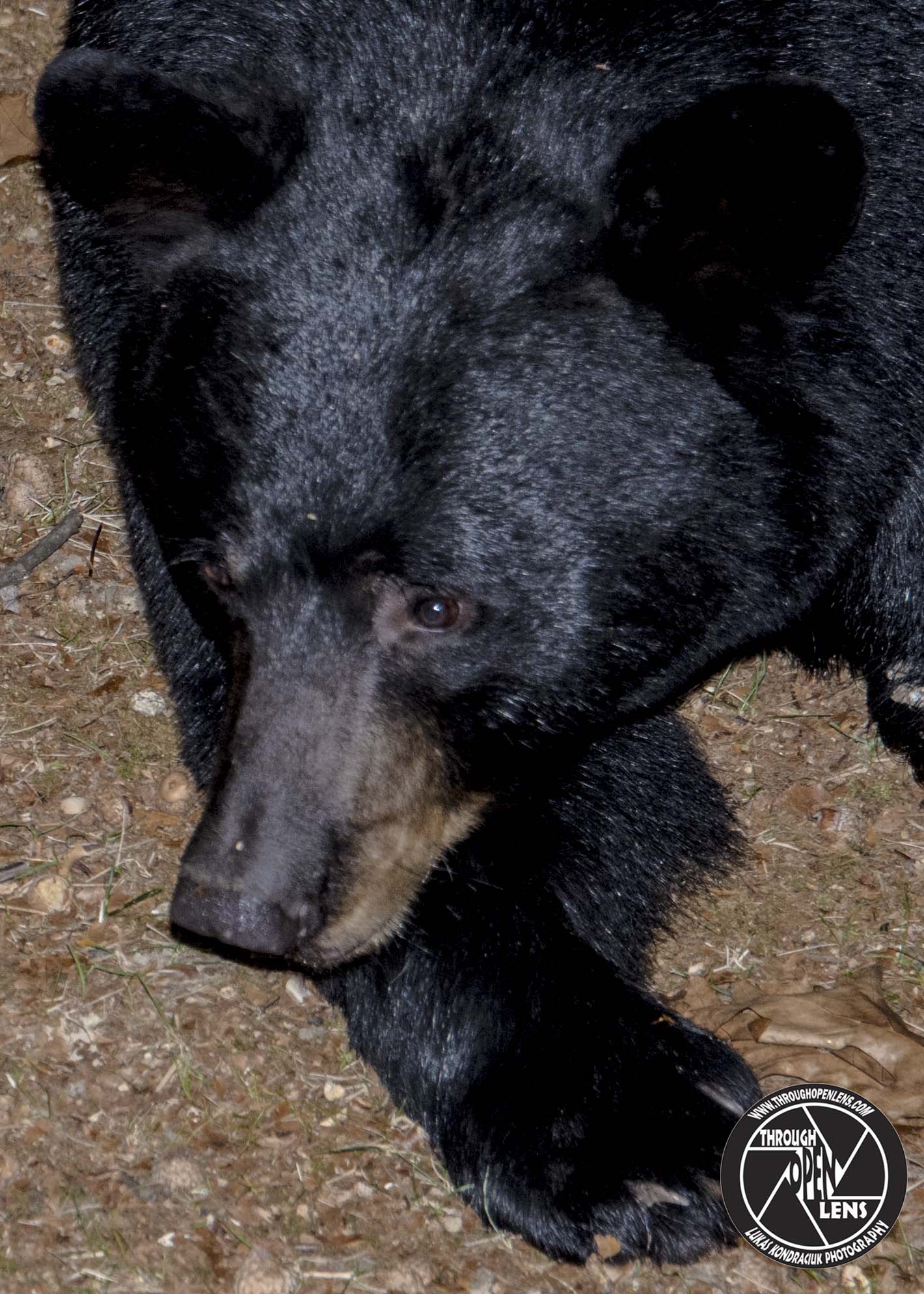
HEY BOO BOO!!!

F/6.3, 1/60. ISO 640.

American Black Bear

How does a tree get on the internet?

He logs in

Interesting Fact: American black bears have better eyesight and hearing than humans. Their keenest sense is their sense of smell, which is about seven times more sensitive than a domestic dog’s.[64] American black bears are excellent and strong swimmers, swimming for pleasure and to feed (largely on fish). ( https://en.wikipedia.org/wiki/American_black_bear )

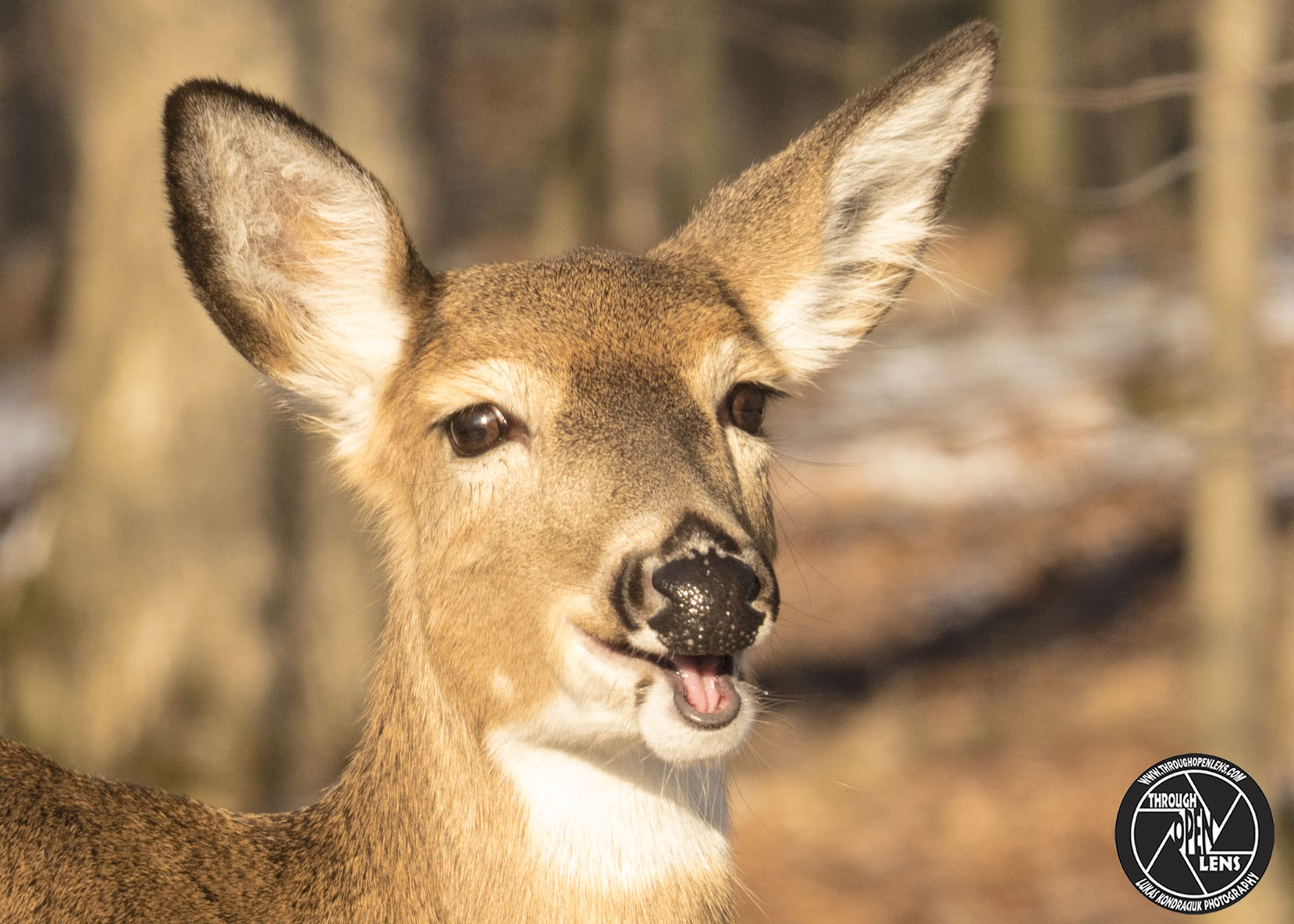
Hey Handsome!

F/9.0, 1/320, ISO 250.

White-Tailed Deer

Did you hear the joke about the butter?

I do not think I should tell you because you might spread it around…

Interesting Fact: Males compete for the opportunity of breeding females. Sparring among males determines a dominance hierarchy.[61] Bucks attempt to copulate with as many females as possible, losing physical condition, since they rarely eat or rest during the rut. The general geographical trend is for the rut to be shorter in duration at increased latitude. Many factors determine how intense the “rutting season” will be; air temperature is a major one. Any time the temperature rises above 40 °F (4 °C), the males do much less traveling looking for females, else they will be subject to overheating or dehydrating. Another factor for the strength in rutting activity is competition. If numerous males are in a particular area, then they compete more for the females. If fewer males or more females are present, then the selection process will not need to be as competitive. ( https://en.wikipedia.org/wiki/White-tailed_deer )

Never Wrestle With A Pig. You Both Get Dirty And The Pig Loves It….

F/5.6, 1/100, ISO 320.

Duroc pig

What do you call a pig with no legs?

A groundhog.

Interesting Fact: The Duroc pig is an older breed of domestic pig. The breed was developed in the United States and formed the basis for many mixed-breed commercial hogs.  ( https://en.wikipedia.org/wiki/Duroc_pig )

I Am Not Liable If You Falling Asleep Count Sheep!

F/8.0, 1/250, ISO 320.

Sheep

What do you call a sheep that is always quiet?

A shhhheep!

Interesting Fact: The exact line of descent between domestic sheep and their wild ancestors is unclear.[1] The most common hypothesis states that Ovis aries is descended from the Asiatic (O. orientalis) species of mouflon.[2]:5 Sheep were among the first animals to be domesticated by humankind (although the domestication of dogs may be over 20,000 years earlier); the domestication date is estimated to fall between 11,000 and 9,000 B.C in Mesopotamia.[2]:4[3]:11–14[4]:2[5] The rearing of sheep for secondary products, and the resulting breed development, began in either southwest Asia or western Europe.[6] Initially, sheep were kept solely for meat, milk and skins. Archaeological evidence from statuary found at sites in Iran suggests that selection for woolly sheep may have begun around 6000 BC,[2]:5[3]:11 and the earliest woven wool garments have been dated to two to three thousand years later. ( https://en.wikipedia.org/wiki/Sheep#History )