NEVER FORGET

F/22.0, 77.0, ISO 125.

New York City Skyline 9/11 Tribute

A Time To Remember Those Who Died, Those Who Served, And Those Who Carry On.

Interesting Fact: The Tribute in Light is an art installation of 88 vertical searchlights placed six blocks south of the World Trade Center on top of the Battery Parking Garage[1] in New York City which create two columns of light to represent the Twin Towers in remembrance of the September 11 attacks.[2]Tribute in Light began initially as a temporary commemoration of the attacks in early 2002 but became an annual commemoration, currently produced on September 11 by the Municipal Art Society of New York.[3][4][5] The Tribute in Light was conceived by artists John Bennett, Gustavo Boneverdi, Richard Nash Gould, Julian LaVerdiere, and Paul Myoda, and lighting consultant Paul Marantz. ( https://en.m.wikipedia.org/wiki/Tribute_in_Light )


Family Are Like Fudge… Mostly Sweet With A Few Nuts.

F/6.3, 1/160, ISO 100.

Canada Goose and Goslings 

What did the baby corn say to the mama corn?

Where’s POP corn?

Interesting Fact: During spring, pairs break out from flocks and begin defending territories. Spacing of these pairs is variable and depends on availability of nest sites and population density; where population is large, even after a great many fights birds may end up nesting in view of one another, and some populations are semi-colonial. ( https://www.allaboutbirds.org/guide/Canada_Goose/lifehistory )

From Small Beginnings Come Great Things

F/5.6, 1/200, ISO 100.

Canada Goose Goslings

What do you get when you cross fish and an elephant?

Swimming trunks.

Interesting Fact: Young often remain with their parents for their entire first year, especially in the larger subspecies. As summer wanes birds become more social; they may gather in large numbers at food sources; where food is limited and patchy, may compete with displays and fights.  ( https://www.allaboutbirds.org/guide/Canada_Goose/lifehistory )

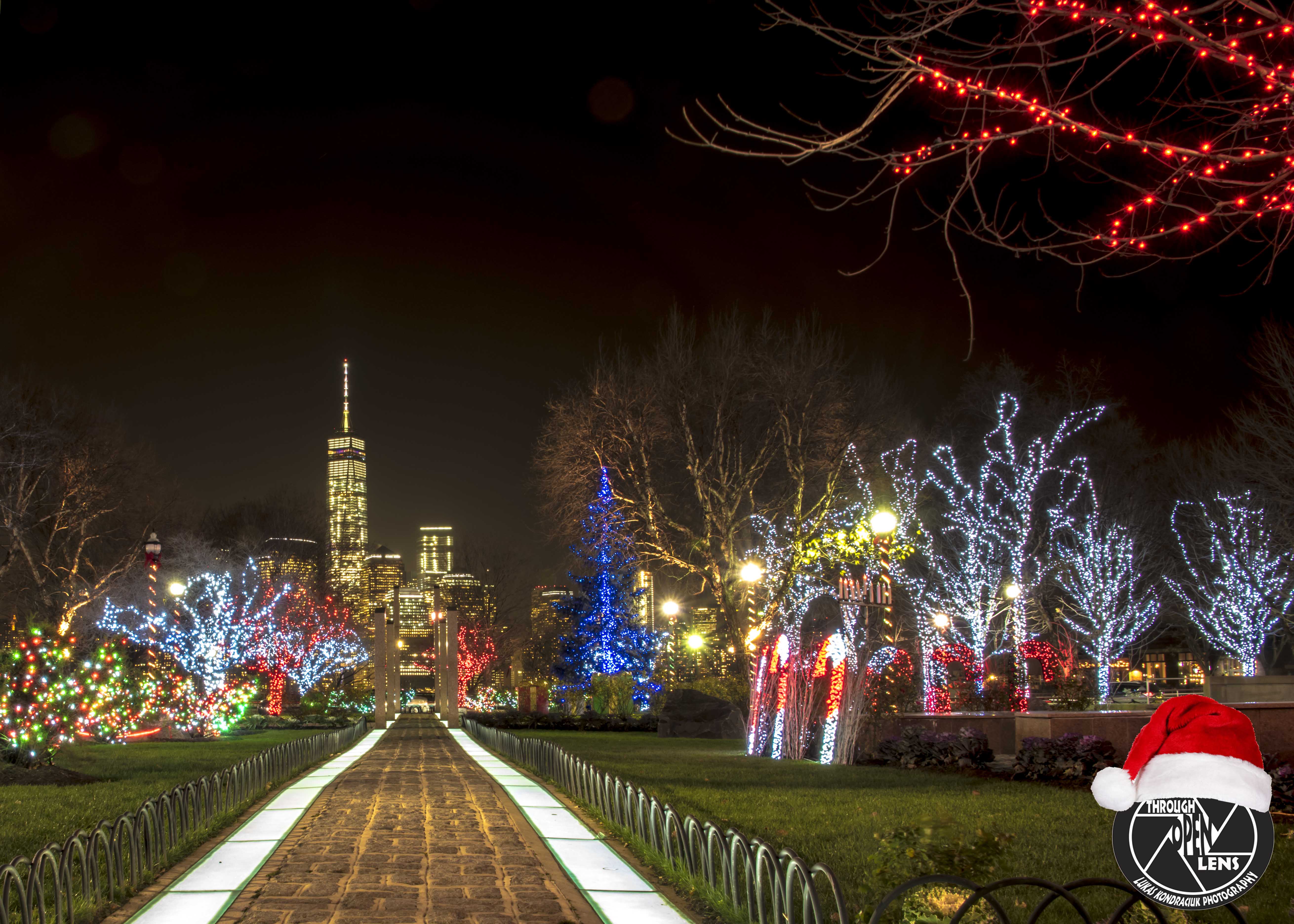
May All Your Troubles Soon Be Gone. Oh, Christmas Lights Keep Shining On.

F/22.0, 87.0, ISO 125.

Jersey City Downtown

What did the stamp say to the Christmas card?

Stick with me and we’ll go places!

Interesting Fact: The first known electrically illuminated Christmas tree was the creation of Edward H. Johnson, an associate of inventor Thomas Edison. While he was vice president of the Edison Electric Light Company, a predecessor of today’s Con Edison electric utility, he had Christmas tree light bulbs especially made for him. He proudly displayed his Christmas tree, which was hand-wired with 80 red, white and blue electric incandescent light bulbs the size of walnuts, on December 22, 1882 at his home on Fifth Avenue in New York City. Local newspapers ignored the story, seeing it as a publicity stunt. However, it was published by a Detroit newspaper reporter, and Johnson has become widely regarded as the Father of Electric Christmas Tree Lights. By 1900, businesses started stringing up Christmas lights behind their windows.[14] Christmas lights were too expensive for the average person; as such, electric Christmas lights did not become the majority replacement for candles until 1930. ( https://en.wikipedia.org/wiki/Christmas_lights#History )


I Have A Bone To Pick With You!

F/5.0, 1/60, ISO 320.

Happy Halloween!

What does a skeleton orders at a restaurant?

Spare ribs!!!

Interesting Fact: Today’s Halloween customs are thought to have been influenced by folk customs and beliefs from the Celtic-speaking countries, some of which are believed to have pagan roots.[35][36]Jack Santino, a folklorist, writes that “there was throughout Ireland an uneasy truce existing between customs and beliefs associated with Christianity and those associated with religions that were Irish before Christianity arrived”.[37] Historian Nicholas Rogers, exploring the origins of Halloween, notes that while “some folklorists have detected its origins in the Roman feast of Pomona, the goddess of fruits and seeds, or in the festival of the dead called Parentalia, it is more typically linked to the Celtic festival of Samhain, which comes from the Old Irish for “summer’s end”. (  https://en.wikipedia.org/wiki/Halloween#History )

We Will Never Forget 9/11

F/13.0, 6.0, ISO 100.

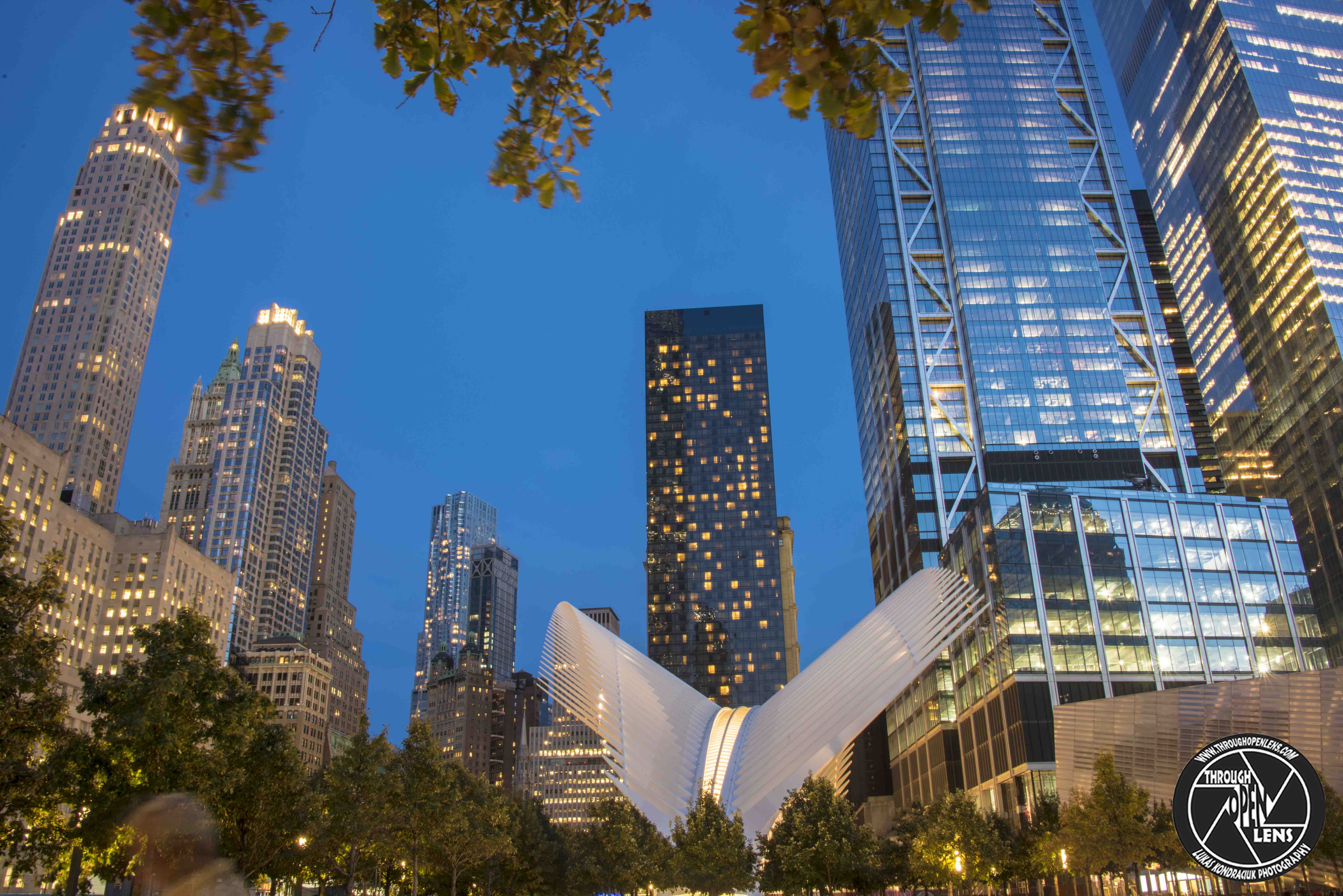
No Sleep In The City

F/22.0, 37.0, ISO 64.

World Trade Center Transportation Hub

What computer sings the best?

A Dell.

Interesting Fact: A large transit station was not part of the 2003 Memory Foundations master plan for the site by Daniel Libeskind, which called for a smaller station along the lines of the original subterranean station that existed beneath the World Trade Center.[39][40] Libeskind’s design called for the Oculus space to be left open, forming a “Wedge of Light” so that sun rays around the autumnal equinox would hit the World Trade Center footprints each September.[39][40] In early 2004, the Port Authority, which owns the land, modified the Libeskind plan to include a large transportation station downtown, intended to rival Penn Station and Grand Central Terminal.[41] In a nod to the Libeskind concept, the Oculus was built to maximize the effect of the autumnal equinox rays (coinciding with the skylight opening on or around September 11 every year). ( https://en.wikipedia.org/wiki/World_Trade_Center_station_(PATH)#World_Trade_Center_Transportation_Hub ) 

Dancing In The Street

dancing-in-the-street

F/4.0, 1/60, ISO 800.

Why don’t dogs make good dancers?

Because they have two left feet!

Interesting Fact: Archeological evidence for early dance includes 9,000-year-old paintings in India at the Rock Shelters of Bhimbetka, and Egyptian tomb paintings depicting dancing figures, dated c. 3300 BC. It has been proposed that before the invention of written languages, dance was an important part of the oral and performance methods of passing stories down from generation to generation.[5] The use of dance in ecstatic trance states and healing rituals (as observed today in many contemporary “primitive” cultures, from the Brazilian rainforest to the Kalahari Desert) is thought to have been another early factor in the social development of dance. ( https://en.wikipedia.org/wiki/Dance#Origins )

We Own The Night


new-york-city-manhattan-1

F/18.0, 26.0, ISO 80

New York City, Manhattan

A couple had lived together in the backwoods for over fifty years.

To celebrate their fiftieth anniversary, he took her to a large city and they checked into a plush hotel.

She said to the bellman, “We refuse to settle for such a small room. No windows, no bed, and no air conditioning.”

“But, madam!”, replied the bellman.

“Don’t ‘But madam’ me,” she continued. “You can’t treat us like we’re a couple of fools just because we don’t travel much, and we’ve never been to the big city, and never spent the night at a hotel. I’m going to complain to the manager.”

“Madam,” the bellman said, “this isn’t your room; this is the elevator!”

Interesting Fact: The name “Manhattan” derives from the word Manna-hata, as written in the 1609 logbook of Robert Juet, an officer on Henry Hudson‘s yacht Halve Maen (Half Moon).[35] A 1610 map depicts the name as Manna-hata, twice, on both the west and east sides of the Mauritius River (later named the Hudson River). The word “Manhattan” has been translated as “island of many hills” from the Lenape language.[36] The United States Postal Service prefers that mail addressed to Manhattan use “New York, NY” rather than “Manhattan, NY”.[

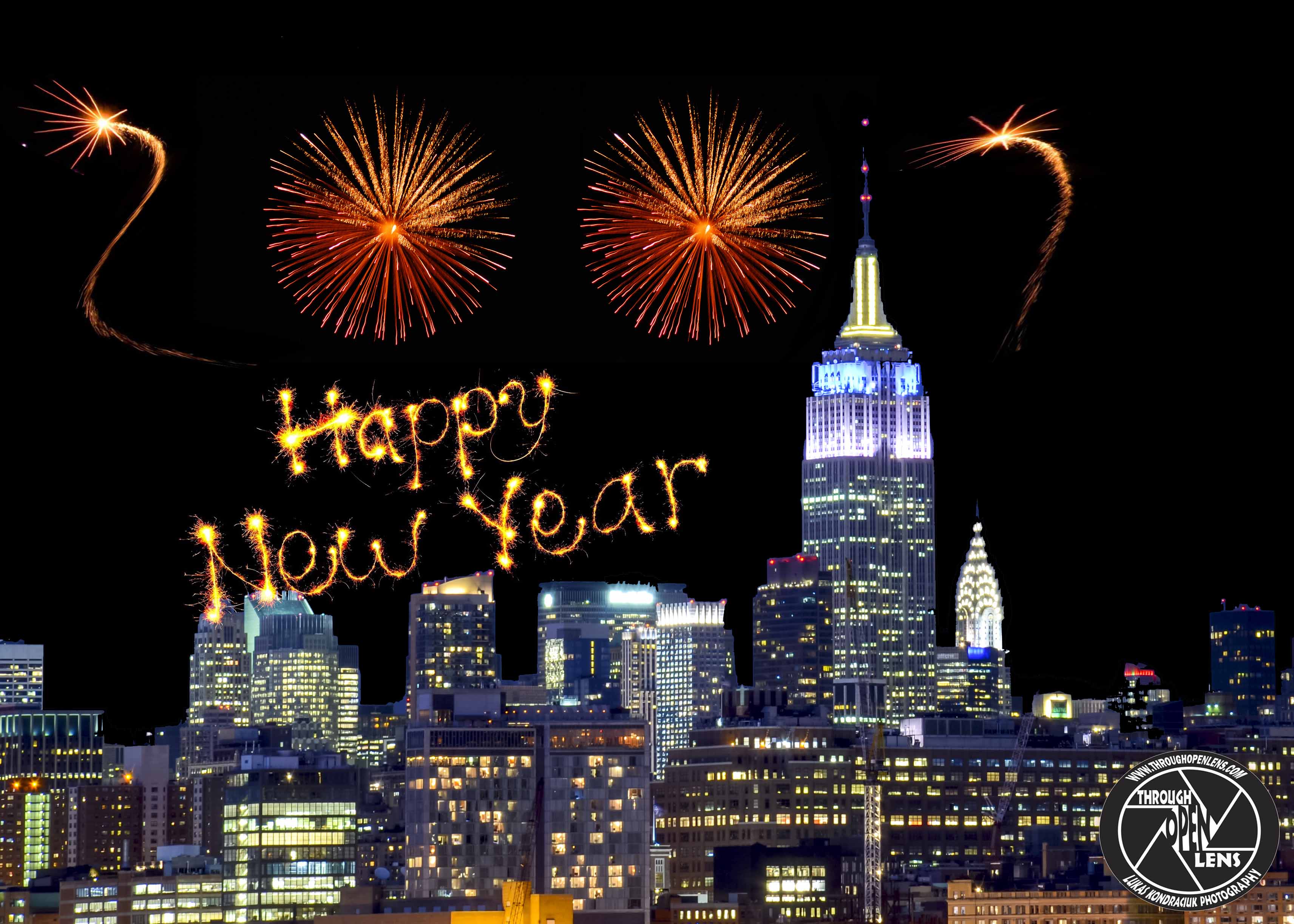
A New Year, A Fresh Start And Infinite Possibilities.

happy-new-year-2017

F/16.0, 30, ISO 100, Photoshop CS6.

On New Year’s Eve, Jenny stood up in the local pub and said that it was time to get ready.

At the stroke of midnight, she wanted every husband to be standing next to the one person who made his life worth living.

Well, it was kind of embarrassing.  As the clock struck – the bartender was almost crushed to death.

Interesting Fact: During the Roman Republic and the Roman Empire years began on the date on which each consul first entered office. This was probably 1 May before 222 BC, 15 March from 222 BC to 154 BC,[7] and 1 January from 153 BC.[8] In 45 BC, when Julius Caesar‘s new Julian calendar took effect, the Senate fixed 1 January as the first day of the year. At that time, this was the date on which those who were to hold civil office assumed their official position, and it was also the traditional annual date for the convening of the Roman Senate. This civil new year remained in effect throughout the Roman Empire, east and west, during its lifetime and well after, wherever the Julian calendar continued in use. ( https://en.wikipedia.org/wiki/New_Year#Historical_European_new_year_dates )