In My Defense, I Was Left Unsupervised.

F/9.0, 1/320, ISO 640.

American Goldfinch

A unit in sex education was about to begin, and each student had to bring in a permission slip in order to take it.

Little Tommy handed in his slip and explained to the teacher, “My mom says I can take the course as long as there’s no homework.”

Interesting Fact: Goldfinches move south in winter following a pattern that seems to coincide with regions where the minimum January temperature is no colder than 0 degrees Fahrenheit on average. ( https://www.allaboutbirds.org/guide/American_Goldfinch )


I Hate When I’m Staring At Nothing In Particular, And Then Realize I’m Staring At Someone.

F/9.0, 1/320, ISO 160.

White-breasted Nuthatch

When do people start using their trampoline?

Spring-Time

Interesting Fact: White-breasted Nuthatches forage up, down, and sideways over tree trunks and around large branches. They often (though not always) start high in trees and move down them head first, pausing to crane their necks up and back, toward the horizontal, for a look around. They probe into bark crevices or chip away at wood to find food. When they find large nuts and seeds, they jam them into the bark and hammer them open. White-breasted Nuthatches often store seeds and insects one at a time, and somewhat haphazardly, under loose bark on their territory. They typically hide the food by covering it with a piece of bark, lichen, moss, or snow. ( https://www.allaboutbirds.org/guide/White-breasted_Nuthatch/id )

When I Was Born I Was So Surprised I Didn’t Talk For A Year And Half

F/5.6, 1/800, ISO 250.

White-throated Sparrow

What do you call a fake noodle?

An Impasta

Interesting Fact:  White-throated Sparrows eat mainly the seeds of grasses and weeds, including ragweed and buckwheat, as well as fruits of sumac, grape, cranberry, mountain ash, rose, blueberry, blackberry, and dogwood. In summer they eat large numbers of insects that they catch on the forest floor or, occasionally on quick flights out from low vegetation. These include dragonflies, wasps, stinkbugs, beetles, flies, and caterpillars, as well as spiders, millipedes, centipedes, and snails. Parents feed their nestlings almost exclusively animal matter. During winter, White-throated Sparrows readily visit bird feeders for millet and black oil sunflower seeds. In spring they eat the tender buds, blossoms, and young seeds of oak, apple, maple, beech, and elm. ( https://www.allaboutbirds.org/guide/White-throated_Sparrow/lifehistory )


Nooo, Go Away You Are Bothering Me!

Tree Swallow

F/5,6, 1/400, ISO 125.

Tree Swallow

How do you make a water bed more bouncy?

Use spring water.

Interesting Fact: The Tree Swallow—which is most often seen in open, treeless areas—gets its name from its habit of nesting in tree cavities. They also take readily to nest boxes.  ( http://www.allaboutbirds.org/guide/tree_swallow/lifehistory )

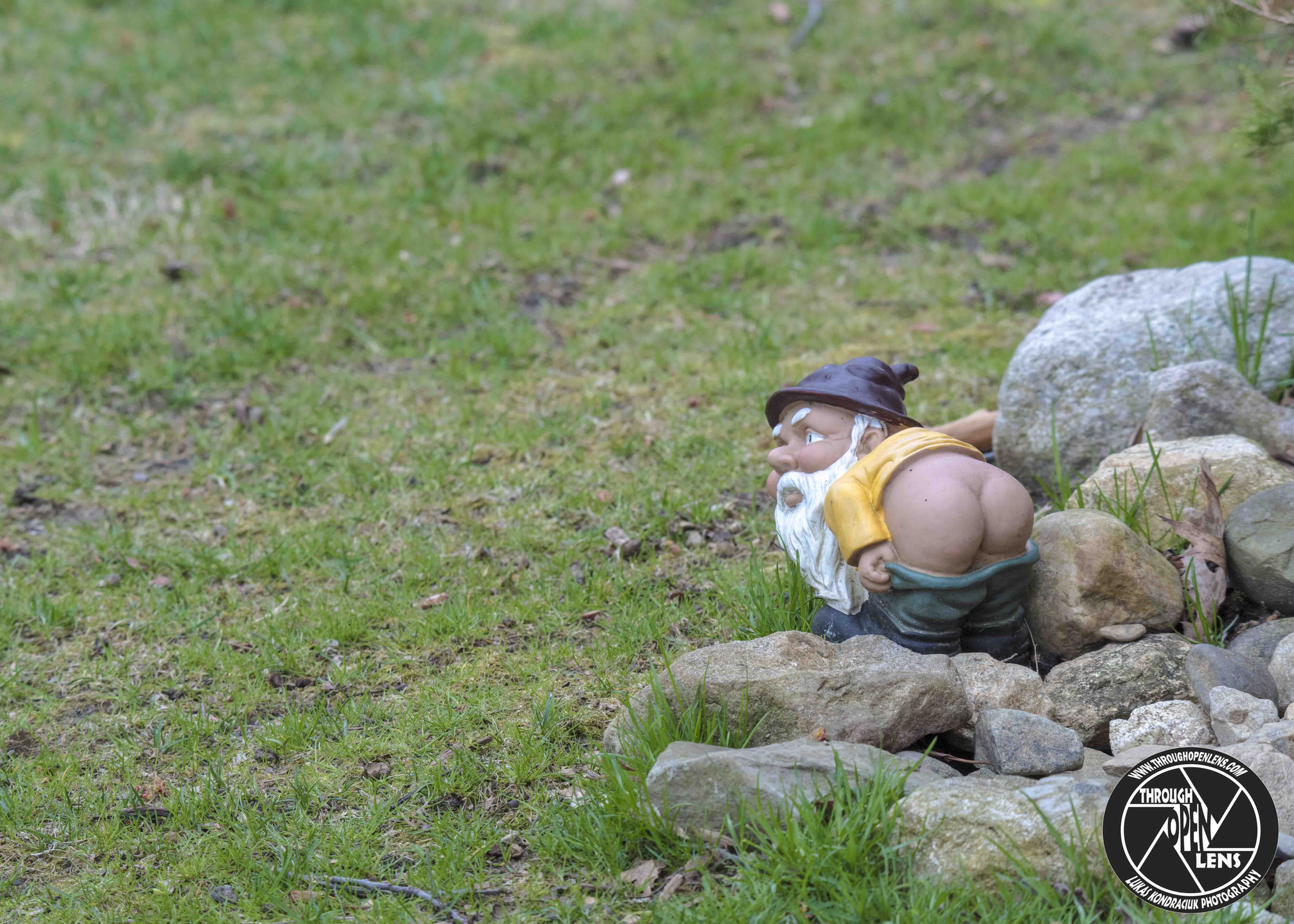
Goodmooning!

F/7.1, 1/200, ISO 640.

Garden Gnome

One time a man was driving on the road when he got stopped by a gnome with red clothes.

The gnome said” I’m a red gnome and I want a strawberry”. The man gave him a strawberry and went on his business.

Later he got stopped by a gnome with yellow clothes.

The gnome said:” I’m a yellow gnome and I want a banana”. The man, slightly annoyed, gave him a banana and continued to drive.

He then got stopped by a gnome with blue clothes.

The man, now pissed, said to him:” Let me guess, you’re a blue gnome and you want a blueberry”

The blue gnome then said:” sir, please step out of the car”

Interesting Fact: In ancient Rome, small stone statues depicting the Greco-Roman fertility god Priapus, also the protector of floors, were frequently placed in Roman gardens.[1][2][3] Gnomes as magical creatures were first described during the Renaissance period by Swiss alchemist Paracelsus as “diminutive figures two spans in height who did not like to mix with humans”.[4] During this period, stone “grotesques“, which were typically garishly painted, 1-metre-tall (3.3 ft) figurines, were commonly placed in the gardens of the wealthy.[5] Among the figures depicted were gobbi (Italian for hunchbacks). In particular, Jacques Callot produced 21 versions of gobbi, which he engraved and printed in 1616.  ( https://en.wikipedia.org/wiki/Garden_gnome#History )

Behind Every Good Kid Is A Great MOM! ( Happy Mother’s Day )

Happy Mother’s Day to all mom’s out there!

F/3.5, 1/150, ISO 325.

Son: “Mom can I get twenty bucks”
Mom: Does it look like I am made of money
Son: “Well isn’t that what M.O.M stands for?”

Interesting Fact: In the United States, celebration of Mother’s Day began in the early 20th century. It is not related to the many celebrations of mothers and motherhood that have occurred throughout the world over thousands of years, such as the Greek cult to Cybele, the Roman festival of Hilaria, or the Christian Mothering Sunday celebration (originally a commemoration of Mother Church, not motherhood).[1][2][3][4] However, in some countries, Mother’s Day has become synonymous with these older traditions. ( https://en.wikipedia.org/wiki/Mother’s_Day )

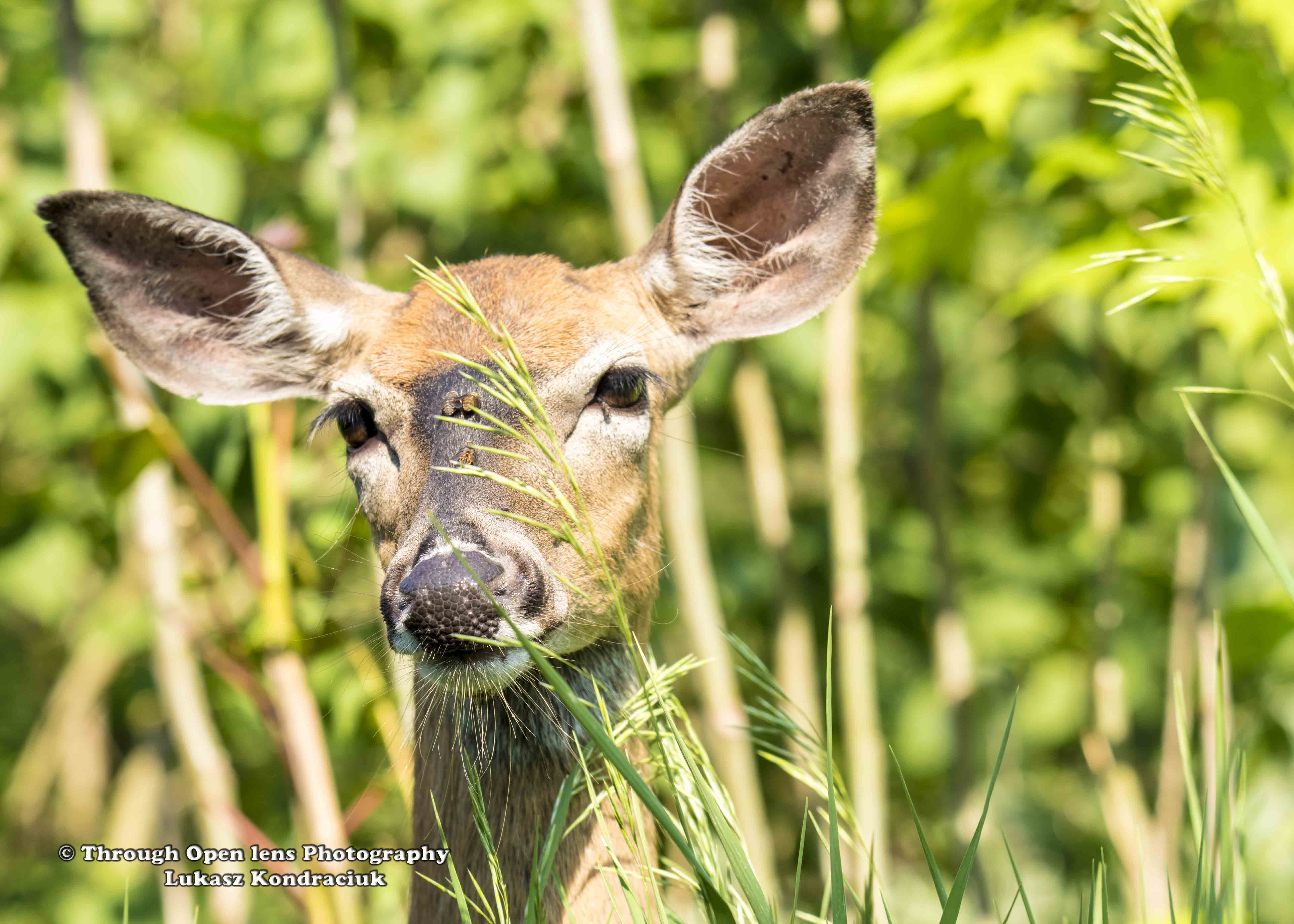
I See What You Did There!

White-Tailed Deer 2

F/8.0, 1/250, ISO 250.

White-Tailed Deer

Teacher: Who answers my next question, can go home.
One boy throws his bag out the window.
Teacher: Who just threw that?
Boy: Me and I’m going home now.

Interesting Fact: In the wild, white-tails, particularly the young, are preyed upon by bobcats, mountain lions, and coyotes. They use speed and agility to outrun predators, sprinting up to 30 miles (48 kilometers) per hour and leaping as high as 10 feet (3 meters) and as far as 30 feet (9 meters) in a single bound. ( http://animals.nationalgeographic.com/animals/mammals/white-tailed-deer/ )

Don’t Let Yesterday Take Up Too Much Of Today

Red-tailed Hawk 1

F/10.0, 1/400, ISO 250.

Red-tailed Hawk

What do u call a police officer that works in bed?

A undercover cop.

Interesting Fact: Courting Red-tailed Hawks put on a display in which they soar in wide circles at a great height. The male dives steeply, then shoots up again at an angle nearly as steep. After several of these swoops he approaches the female from above, extends his legs, and touches her briefly. Sometimes, the pair grab onto one other, clasp talons, and plummet in spirals toward the ground before pulling away. ( https://www.allaboutbirds.org/guide/Red-tailed_Hawk/lifehistory )

This Is A Private Area No Peeking!

Red-Eared Slider Turtle 1

F/5.6, 1/200, ISO 100.

Red-Eared Slider Turtle

What do you get when you cross a turtle and a flu shot?

A slow-poke.

Interesting Fact: The red-eared slider (Trachemys scripta elegans), also known as the red-eared terrapin, is a semiaquatic turtle belonging to the family Emydidae. It is a subspecies of the pond slider. It is the most popular pet turtle in the United States and is also popular as a pet in the rest of the world.[2] It has, therefore, become the most commonly traded turtle in the world.[3] It is native to the southern United States and northern Mexico, but has become established in other places because of pet releases, and has become an invasive species in many areas, where it outcompetes native species. The red-eared slider is included in the list of the world’s 100 most invasive species[4] published by the IUCN. ( https://en.wikipedia.org/wiki/Red-eared_slider )


Why Wasn’t I Casted In The “Angry Bird” Movie?!

Chipping Sparrow 1

F/9.0, 1/320, ISO 100.

Chipping Sparrow 

Bob: You know Tom, sometimes I don’t understand life.
Tom: What do you mean?
Bob: When we were a younger, we learnt to talk and to walk. At school, we always have to sit down and shut up…

Interesting Fact: In much of the West, Chipping Sparrows disperse shortly after breeding to move to areas with better food resources. It’s not unusual to see Chipping Sparrows on alpine tundra or along roadsides in open grasslands. This results in the common misperception that they bred in those areas, when really they simply moved there to molt. ( https://www.allaboutbirds.org/guide/Chipping_Sparrow/lifehistory )