Sitting Like A King

F/13.0, 1/640, ISO 320.

Eastern Kingbirds

Why does a dog stay in a shadow.

Because it doesn’t want to be a Hotdog.

Interesting Fact: Kingbirds sometimes catch small frogs, treating them the same way they deal with large insects: beating them against a perch and swallowing them whole. Eastern Kingbirds apparently rely almost completely on insects and fruit for moisture; they are rarely seen drinking water. ( https://www.allaboutbirds.org/guide/Eastern_Kingbird/lifehistory )


I Know I Know I Am Standing Up For Myself!

F/6.3, 1/160, ISO 320.

Common Gallinule

Why is there only one Yogi Bear?

Because when they tried to make another one, they made a Boo-Boo.

Interesting Fact: The long-toed Common Gallinule walks atop floating vegetation and soft soils in a crouched position while slowly flicking its tail up. Seldom do you see them fly, but when they do, their flight is labored. They stride through water pumping their head forward with tail held horizontally and wings held up over the back. ( https://www.allaboutbirds.org/guide/Common_Gallinule/lifehistory )


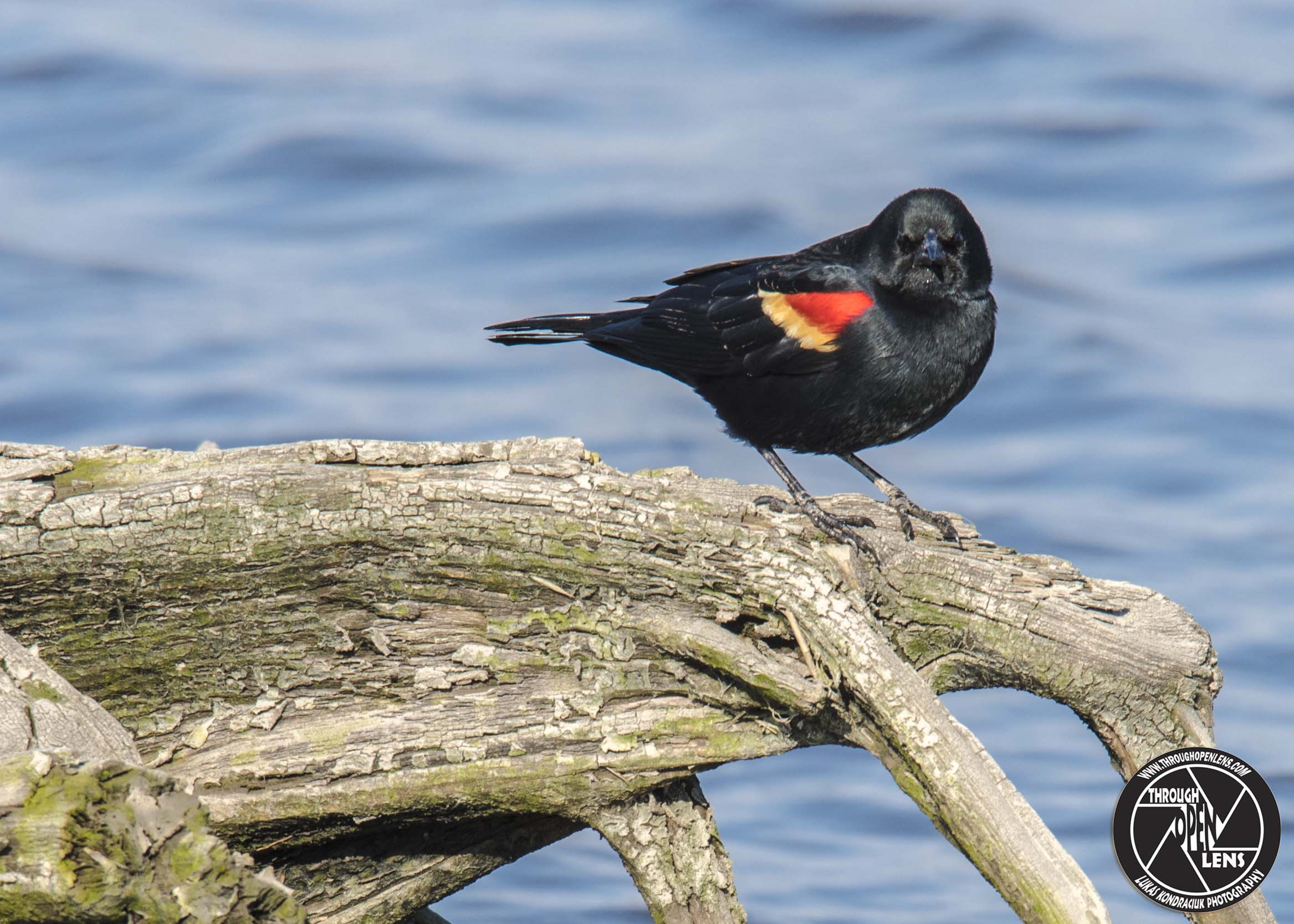
I Don’t Need Anger Management I Need People To Stop Pissing Me Off.

F/9.0, 1/320, ISO 320.

Red-winged Blackbird 

What did the ghost eat at his birthday party?

I scream

Interesting Fact: Male Red-winged Blackbirds spend much of the breeding season sitting on a high perch over their territories and singing their hearts out. Females tend to slink through reeds and grasses collecting food or nest material. Both males and females defend nests from intruders and predators. ( https://www.allaboutbirds.org/guide/Red-winged_Blackbird/lifehistory )

I’m Sick Of Following My Dreams, Man. I’m Just Going To Ask Where They’re Going And Hook Up With ’em Later.

F/7.1, 1/200, ISO 320.

Palm Warbler

Why couldn’t Dracula’s wife get to sleep?

Because of his coffin.

Interesting Fact: The Palm Warbler, unlike most warblers, spends a lot of time walking on the ground and bobbing its tail as it goes—an obvious trait whether the bird is on the ground or perched in a tree or shrub. Despite its affinity for the ground it also forages and sings from taller trees and shrubs. It sometimes sallies out to grab an insect from a low shrub or tree like a flycatcher. ( https://www.allaboutbirds.org/guide/Palm_Warbler/lifehistory )


Sorry… We Are Busy Sunbathing.

F/8.0, 1/250, ISO 320.

Red-Eared Slider Turtle

What did the Sewage Worker say to his apprentice?

Urine for a surprise.

Interesting Fact: Red-eared sliders do not hibernate, but actually brumate; while they become less active, they do occasionally rise to the surface for food or air. Brumation can occur to varying degrees. In the wild, red-eared sliders brumate over the winter at the bottoms of ponds or shallow lakes. They generally become inactive in October, when temperatures fall below 10 °C (50 °F).[9] During this time, the turtles enter a state of sopor, during which they do not eat or defecate, they remain nearly motionless, and the frequency of their breathing falls. Individuals usually brumate underwater, but they have also been found under banks and rocks, and in hollow stumps. In warmer winter climates, they can become active and come to the surface for basking. When the temperature begins to drop again, however, they quickly return to a brumation state. Sliders generally come up for food in early March to as late as the end of April. ( https://en.wikipedia.org/wiki/Red-eared_slider )

I Am Not Liable If You Falling Asleep Count Sheep!

F/8.0, 1/250, ISO 320.

Sheep

What do you call a sheep that is always quiet?

A shhhheep!

Interesting Fact: The exact line of descent between domestic sheep and their wild ancestors is unclear.[1] The most common hypothesis states that Ovis aries is descended from the Asiatic (O. orientalis) species of mouflon.[2]:5 Sheep were among the first animals to be domesticated by humankind (although the domestication of dogs may be over 20,000 years earlier); the domestication date is estimated to fall between 11,000 and 9,000 B.C in Mesopotamia.[2]:4[3]:11–14[4]:2[5] The rearing of sheep for secondary products, and the resulting breed development, began in either southwest Asia or western Europe.[6] Initially, sheep were kept solely for meat, milk and skins. Archaeological evidence from statuary found at sites in Iran suggests that selection for woolly sheep may have begun around 6000 BC,[2]:5[3]:11 and the earliest woven wool garments have been dated to two to three thousand years later. ( https://en.wikipedia.org/wiki/Sheep#History )