Keep Calm And Quack On!

F/9.0, 1/320, ISO 200.

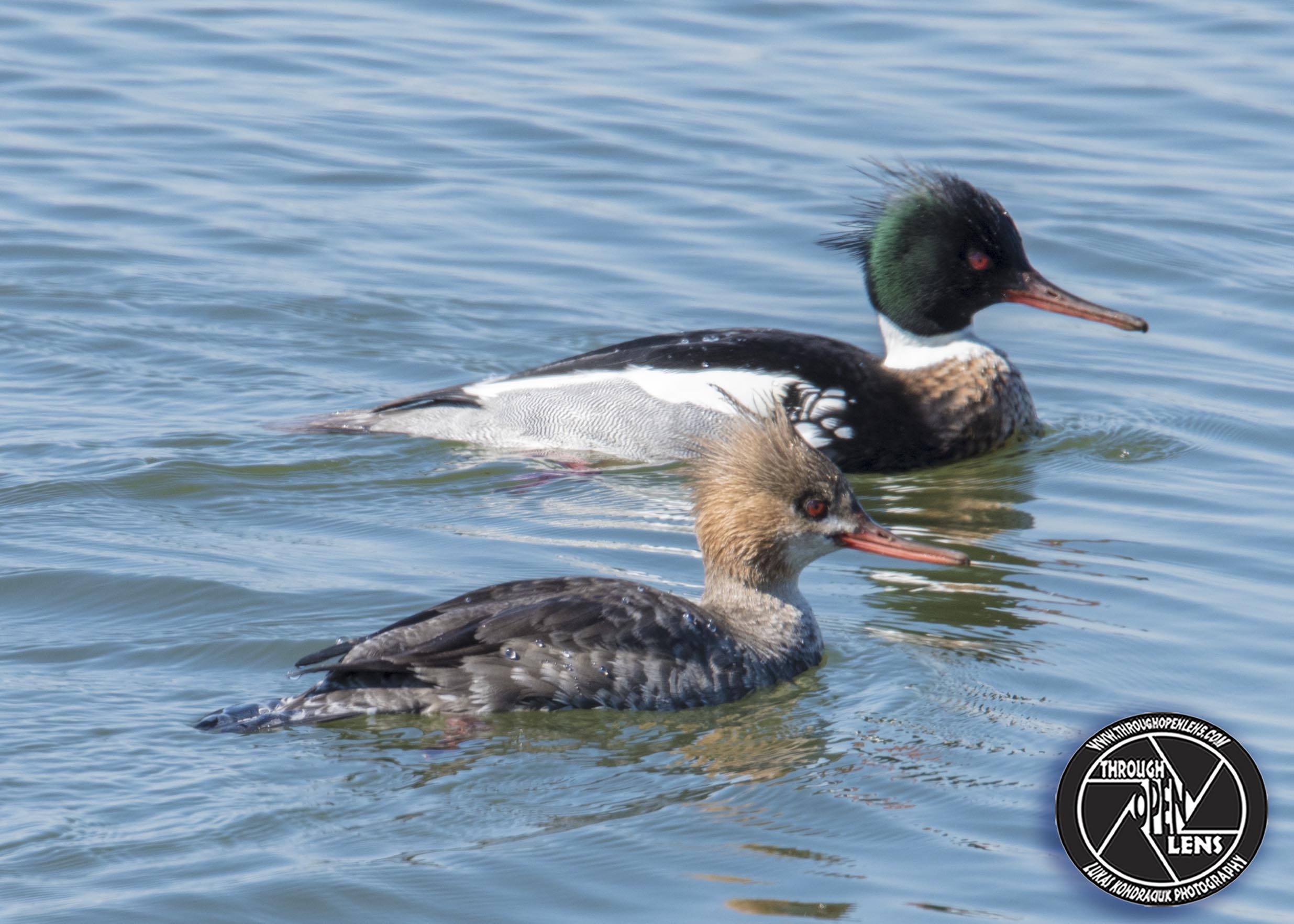
Red-breasted Merganser  

A motorist in a B.M.W. was driving through the countryside on a beautiful Saturday afternoon, having a lovely time, when he came to an area of the road that was covered with a rather large puddle of water from a previous rain storm. Worried that he was going to damage the car and its engine in the deep water, he spotted a nearby farmer and asked how deep the water was. “Arr”, said the local farmer “That water only be a few inches deep!” Relieved, the motorist edged his car into the water, expecting to come out the other side in no time. Instead, as he drove in, the water came right up the side of the car, and the engine sputtered to a halt. Sitting there in his soaking wet luxury car, the motorist yelled at the local angrily: “I thought you said this water was only a few inches deep!!!” “Well,” replied the local farmer “It only come up to the waist of them there ducks!”

Interesting Fact: It prefers salt water more than the other two species of merganser. ( http://identify.whatbird.com/obj/115/overview/Red-breasted_Merganser.aspx )
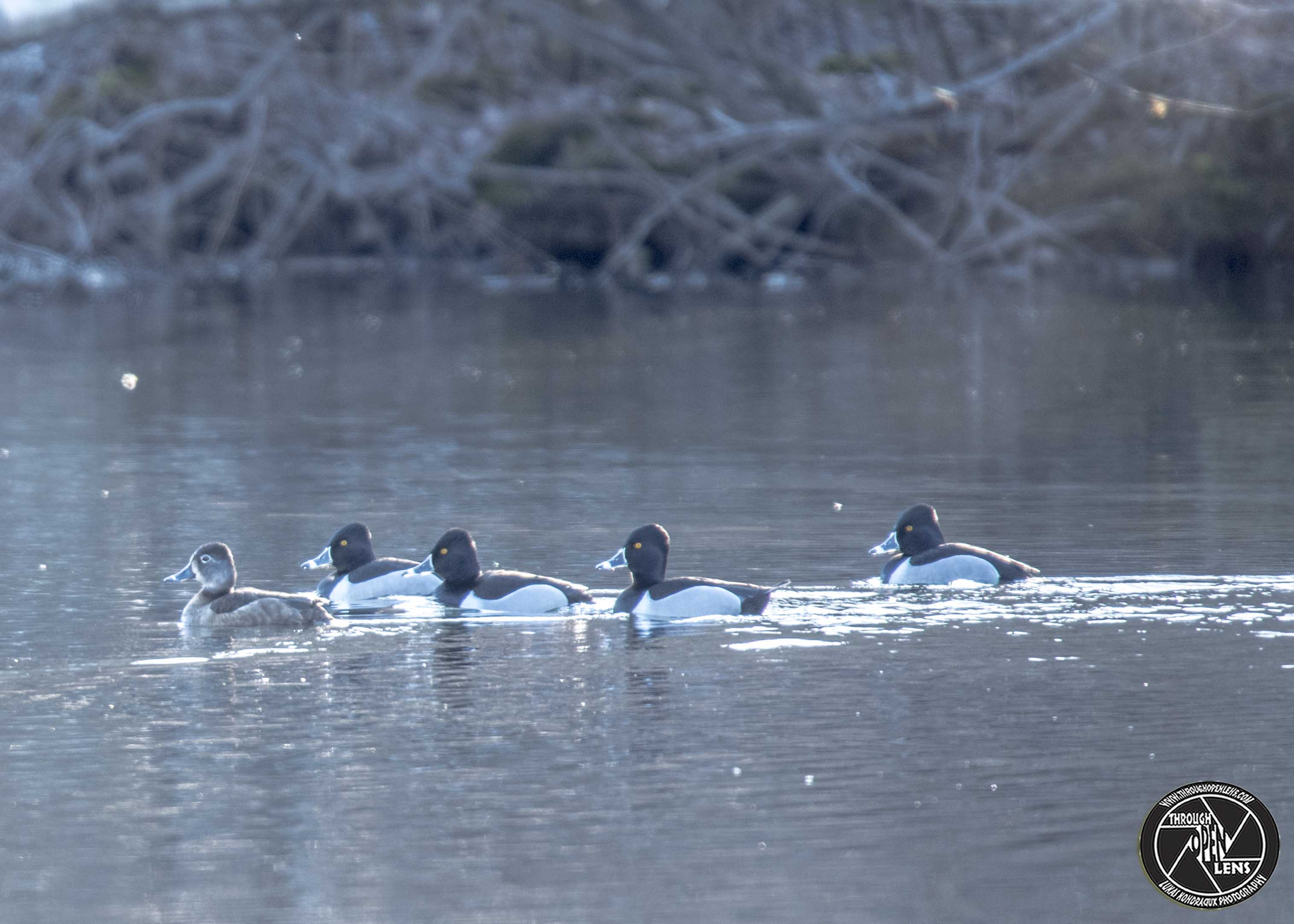
I Quack You Quack We Quack Together

F/10.0, 1/400, ISO 320.

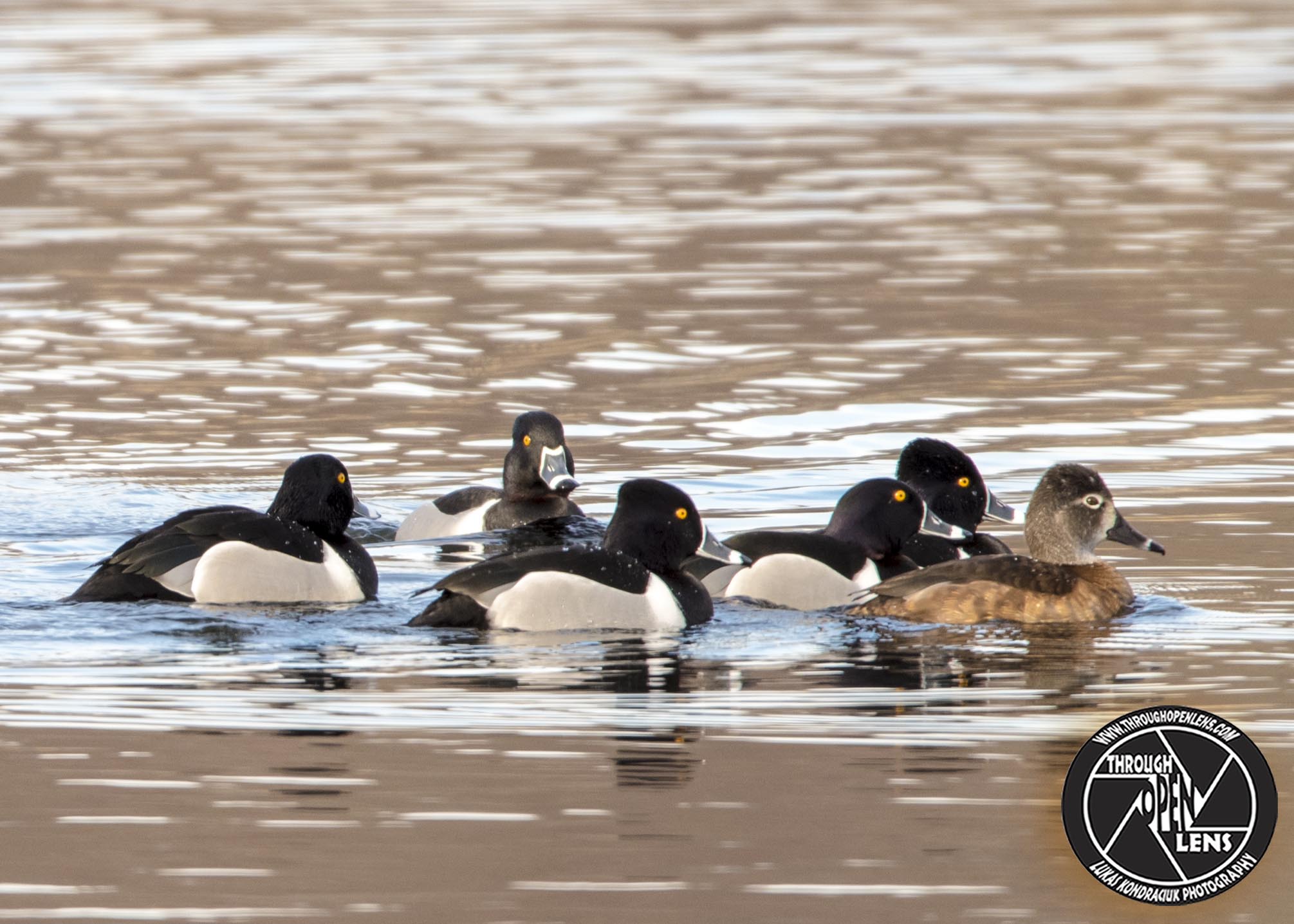
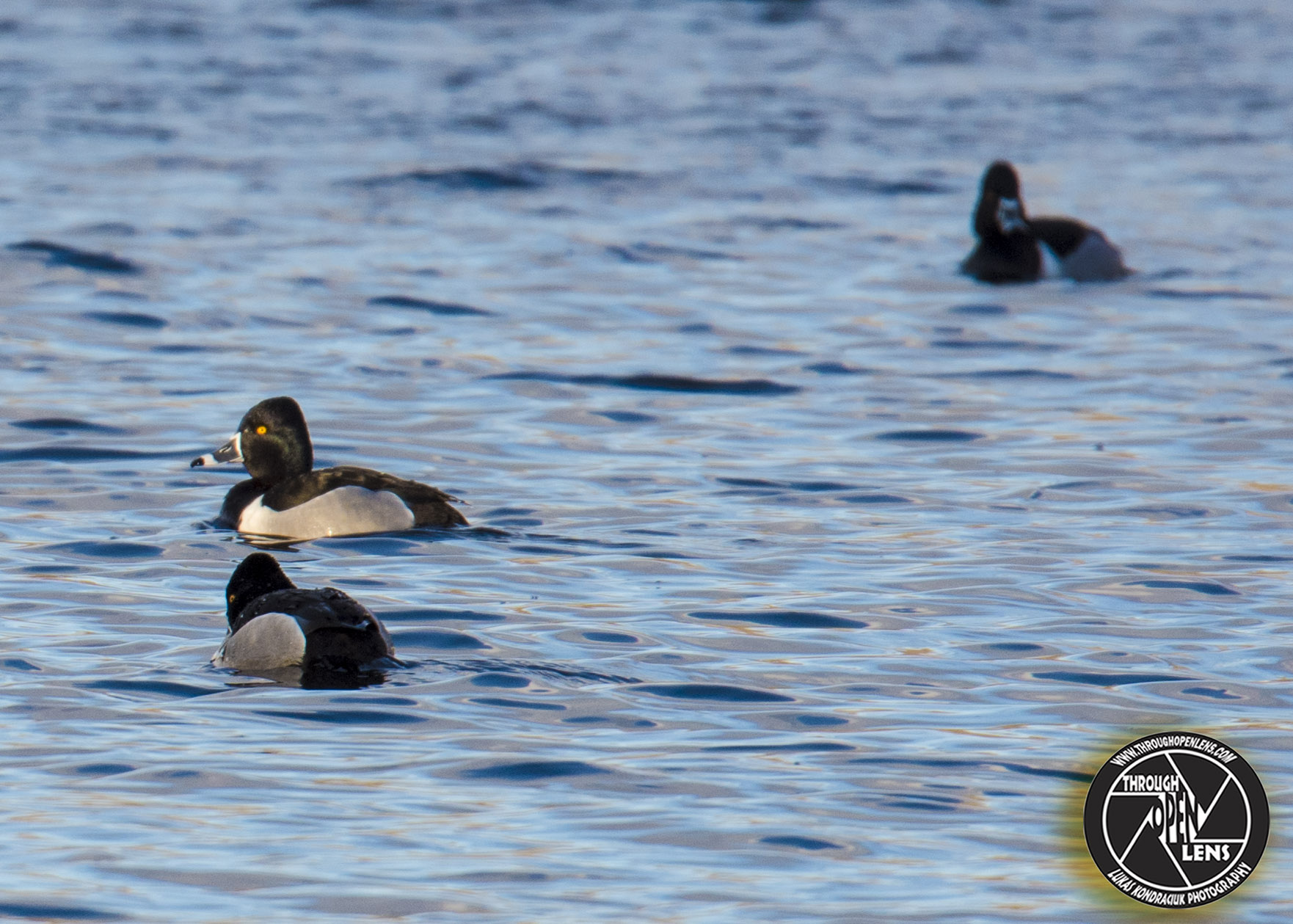
Ring-necked Ducks

Why did the old woman put roller skates on her rocking chair?

Because she wanted to rock and roll.

Interesting Fact: This bird’s common name (and its scientific name “collaris,” too) refer to the Ring-necked Duck’s hard-to-see chestnut collar on its black neck. It’s not a good field mark to use for identifying the bird, but it jumped out to the nineteenth century biologists that described the species using dead specimens.  ( https://www.allaboutbirds.org/guide/Ring-necked_Duck/lifehistory )


One Lucky Gal!

F/6.3, 1/250, ISO 500.

Ring-necked Duck

Why can’t you hear a pterodactyl in the bathroom?

Because it has a silent pee.

Interesting Fact: Ring-necked Ducks put their nests among dense sedges and other emergent plants in marshes. Pairs choose these sites by swimming at the vegetation edge or by making low circling flights over potential spots. They typically build their nests directly over the water or on floating vegetation; this helps protect the nests from land-based predators. ( https://www.allaboutbirds.org/guide/Ring-necked_Duck/lifehistory )

Grow Old With Me.

F/9.0, 1/320, ISO 200.

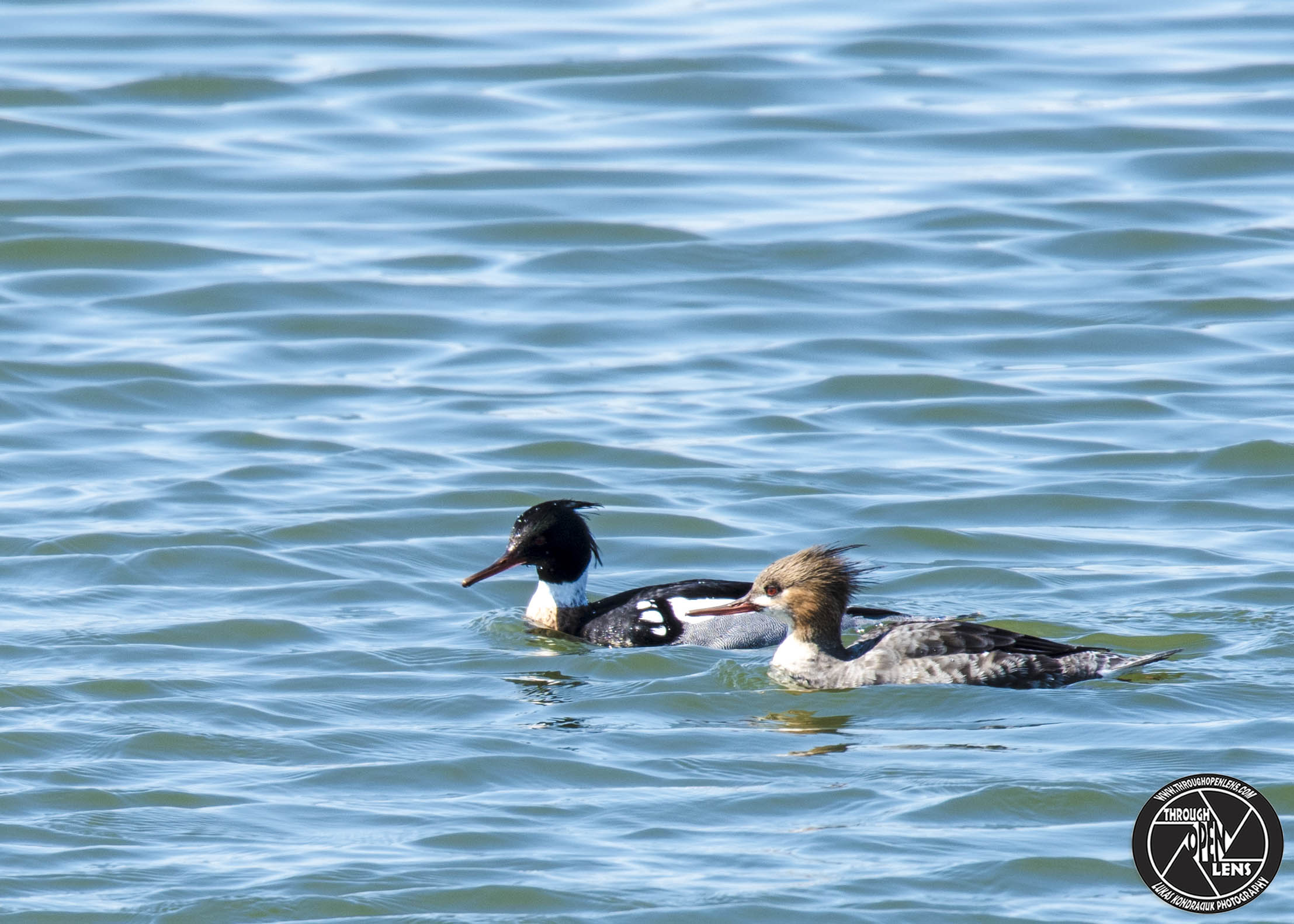
Red-breasted Mergansers

Why did the boy eat his homework?

Because his teacher said it was a piece of cake!

Interesting Fact: The oldest recorded Red-breasted Merganser was a female, and at least 9 years, 6 months old when she was shot in Alaska, the same state where she had been banded. ( https://www.allaboutbirds.org/guide/Red-breasted_Merganser/lifehistory )

Release The Quackin!

ring-necked-ducks

F/11.0, 1/500, ISO 500.

Ring-necked Ducks

Why shouldn’t you write with a broken pencil?

Because it’s pointless!

Interesting Fact: During fall migration, Ring-necked Ducks can form immense flocks. Several hundred thousand congregate each fall on certain lakes in Minnesota to feed on wild rice. ( https://www.allaboutbirds.org/guide/Ring-necked_Duck/lifehistory )

It’s The New Year, Get Your Ducks In A Row!

F/9.0, 1/320, ISO 320.

Ring-necked Ducks

What time is it when an elephant sits on your fence?

Time to get a new fence!

Interesting Fact: They tend to remain in pairs during the breeding season but group into flocks of several to several thousand during migration and winter. Like many other ducks, the Ring-necked Duck uses many kinds of displays to ward off rivals and to seek mates; almost any group of ducks offers an opportunity to watch these displays at work. When warning away another bird, Ring-necked Ducks lower their bill to meet their chest or push against each other, breast to breast, while swimming. This can intensify to bites and blows with the wings, particularly during the breeding season. When courting, males often throw their head sharply backward, touching the back; swim rapidly while nodding the head; or act as if they are preening their wing. As pairs begin to form, the two birds may perform exaggerated neck stretches or dip their bills in the water as if drinking. Pairs tend to form in spring and stay together at least until incubation begins. ( https://www.allaboutbirds.org/guide/Ring-necked_Duck/lifehistory )

Alone We Are Strong… Together We Are Stronger!

F/9.0, 1/320, ISO 200.

Red-breasted Merganser

Why can’t a leopard hide?

Because he’s always spotted!

Interesting Fact:  The Red-breasted Merganser breeds farther north and winters farther south than the other American mergansers. ( https://www.allaboutbirds.org/guide/Red-breasted_Merganser/lifehistory )

Emo Ducks

red-breasted-mergansers

F/9.0, 1/320, ISO 200.

Red-breasted Mergansers

Is it dangerous to swim on a full stomach?

Yes. It’s better to swim in water.

Interesting Fact: The Red-breasted Merganser breeds farther north and winters farther south than the other American mergansers. ( https://www.allaboutbirds.org/guide/Red-breasted_Merganser/lifehistory )

Beware Of The Quacks!

F/9.0, 1/250, ISO 320.

Ring-necked Ducks

Two friends are talking:

Bobby: Where will you be in two years?

Tommy: I don’t know. I don’t have 2020 vision.

Interesting Fact: On migration, Ring-necked Ducks stop to rest and feed on shallow lakes and impoundments with dense stands of cattails, bulrushes, and other emergent vegetation. They can form very large flocks on some lakes. During the winter, look for them in swamps, river floodplains, brackish portions of estuaries, shallow inland lakes, sloughs, marshes, reservoirs, and other managed freshwater impoundments. (  https://www.allaboutbirds.org/guide/Ring-necked_Duck/lifehistory#habitat  )

Rain Makes Everything Wet

F/6.3, 1/125, ISO 320.

Red-breasted Merganser

A teacher wanted to teach her students about self-esteem, so she asked anyone who thought they were stupid to stand up.

One kid stood up and the teacher was surprised.

She didn’t think anyone would stand up so she asked him, “Why did you stand up?”

He answered, “I didn’t want to leave you standing up by yourself.”

Interesting Fact: The fastest duck ever recorded was a red-breasted merganser that attained a top airspeed of 100 mph while being pursued by an airplane. This eclipsed the previous speed record held by a canvasback clocked at 72 mph. ( https://en.wikipedia.org/wiki/Red-breasted_merganser )