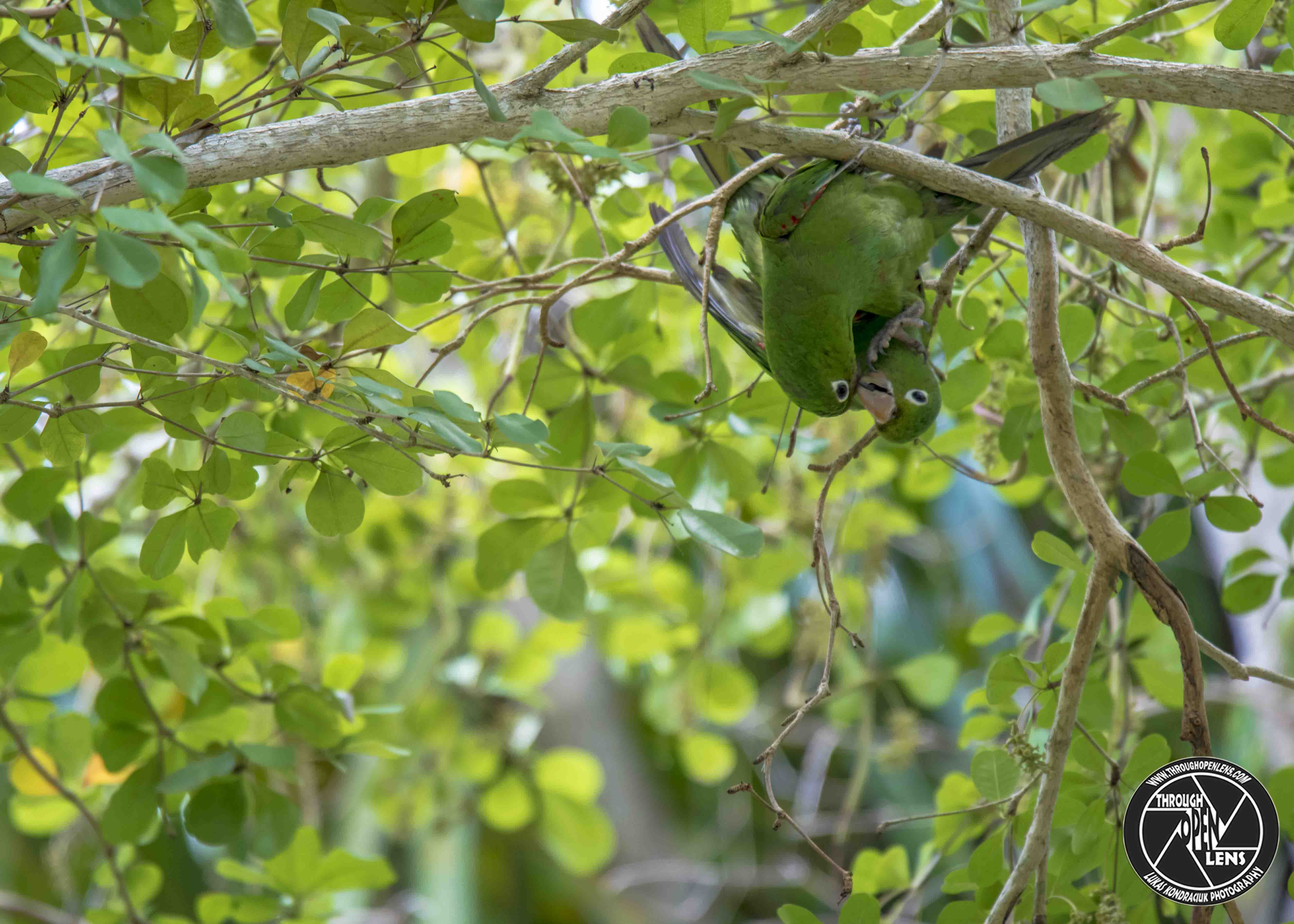
You Turn My World Upside Down

F/6.3, 1/60, ISO 640.

Hispaniolan Amazon Parrots

What’s the difference between a gamer and the calendar?

A calendar has dates.

Interesting Fact: These parrots create nests in tree cavities, the clutch ranges from 2 to 4 eggs maximum, the eggs hatch in about a 30 days and chicks usually fledge at 10 to 12 weeks of age. However people often remove the newborns from the tree cavities and destroy the nest that have been reused over the years and afterwards priving the parrot from reproducing. ( https://en.wikipedia.org/wiki/Hispaniolan_amazon )

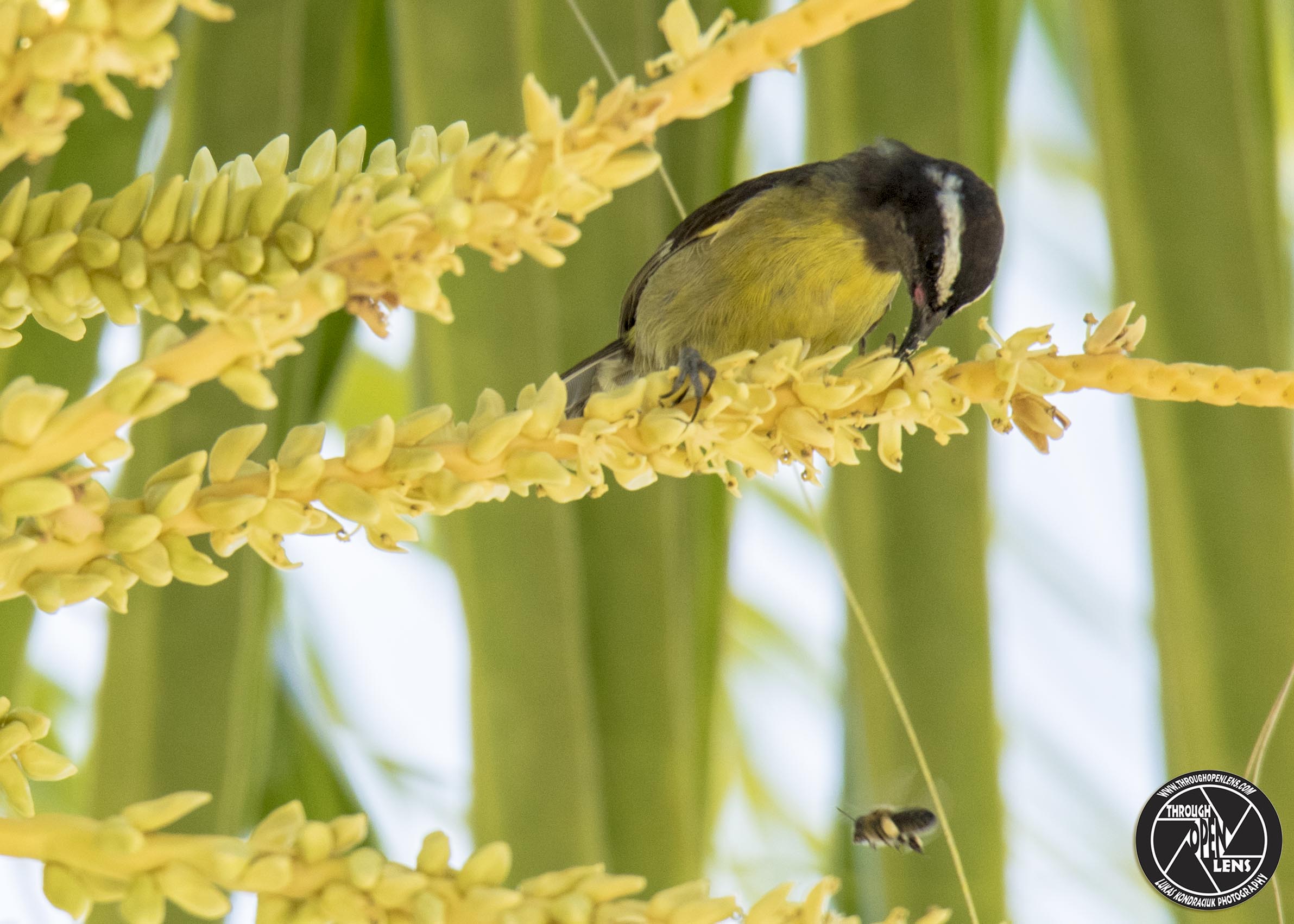
I’ll Eat You Up I Love You So!

F/9.0, 1/320, ISO 500.

Bananaquit

What did the guitar say to the guitarist?

Pick on someone your own size!

Interesting Fact: Bananaquits build nests with side entrance holes. Several nests may be built, with some used only as sleeping quarters. ( http://identify.whatbird.com/obj/1014/overview/Bananaquit.aspx )

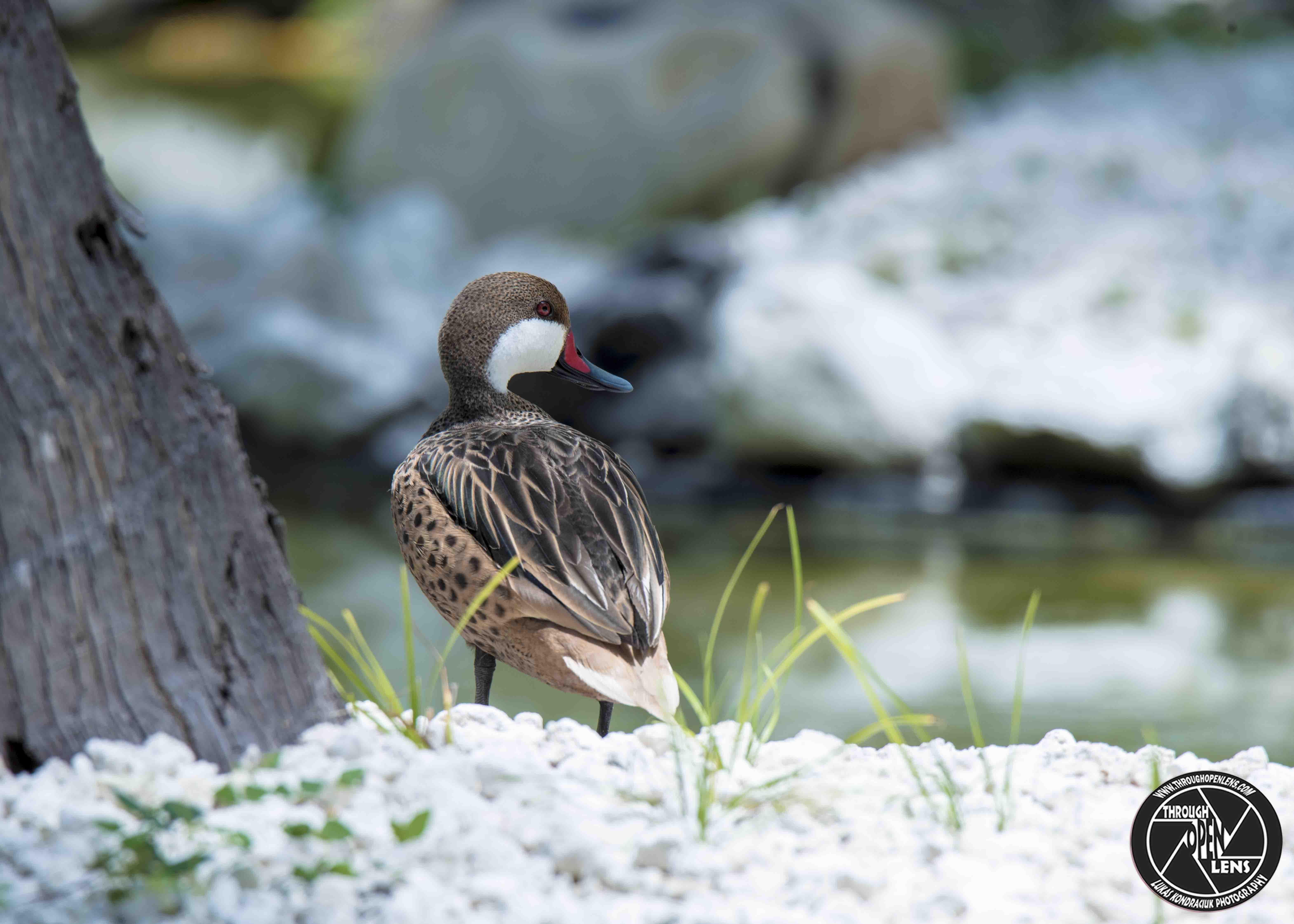
Don’t Turn Around Just Walk Away!

F/9.0, 1/320, ISO 160.

White-Cheeked Pintail

Why didn’t the elephant pack a suitcase for summer vacation?

Because he uses a trunk.

Interesting Fact: Like many southern ducks, the sexes are similar. It is mainly brown with white cheeks and a red-based grey bill (young birds lack the pink). It cannot be confused with any other duck in its range. ( https://en.wikipedia.org/wiki/White-cheeked_pintail )

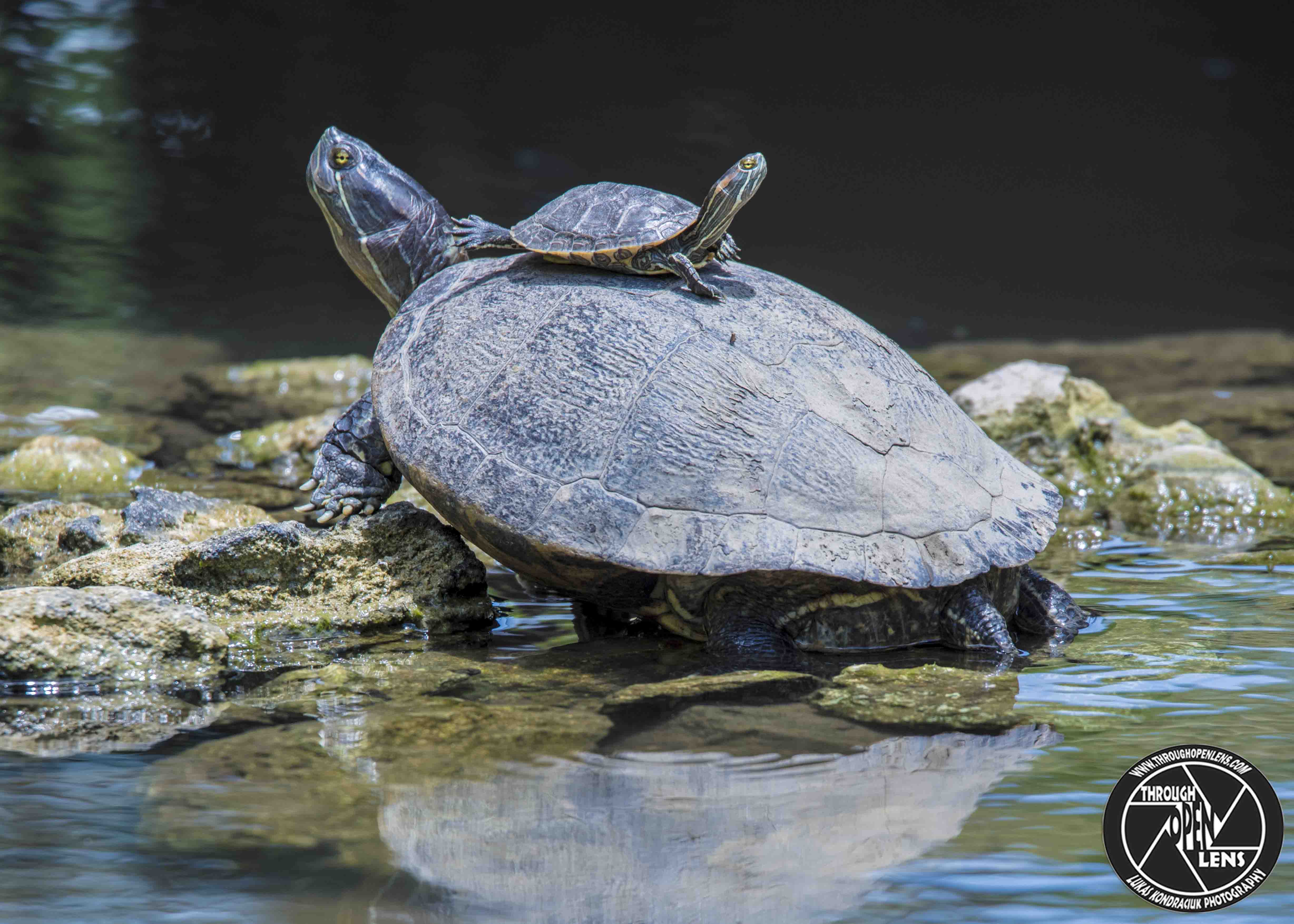
Life Is Good Take It Slow

F/7.1, 1/200, ISO 200.

Hispaniolan slider

What do sheep do on nice summer days?

Go to a baa-baa-cue.

Interesting Fact: Unlike red-eared sliders, they do not have red patches on their heads. They have distinct light and dark stripes on their necks, feet, and tails. The tops of their shells are brown and the bottoms are yellow. ( https://en.wikipedia.org/wiki/Hispaniolan_slider )

Be A Flamingo In A Flock Of Pigeons!

F/7.1, 1/160, ISO 320.

American Flamingo

Why don’t basketball players go away for summer vacation?

They’re afraid they might get called for traveling

Interesting Fact: The American Flamingo is the most widespread species of the flamingo family. It is the state bird of Gujarat, India. ( http://identify.whatbird.com/obj/940/overview/American_Flamingo.aspx )

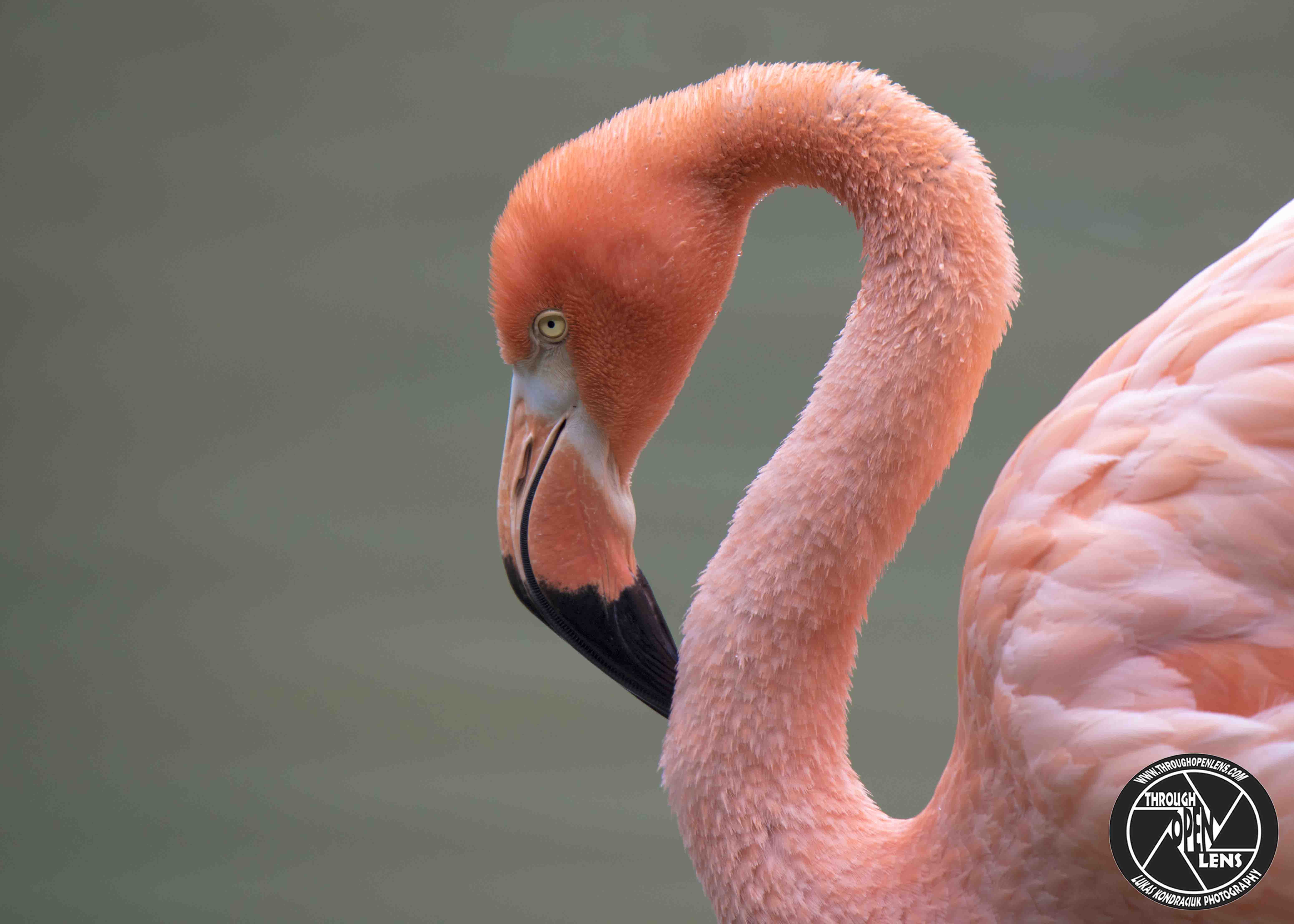
Born To Stand Out Not To Fit In!

F/9.0, 1/320, ISO 200.

American Flamingo

What’s the opposite of a flamingo?

A flamin-stop.

Interesting Fact: At the beginning of the nesting season, they perform mass courtship displays, where hundreds move together in a coordinated walk. ( http://identify.whatbird.com/obj/940/overview/American_Flamingo.aspx )

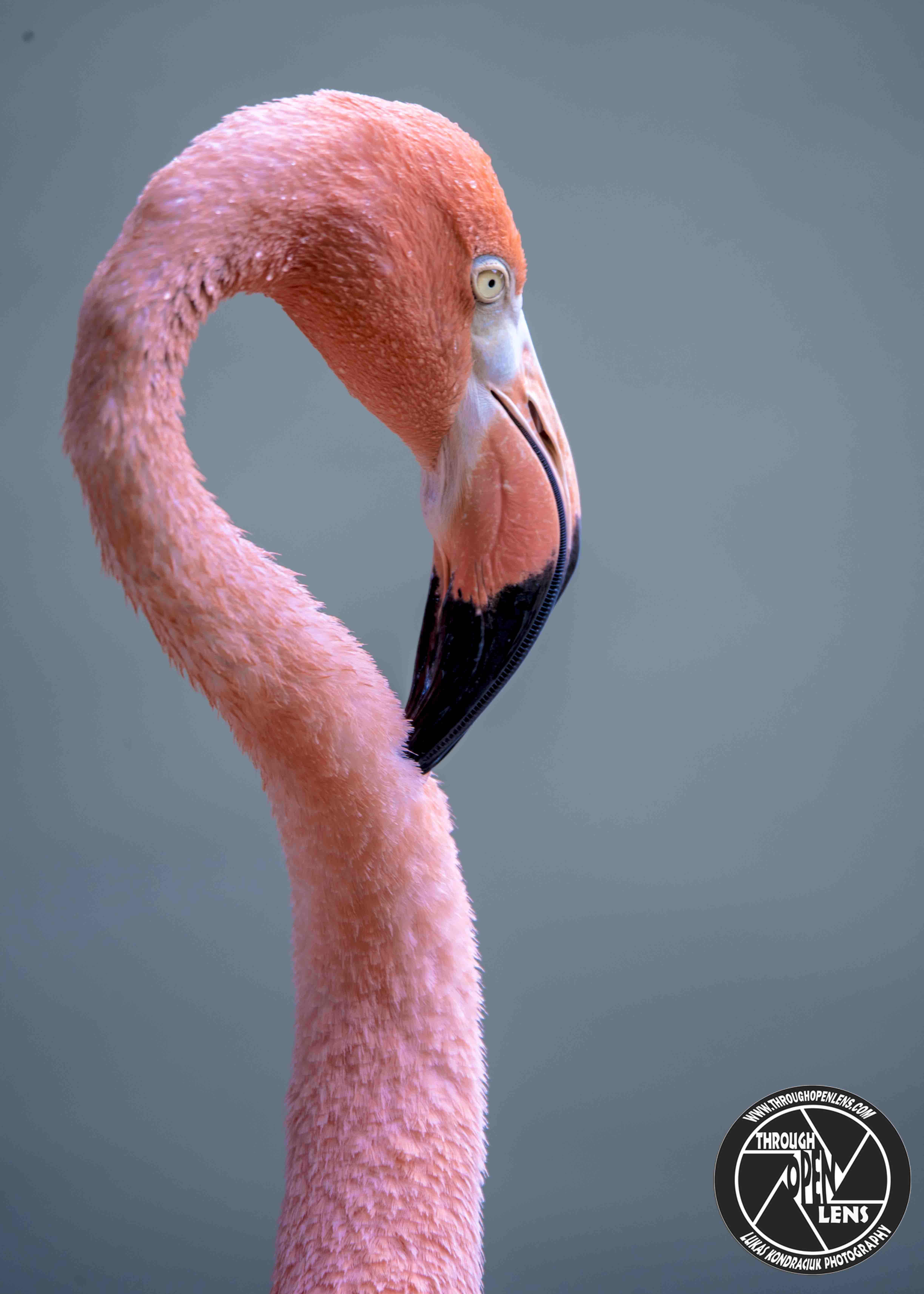
So Much On My Mind It’s A Wonder My Neck Doesn’t Snap.

F/6.3, 1/50, ISO 200.

American Flamingo 

What did one hat say to the other?

You stay here, I’ll go on a head.

Interesting Fact: The American flamingo has adapted to its shallow-water environment in several ways. It has evolved long legs and large webbed feet to wade and stir up the bottom of the water bed to bring up their food source to then be retrieved. To feed, it has evolved a specialized beak which is hooked downward and features marginal lamellae on the upper mandible, and inner and outer lamellae on both the upper and lower mandibles. These are adapted for filtering out differently sized food from water.[16] Depending on the food source in their area, diets depend on the exact morphology of their beaks on what can and cannot be strained out of them. It submerges its head under water to retrieve its food, and may have its head under water for long times, which requires it to hold its breath. Factors which affect the habitat choice of American flamingos are environmental temperatures, water depth, food source, accessibility of an area, and the presence of vegetation beds in feeding areas. If available food items do not meet the needs of the flamingos or the temperature is not appropriate to their requirements, they move to a better feeding or more temperate area. ( https://en.wikipedia.org/wiki/American_flamingo )

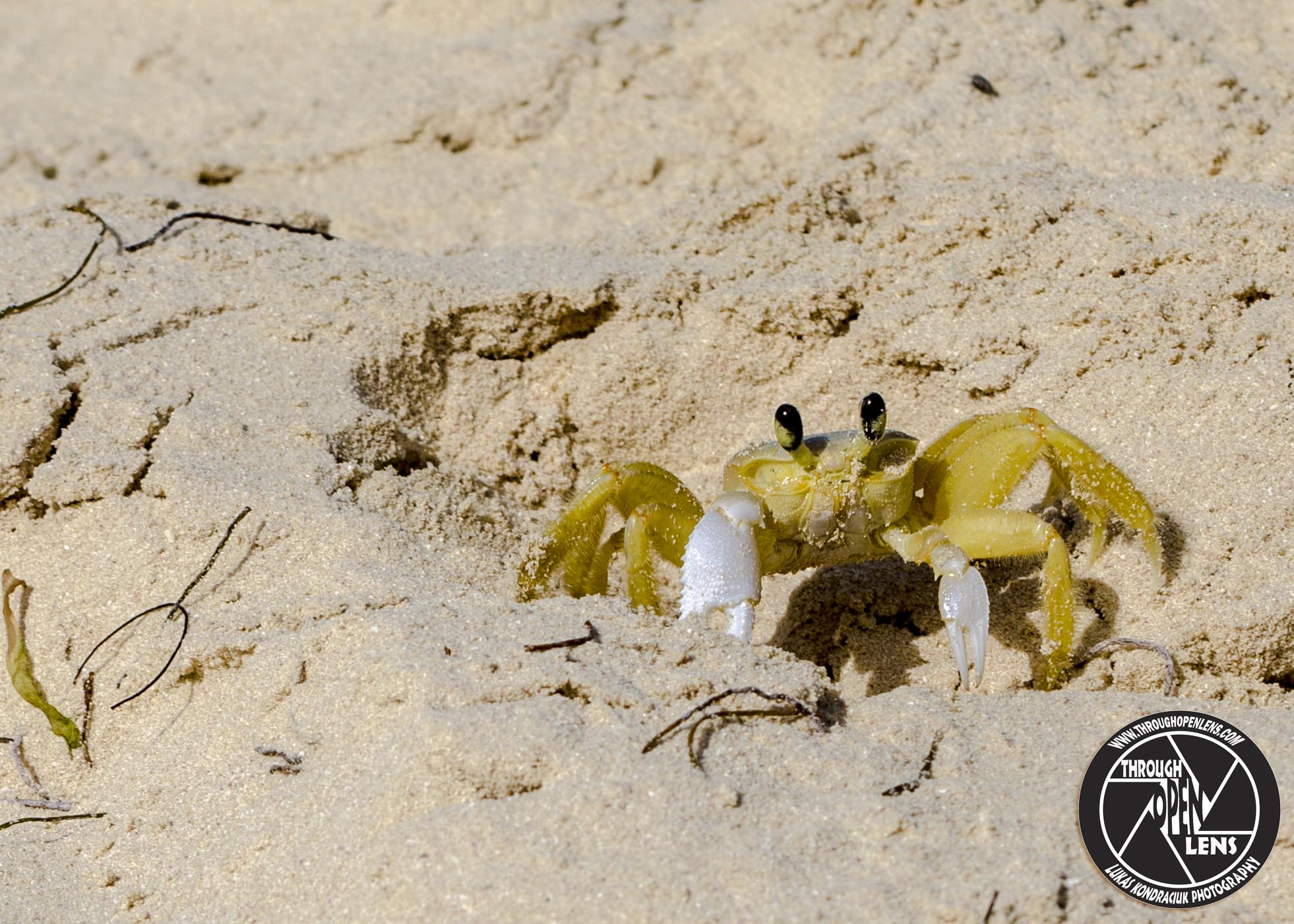
Be Clawsome!

F/8.0, 1/640, ISO 100.

Atlantic Ghost Crab

What’s red and moves up and down?

A tomato in an elevator!

Interesting Fact: The Atlantic ghost crab lives in burrows in sand above the strandline.[2] Older individuals dig their burrows farther from the sea, some starting as much as 400 m (1,300 ft) inland.[4] Burrows can be up to 1.3 m (4 ft 3 in) deep, and can be closed off with sand during hot periods. ( https://en.wikipedia.org/wiki/Atlantic_ghost_crab )

Hi There!

F/7.1, 1/200, ISO 400.

Hispaniolan Amazon Parrots

What goes tick tick woof woof?

A watch dog.

Interesting Fact: As with other amazons, it prefers forested areas where food is plentiful. This parrot lives in the wood forests in Haiti and the Dominican Republic. However over the recent years they have been captured out of their natural habitat illegally for pet trades or just to keep them as pets which are very popular in the Dominican Republic. Right now[when?] the population ranges from 10,000 to 19,000 in the wild and decreasing. ( https://en.wikipedia.org/wiki/Hispaniolan_amazon )

Double Take!

F/8.0, 1/250, ISO 250.

White-Cheeked Pintail

What kind of water do you put into a waterbed?

Spring water.

Interesting Fact: It is found in the CaribbeanSouth America, and the Galápagos Islands.[4] It occurs on waters with some salinity, such as brackish lakes, estuaries and mangrove swamps. ( https://en.wikipedia.org/wiki/White-cheeked_pintail )