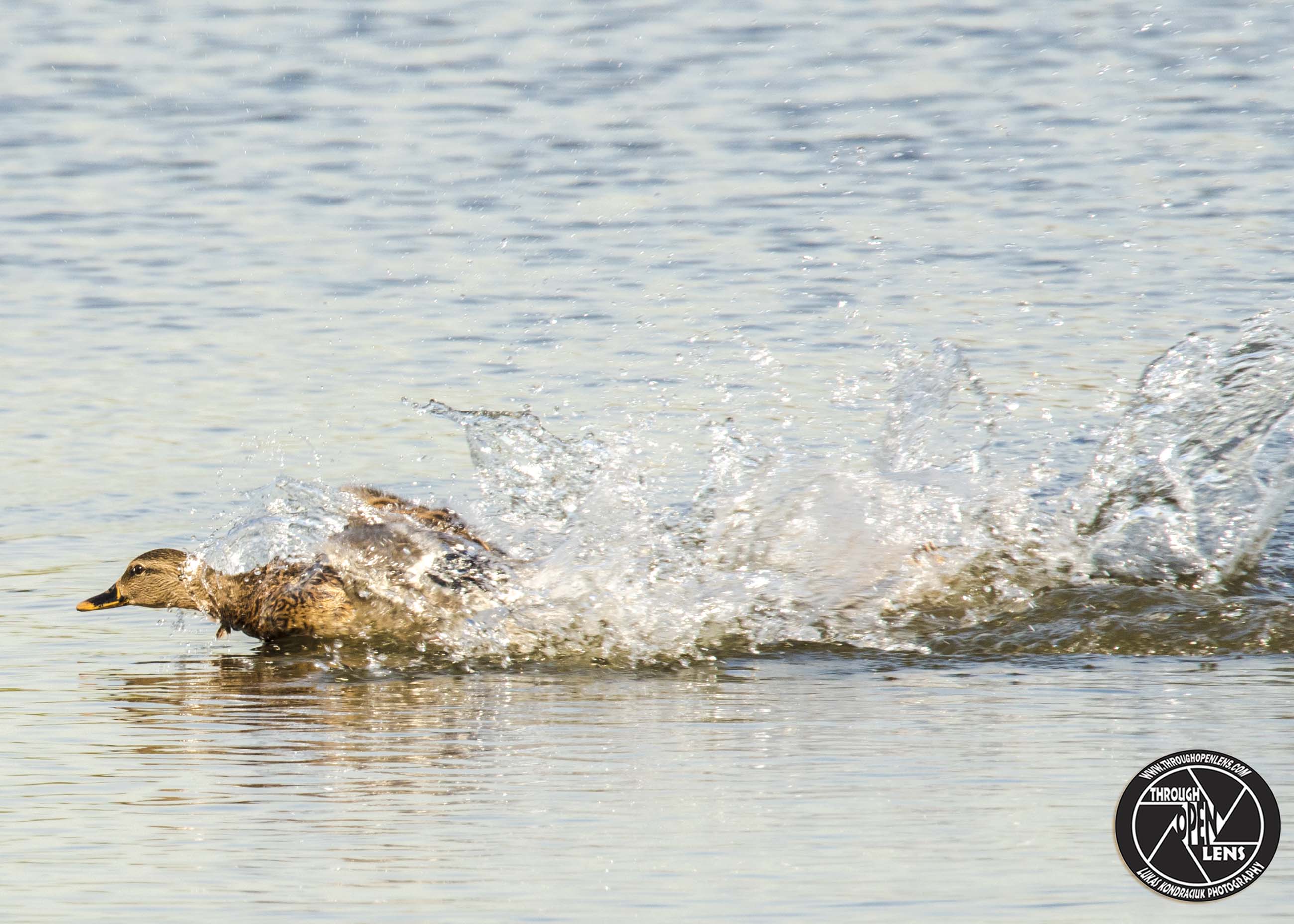
I’m The King Of The World!

F/10.0, 1/400, ISO 400.

Mallard 

Did you hear the rumor about butter?

Everyone’s spreading it.

Interesting Fact: Mallards are an abundant city and suburban park duck and because of constant feedings by park visitors, they can become very tame and approachable. In more natural settings and where Mallards are heavily hunted, they can be very wary of approaching people. They commonly associate with and may hybridize with other dabbling ducks. ( https://www.allaboutbirds.org/guide/Mallard/lifehistory )

 

By Invitation Only!

F/5.6, 1/500, ISO 200.

Mallard Female

Why do barbers make good drivers?

They know all the shortcuts.

Interesting Fact: During egg-laying phase, she lines the nest with grasses, leaves, and twigs from nearby. She also pulls tall vegetation over to conceal herself and her nest. After incubation begins, she plucks down feathers from her breast to line the nest and cover her eggs. The finished nest is about a foot across, with a bowl for the eggs that is 1–6 inches deep and 6–9 inches across. ( https://www.allaboutbirds.org/guide/Mallard/lifehistory )

Motorboating Is My Thing!

F/11.0, 1/500, ISO 250.

Mallard Female

Which day of the week do chickens hate most?

Fry-day!

Interesting Fact: The female forms a shallow depression or bowl on the ground in moist earth. She does not carry material to the nest but rather pulls vegetation she can reach toward her while sitting on nest. During egg-laying phase, she lines the nest with grasses, leaves, and twigs from nearby. She also pulls tall vegetation over to conceal herself and her nest. ( https://www.allaboutbirds.org/guide/Mallard/lifehistory )
Ehh, What’s Up Duck?

F/5.6, 1/500, ISO 200.

Mallard 

Why did the duck cross the road?

Because there was a quack in the sidewalk. 

Interesting Fact:  Ducks have webbed feet, which they use for paddling beneath the water. Their feet have no nerves or blood vessels, which mean that they won’t feel chill from swimming in icy water. ( https://americanexpedition.us/mallard-duck-information-facts-photos-and-artwork )

One Lucky Gal!

F/6.3, 1/250, ISO 500.

Ring-necked Duck

Why can’t you hear a pterodactyl in the bathroom?

Because it has a silent pee.

Interesting Fact: Ring-necked Ducks put their nests among dense sedges and other emergent plants in marshes. Pairs choose these sites by swimming at the vegetation edge or by making low circling flights over potential spots. They typically build their nests directly over the water or on floating vegetation; this helps protect the nests from land-based predators. ( https://www.allaboutbirds.org/guide/Ring-necked_Duck/lifehistory )

Release The Quackin!

ring-necked-ducks

F/11.0, 1/500, ISO 500.

Ring-necked Ducks

Why shouldn’t you write with a broken pencil?

Because it’s pointless!

Interesting Fact: During fall migration, Ring-necked Ducks can form immense flocks. Several hundred thousand congregate each fall on certain lakes in Minnesota to feed on wild rice. ( https://www.allaboutbirds.org/guide/Ring-necked_Duck/lifehistory )

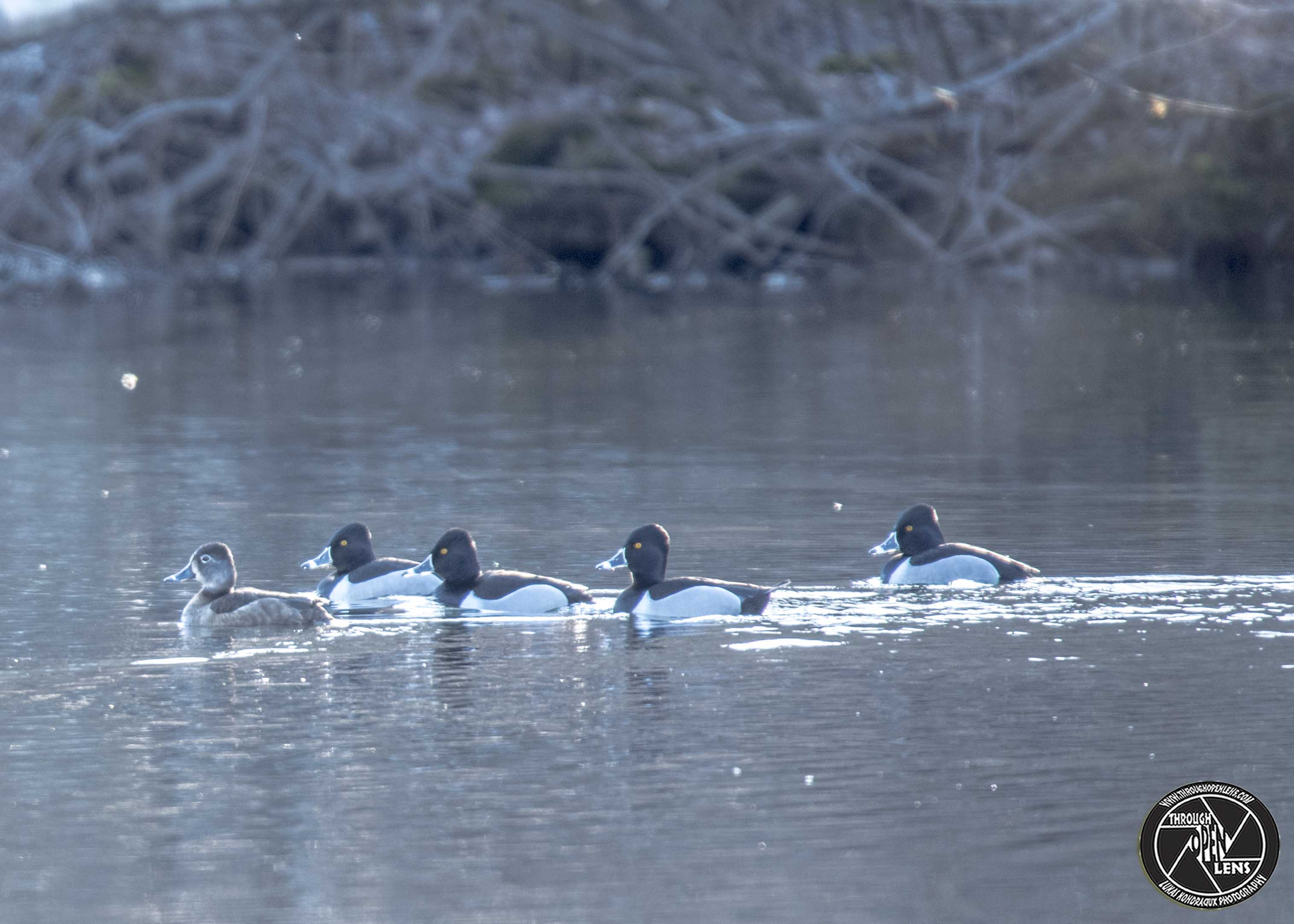
It’s The New Year, Get Your Ducks In A Row!

F/9.0, 1/320, ISO 320.

Ring-necked Ducks

What time is it when an elephant sits on your fence?

Time to get a new fence!

Interesting Fact: They tend to remain in pairs during the breeding season but group into flocks of several to several thousand during migration and winter. Like many other ducks, the Ring-necked Duck uses many kinds of displays to ward off rivals and to seek mates; almost any group of ducks offers an opportunity to watch these displays at work. When warning away another bird, Ring-necked Ducks lower their bill to meet their chest or push against each other, breast to breast, while swimming. This can intensify to bites and blows with the wings, particularly during the breeding season. When courting, males often throw their head sharply backward, touching the back; swim rapidly while nodding the head; or act as if they are preening their wing. As pairs begin to form, the two birds may perform exaggerated neck stretches or dip their bills in the water as if drinking. Pairs tend to form in spring and stay together at least until incubation begins. ( https://www.allaboutbirds.org/guide/Ring-necked_Duck/lifehistory )

Got An Itch That I Can’t Reach!

F/10.0, 1/400, ISO 320.

Mallard

What do you call a duck that steals?

A robber ducky.

Interesting Fact: Mallards nest on the ground on dry land that is close to water; nests are generally concealed under overhanging grass or other vegetation. Occasionally, Mallards nest in agricultural fields, especially alfalfa but also winter wheat, barley, flax, and oats. Both urban and wild populations readily nest in artificial nesting structures. Pairs search for nest sites together, typically on evening flights circling low over the habitat. Occasionally nests are placed on floating mats of vegetation or woven into plant stems that rise out of the water. ( https://www.allaboutbirds.org/guide/Mallard/lifehistory )

Beware Of The Quacks!

F/9.0, 1/250, ISO 320.

Ring-necked Ducks

Two friends are talking:

Bobby: Where will you be in two years?

Tommy: I don’t know. I don’t have 2020 vision.

Interesting Fact: On migration, Ring-necked Ducks stop to rest and feed on shallow lakes and impoundments with dense stands of cattails, bulrushes, and other emergent vegetation. They can form very large flocks on some lakes. During the winter, look for them in swamps, river floodplains, brackish portions of estuaries, shallow inland lakes, sloughs, marshes, reservoirs, and other managed freshwater impoundments. (  https://www.allaboutbirds.org/guide/Ring-necked_Duck/lifehistory#habitat  )

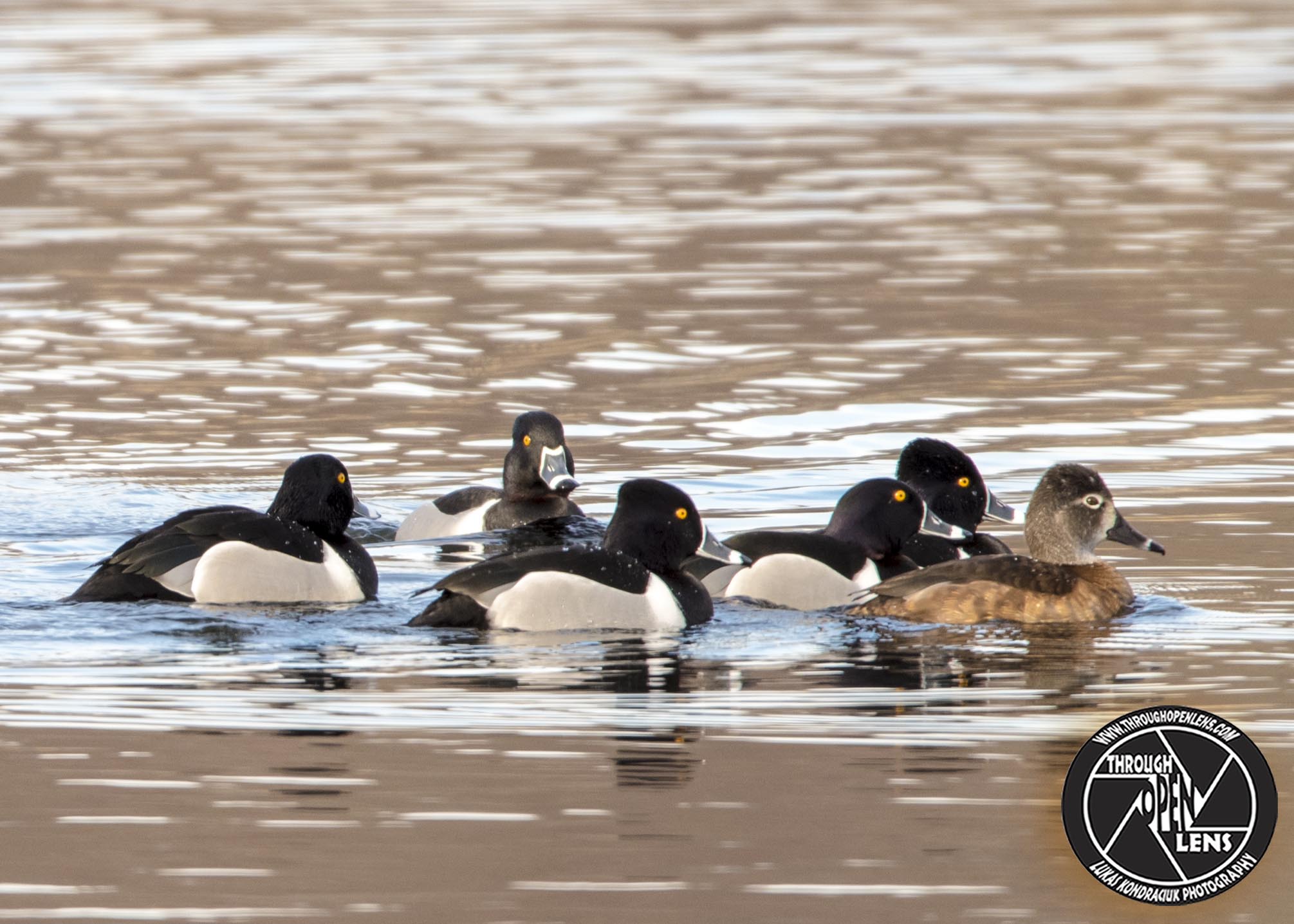
We Are Rolling Deep Today!

F/8.0, 1/250, ISO 320.

Ring-necked Duck

Why don`t ducks tell jokes when they fly?

Because they would quack up!

Interesting Fact: Ring-necked Ducks breed in northern North America and spend winters in southern and western North America, northern Central America, and the Caribbean, often on freshwater. Much of the population migrates from central Canada to the southeastern United States, staging along the way in Minnesota and other parts of the upper Midwest.  ( https://www.allaboutbirds.org/guide/Ring-necked_Duck/maps-range