It’s Not What’s Under The Tree That Matters It’s Who’s Gathered Around It.

F/11.0, 1/500, ISO 400.

Merry Christmas And Happy Holidays To You All!

Why is Santa so jolly?

Because he knows where all the naughty girls live.

Interesting Fact: Modern Christmas trees originated during the Renaissance of early modern Germany. Its 16th-century origins are sometimes associated with Protestant Christian reformer Martin Luther, who is said to have first added lighted candles to an evergreen tree. ( https://en.wikipedia.org/wiki/Christmas_tree )

I Trying To Get My Duck In The Row But I Got Geese Instead!

F/7.1, 1/200, ISO 250.

Canada Goose and Goslings

What did the triangle say to the circle?

Your pointless!

Interesting Fact:  In spring and summer, geese concentrate their feeding on grasses and sedges, including skunk cabbage leaves and eelgrass. During fall and winter, they rely more on berries and seeds, including agricultural grains, and seem especially fond of blueberries. They’re very efficient at removing kernels from dry corn cobs. Two subspecies have adapted to urban environments and graze on domesticated grasses year round. ( https://www.allaboutbirds.org/guide/Canada_Goose/lifehistory )

If You Want To Go Running With Me, You’d Better Be Prepared To Walk A Lot.

F/6.3, 1/80, ISO 400.

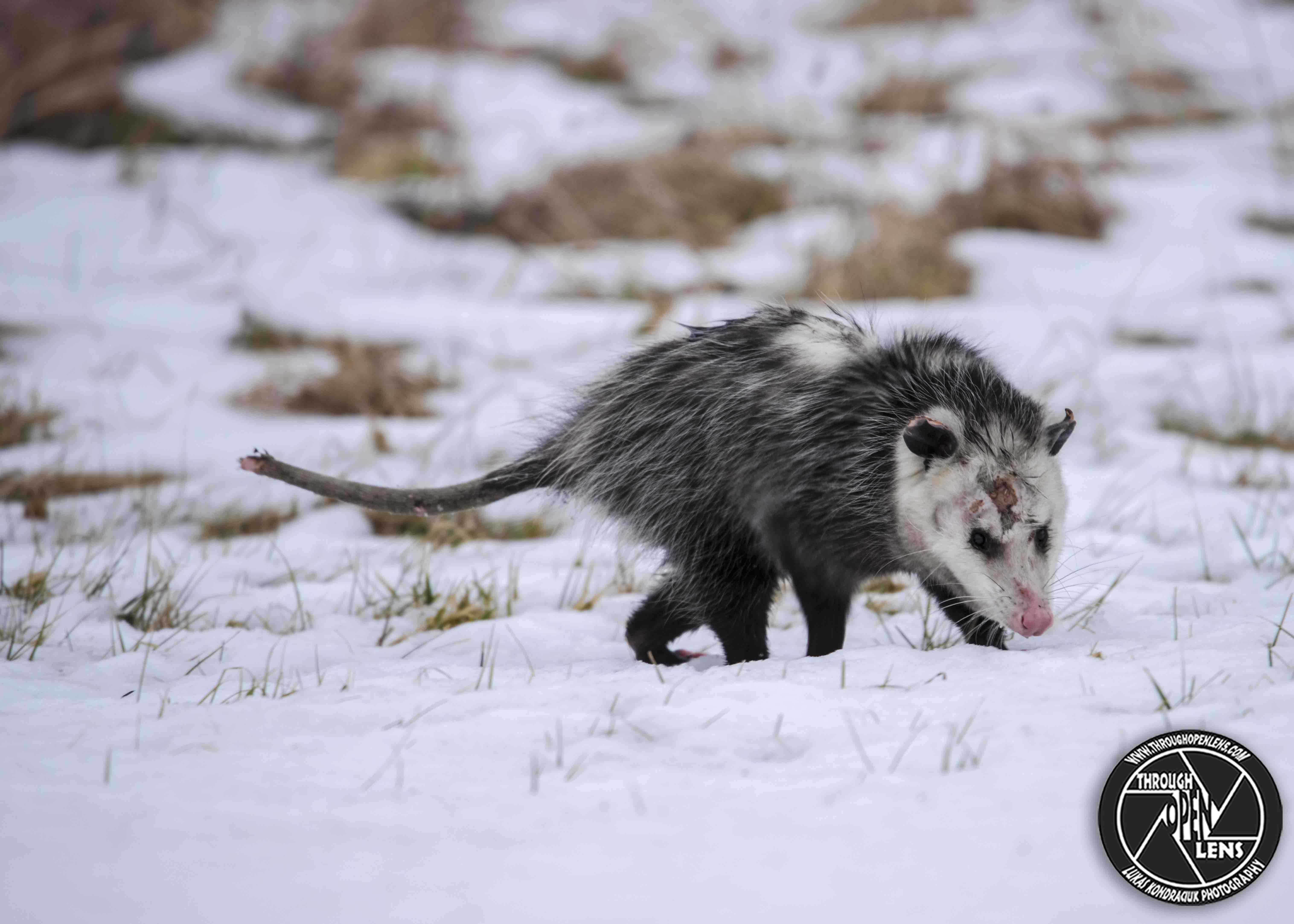
Opossums

A 3 years old boy sits near a pregnant woman.

Boy: Why do you look so fat?

Pregnant woman: I have a baby inside me.

Boy: Is it a good baby?

Pregnant woman: Yes, it is a very good baby.

Boy: Then why did you eat it?!

Interesting Fact:  These animals are most famous for “playing possum.” When threatened by dogs, foxes, or bobcats, opossums sometimes flop onto their sides and lie on the ground with their eyes closed or staring fixedly into space. They extend their tongues and generally appear to be dead. This ploy may put a predator off its guard and allow the opossum an opportunity to make its escape. ( https://www.nationalgeographic.com/animals/mammals/group/opossums/ )

BON VOYAGE! The Rest Of Us Will Envying You While We Work.

F/11.0, 1/500, ISO 320.

New York City Skyline & Norwegian Cruise Line Ship

A very nervous first time crew member says to the skipper, “Do ships like this sink very often?”

“Not too often,” replied the skipper. “Usually it’s only once.”

Interesting Fact: The cruise line was founded as Norwegian Caribbean Line in 1966 by Knut Kloster and Ted Arison, with the 8,666-ton, 140m cruise ship/car ferry, Sunward,[5] which in 1966 operated as a car-ferry between Southampton UK and Gibraltar, for that one, short season only. Arison soon left to form Carnival Cruise Lines, while Kloster acquired additional ships for Caribbean service. Norwegian pioneered many firsts in the cruise industry like: the first Out Island Cruise, the first combined air-sea program (marketed as “Cloud 9 Cruises”) which combined low cost air fares with the cruise, first shipline to develop new ports in the Caribbean, like Ocho Rios in Jamaica. Like the original Sunward of 1966, Norwegians’s second ship, the Starward had the capability to carry automobiles through a well concealed stern door. Later, this area was turned into cabins and a two deck movie theater, which is now a casino. Norwegian was responsible for many of the cruise innovations that have now become standard throughout the industry. ( https://en.wikipedia.org/wiki/Norwegian_Cruise_Line )

Squeak, Squeak Down The Creek!

F/8.0, 1/250, ISO 320.

Warwick’s 27th Annual Duck Derby

Warwick’s annual Duck Derby, a popular fundraising event sponsored by Winslow Therapeutic Center, took place today.

What do you call a duck that steals?

A robber ducky.

Interesting Fact: The history of the rubber duck is linked to the emergence of rubber manufacturing in the late 19th century. The earliest rubber ducks were made from harder rubber when manufacturers began using Charles Goodyear‘s invention, vulcanized rubber. As a consequence, these solid rubber ducks were not capable of floating, but instead were intended for use as chew toys. ( https://en.wikipedia.org/wiki/Rubber_duck#History )

Do Not Disturb!

F/14.0, 1/250, ISO 200.

Punta Cana, Dominican Republic Beach

What is the best day to go to the beach?

Sunday, of course!

Interesting Fact: Fraser Island off the coast of Queensland, Australia, is the largest sand island in the world covering around 163,000 ha and it has a beach 65 km (40 mi) long. ( http://www.sciencekids.co.nz/sciencefacts/earth/beaches.html )

At The Quack Of Dawn

F/6.3, 1/160, ISO 250.

Wood Duck

What do you get when a duck bends over?

Buttquack

Interesting Fact: Wood Ducks feed by dabbling or short, shallow dives. They are strong fliers and can reach speeds of 30 mph. Wood Ducks are not territorial, with the exception that a male may fight off other males that approach his mate too closely. ( https://www.allaboutbirds.org/guide/Wood_Duck/lifehistory )


Wet And Wild!

F/5.6, 1/500, ISO 100.

Mallard Ducks

What season is it when you are on a trampoline?

Spring time.

Interesting Fact: Mallards are generalist foragers and will eat a wide variety of food. They don’t dive, but dabble to feed, tipping forward in the water to eat seeds and aquatic vegetation. They also roam around on the shore and pick at vegetation and prey on the ground. During the breeding season, they eat mainly animal matter including aquatic insect larvae, earthworms, snails and freshwater shrimp. During migration, many Mallards consume largely agricultural seed and grain. In city parks, they readily accept handouts from parkgoers.  ( https://www.allaboutbirds.org/guide/Mallard/lifehistory )

If A Turtle Loses It’s Shell Is It Naked Or Homeless?

F/7.1, 1/200, ISO 200.

Common Snapping Turtle

What kind of photos does a turtle take?

Shellfies.

Interesting Fact: In their environment, they are at the top of the food chain, causing them to feel less fear or aggression in some cases. When they encounter a species unfamiliar to them such as humans, in rare instances, they will become curious and survey the situation and even more rarely may bump their nose on a leg of the person standing in the water. Although snapping turtles have fierce dispositions,[16] when they are encountered in the water or a swimmer approaches, they will slip quietly away from any disturbance or may seek shelter under mud or grass nearby.[17] Common snapping turtles are very aggressive if caught, and have a strong enough bite to easily amputate human fingers. ( https://en.wikipedia.org/wiki/Common_snapping_turtle#Behavior )

Laugh And The World Laughs With You, Cackle Maniacally And People Back Away From You Slowly

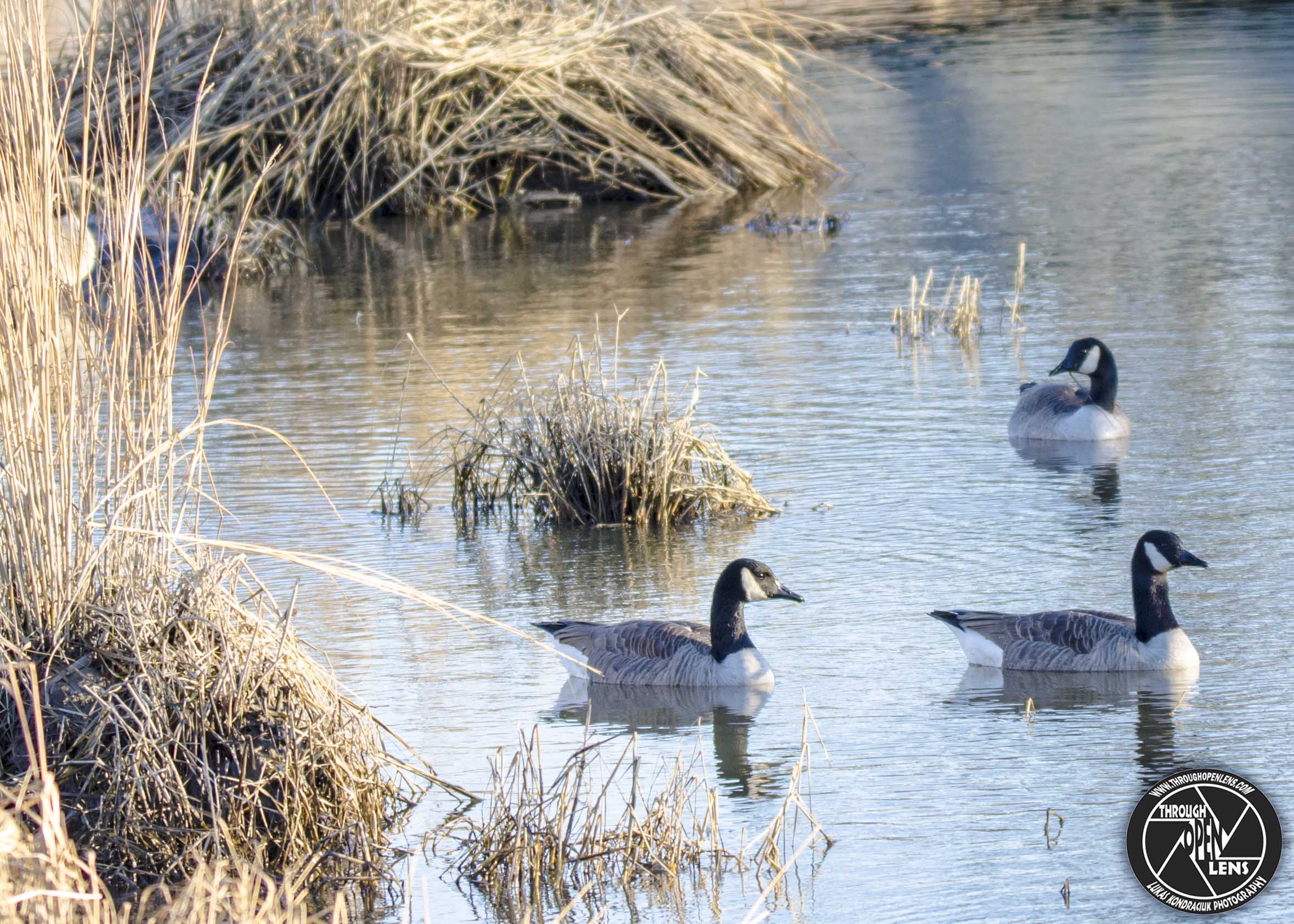
cackling-goose

F/5.0, 1/400, ISO 400.

Cackling Goose

What did the 30 degree angle say to the 90 degree angle?

“You think you’re always right!”

Interesting Fact: The Cackling Goose was long considered just a small race of the Canada Goose. The smallest four of the eleven recognized races were recently determined to be distinct enough to be their own species. Cackling Goose includes the races known as Taverner’s, Richardson’s, Aleutian, and Cackling geese. Confusingly, the “Lesser Canada Goose” is still a race of the Canada Goose. ( https://www.allaboutbirds.org/guide/Cackling_Goose/lifehistory )