Follow The Bunny He Has The Chocolate!

F/9.0, 1/320, ISO 250.

Desert Cottontail Rabbit

How do you make a bandstand?

Take away their chairs!

Interesting Fact: Habitat loss due to land clearing and cattle grazing may severely affect the population of the desert cottontail.[12] Human-induced fires are also a potential threat for desert cottontail populations.[12] Another factor is its competition with the black-tailed jackrabbit (Lepus californicus), because both have the same diet, and share the same habitat.[24] When a season has been particularly dry, there is less plant life to go around. The cottontail does not fear the jackrabbit, in fact the jackrabbit is very skittish and will retreat from a confrontation in most instances. However, the black-tailed jackrabbit is much bigger, and consumes much more food at eating times. ( https://en.wikipedia.org/wiki/Desert_cottontail

Once You Stop Chasing The Wrong Things, The Right Ones Catch You.

F/9.0, 1/320, ISO 160.

Wood Duck

How does a man show he’s planning for the future?

He buys two cases of Beer instead of one.

Interesting Fact: Wood ducks cavities are typically places where a branch has broken off and the tree’s heartwood has subsequently rotted. Woodpecker cavities are used less frequently. Wood Ducks cannot make their own cavities. The nest tree is normally situated near to or over water, though Wood Ducks will use cavities up to 1.2 miles from water. ( https://www.allaboutbirds.org/guide/Wood_Duck/lifehistory )


Never Bend Your Head. Always Hold It High. Look The World Straight In The Eye.

F/10.0, 1/400, ISO 320.

Curve-billed Thrasher

A wife says, “Hey! Look at that funny guy whose been drinking a lot.”

The husband responds, “Who is he?”

The wife answers, “Well, five years ago, he was my boyfriend and I denied him for marriage.”

The husband says, “Oh my God! He’s still celebrating his freedom!”

Interesting Fact: The Curve-billed Thrasher that lives in the Sonoran Desert of Arizona and northwestern Mexico looks different than the form that lives in the Chihuahuan Desert of Texas and central Mexico, and they may be separate species. The Texas and eastern bird has a lighter breast, more contrasting spots, pale wingbars, and white tail corners. The more western form has a grayer breast with less obvious spots, inconspicuous wingbars, and smaller, more grayish tail corners. ( https://www.allaboutbirds.org/guide/Curve-billed_Thrasher/lifehistory )

TAIL Me What You Think?

F/8.0, 1/250, ISO 200.

Great-tailed Grackle

Why did Frosty the snowman want a divorce?

Because he thought his wife was a flake

Interesting Fact: In winter, enormous flocks of both male and female Great-tailed Grackles gather in “roost trees.” These winter roosts can contain thousands of individuals, with flocks of up to half a million occurring in sugarcane fields in Texas’s Rio Grande Valley. (  https://www.allaboutbirds.org/guide/Great-tailed_Grackle/overview  )

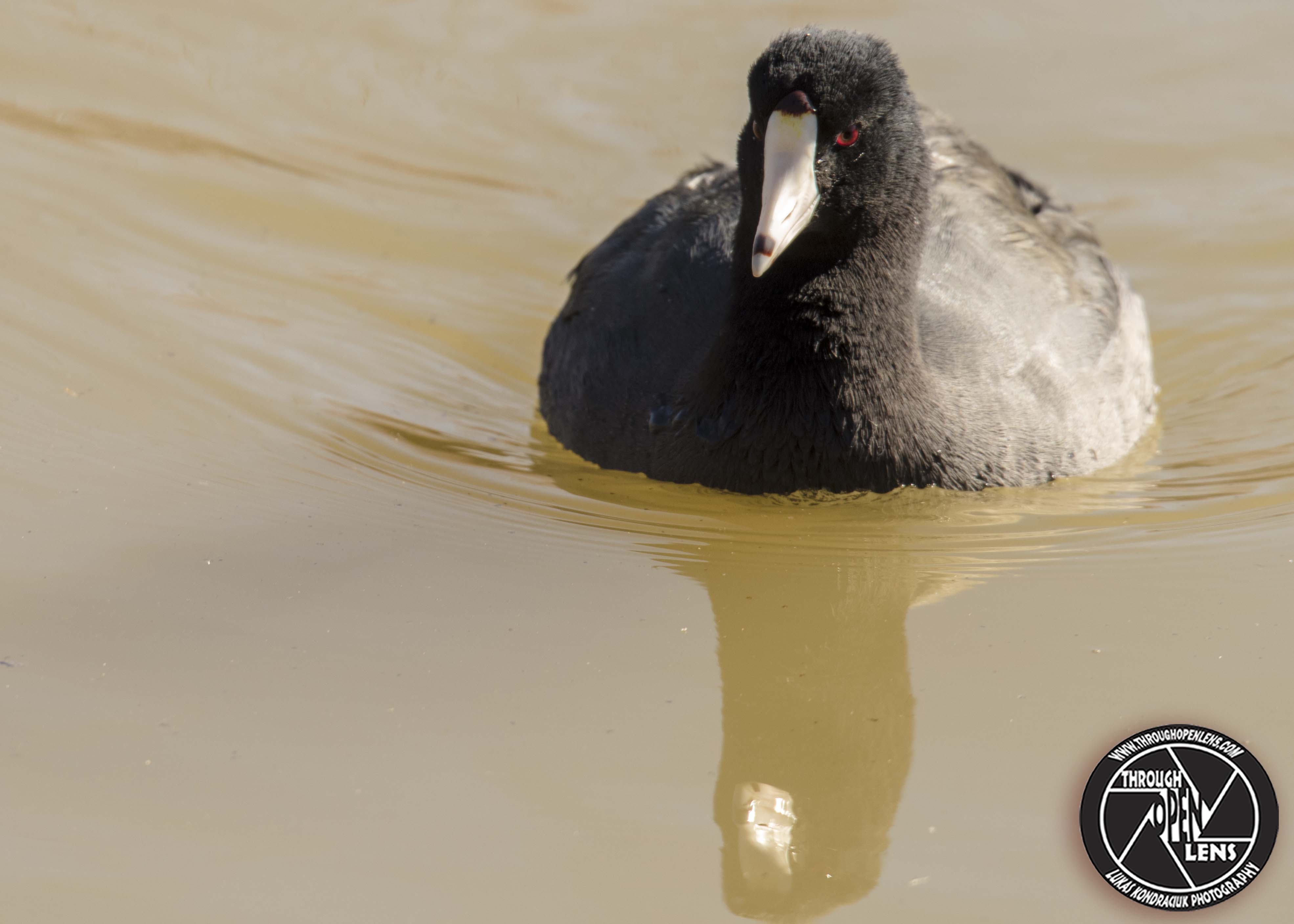
Water Chicken!

F/9.0, 1/320, ISO 320.

American Coot

“Babe is it in?”

“Yea.” “Does it hurt?”

“Uh huh.”

“Let me put it in slowly.”

“It still hurts.”

“Okay, let’s try another shoe size.”

Interesting Fact: A slow and meticulous forager, the American Coot plucks at plants while walking, swimming, dabbling with its head just underwater, or in full dives. In flight coots are clumsy and labored (though less so than Common Moorhens). To get airborne, coots typically have to beat their wings while running across the water for many yards. ( https://www.allaboutbirds.org/guide/American_Coot/lifehistory# )

Easter Is The Only Time Of The Year When It’s Perfectly Safe To Put All Your Eggs In One Basket.

Happy Easter Everyone! 

F/8.0, 1/250, ISO 250.

Desert Cottontail Rabbit

What did the Easter Egg say to the boiling water?

It’s going to take awhile to get me hard I just got layed by some chick!

Interesting Fact:  Many desert animals prey on cottontails, including birds of prey, mustelids, the coyote, the bobcat, the lynx, wolves, mountain lions, snakes, weasels, humans, and even squirrels, should a cottontail be injured or docile from illness.[22] Alien species, such as cats and dogs, are also known predators, and also pose a threat.[12] Southwestern Native Americans hunted them for meat but also used their fur and hides. It is also considered a game species, due to which it is hunted for sport.[12] The desert cottontail’s normal behavior upon spotting a potential predator is to freeze in place in an attempt to avoid being detected. If it determines that it is in danger, it will flee the area by hopping away in a zigzag pattern.[23] Cottontails can reach speeds of over 30 km/h (19 mph). When defending itself against small predators or other desert cottontails, it will nudge with its nose, or slap with its front paws, usually preceded by a hop straight upwards as high as two feet when threatened or taken by surprise. ( https://en.wikipedia.org/wiki/Desert_cottontail )

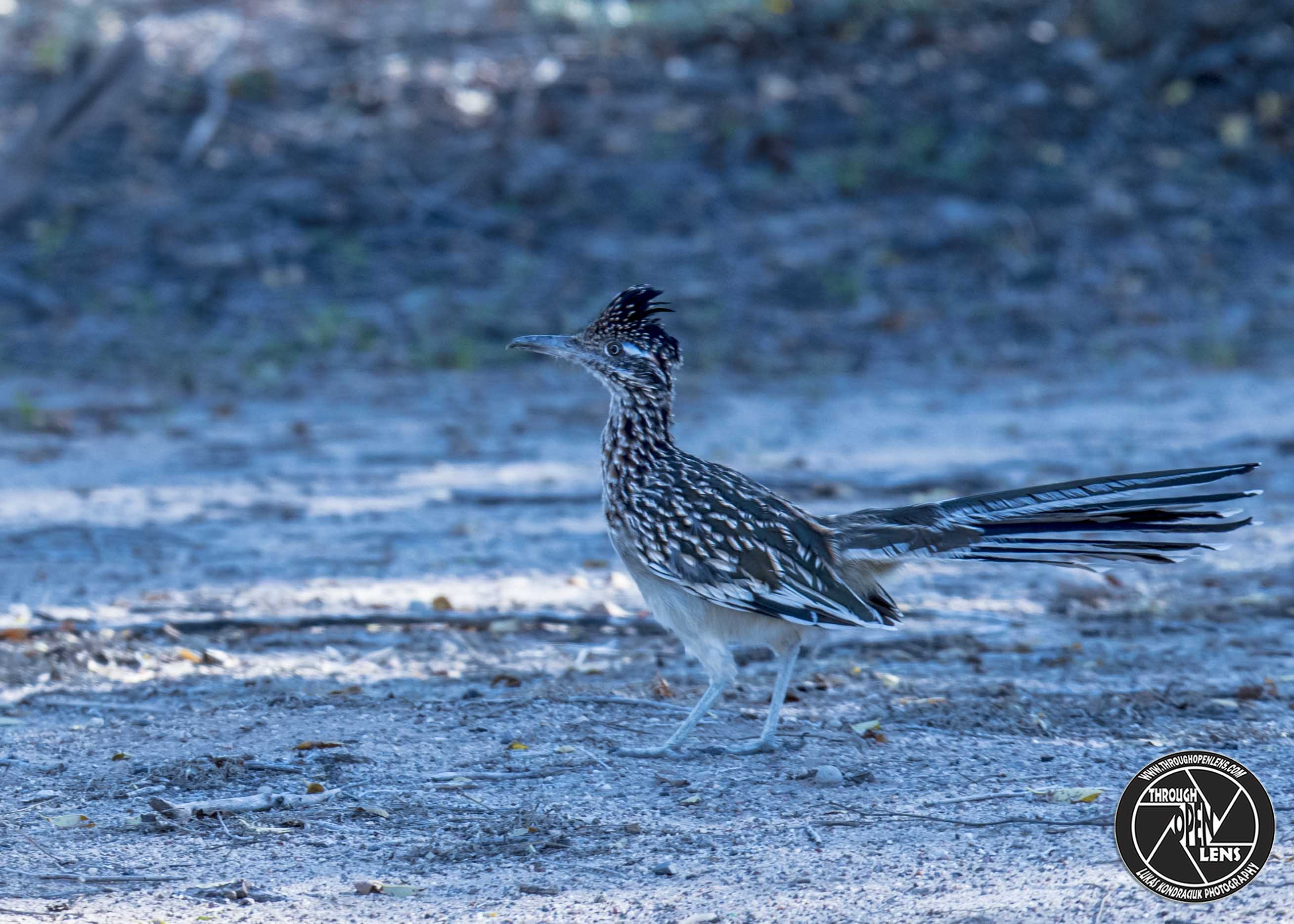
Beep, Beep!

F/7.1, 1/200, ISO 250.

Greater Roadrunner

Why can you never trust atoms?

They make up everything!

Interesting Fact: Roadrunners have evolved a range of adaptations to deal with the extremes of desert living. Like seabirds, they secrete a solution of highly concentrated salt through a gland just in front of each eye, which uses less water than excreting it via their kidneys and urinary tract. Moisture-rich prey including mammals and reptiles supply them otherwise-scarce water in their diet. Both chicks and adults flutter the unfeathered area beneath the chin (gular fluttering) to dissipate heat. ( https://www.allaboutbirds.org/guide/Greater_Roadrunner/overview

My New Year’s resolution Is To Stop Hanging Out With People Who Ask Me About My New Years’s Resolutions.

F/10.0, 1/400, ISO 320.

Sandhill Crane

What’s the problem with jogging on New Years Eve?

The ice falls out of your drinks!

Interesting Fact: Sandhill Cranes are known for their dancing skills. Courting cranes stretch their wings, pump their heads, bow, and leap into the air in a graceful and energetic dance. ( https://www.allaboutbirds.org/guide/Sandhill_Crane/lifehistory )

I Wonder If Earth Makes Fun Of Other Planets For Having No Life.

F/8.0, 1/250, ISO 320.

American Coot

Why was the broom late?

It over swept!

Interesting Fact: The ecological impact of common animals, like this ubiquitous waterbird, can be impressive when you add it all up. One estimate from Back Bay, Virginia, suggested that the local coot population ate 216 tons (in dry weight) of vegetation per winter. ( https://www.allaboutbirds.org/guide/American_Coot )

Let’s Swim Away Together!

F/9.0, 1/320, ISO 200.

Wood Ducks

A man and a woman have just had their 50th wedding anniversary.

The husband turns to his wife and asks, “What do you want to do to celebrate our anniversary dear?”

She replies, “Let’s run upstairs and make love.”

He turns to her and says, “Well make up your mind, we can’t do both!”

Interesting Fact: Egg-dumping, or “intraspecific brood parasitism” is common in Wood Ducks—females visit other Wood Duck cavities, lay eggs in them, and leave them to be raised by the other female. This may have been made more common by the abundance and conspicuousness of artificial nest boxes; in some areas it happens in more than half of all nests. Individual females typically lay 10-11 eggs per clutch, but some very full nests have been found containing 29 eggs, the result of egg-dumping. ( https://www.allaboutbirds.org/guide/Wood_Duck/lifehistory#behavior )