Stop, Don’t Move!

black-capped-chickadee

F/9.0, 1/320, ISO 400.

Black-Capped Chickadee

Did you hear about the actor who fell through the floorboards?

He was just going through a stage.

Interesting Fact: Every autumn Black-capped Chickadees allow brain neurons containing old information to die, replacing them with new neurons so they can adapt to changes in their social flocks and environment even with their tiny brains. ( https://www.allaboutbirds.org/guide/Black-capped_Chickadee/lifehistory )

I Trying To Get My Duck In The Row But I Got Geese Instead!

F/7.1, 1/200, ISO 250.

Canada Goose and Goslings

What did the triangle say to the circle?

Your pointless!

Interesting Fact:  In spring and summer, geese concentrate their feeding on grasses and sedges, including skunk cabbage leaves and eelgrass. During fall and winter, they rely more on berries and seeds, including agricultural grains, and seem especially fond of blueberries. They’re very efficient at removing kernels from dry corn cobs. Two subspecies have adapted to urban environments and graze on domesticated grasses year round. ( https://www.allaboutbirds.org/guide/Canada_Goose/lifehistory )

Look Up In The Sky!

F/13.0, 1/640, ISO 250.

MH-53E Sea Dragon

What did the candle say to the other candle?

I’m going out tonight

Interesting Fact: The CH-53 was the product of the U.S. Marines’ “Heavy Helicopter Experimental” (HH(X)) competition begun in 1962. Sikorsky‘s S-65 was selected over Boeing Vertol‘s modified CH-47 Chinook version. The prototype YCH-53A first flew on 14 October 1964.[1] The helicopter was designated “CH-53A Sea Stallion” and delivery of production helicopters began in 1966.[2] The first CH-53As were powered by two General Electric T64-GE-6 turboshaft engines with 2,850 shp (2,125 kW) and had a maximum gross weight of 46,000 lb (20,865 kg) including 20,000 lb (9,072 kg) in payload. ( https://en.wikipedia.org/wiki/Sikorsky_CH-53E_Super_Stallion#Specifications_(CH-53E) )

Call Me A Teddy Bear Again!

F/6.3, 1/50, ISO 2000.

American Black Bear

Why don’t bears like fast food?

Because they can’t catch it!

Interesting Fact: Solitary animals, black bears roam large territories, though they do not protect them from other bears. Males might wander a 15- to 80-square-mile home range. ( https://www.nationalgeographic.com/animals/mammals/a/american-black-bear/ )

I Wanna Go Fast!

F/6.3, 1/60, ISO 400.

White-throated Sparrow

Two state officials are talking  “I don’t know what people have against us, We haven’t done anything.”

Interesting Fact:  Males are typically dominant over females, but whether an individual is white-striped or tan-striped seems to have no bearing on status. When pairing up, white-striped forms tend to choose tan-striped individuals, and vice versa. Pairs stay together for the summer, but birds often choose new partners the next year.  ( https://www.allaboutbirds.org/guide/White-throated_Sparrow/lifehistory )

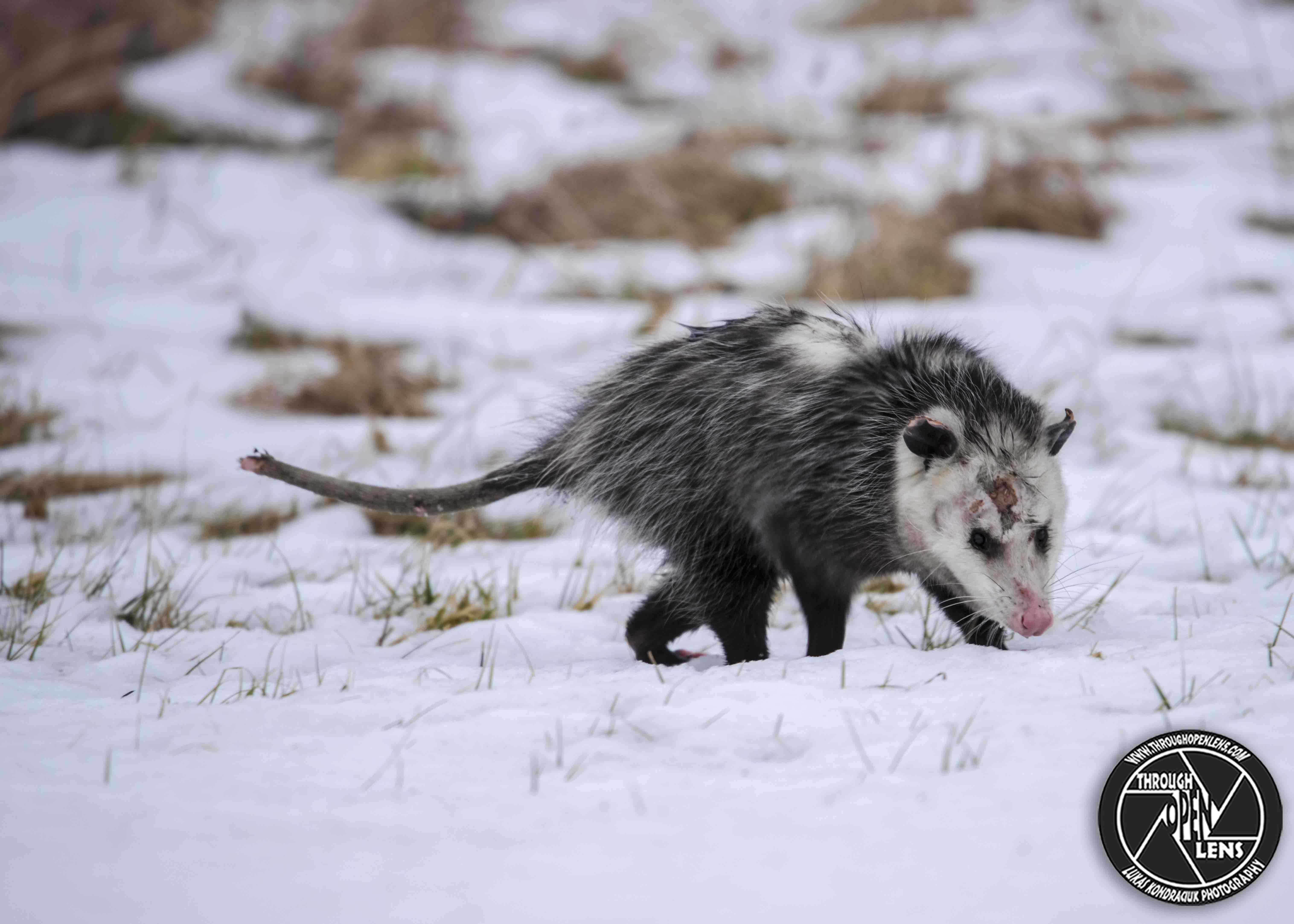
If You Want To Go Running With Me, You’d Better Be Prepared To Walk A Lot.

F/6.3, 1/80, ISO 400.

Opossums

A 3 years old boy sits near a pregnant woman.

Boy: Why do you look so fat?

Pregnant woman: I have a baby inside me.

Boy: Is it a good baby?

Pregnant woman: Yes, it is a very good baby.

Boy: Then why did you eat it?!

Interesting Fact:  These animals are most famous for “playing possum.” When threatened by dogs, foxes, or bobcats, opossums sometimes flop onto their sides and lie on the ground with their eyes closed or staring fixedly into space. They extend their tongues and generally appear to be dead. This ploy may put a predator off its guard and allow the opossum an opportunity to make its escape. ( https://www.nationalgeographic.com/animals/mammals/group/opossums/ )

Don’t Just Stand There, Summer Is Here!

F/5.6, 1/500, ISO 200.

Greater Yellowlegs

What did the pig say on a hot summer day?

I’m bacon!

Interesting Fact:  Greater Yellowlegs eats small aquatic and terrestrial invertebrates, small fish, frogs, and occasionally seeds and berries. ( https://www.allaboutbirds.org/guide/Greater_Yellowlegs/lifehistory )


I Just Did A Weeks Worth Of Cardio After Walking Into A Spider’s Web.

F/8.0, 1/250, ISO 320.

Spider

How do spiders communicate?

Through the World Wide Web.

Interesting Fact: Spiders (order Araneae) are air-breathing arthropods that have eight legs and chelicerae with fangs that inject venom. They are the largest order of arachnids and rank seventh in total species diversity among all other orders of organisms.[2] Spiders are found worldwide on every continent except for Antarctica, and have become established in nearly every habitat with the exceptions of air and sea colonization. As of November 2015[update], at least 45,700 spider species, and 113 families have been recorded by taxonomists.[1] However, there has been dissension within the scientific community as to how all these families should be classified, as evidenced by the over 20 different classifications that have been proposed since 1900. ( https://en.wikipedia.org/wiki/Spider )

At The Quack Of Dawn

F/6.3, 1/160, ISO 250.

Wood Duck

What do you get when a duck bends over?

Buttquack

Interesting Fact: Wood Ducks feed by dabbling or short, shallow dives. They are strong fliers and can reach speeds of 30 mph. Wood Ducks are not territorial, with the exception that a male may fight off other males that approach his mate too closely. ( https://www.allaboutbirds.org/guide/Wood_Duck/lifehistory )


If A Turtle Loses It’s Shell Is It Naked Or Homeless?

F/7.1, 1/200, ISO 200.

Common Snapping Turtle

What kind of photos does a turtle take?

Shellfies.

Interesting Fact: In their environment, they are at the top of the food chain, causing them to feel less fear or aggression in some cases. When they encounter a species unfamiliar to them such as humans, in rare instances, they will become curious and survey the situation and even more rarely may bump their nose on a leg of the person standing in the water. Although snapping turtles have fierce dispositions,[16] when they are encountered in the water or a swimmer approaches, they will slip quietly away from any disturbance or may seek shelter under mud or grass nearby.[17] Common snapping turtles are very aggressive if caught, and have a strong enough bite to easily amputate human fingers. ( https://en.wikipedia.org/wiki/Common_snapping_turtle#Behavior )