This Is My Good Side

F/8.0, 1/200, ISO 400.

Northern Flicker

Why is it so hot in a stadium after a football game?

Because all the fans have left.

Interesting Fact: The Northern Flicker is one of the few North American woodpeckers that is strongly migratory. Flickers in the northern parts of their range move south for the winter, although a few individuals often stay rather far north. ( https://www.allaboutbirds.org/guide/Northern_Flicker/lifehistory )


Something Is Flickering!

F/6.3, 1/160, ISO 640.

Northern Flicker

What did the math book say to its therapist?

I’ve got a lot of problems.

Interesting Fact: Northern Flickers usually excavate nest holes in dead or diseased tree trunks or large branches. In northern North America look for nests in trembling aspens, which are susceptible to a heartrot that makes for easy excavation. Unlike many woodpeckers, flickers often reuse cavities that they or another species excavated in a previous year. Nests are generally placed 6-15 feet off the ground, but on rare occasions can be over 100 feet high. Northern Flickers have been known to nest in old burrows of Belted Kingfishers or Bank Swallows. ( https://www.allaboutbirds.org/guide/Northern_Flicker/lifehistory )

Oh Stop, You Making Me Blush!

F/6.3, 1/160, ISO 500.

House Finch

What did one hat say to another? 

You stay here, I’ll go on a head.

Interesting Fact: House Finches nest in a variety of deciduous and coniferous trees as well as on cactus and rock ledges. They also nest in or on buildings, using sites like vents, ledges, street lamps, ivy, and hanging planters. Occasionally House Finches use the abandoned nests of other birds. ( https://www.allaboutbirds.org/guide/House_Finch/lifehistory )

You Give Me The Chills!

F/10.0, 1/400, ISO 160.

Red-tailed Hawk

Two snakes are talking.

One of them turns to the other and asks, “Are we venomous?”

The other replays, “Yes,why?…”

“I just bit ma lip.”

Interesting Fact: Red-tailed Hawks typically put their nests in the crowns of tall trees where they have a commanding view of the landscape. They may also nest on a cliff ledge or on artificial structures such as window ledges and billboard platforms. ( https://www.allaboutbirds.org/guide/Red-tailed_Hawk/lifehistory

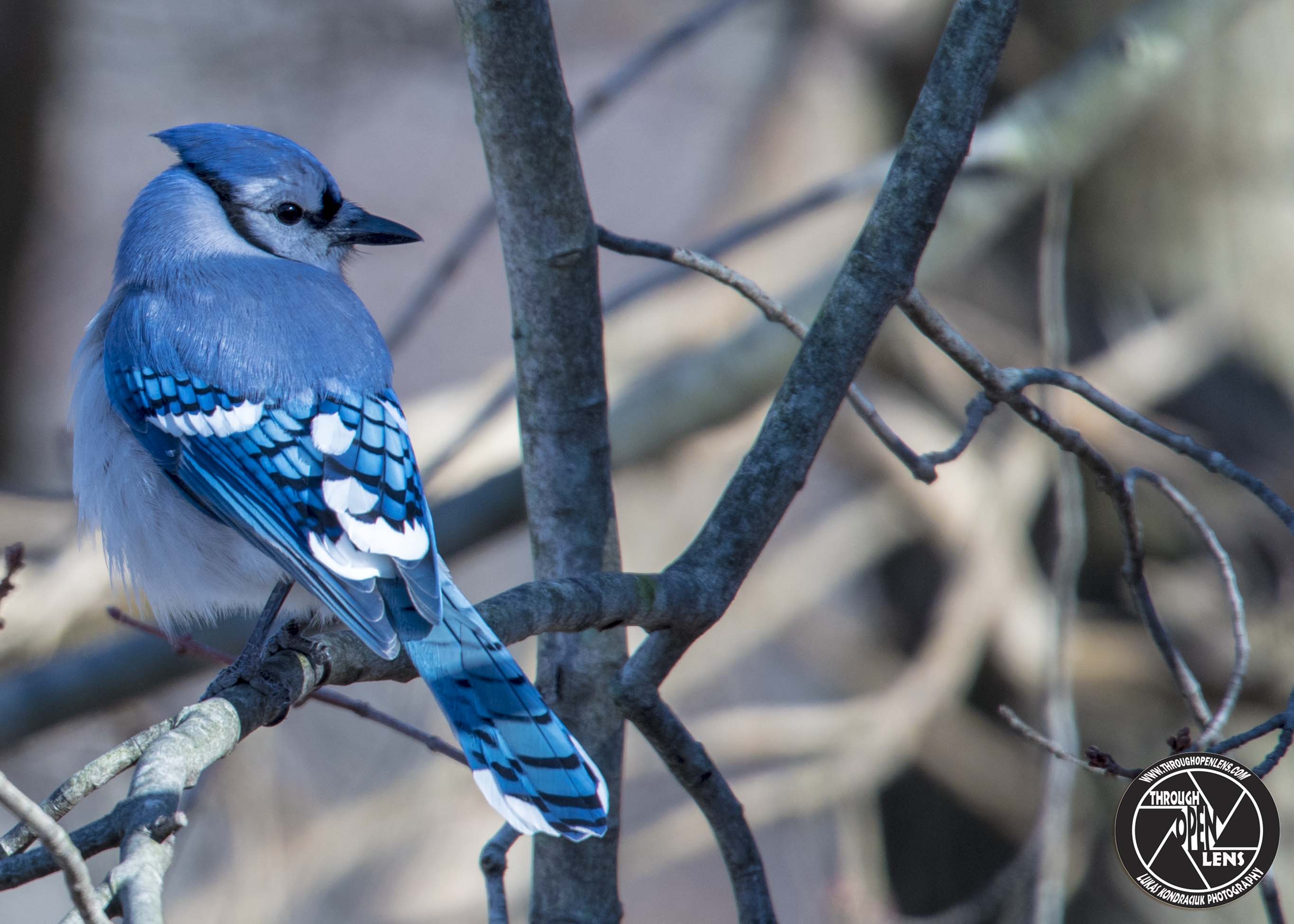
Blue You Away!

F/7.1, 1/200, ISO 250.

Blue Jay 

Why do ghosts have so much trouble dating?

Women can see right through them.

Interesting Fact: This common, large songbird is familiar to many people, with its perky crest; blue, white, gray, and black plumage; and noisy calls. Blue Jays are known for their intelligence and complex social systems, and have tight family bonds. They often mate for life, remaining with their social mate throughout the year. ( https://www.allaboutbirds.org/guide/Blue_Jay/lifehistory )


Eat My Shorts, Dude!

F/7.1, 1/200, ISO 320.

Common Grackle 

Why do golfers wear two pairs of pants?

In case they get a hole in one!

Interesting Fact: Grackles have a hard keel on the inside of the upper mandible that they use for sawing open acorns. Typically they score the outside of the narrow end, then bite the acorn open. ( https://www.allaboutbirds.org/guide/Common_Grackle/lifehistory )

That Hawkward Moment!

F/7.1, 1/200, ISO 400.

A pirate walks into a bar with a steering wheel on his pants, a peg leg and a parrot on his shoulder. The bartender says, “Hey, you’ve got a steering wheel on your pants.”

The pirate says, “Arrrr, I know. It’s driving me nuts.”

Interesting Fact: ed-tailed Hawks typically put their nests in the crowns of tall trees where they have a commanding view of the landscape. They may also nest on a cliff ledge or on artificial structures such as window ledges and billboard platforms. ( https://www.allaboutbirds.org/guide/Red-tailed_Hawk/lifehistory )

Wait, What Did You Said?

F/7.1, 1/200, ISO 250.

Blue Jay

Why is your foot more special than your other body parts?

Because they have their own soul.

Interesting Fact: Blue Jays are found in all kinds of forests but especially near oak trees; they’re more abundant near forest edges than in deep forest. They’re common in urban and suburban areas, especially where oaks or bird feeders are found. ( https://www.allaboutbirds.org/guide/Blue_Jay/lifehistory )

Here’s Looking At You, Kid

F/11.0, 1/500, ISO 320.

Red-tailed Hawk

Why can you never trust atoms?

They make up everything!

Interesting Fact: Birds are amazingly adapted for life in the air. The Red-tailed Hawk is one of the largest birds you’ll see in North America, yet even the biggest females weigh in at only about 3 pounds. A similar-sized small dog might weigh 10 times that. ( https://www.allaboutbirds.org/guide/Red-tailed_Hawk/lifehistory )

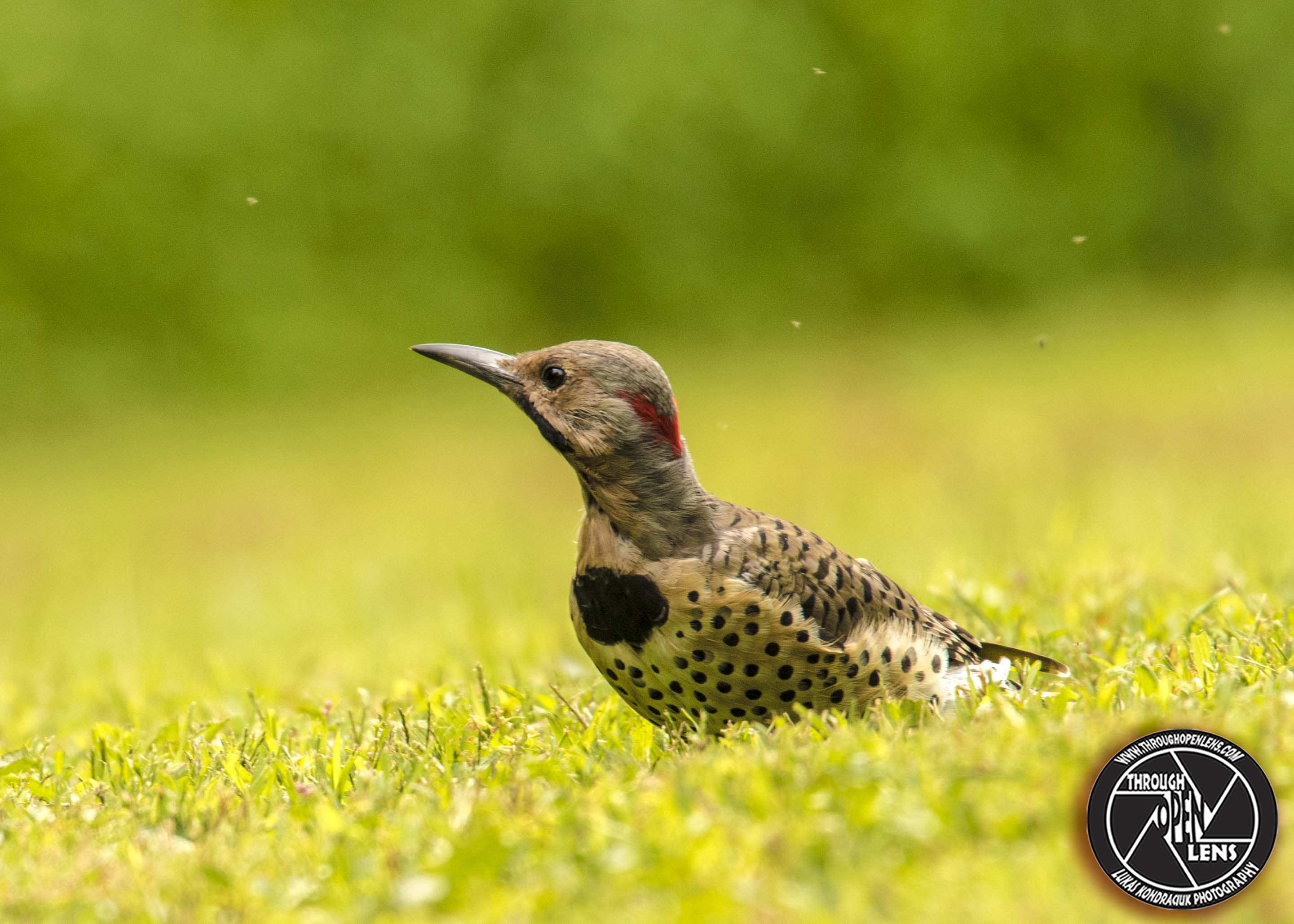
Please Keep Off The Grass!

F/8.0, 1/250, ISO 400.

Northern Flicker

What can you hold without ever touching it?

A conversation.

Interesting Fact: The red-shafted and yellow-shafted forms of the Northern Flicker formerly were considered different species. The two forms hybridize extensively in a wide zone from Alaska to the panhandle of Texas. A hybrid often has some traits from each of the two forms and some traits that are intermediate between them. The Red-shafted Flicker also hybridizes with the Gilded Flicker, but less frequently. ( https://www.allaboutbirds.org/guide/Northern_Flicker )