Life Always Offers You A Second Chance. It’s Called Tomorrow.

F/10.0, 1/400, ISO 250.

Tree Swallow

What did one wall say to the other wall?

Meet you at the corner!

Interesting Fact:  Tree Swallows are highly social, forming large migratory and wintering flocks; and pairs often nest close together, particularly where nest boxes are numerous. Agile fliers, Tree Swallows tend to glide more than any other swallow species. They bathe by flying low over the water and skimming their bodies against the surface, then rising quickly while shaking off droplets. ( https://www.allaboutbirds.org/guide/Tree_Swallow/lifehistory )

Just Sitting Here On The Corner Of Awesome And Bombdiggity.

F/8.0, 1/125, ISO 100.

Peregrine Falcon

Why did Mickey Mouse go to space?

To visit Pluto.

Interesting Fact: The Peregrine Falcon is one of the most widespread birds in the world. It is found on all continents except Antarctica, and on many oceanic islands. ( https://www.allaboutbirds.org/guide/Peregrine_Falcon/lifehistory )

Catching Some Rays DUDE!

F/9.0, 1/320, ISO 160.

Red-Eared Slider Turtles 

What do turtles use to communicate?

A shellphone!

Interesting Fact: During brumation, T. s. elegans can survive anaerobically for weeks, producing ATP from glycolysis. The turtle’s metabolic rate drops dramatically, with heart rate and cardiac output dropping by 80% to minimise energy requirements.[25][26] The lactic acid produced is buffered by minerals in the shell, preventing acidosis.[27] Red-eared sliders kept captive indoors should not brumate. ( https://en.wikipedia.org/wiki/Red-eared_slider )


Mouth Full!

F/7.1, 1/160, ISO 320.

American Robin

Why are vampires so easy to fool?

Because they are suckers.

Interesting Fact: An American Robin can produce three successful broods in one year. On average, though, only 40 percent of nests successfully produce young. Only 25 percent of those fledged young survive to November. From that point on, about half of the robins alive in any year will make it to the next. Despite the fact that a lucky robin can live to be 14 years old, the entire population turns over on average every six years. ( https://www.allaboutbirds.org/guide/American_Robin/lifehistory )

I May Look Calm, But In My Head I’ve Killed You 3 Times.

F/10.0, 1/400, ISO 200.

Osprey

What do lawyers wear to court?

Lawsuits!

Interesting Fact: The Osprey readily builds its nest on manmade structures, such as telephone poles, channel markers, duck blinds, and nest platforms designed especially for it. Such platforms have become an important tool in reestablishing Ospreys in areas where they had disappeared. In some areas nests are placed almost exclusively on artificial structures. ( https://www.allaboutbirds.org/guide/Osprey/lifehistory )

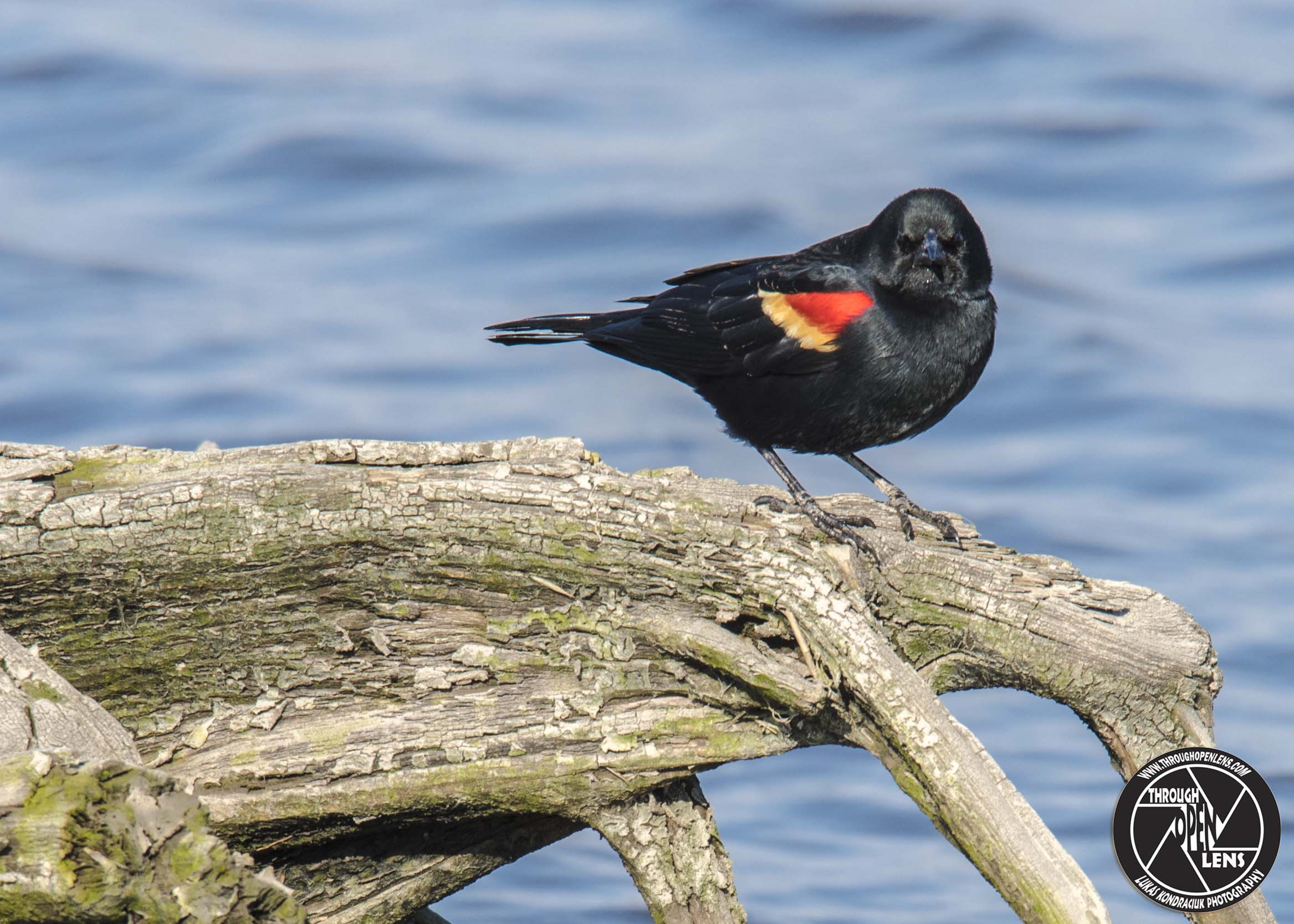
I Don’t Need Anger Management I Need People To Stop Pissing Me Off.

F/9.0, 1/320, ISO 320.

Red-winged Blackbird 

What did the ghost eat at his birthday party?

I scream

Interesting Fact: Male Red-winged Blackbirds spend much of the breeding season sitting on a high perch over their territories and singing their hearts out. Females tend to slink through reeds and grasses collecting food or nest material. Both males and females defend nests from intruders and predators. ( https://www.allaboutbirds.org/guide/Red-winged_Blackbird/lifehistory )

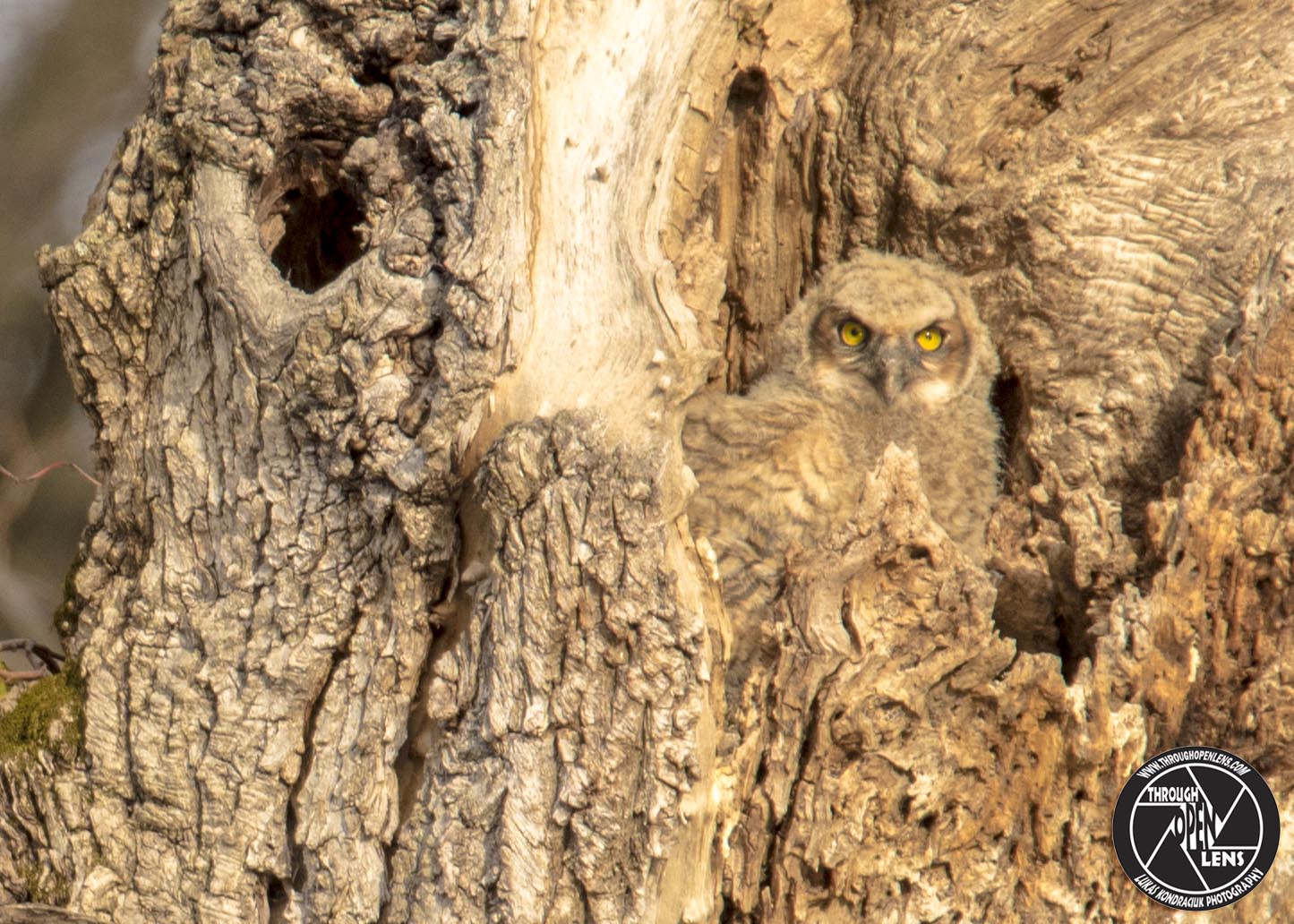
Be OWLsome!

F/8.0, 1/200, ISO 250.

Great Horned Owl 

What do you call an owl that can perform magic tricks

Hoo-dini

Interesting Fact: If you hear an agitated group of cawing American Crows, they may be mobbing a Great Horned Owl. Crows may gather from near and far and harass the owl for hours. The crows have good reason, because the Great Horned Owl is their most dangerous predator. ( https://www.allaboutbirds.org/guide/Great_Horned_Owl/ )

Ordinarily, Staring is Creepy. But If You Spread Your Attention Across Many Individuals, Then It’s Just People Watching.

F/7.1, 1/200, ISO 320.

Common Grackle

Tom is sitting on the ice all day fishing with no luck, not even a nibble. Cold and tired he is about to leave, when a guy walks up cuts a hole in the ice beside him, and starts pulling out fish as fast a he can drop his hook in the water. Tom cant believe it, he yells over ” whats your secret?” “woogatkakeptewrwm” he answers back. “what did you say?” replies Tom. The man spits a large ball of worms on the ice and says to Tom, ” you have to keep your worms warm”.

Interesting Fact: Those raggedy figures out in cornfields may be called scare-crows, but grackles are the #1 threat to corn. They eat ripening corn as well as corn sprouts, and their habit of foraging in big flocks means they have a multimillion dollar impact. Some people have tried to reduce their effects by spraying a foul-tasting chemical on corn sprouts or by culling grackles at their roosts. ( https://www.allaboutbirds.org/guide/Common_Grackle/lifehistory )


I’m Not Lazy, I’m Just On My Energy Saving Mode!

F/6.3, 1/125, ISO 250.

Red-tailed Hawk 

How did the tree feel in the spring?

Releaved.

Interesting Fact: Red-tailed Hawks typically put their nests in the crowns of tall trees where they have a commanding view of the landscape. They may also nest on a cliff ledge or on artificial structures such as window ledges and billboard platforms. ( https://www.allaboutbirds.org/guide/Red-tailed_Hawk/lifehistory )


Danger Mouth Operates Faster Than Brain!

F/10.0, 1/640, ISO 250.

Belted Kingfisher

What did the salad say to the fridge?

Shut the door, I’m dressing!

Interesting Fact: Pleistocene fossils of Belted Kingfishers (to 600,000 years old) have been unearthed in Florida, Virginia, Tennessee, and Texas. The oldest known fossil in the kingfisher genus is 2 million years old, found in Alachua County, Florida. ( https://www.allaboutbirds.org/guide/Belted_Kingfisher )