
F/8.0, 1/1000, ISO 200.
Black-crowned Night-Heron
What did the big chimney say to the little chimney?
“You’re too young to smoke.”

F/8.0, 1/1000, ISO 200.
Black-crowned Night-Heron
What did the big chimney say to the little chimney?
“You’re too young to smoke.”
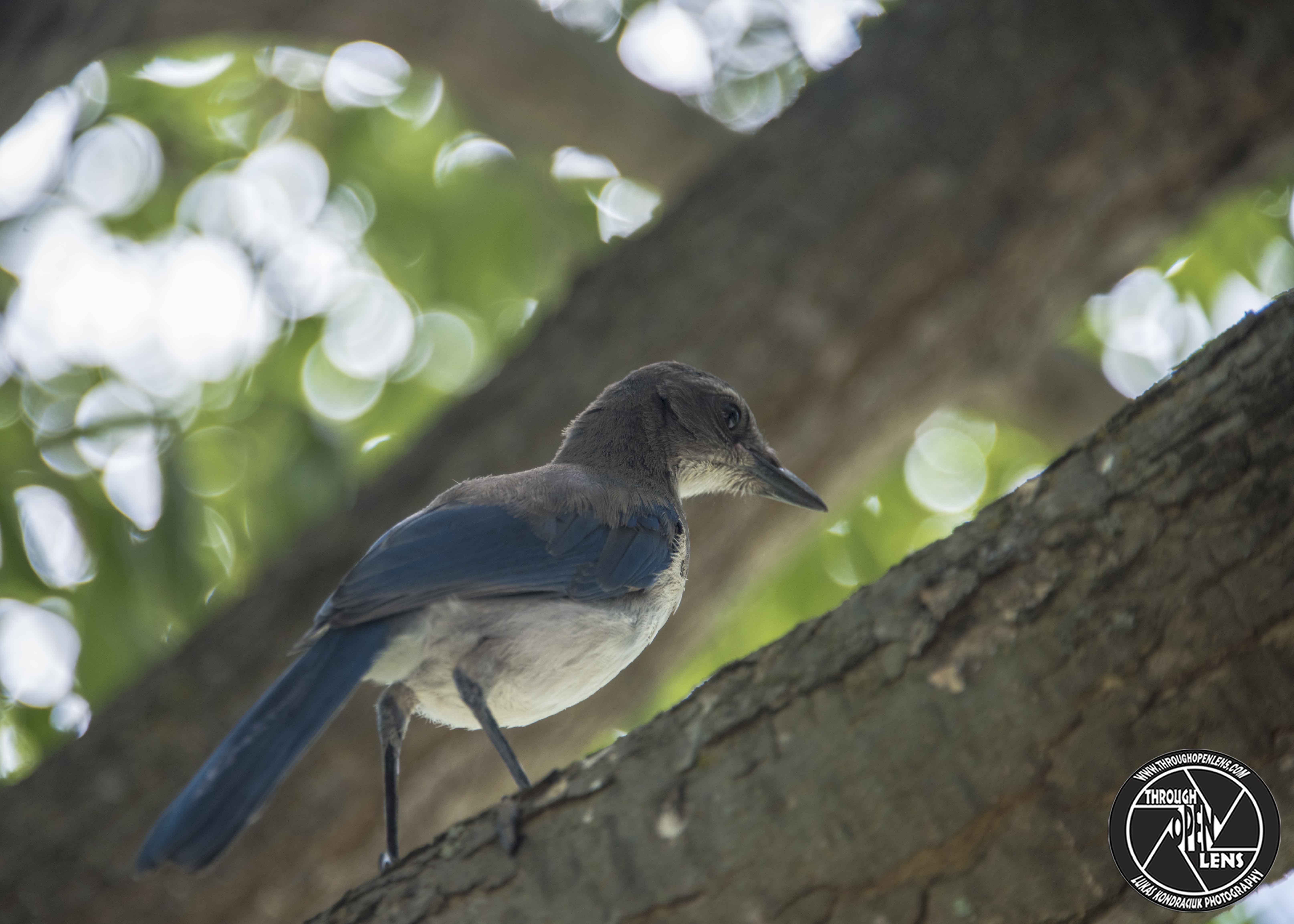
F/5.6, 1/160, ISO 320.
California Scrub-Jay
Why did Papa Smurf send Smurfette to see a doctor???
She was always feeling blue…
Interesting Fact: Look closely, and you’ll see an intriguing difference between the California Scrub-Jay and its close relative, Woodhouse’s Scrub-Jay. The bill of a California Scrub-Jay is stout and hooked, giving it extra power and grip as the birds hammer open acorns in their oak woodland habitats. By comparison, Woodhouse’s have thinner, more pointed bills that nimbly reach deep into pinyon pine cones to pull out the pine nuts inside. ( https://www.allaboutbirds.org/guide/California_Scrub-Jay )
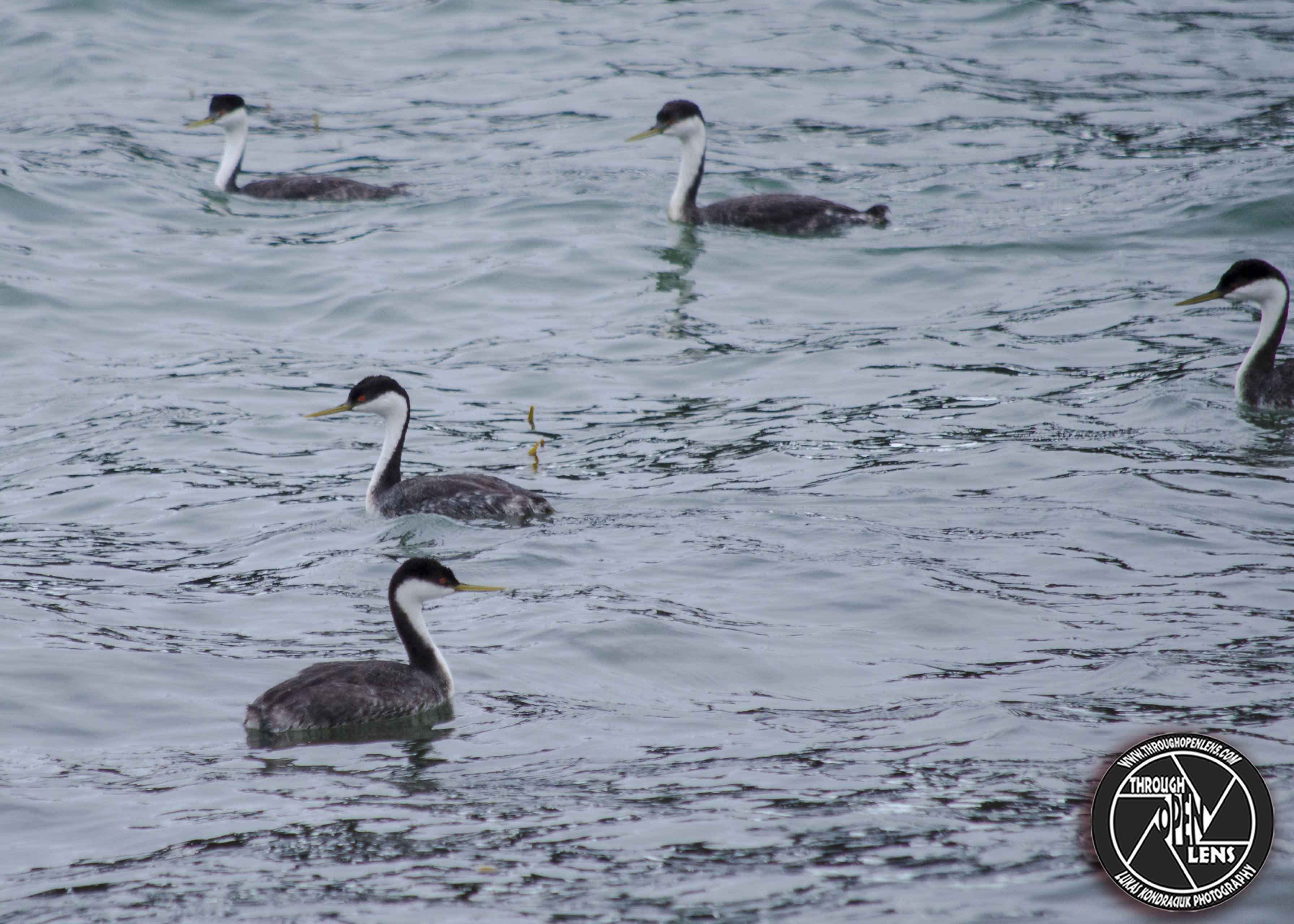
F/5.6, 1/500, ISO 360.
Western-Grebe
Why did the traffic light turn red?
You would too if you had to change in the middle of the street!
Interesting Fact: The Western Grebe, like other grebes, spends almost all its time in water and is very awkward when on land. The legs are so far back on the body that walking is very difficult. Western Grebes are adept swimmers and divers. Courtship happens entirely in the water, including a well-known display known as “rushing,” where two birds turn to one side, lunge forward in synchrony, their bodies completely out of the water, and race across the water side by side with their necks curved gracefully forward. ( https://www.allaboutbirds.org/guide/Western_Grebe/lifehistory )

F/8.0, 1/250, ISO 250.
Common Murre
Where do polar bears vote?
The North Poll.
Interesting Fact: In the Atlantic, some populations include “bridled” or “ringed” individuals, which have a white eye-ring and a white line extending backward from the eyes. Bridled birds are more common farther north. ( https://www.allaboutbirds.org/guide/Common_Murre/overview )

F/5.6, 1/800, ISO 160.
Greylag goose
How do you make an egg-roll?
You push it!!!
Interesting Fact: Young greylags stay with their parents as a family group, migrating with them in a larger flock, and only dispersing when the adults drive them away from their newly established breeding territory the following year.[18] At least in Europe, patterns of migration are well understood and follow traditional routes with known staging sites and wintering sites. The young learn these locations from their parents which normally stay together for life. ( https://en.wikipedia.org/wiki/Greylag_goose#Behaviour )

F/6.3, 1/640, ISO 160.
Greylag goose
What concert costs 45 cents?
50 Cent featuring Nickleback.
Interesting Fact: Greylag geese are gregarious birds and form flocks. This has the advantage for the birds that the vigilance of some individuals in the group allows the rest to feed without having to constantly be alert to the approach of predators. After the eggs hatch, some grouping of families occur, enabling the geese to defend their young by their joint actions, such as mobbing or attacking predators.[17] After driving off a predator, a gander will return to its mate and give a “triumph call”, a resonant honk followed by a low-pitched cackle, uttered with neck extended forward parallel with the ground. The mate and even unfledged young reciprocate in kind. ( https://en.wikipedia.org/wiki/Greylag_goose#Behaviour )

F/5.6, 1/125, ISO 125.
Anna’s Hummingbird
What did the summer say to the spring?
Help! I’m going to fall.
Interesting Fact: Hummingbirds are very smart and they can remember every flower they have been to, and how long it will take a flower to refill. ( http://www.worldofhummingbirds.com/facts.php )
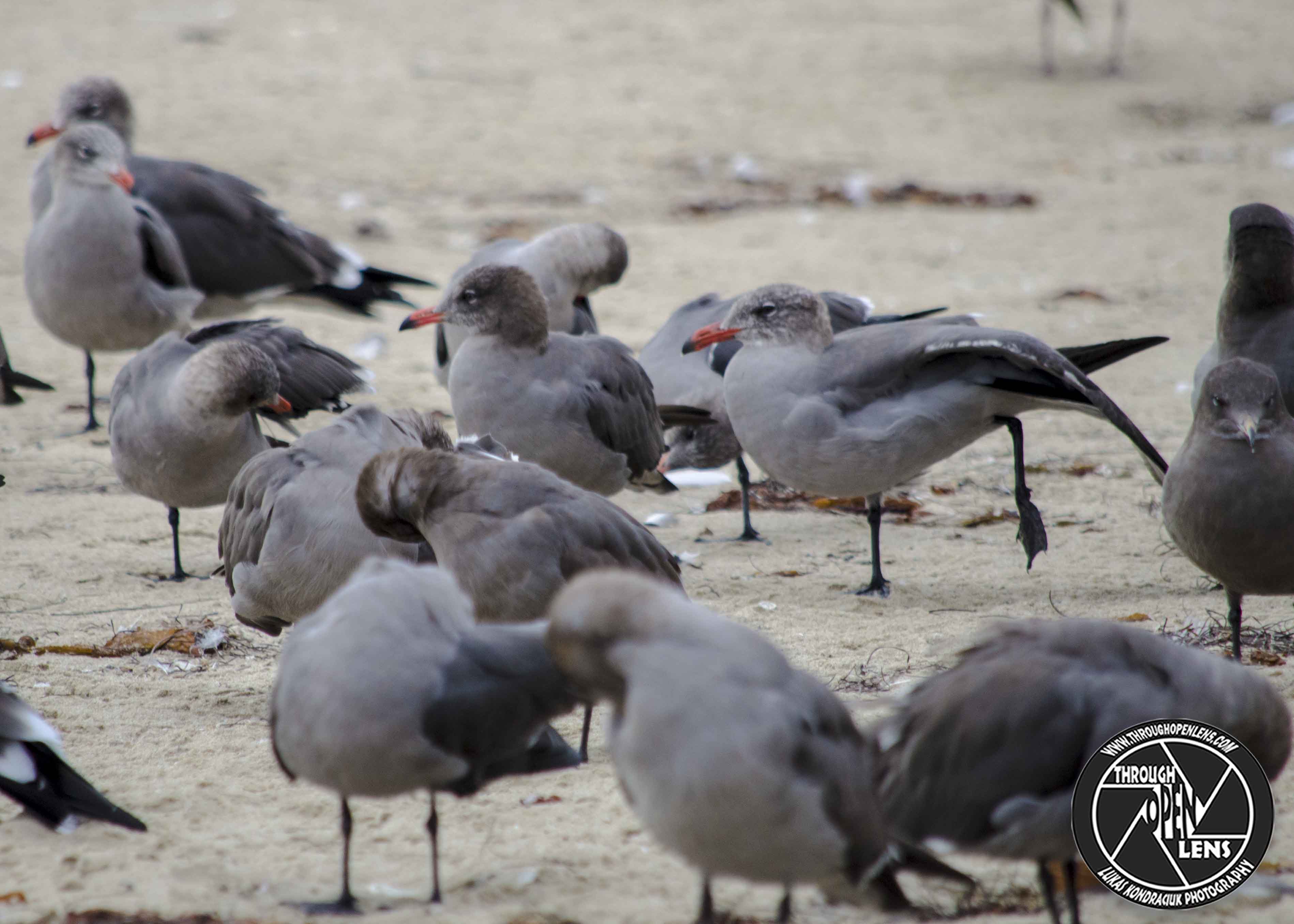
F/5.6, 1/500, ISO 400.
Heermann’s Gull
How do you communicate with a fish?
Drop him a line!
Interesting Fact: The Heermann’s Gull is the only North American gull that breeds south of the United States and comes north to spend the nonbreeding season. After breeding is over in July, the gull quickly comes north all the way to southern Canada. It heads back southward by December, and most breeders are at the breeding islands by March. ( https://www.allaboutbirds.org/guide/Heermanns_Gull/lifehistory )

F/5.6, 1/500, ISO 250.
Black-bellied Plover ( Juvenile )
I went to a seafood disco last week… and pulled a mussel.
Interesting Fact: Wary and quick to give alarm calls, the Black-bellied Plover functions worldwide as a sentinel for mixed groups of shorebirds. These qualities allowed it to resist market hunters, and it remained common when populations of other species of similar size were devastated. ( https://www.allaboutbirds.org/guide/Black-bellied_Plover/overview )

F/5.6, 1/800, ISO 320.
Anna’s Hummingbird ( Female )
Two pickles fell out of a jar onto the floor.
What did one say to the other?
Dill with it.
Interesting Fact: Hummingbirds have tiny legs and can neither hop nor walk, though they can sort of scoot sideways while perched. ( https://www.allaboutbirds.org/guide/Annas_Hummingbird )
 Through Open Lens