We Are Rolling Deep Today!

F/8.0, 1/250, ISO 320.

Ring-necked Duck

Why don`t ducks tell jokes when they fly?

Because they would quack up!

Interesting Fact: Ring-necked Ducks breed in northern North America and spend winters in southern and western North America, northern Central America, and the Caribbean, often on freshwater. Much of the population migrates from central Canada to the southeastern United States, staging along the way in Minnesota and other parts of the upper Midwest.  ( https://www.allaboutbirds.org/guide/Ring-necked_Duck/maps-range

I Lost My Temper, But It Came Back!

F/9.0, 1/250, ISO 160.

Ring-necked Duck

Why did the cookie go to the hospital?

He felt crummy!

Interesting Fact: Ring-necked Ducks feed by diving underwater, rather than by tipping up as “dabbling” ducks do. When diving, they leap forward in an arc to plunge underwater, and they swim using only their feet for propulsion. ( https://www.allaboutbirds.org/guide/Ring-necked_Duck/lifehistory )


50 Shades Of Red In My Eyes

F/ 6.3, 1/640, ISO 200.

Canvasback 

What type of book has only characters and no story?

A telephone book.

Interesting Fact: A large diving duck, the Canvasback breeds in prairie potholes and winters on ocean bays. Its sloping profile distinguishes it from other ducks. ( https://www.allaboutbirds.org/guide/Canvasback/id )

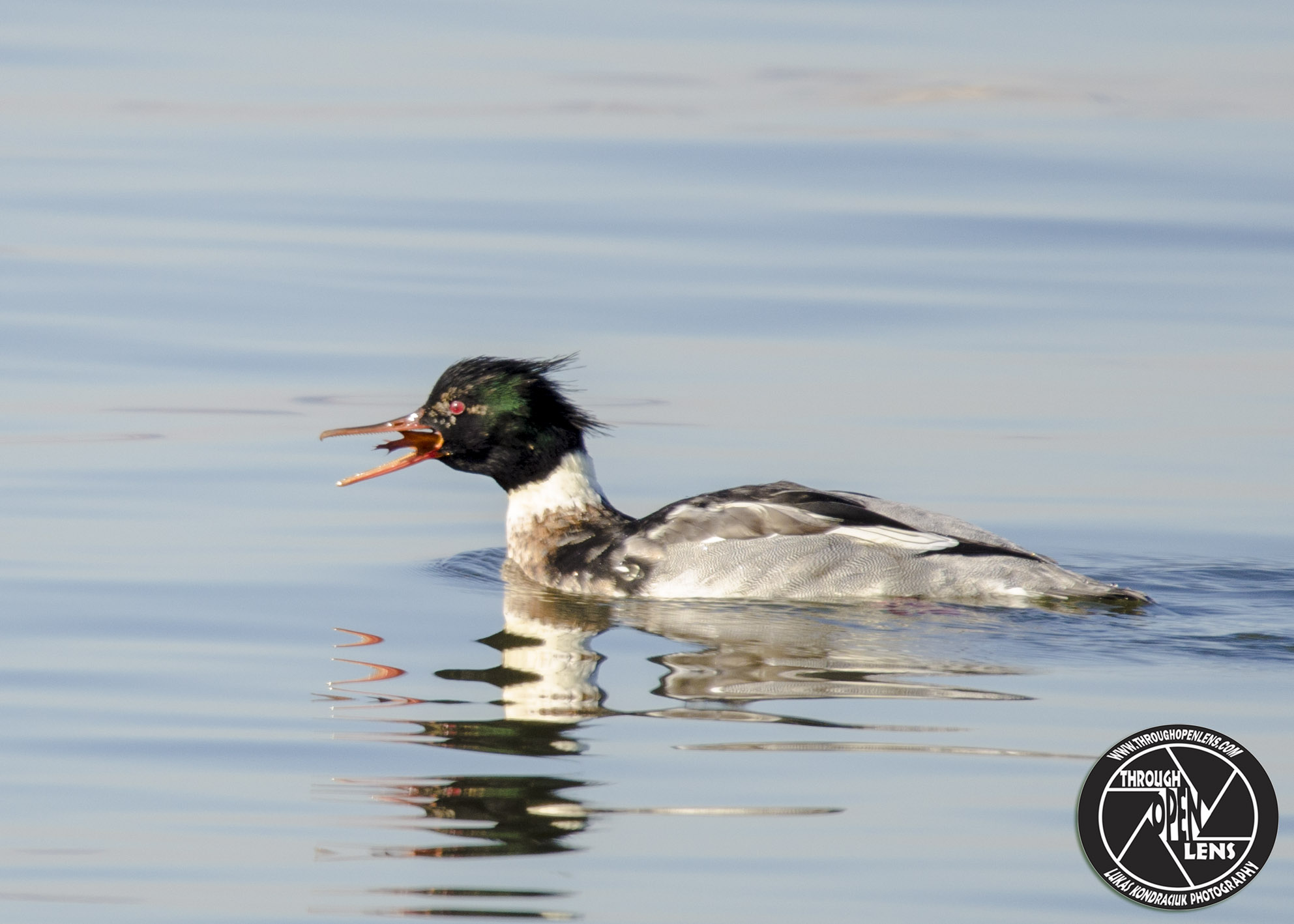
Eat Like No One Is Watching You!

F/6.3, 1/500, ISO 200.

Red-breasted Merganser  

Why do bananas use sunscreen?

Because they peel.

Interesting Fact: The red-breasted merganser (Mergus serrator) is a diving duck, one of the sawbills. The genus name is a Latin word used by Pliny and other Roman authors to refer to an unspecified waterbird, and serrator is a sawyer from Latin serra, “saw”.  ( https://en.wikipedia.org/wiki/Red-breasted_merganser#Behaviour )

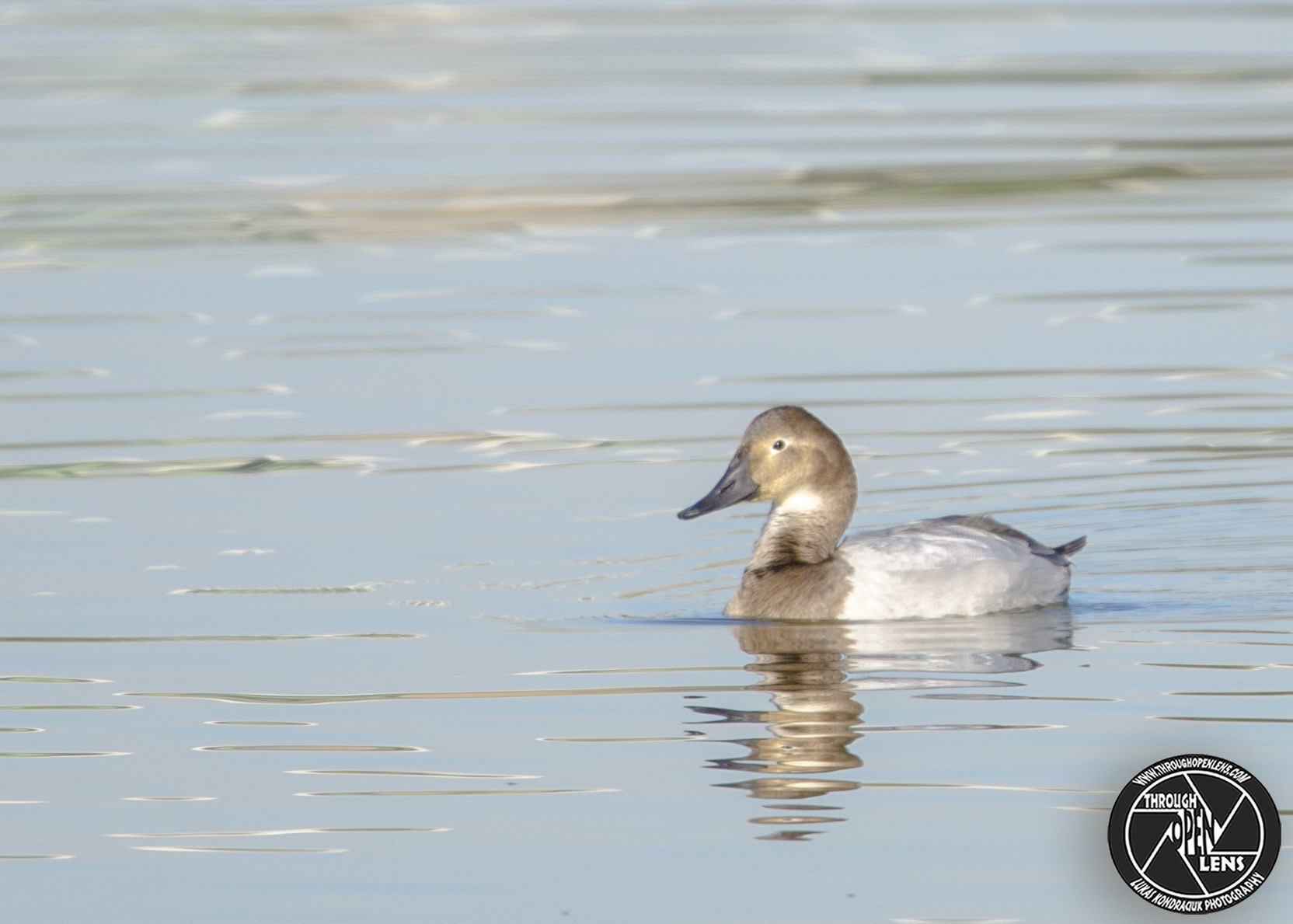
I Will, I Will, Quack You!

F/6.3, 1/640, ISO 200.

Canvasback ( Female ) 

Guy in a restaurant calls a waiter over

Guy: “Waiter, I am outraged. There is one hair in my soup.”

Waiter: “And what do you expect for this price? A whole wig?!”

Interesting Fact: The breeding habitat of the canvasback is in North Americaprairie potholes. The bulky nest is built from vegetation in a marsh and lined with down. Loss of nesting habitat has caused populations to decline. The canvasback usually takes a new mate each year, pairing in late winter on ocean bays.[5] It prefers to nest over water on permanent prairie marshes surrounded by emergent vegetation, such as cattails and bulrushes, which provide protective cover. Other important breeding areas are the subarctic river deltas in Saskatchewan and the interior of Alaska. ( https://en.wikipedia.org/wiki/Canvasback )

Eat My Bubbles!

F/9.0, 1/320, ISO 200.

Red-breasted Merganser  

Tom and Bobby are talking:

Bobby: “Holy crap, I just fell off a 50 ft ladder.”

Tom: “Oh my God, are you okay?”

Bobby: “Yeah it’s a good thing I fell off the first step.”

Interesting Fact: Its breedinghabitat is freshwater lakes and rivers across northern North America, Greenland, Europe, and Asia. It nests in sheltered locations on the ground near water. It is migratory and many northern breeders winter in coastalwaters further south. ( https://en.wikipedia.org/wiki/Red-breasted_merganser#Behaviour )

Chill The Duck Out!

F/10.0, 1/400, ISO 250.

Ring-necked Duck

Why did the duck go to jail?

Because he got caught selling quack.

Interesting Fact: Ring-necked Ducks on their breeding grounds occasionally get attacked by the much larger Common Loon, the Red-necked Grebe, and even the much smaller Pied-billed Grebe. ( https://www.allaboutbirds.org/guide/Ring-necked_Duck/lifehistory )

PAUSE For A Moment And REFLECT

F/9.0, 1/320, ISO 320.

Red breasted Merganser 

What did E.T.’s mother say to him when he got home?

Where on Earth have you been?

Interesting Fact: The female creates a depression on the ground that she covers with dead grasses, forming a shallow bowl. She plucks down feathers from her breast to help insulate the nest. ( https://www.allaboutbirds.org/guide/Red-breasted_Merganser/lifehistory )


Always Be Yourself… Unless You Can Be A Duck… Then Always Be A Duck.

F/8.0, 1/250, ISO 200. 

Red-breasted Merganser 

Two men meet on opposite sides of a river.

One shouts to the other, “I need you to help me get to the other side!”

The other guy replies, “You’re on the other side!”

Interesting Fact: Red-breasted Mergansers are among the fastest flying ducks, clocking speeds of up to 81 miles per hour.  ( https://www.allaboutbirds.org/guide/Red-breasted_Merganser/lifehistory )


Bad Hair Day: Ain’t Nobody Got Time For That!

F/9.0, 1/320, ISO 200.

Red-breasted Mergansers 

Can February March?

No, but April May.

Interesting Fact:Red-breasted Mergansers nest along forested riverbanks, marsh edges, lakeshores, coastal islands, and sandy shores with vegetation. They are never far from water. Female Red-breasted Mergansers select a spot on the ground under dense cover from low tree branches, fallen logs, or boulders. They nest alone or in colonies often with gulls and terns. ( https://www.allaboutbirds.org/guide/Red-breasted_Merganser/lifehistory )