Catching Some Rays DUDE!

F/9.0, 1/320, ISO 160.

Red-Eared Slider Turtles 

What do turtles use to communicate?

A shellphone!

Interesting Fact: During brumation, T. s. elegans can survive anaerobically for weeks, producing ATP from glycolysis. The turtle’s metabolic rate drops dramatically, with heart rate and cardiac output dropping by 80% to minimise energy requirements.[25][26] The lactic acid produced is buffered by minerals in the shell, preventing acidosis.[27] Red-eared sliders kept captive indoors should not brumate. ( https://en.wikipedia.org/wiki/Red-eared_slider )


Ordinarily, Staring is Creepy. But If You Spread Your Attention Across Many Individuals, Then It’s Just People Watching.

F/7.1, 1/200, ISO 320.

Common Grackle

Tom is sitting on the ice all day fishing with no luck, not even a nibble. Cold and tired he is about to leave, when a guy walks up cuts a hole in the ice beside him, and starts pulling out fish as fast a he can drop his hook in the water. Tom cant believe it, he yells over ” whats your secret?” “woogatkakeptewrwm” he answers back. “what did you say?” replies Tom. The man spits a large ball of worms on the ice and says to Tom, ” you have to keep your worms warm”.

Interesting Fact: Those raggedy figures out in cornfields may be called scare-crows, but grackles are the #1 threat to corn. They eat ripening corn as well as corn sprouts, and their habit of foraging in big flocks means they have a multimillion dollar impact. Some people have tried to reduce their effects by spraying a foul-tasting chemical on corn sprouts or by culling grackles at their roosts. ( https://www.allaboutbirds.org/guide/Common_Grackle/lifehistory )


Sorry… We Are Busy Sunbathing.

F/8.0, 1/250, ISO 320.

Red-Eared Slider Turtle

What did the Sewage Worker say to his apprentice?

Urine for a surprise.

Interesting Fact: Red-eared sliders do not hibernate, but actually brumate; while they become less active, they do occasionally rise to the surface for food or air. Brumation can occur to varying degrees. In the wild, red-eared sliders brumate over the winter at the bottoms of ponds or shallow lakes. They generally become inactive in October, when temperatures fall below 10 °C (50 °F).[9] During this time, the turtles enter a state of sopor, during which they do not eat or defecate, they remain nearly motionless, and the frequency of their breathing falls. Individuals usually brumate underwater, but they have also been found under banks and rocks, and in hollow stumps. In warmer winter climates, they can become active and come to the surface for basking. When the temperature begins to drop again, however, they quickly return to a brumation state. Sliders generally come up for food in early March to as late as the end of April. ( https://en.wikipedia.org/wiki/Red-eared_slider )

Admit It. You’re Waiting For Something You Know Won’t Happen.

F/6.3, 1/500, ISO 800.

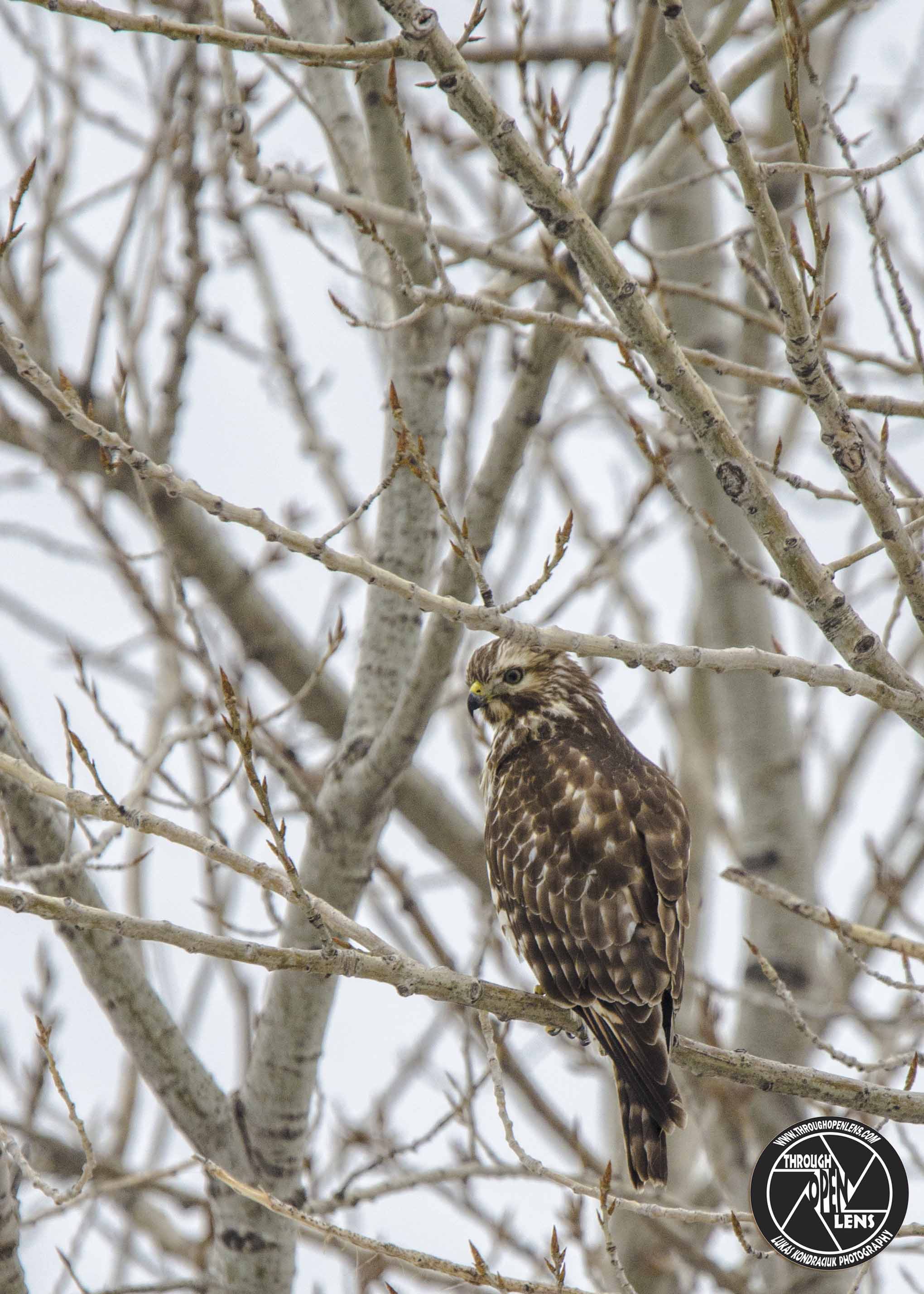
Merlin

What do you get if you cross LSD with birth control?

A trip without the kids!

Interesting Fact: The name “Merlin” comes from esmerillon, the old French name for the species. Merlins used to be called “pigeon hawks” because in flight they look somewhat pigeon-like. Their species name, columbarius, is also a reference to pigeons.  ( https://www.allaboutbirds.org/guide/Merlin )


Do Not Disturb!

F/14.0, 1/250, ISO 200.

Punta Cana, Dominican Republic Beach

What is the best day to go to the beach?

Sunday, of course!

Interesting Fact: Fraser Island off the coast of Queensland, Australia, is the largest sand island in the world covering around 163,000 ha and it has a beach 65 km (40 mi) long. ( http://www.sciencekids.co.nz/sciencefacts/earth/beaches.html )

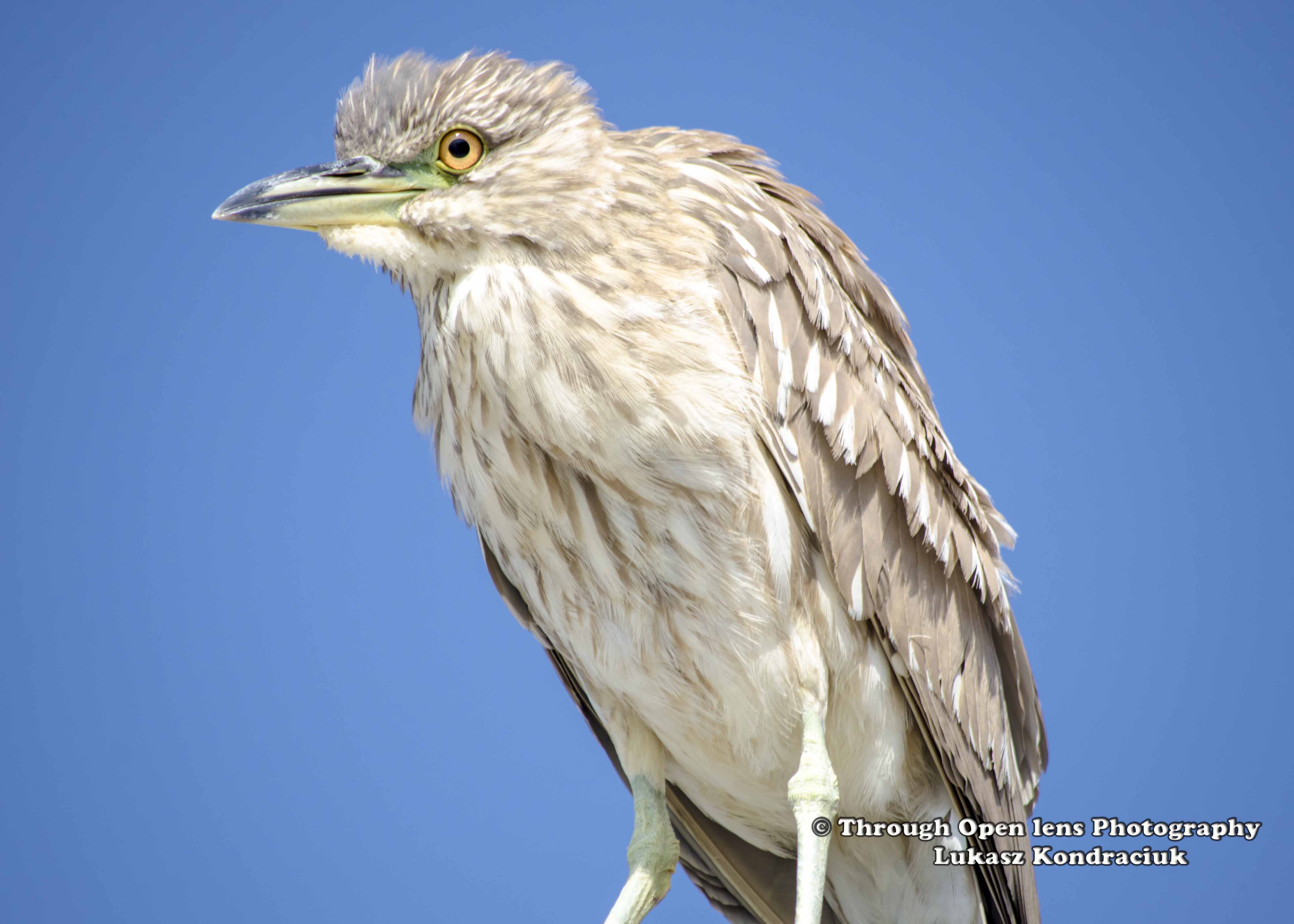
Look Into My Eyes, You Are Getting Sleepy!

Black-crowned Night-Heron 1

F/ 6.3, 1/640, ISO 200.

Black-Crowned Night-Heron ( Juvenile )

How do you wake up Lady gaga?

Poke her face.

Interesting Fact: The familiar evening sight and sound of the Black-crowned Night-Heron was captured in this description from Arthur Bent’s Life Histories of North American Marsh Birds: “How often, in the gathering dusk of evening, have we heard its loud, choking squawk and, looking up, have seen its stocky form, dimly outlined against the gray sky and propelled by steady wing beats, as it wings its way high in the air toward its evening feeding place in some distant pond or marsh!” ( https://www.allaboutbirds.org/guide/Black-crowned_Night-Heron/lifehistory )

I Always Have To Deal With Paparazzis

White-Tailed Deer 1

F/5.6, 1/50, ISO 100.

White-Tailed Deer

Who did Bambi invite to his birthday party?

His nearest and deer-est friends.

Interesting Fact: White-tailed deer, the smallest members of the North American deer family, are found from southern Canada to South America. In the heat of summer they typically inhabit fields and meadows using clumps of broad-leaved and coniferous forests for shade. During the winter they generally keep to forests, preferring coniferous stands that provide shelter from the harsh elements. ( http://animals.nationalgeographic.com/animals/mammals/white-tailed-deer/ )

A Little Birdie Told Me…

Chipping Sparrow

F/7.1, 1/200, ISO 500.

Chipping Sparrow 

Bacon and eggs walk into a bar and order a beer, the bartender says sorry, we don’t serve breakfast.

Interesting Fact: Chipping Sparrows typically build their nests low in a shrub or tree, but every once in a while they get creative. People have found their nests among hanging strands of chili peppers, on an old-fashioned mower inside a tool shed, and on a hanging basket filled with moss. ( https://www.allaboutbirds.org/guide/Chipping_Sparrow/lifehistory )

So They Say Orange Is The New Black, What If I’m Both?!

Eastern Towhee

F/6.3, 1/40, ISO 400.

Eastern Towhee

What did the bird say after his cage fell apart?

“Cheap, cheap!”

Interesting Fact: Eastern Towhees are common victims of the parasitic Brown-headed Cowbird. Female cowbirds lay eggs in towhee nests, then leave the birds to raise their cowbird young. In some areas cowbirds lay eggs in more than half of all towhee nests. Towhees, unlike some other birds, show no ability to recognize or remove the imposter’s eggs. Female cowbirds typically take out a towhee egg when laying their own, making the swap still harder to notice. ( https://www.allaboutbirds.org/guide/Eastern_Towhee/lifehistory )


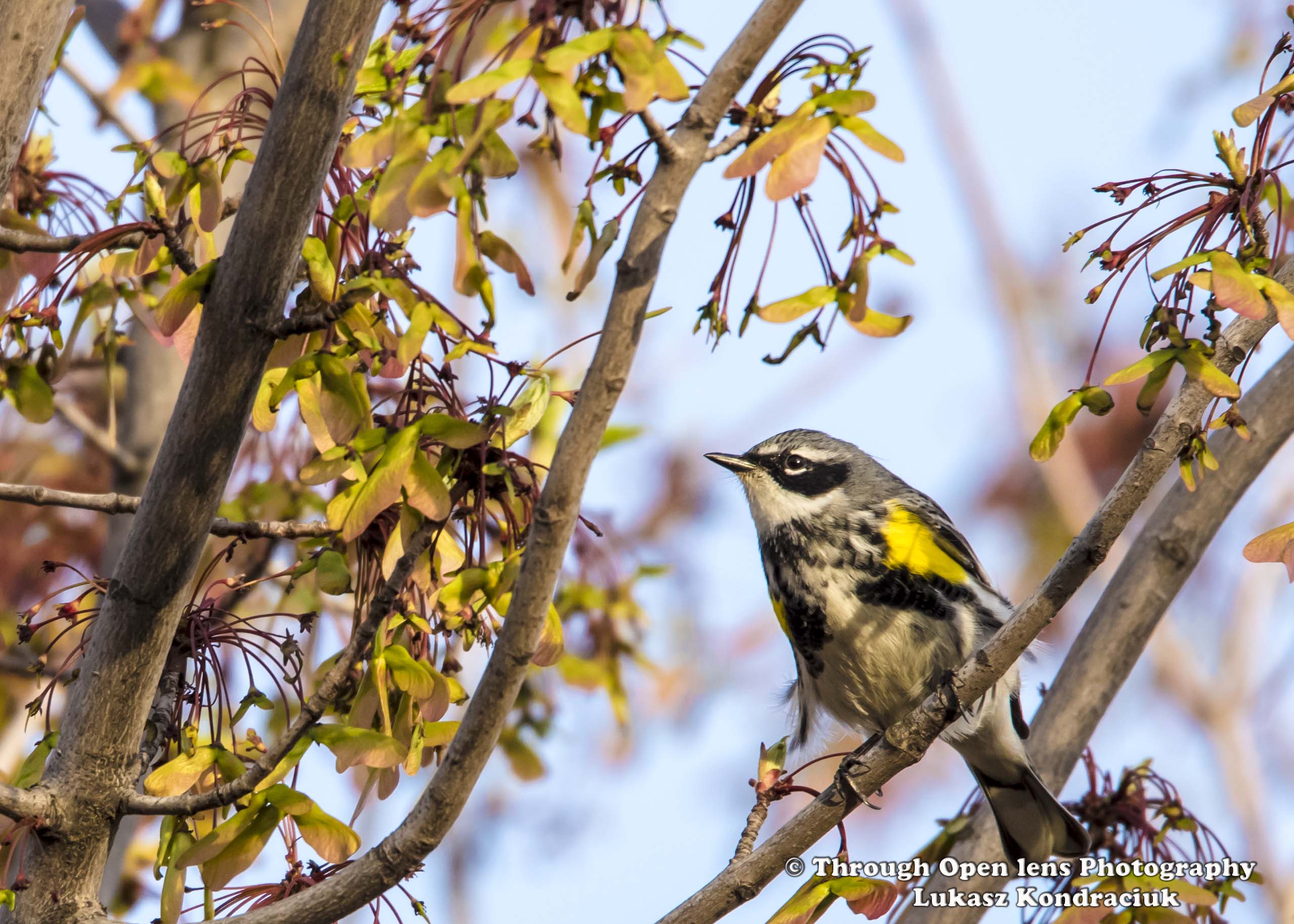
You Can’t See Me I’m Camouflage!

Yellow-Rumped Warbler

F/9.0, 1/320, ISO 400.

Yellow-Rumped Warbler

A magician was working on a cruise ship in the Caribbean.
The audience would be different each week, so the magician
allowed himself to do the same tricks over and over again.
There was only one problem:  The captain’s parrot saw the
shows each week and began to understand how the magician did
every trick.  Once he understood he started shouting in the
middle of the show:
“Look, it’s not the same hat”
“Look, he is hiding the flowers under the table”
“Hey, why are all the cards the Ace of Spades ?”
The magician was furious but couldn’t do anything, it was,
after all, the captain’s parrot.
One day the ship had an accident and sank.  The magician
found himself on a piece of wood in the middle of the ocean
with the parrot, of course.  They stared at each other with
hate, but did not utter a word.
This went on for a day and another and another.
After a week the parrot said:  “OK, I give up.  Where’s
the boat?”

Interesting Fact: The Yellow-rumped Warbler is the only warbler able to digest the waxes found in bayberries and wax myrtles. Its ability to use these fruits allows it to winter farther north than other warblers, sometimes as far north as Newfoundland.  ( https://www.allaboutbirds.org/guide/Yellow-rumped_Warbler/lifehistory )