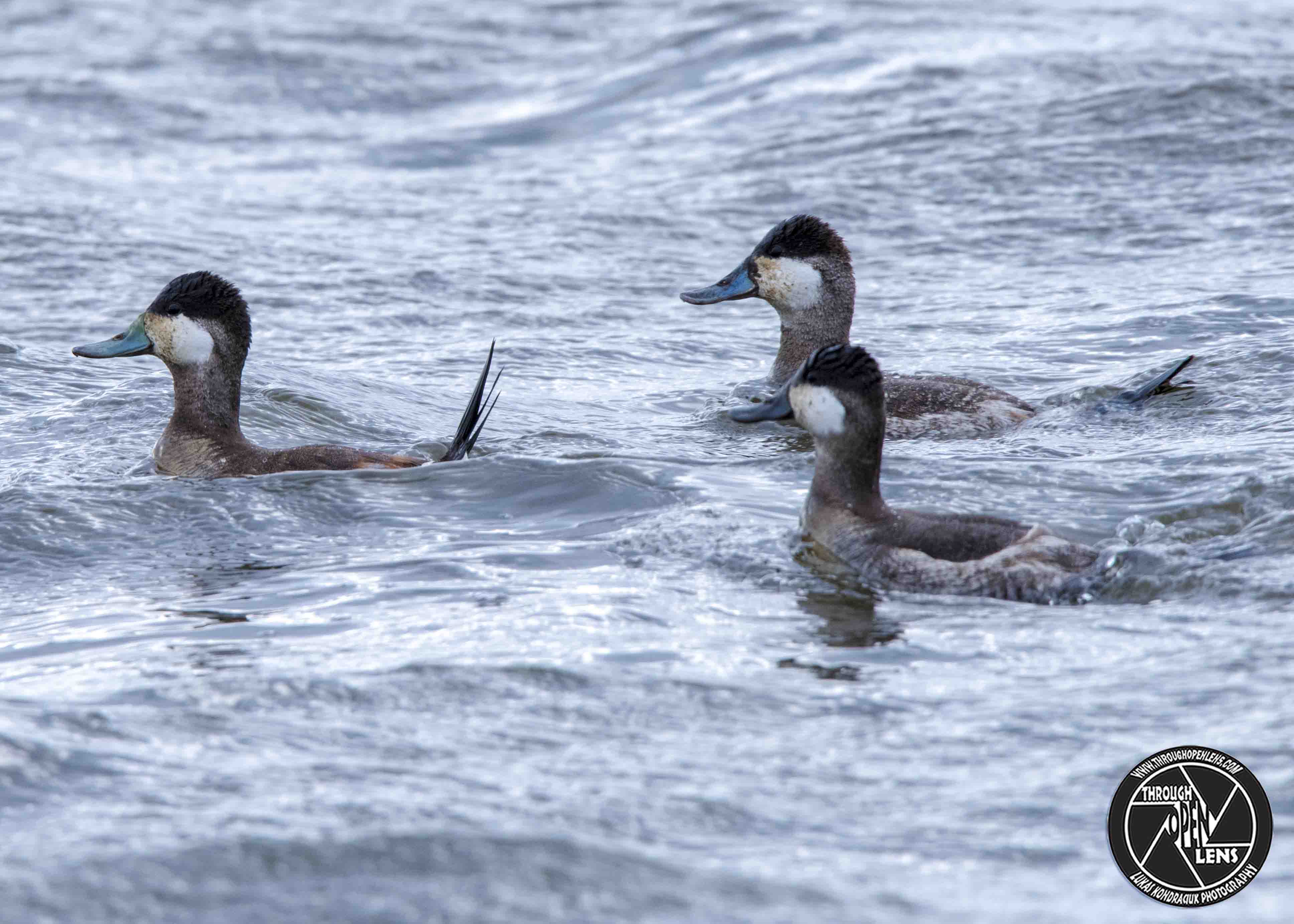
You Know What Guys I Am Getting Sick Of The V Formation!

F/10.0, 1/400, ISO 640.

Ruddy Duck

What do you get when you put four ducks in a box?

A box of quackers!

Interesting Fact: The Ruddy Duck has spiky tail feathers that are used in courtship displays. ( http://identify.whatbird.com/obj/116/overview/Ruddy_Duck.aspx )

Release The Quackin!

ring-necked-ducks

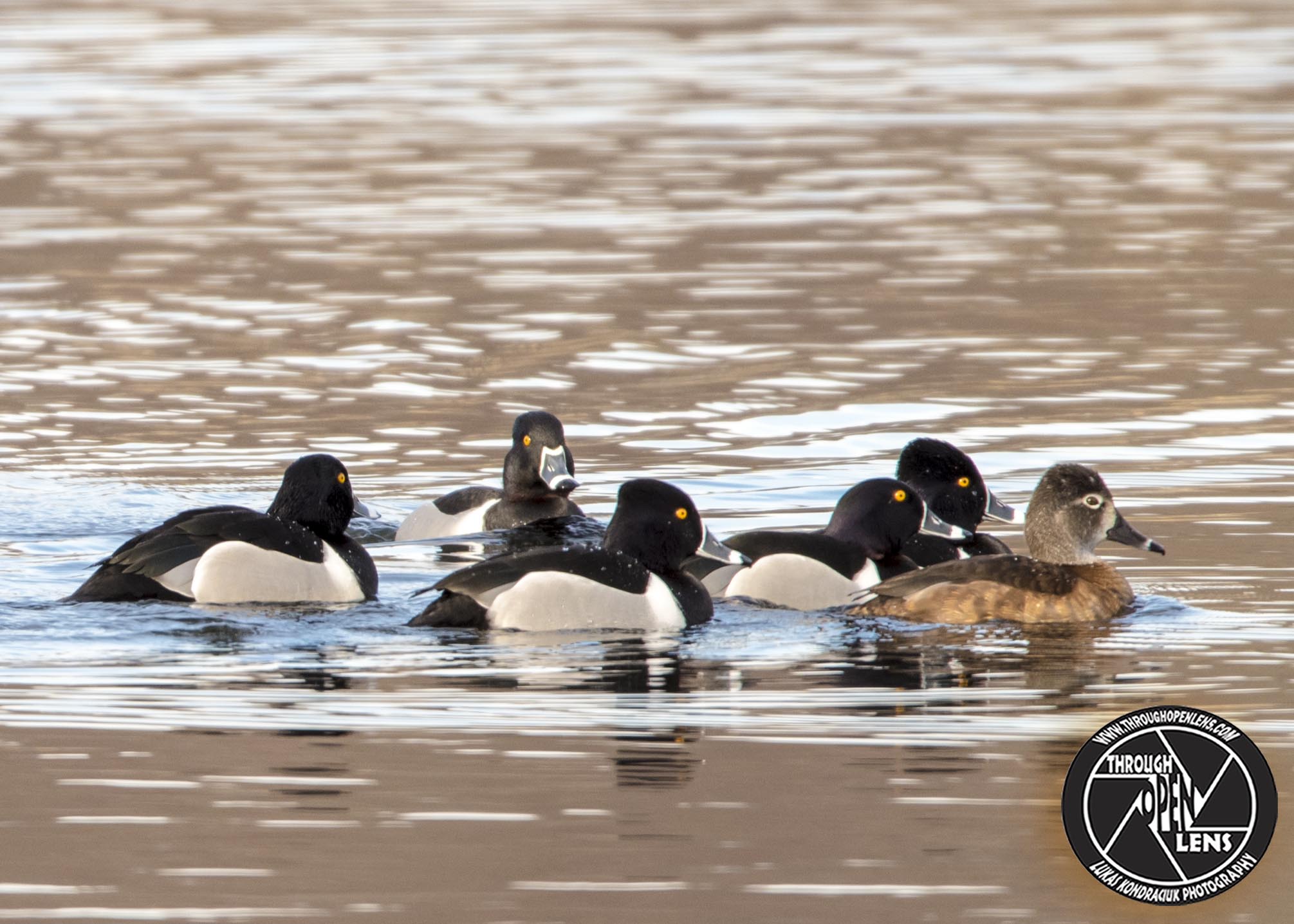
F/11.0, 1/500, ISO 500.

Ring-necked Ducks

Why shouldn’t you write with a broken pencil?

Because it’s pointless!

Interesting Fact: During fall migration, Ring-necked Ducks can form immense flocks. Several hundred thousand congregate each fall on certain lakes in Minnesota to feed on wild rice. ( https://www.allaboutbirds.org/guide/Ring-necked_Duck/lifehistory )

It’s The New Year, Get Your Ducks In A Row!

F/9.0, 1/320, ISO 320.

Ring-necked Ducks

What time is it when an elephant sits on your fence?

Time to get a new fence!

Interesting Fact: They tend to remain in pairs during the breeding season but group into flocks of several to several thousand during migration and winter. Like many other ducks, the Ring-necked Duck uses many kinds of displays to ward off rivals and to seek mates; almost any group of ducks offers an opportunity to watch these displays at work. When warning away another bird, Ring-necked Ducks lower their bill to meet their chest or push against each other, breast to breast, while swimming. This can intensify to bites and blows with the wings, particularly during the breeding season. When courting, males often throw their head sharply backward, touching the back; swim rapidly while nodding the head; or act as if they are preening their wing. As pairs begin to form, the two birds may perform exaggerated neck stretches or dip their bills in the water as if drinking. Pairs tend to form in spring and stay together at least until incubation begins. ( https://www.allaboutbirds.org/guide/Ring-necked_Duck/lifehistory )

Save Water Take Baths With A Friend!

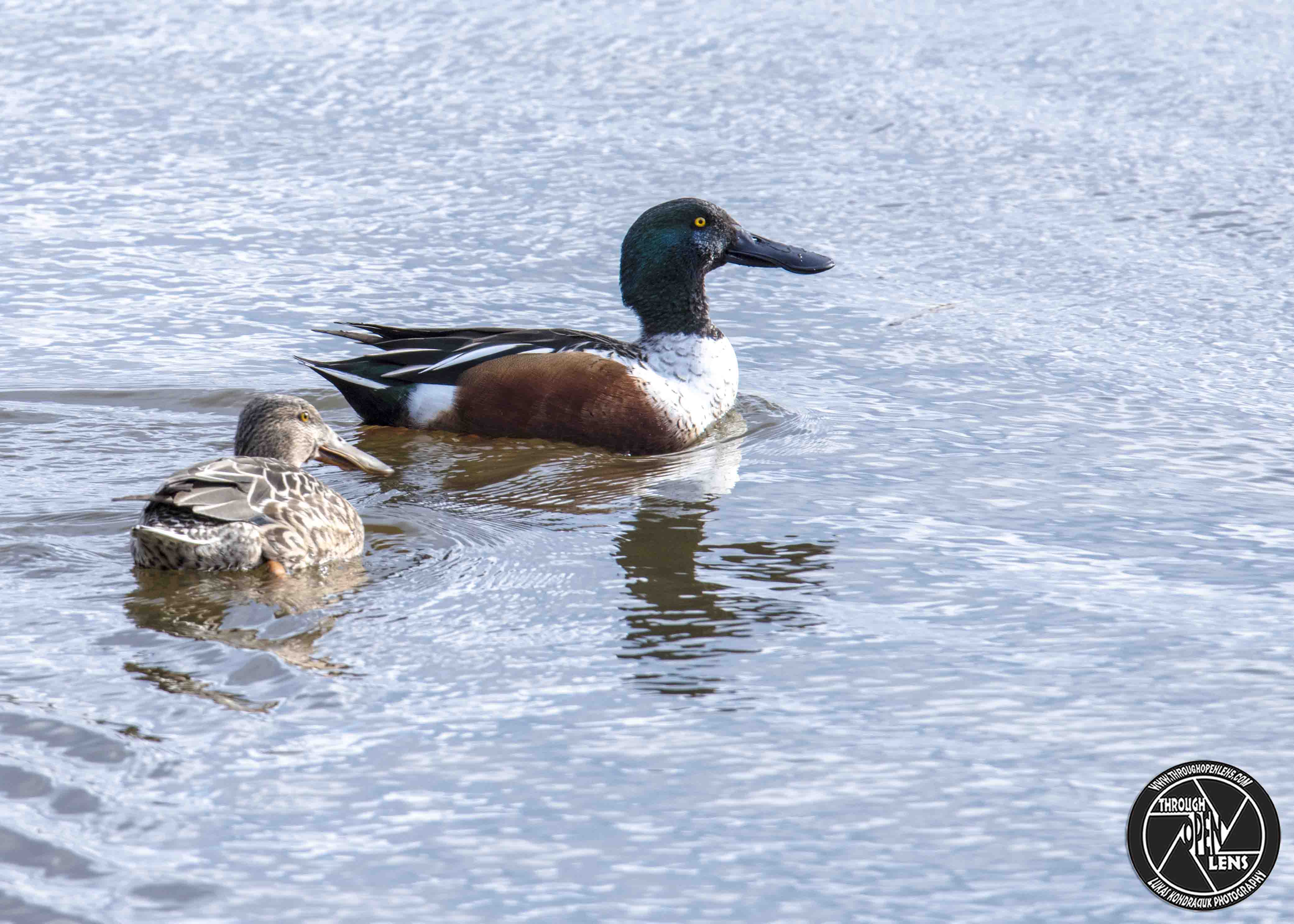
F/11.0, 1/500, ISO 400.

Northern Shoveler

What did the duck say when he dropped the dishes?

“I hope I didn’t quack any!”

Interesting Fact: Females use their body, feet, and bill to make a small depression on the ground about 8 inches wide. The nest scrape is usually surrounded on at least three sides by vegetation and lined with downy feathers. ( https://www.allaboutbirds.org/guide/Northern_Shoveler/lifehistory )


A song told me to Deck the Halls…so I did! Mr.and Mrs. Hall are not very happy!

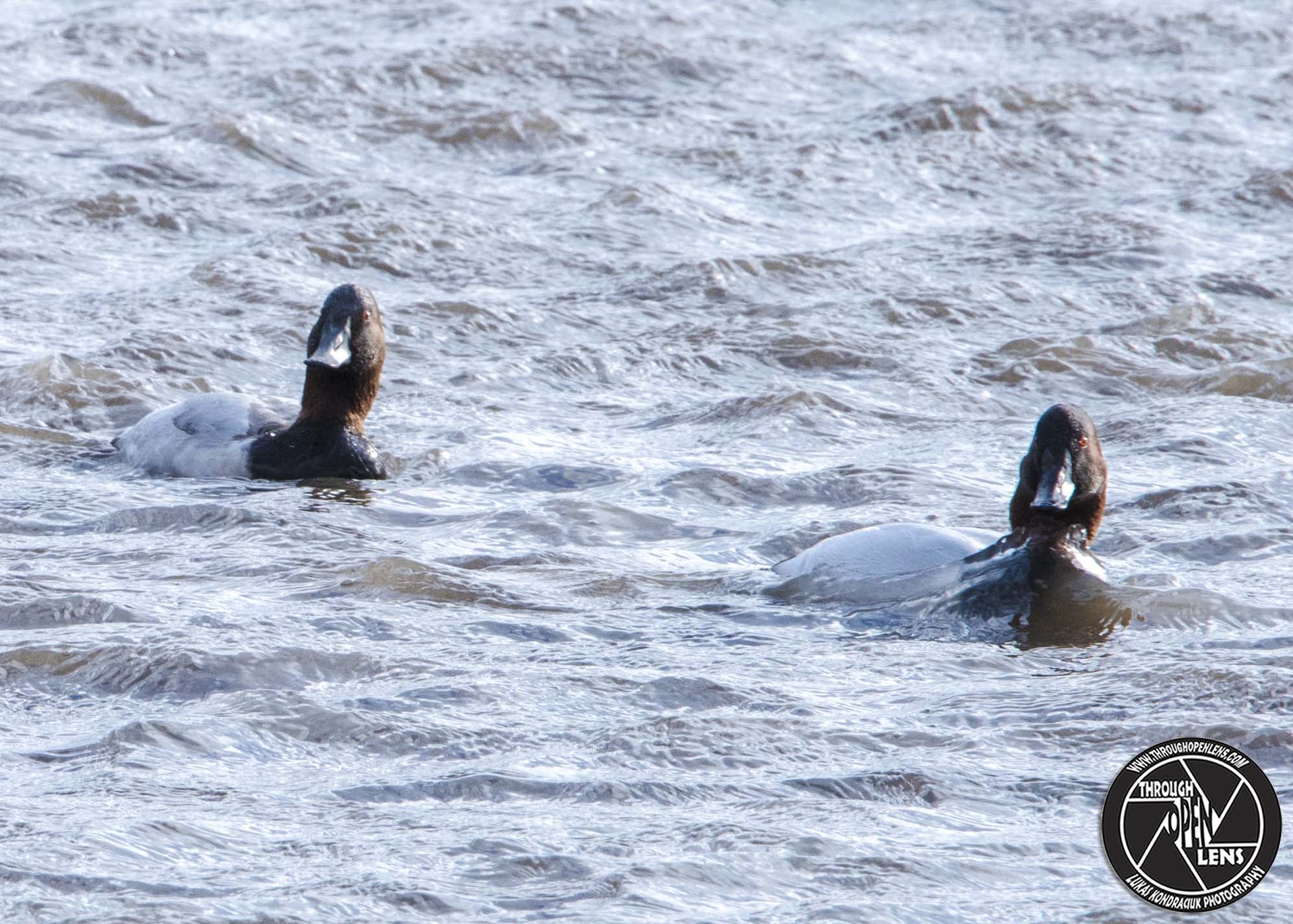
F/11.0, 1/500, ISO 500.

Canvasback 

Did you hear the joke about the roof?

Never mind, it’s over your head!

Interesting Fact: Canvasbacks are diving ducks at home in the water, seldom going ashore to dry land. They sleep on the water with their bill tucked under the wing, and they nest on floating mats of vegetation. To get airborne Canvasbacks need a running start, but once in the air they are strong and fast fliers, clocking airspeeds of up to 56 miles per hour. ( https://www.allaboutbirds.org/guide/Canvasback/lifehistory )

Together We Can Quack Everything!

F/9.0, 1/320, ISO 500.

Canvasback 

Did you hear about the duck with a drug problem?

He was a quackhead.

Interesting Fact: Canvasbacks are social outside of the breeding season; they gather in large rafts by the thousands to tens of thousands. Only when winter food is scarce or clumped do they defend foraging areas against other Canvasbacks. During spring and early in the breeding season, they act more aggressively. Threat displays include putting the bill in the water or on the chest, jabbing, pumping the head, or chasing.  ( https://www.allaboutbirds.org/guide/Canvasback/lifehistory )

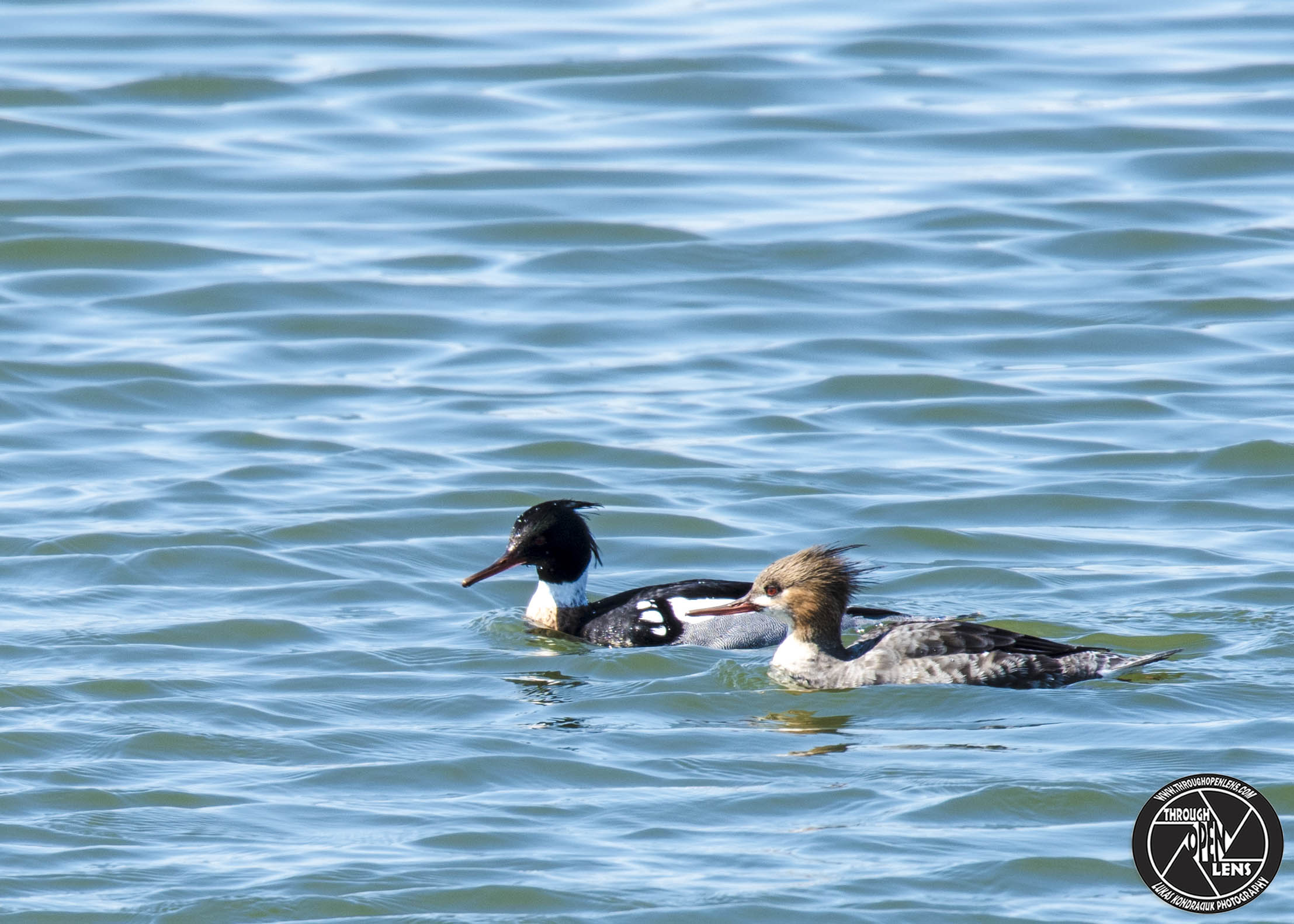
Alone We Are Strong… Together We Are Stronger!

F/9.0, 1/320, ISO 200.

Red-breasted Merganser

Why can’t a leopard hide?

Because he’s always spotted!

Interesting Fact:  The Red-breasted Merganser breeds farther north and winters farther south than the other American mergansers. ( https://www.allaboutbirds.org/guide/Red-breasted_Merganser/lifehistory )

Got An Itch That I Can’t Reach!

F/10.0, 1/400, ISO 320.

Mallard

What do you call a duck that steals?

A robber ducky.

Interesting Fact: Mallards nest on the ground on dry land that is close to water; nests are generally concealed under overhanging grass or other vegetation. Occasionally, Mallards nest in agricultural fields, especially alfalfa but also winter wheat, barley, flax, and oats. Both urban and wild populations readily nest in artificial nesting structures. Pairs search for nest sites together, typically on evening flights circling low over the habitat. Occasionally nests are placed on floating mats of vegetation or woven into plant stems that rise out of the water. ( https://www.allaboutbirds.org/guide/Mallard/lifehistory )

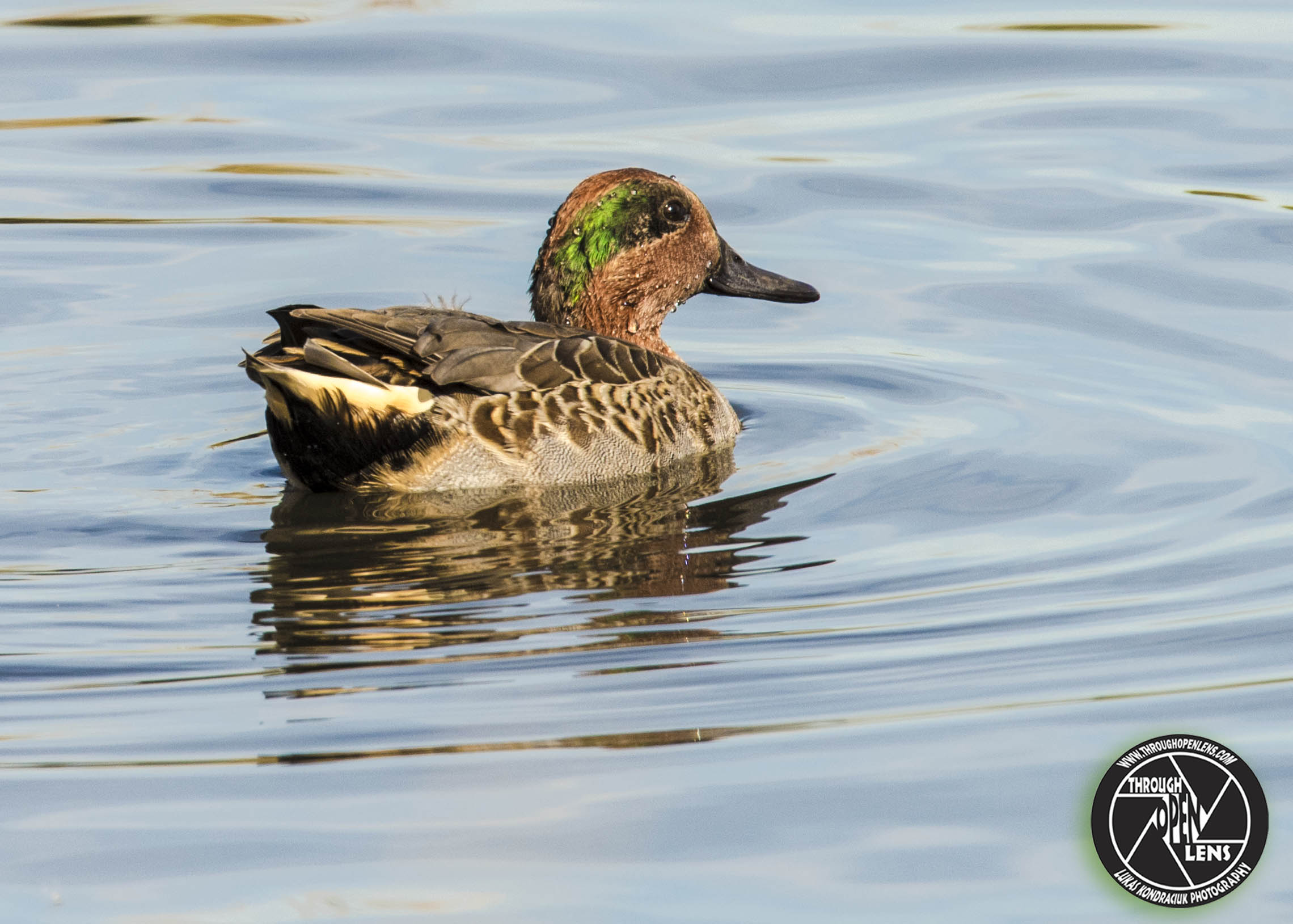
Swim, Duck, Swim!

F/11.0, 1/500, ISO 320.

Green-Winged Teal

Why aren’t there any famous skeletons?

They’re a bunch of no bodies.

Interesting Fact:  The oldest known Green-winged Teal was at least 20 years and 3 months, based on banding data. It was a female banded in 1941 in Oklahoma, and recovered by a hunter 1960 in Missouri. ( https://www.allaboutbirds.org/guide/Green-winged_Teal/lifehistory )

Dear People, Quit Trying To Look Like Us In Photos… It’s Embarrassing To Our Species.

F/10.0, 1/400, ISO 320.

Gadwall

Why did the can crusher quit his job?

Because it was soda pressing.

Interesting Fact:  Gadwall are dabbling ducks—they ride fairly high in the water and they tip forward to graze on submerged plants that they can reach with their outstretched necks. They rarely dive. Gadwall sometimes steal food from American Coots. ( https://www.allaboutbirds.org/guide/Gadwall/lifehistory )