Sometimes I Pretend To Be Normal But It Gets Boring. So I Go Back To Being Me.

F/7.1, 1/200, ISO 250.

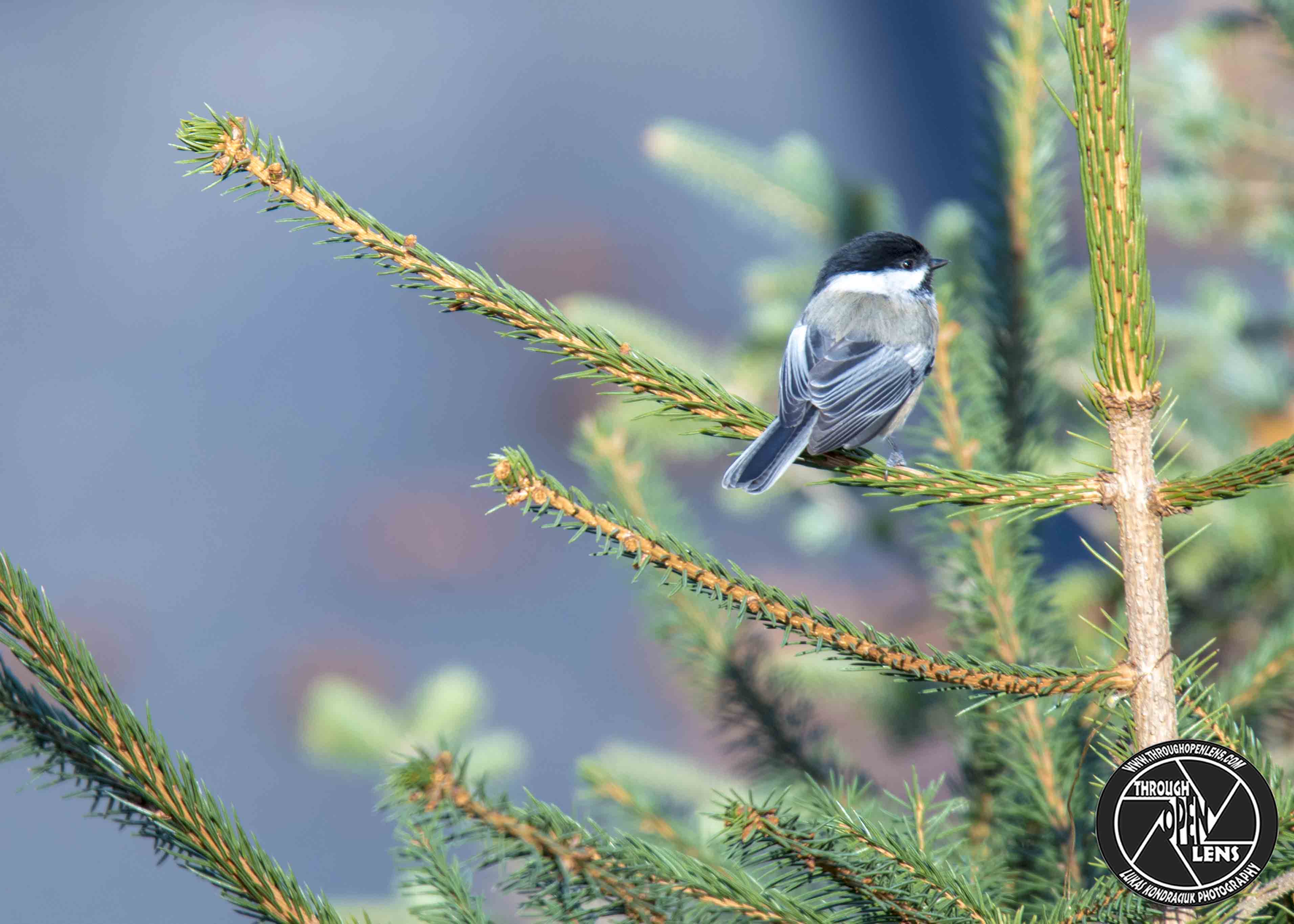
Black-capped Chickadee 

What’s the difference between a cat and a frog?

A Cat has nine lives but a Frog croaks every night!

Interesting Fact: Even when temperatures are far below zero, chickadees virtually always sleep in their own individual cavities. In rotten wood, they can excavate nesting and roosting holes entirely on their own. ( https://www.allaboutbirds.org/guide/Black-capped_Chickadee )

I’m Feeling A Bit Puffy Today!

F/7.1, 1/200, ISO 250.

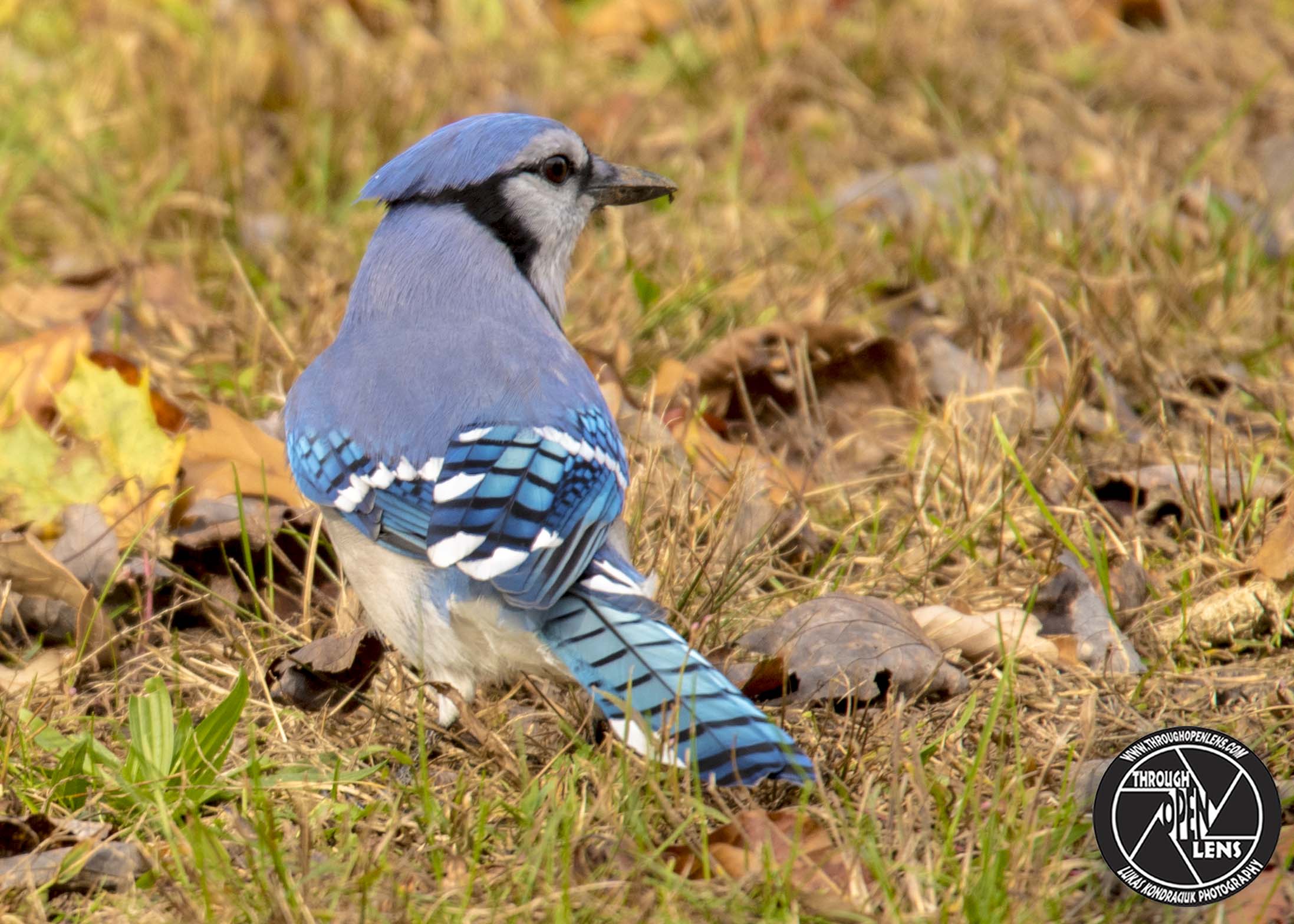
Blue Jay

Why did the girl bring lipstick and eye shadow to school?

She had a make-up exam!

Interesting Fact: The Blue Jay frequently mimics the calls of hawks, especially the Red-shouldered Hawk. These calls may provide information to other jays that a hawk is around, or may be used to deceive other species into believing a hawk is present. (  https://www.allaboutbirds.org/guide/Blue_Jay/lifehistory )

What Was That?

F/13.0, 1/500, ISO 800.

Northern Cardinal ( Female )

Why couldn’t the leopard play hide and seek?

Because he was always spotted.

Interesting Fact: A week or two before the female starts building, she starts to visit possible nest sites with the male following along. The pair call back and forth and hold nesting material in their bills as they assess each site. Nests tend to be wedged into a fork of small branches in a sapling, shrub, or vine tangle, 1-15 feet high and hidden in dense foliage. They use many kinds of trees and shrubs, including dogwood, honeysuckle, hawthorn, grape, redcedar, spruce, pines, hemlock, rose bushes, blackberry brambles, elms, sugar maples, and box elders. ( https://www.allaboutbirds.org/guide/Northern_Cardinal/lifehistory )

Headbanger!

F/6.3, 1/100, ISO 320.

Pileated Woodpecker

Two men visit a prostitute.

The first man goes into the bedroom. He comes out ten minutes later and says, “Heck. My wife is better than that.”

The second man goes in. He comes out ten minutes later and says, “You know? Your wife IS better.”

Interesting Fact: The Pileated Woodpecker prefers large trees for nesting. In young forests, it will use any large trees remaining from before the forest was cut. Because these trees are larger than the rest of the forest, they present a lightning hazard to the nesting birds. ( https://www.allaboutbirds.org/guide/Pileated_Woodpecker  )

Bluetiful!

F/8.0, 1/250, ISO 400.

Blue Jay

Where do cows go for entertainment?

The mooooo-vies!

Interesting Fact:  The Blue Jay frequently mimics the calls of hawks, especially the Red-shouldered Hawk. These calls may provide information to other jays that a hawk is around, or may be used to deceive other species into believing a hawk is present. (  https://www.allaboutbirds.org/guide/Blue_Jay/lifehistory )

“So What’s So Great About Being OnLine?! “

monk-parakeets-online

F/6.3, 1/640, ISO 200.

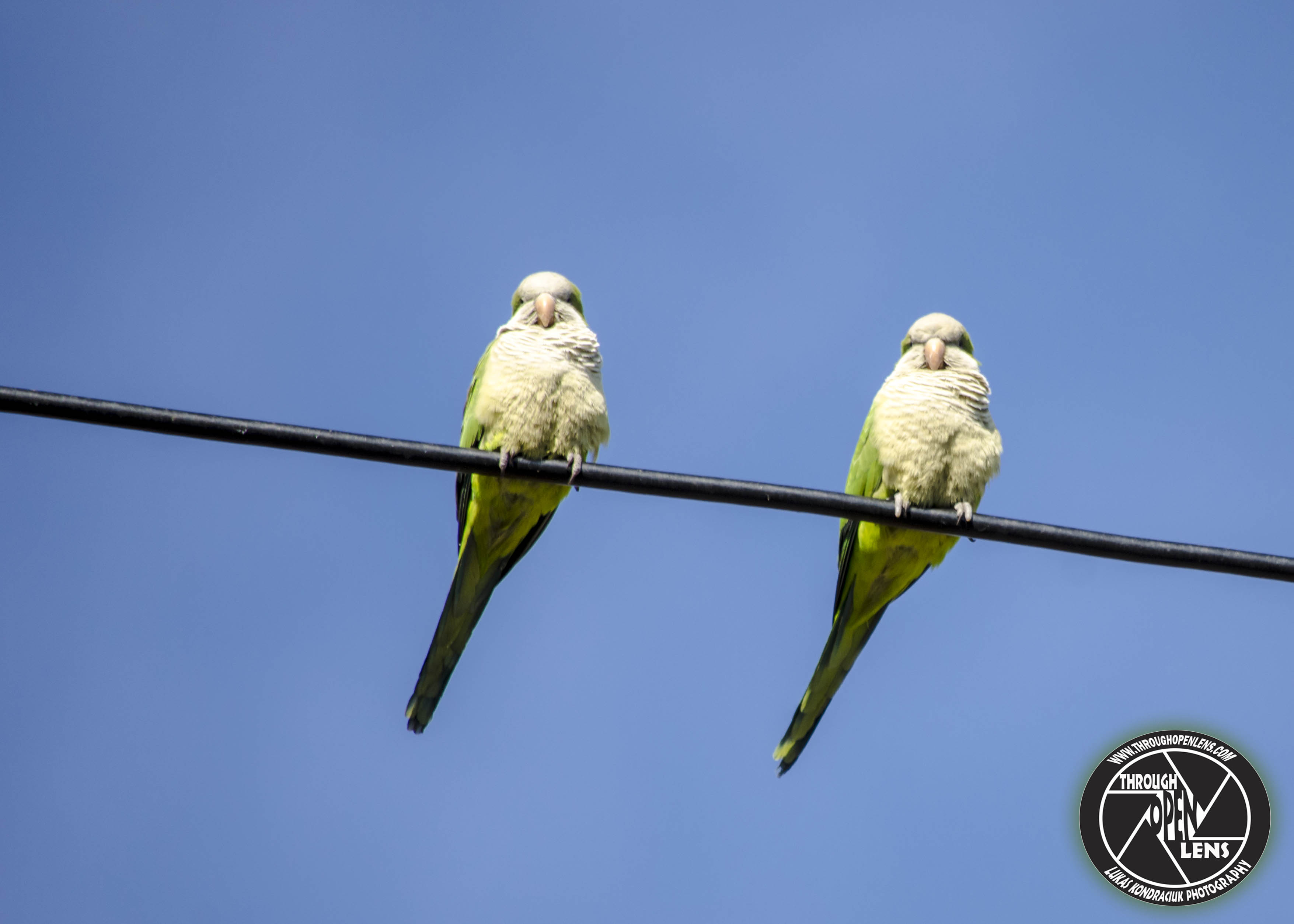
Monk Parakeets

What is a parrot’s favorite game?

Hide and Speak!

Interesting Fact: In their native Argentina, Monk Parakeets sometimes adopt old nests of other species. Some ornithologists have suggested that this behavior may have been the first step, evolutionarily speaking, to transitioning from nesting in tree cavities to constructing stick nests. ( https://www.allaboutbirds.org/guide/Monk_Parakeet/lifehistory )

Do We Have A Problem Here!

F/6.3, 1/640, ISO800.

American Black Duck

What says “Quick, Quick”?

A duck with the hiccups.

Interesting Fact: If a mother is killed or separated from her brood, another Black Duck with ducklings of her own, regardless of their age, will quickly adopt the orphans. ( http://identify.whatbird.com/obj/392/_/American_Black_Duck.aspx )

Let Me Sing You A Song!

F/6.3, 1/640, ISO 100.

Northern Mockingbird

What’s a monsters favorite desert?

I-Scream!

Interesting Fact: Northern Mockingbirds continue to add new sounds to their repertoires throughout their lives. A male may learn around 200 songs throughout its life. ( https://www.allaboutbirds.org/guide/Northern_Mockingbird/lifehistory )

I Might Be Too Punk Rock For You.

F/ 7.1, 1/200, ISO 1600.

Pileated Woodpecker 

When is it bad luck to be followed by a black cat?

When you’re a mouse.

Interesting Fact: When hammering into this soft wood, Pileated Woodpeckers use their long necks to pull far back from the tree, then make powerful strikes with their heavy bills, pulling with their feet to increase the strength of the blow. The sound is often audible as a heavy thunk, and large chips of wood collect on the ground below. ( https://www.allaboutbirds.org/guide/Pileated_Woodpecker/lifehistory )

I Only Have Crazy Eyes For You!

F/9.0, 1/320, ISO 320.

Northern Mockingbird 

Why don’t witches like to ride their brooms when they’re angry?

They’re afraid of flying off the handle!

Interesting Fact:  The Northern Mockingbird frequently gives a “wing flash” display, where it half or fully opens its wings in jerky intermediate steps, showing off the big white patches. No one knows why it does this, but it may startle insects, making them easier to catch. On the other hand, it doesn’t often seem to be successful, and different mockingbird species do this same display even though they don’t have white wing patches.  ( https://www.allaboutbirds.org/guide/Northern_Mockingbird/lifehistory )