Wait, What Did You Said?

F/7.1, 1/200, ISO 250.

Blue Jay

Why is your foot more special than your other body parts?

Because they have their own soul.

Interesting Fact: Blue Jays are found in all kinds of forests but especially near oak trees; they’re more abundant near forest edges than in deep forest. They’re common in urban and suburban areas, especially where oaks or bird feeders are found. ( https://www.allaboutbirds.org/guide/Blue_Jay/lifehistory )

So, You Are The Quiet Type, I Like That.

F/9.0, 1/320, ISO 250.

Black-capped Chickadee 

“How do you shoot a killer bee?”

“With a bee bee gun.”

Interesting Fact: Adult chickadees don’t migrate. In years when chickadee reproduction is high, young birds sometimes move large distances, but these movements are irregular and are more accurately called “irruptions.”( https://www.allaboutbirds.org/guide/Black-capped_Chickadee )


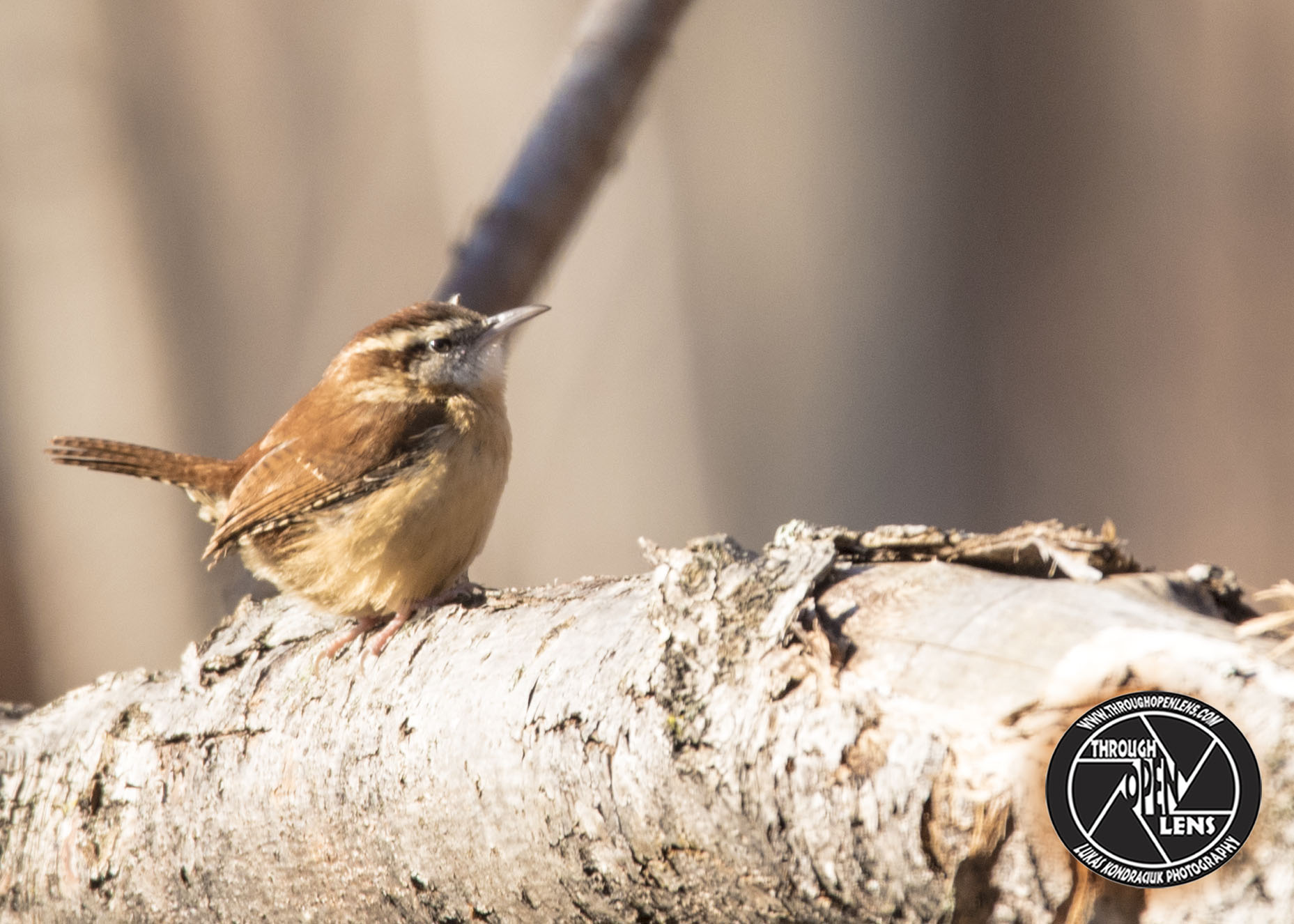
Life Is So Much Easier When You Just Chill Out.

F/8.0, 1/250, ISO 400.

Carolina Wren

One day, during a lesson on proper grammar, the teacher asked for a show of hands from those who could use the word “beautiful” in the same sentence twice. First, she called on little Suzie, who responded with, “My father bought my mother a beautiful dress and she looked beautiful in it.”

“Very good, Suzie,” replied the teacher. She then called on little Michael. “My mommy planned a beautiful banquet and it turned out beautifully,” he said.

“Excellent, Michael!”

Then, the teacher called on Little Johnny. “Last night, at the dinner table, my sister told my father that she was pregnant, and he said, ‘Beautiful, …just #$&#*&^# beautiful!

Interesting Fact: One captive male Carolina Wren sang nearly 3,000 times in a single day. ( https://www.allaboutbirds.org/guide/Carolina_Wren/lifehistory )

Say What?!

F/8.0, 1/250, ISO 320.

Tufted Titmouse

Why are hairdressers never late for work?

Because they know all the short cuts!

Interesting Fact: Tufted Titmice live in deciduous woods or mixed evergreen-deciduous woods, typically in areas with a dense canopy and many tree species. They are also common in orchards, parks, and suburban areas. Generally found at low elevations, Tufted Titmice are rarely reported at elevations above 2,000 feet. ( https://www.allaboutbirds.org/guide/Tufted_Titmouse/lifehistory )


He Can Be A Real Pecker !

red-bellied-woodpecker-1

F/ 6.3, 1/125, ISO 1100.

Red-Bellied Woodpecker

An New York woodpecker and a Florida woodpecker were in New York arguing about which state had the toughest trees to peck. The New Yorker

woodpecker said that they had a tree there that no woodpecker can peck.

The Florida woodpecker challenged him and was able to peck a hole in the tree with no problem. The New Yorker woodpecker was in awe!

The Florida woodpeck then challenged the New Yorker woodpecker to come to Florida and try to peck this certain tree there that no woodpecker had

ever been able to peck successfully.

The NewYorker woodpecker said he was sure he would be able to do it. So, after flying down to Florida, he successfully pecked the tree!

The two woodpeckers then had a discussion about why they were each unable to peck those trees in their own states. After thinking about this problem

for some time, they both came to the same conclusion: “Your pecker is always harder when you’re away from home…”


Interesting Fact: You may sometimes see Red-bellied Woodpeckers wedge large nuts into bark crevices, then whack them into manageable pieces using their beaks. They also use cracks in trees and fence posts to store food for later in the year, a habit it shares with other woodpeckers in its genus. ( https://www.allaboutbirds.org/guide/Red-bellied_Woodpecker/lifehistory )


I Meant To Be Good But There Were Too Many Other Options!

ruby-crowned-kinglet

F/8.0, 1/250, ISO 640.

Ruby-crowned Kinglet

teacher asked : Why are you late for school?

Bobby: Because of the Sign.

Teacher : What Sign?

Bobby : The sign that says “School ahead go slow”

Interesting Fact: The Ruby-crowned Kinglet is a tiny bird that lays a very large clutch of eggs—there can be up to 12 in a single nest. Although the eggs themselves weigh only about a fiftieth of an ounce, an entire clutch can weigh as much as the female herself. ( https://www.allaboutbirds.org/guide/Ruby-crowned_Kinglet/lifehistory )

Use Your Head!

yellow-bellied-sapsucker-2

F/10.0, 1/400, ISO 400.

Yellow-Bellied Sapsucker

What did the trees wear to Mother Nature’s pool party?

Swimming trunks!

Interesting Fact: The Yellow-bellied Sapsucker frequently uses human-produced materials to help in its territorial drumming. Street signs and metal chimney flashing amplify the irregular tapping of a territorial sapsucker. The sapsucker seems to suffer no ill effects of whacking its bill on metal, and a bird will return to a favorite sign day after day to pound out its Morse code-like message. ( https://www.allaboutbirds.org/guide/Yellow-bellied_Sapsucker/lifehistory  )

WHAT DO YOU WANT?!

american-kestrel-1

F/6.3, 1/640, ISO 200.

American Kestrel

Bacon and eggs walk into a bar and order a beer, the bartender says sorry, we don’t serve breakfast.

Interesting Fact:

Sports fans in some cities get an extra show during night games: kestrels perching on light standards or foul poles, tracking moths and other insects in the powerful stadium light beams and catching these snacks on the wing. Some of their hunting flights have even made it onto TV sports coverage.  ( https://www.allaboutbirds.org/guide/American_Kestrel/lifehistory )


I’ve Been Patiently Waiting For A Someone To Fly By!

F/9.0, 1/320, ISO 400.

Cooper’s Hawk

What did the hamburger name his daughter?

Patty!

Interesting Fact: Cooper’s Hawks show the classic accipiter flight style: a few stiff wingbeats followed by short glides. But in pursuit of prey their flight becomes powerful, quick, and very agile, allowing the bird to thread its way through tree branches at top speed. Courting birds display by flying with slow wingbeats, then gliding with wings held in a V. Males make a bowing display to females after pairing and before beginning to build the nest. ( https://www.allaboutbirds.org/guide/Coopers_Hawk/lifehistory )

Stop Waiting For Prince Charming. Get Up And Find Him. The Poor Idiot May Be Stuck In A Tree Or Something.

black-crowned-night-heron-tree

F/10.0, 1/1600, ISO 800.

Black-crowned Night-Heron

Did you know that before you became my best friend, I used to hang out with another girl every single day in her super awesome tree house?

It’s true, but unfortunately we had a falling-out.

Interesting Fact: Scientists find it easy, if a bit smelly and messy, to study the diet of young Black-crowned Night-Herons—the nestlings often disgorge their stomach contents when approached. ( https://www.allaboutbirds.org/guide/Black-crowned_Night-Heron/lifehistory )